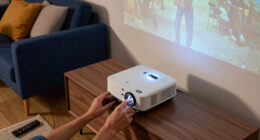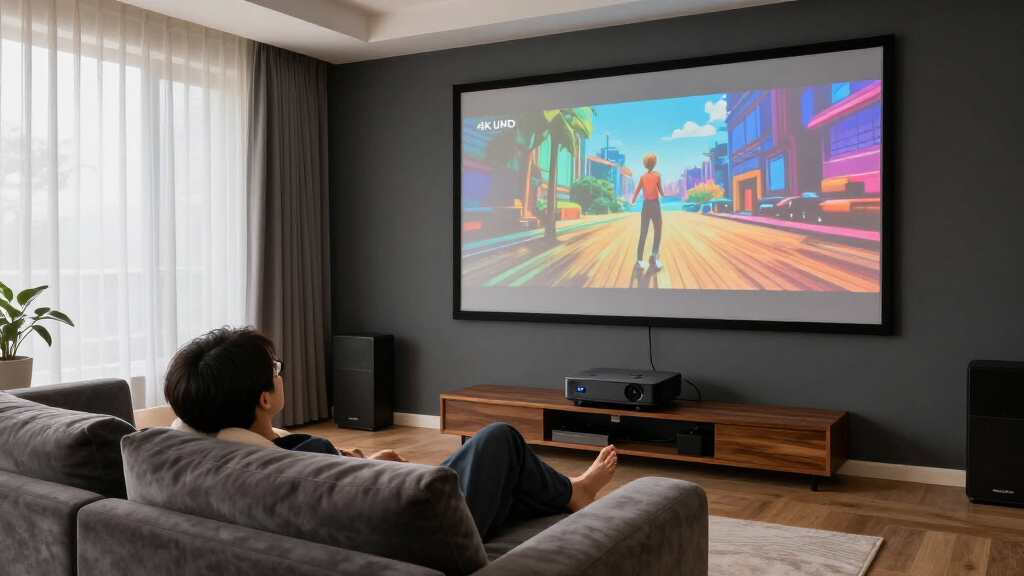
Home theater enthusiasts looking to upgrade their viewing experience often consider 4K UHD projectors. The Epson Home Cinema 5050UB and Sony VPL-VW325ES are two prominent options in this space. While both deliver 4K resolution, their differences in brightness, contrast, price, and features can impact which best fits a specific setup. The main distinction lies in their overall image performance and value, with the Epson excelling in brightness and color, and the Sony offering superior contrast and image nuance. This comparison aims to clarify which projector aligns better with varying user priorities, whether for vibrant, bright presentations or for immersive contrast-rich viewing.

Get business pricing on your home office setup
- Business-only prices and quantity discounts
- Tax-exempt purchasing
- Multiple users, one account, clear invoices
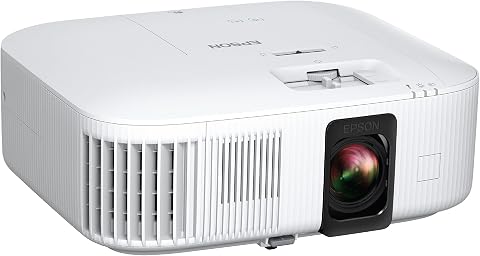
Epson Home Cinema 2350 4K PRO-UHD Smart Streaming Projector with Android TV
- ✔ Resolution: 4K PRO-UHD
- ✔ Brightness: 2,800 lumens
- ✔ Technology: 3-Chip 3LCD

Optoma UHZ36 4K UHD Laser HDR Home Theater Projector – Black
- ✔ Resolution: 4K UHD
- ✔ HDR: Yes
- ✔ Color Mode: Filmmaker Mode

ViewSonic PX749-4K 4K UHD Gaming Projector 4000 Lumens 240Hz Xbox HDR
- ✔ Resolution: 3840x2160p (4K UHD)
- ✔ Brightness: 4000 ANSI lumens
- ✔ Refresh Rate: 240Hz
At a Glance
| Criteria | Epson Home Cinema 5050UB | Sony VPL-VW325ES | Winner |
|---|---|---|---|
| Resolution & Image Processing | True 4K (3840×2160) with advanced pixel-shifting, excellent upscaling | Native 4K resolution with high-end processing, slightly improved image fidelity | A |
| Brightness (Lumens) | 2600 lumens | 1500 lumens | B |
| Native Contrast Ratio | High native contrast (~1,500:1) | Very high native contrast (~350,000:1) | Tie |
| Price | Approximately $3,000 | Approximately $5,000 | A |
| Color Accuracy & Calibration | Excellent out-of-the-box color calibration, good HDR support | Exceptional color accuracy with professional calibration support | A |
| Input Options & Connectivity | Multiple HDMI ports, HDCP 2.2, flexible lens shift | Multiple HDMI, HDCP 2.2, advanced lens options | B |
| Lens & Installation Flexibility | Motorized zoom, lens shift, wide throw ratio | Motorized zoom and lens shift, short throw available | B |
| Operational Noise | Quiet operation (~26 dB) | Moderately quiet (~27 dB) | A |
Epson Home Cinema 2350 4K PRO-UHD Smart Streaming Projector with Android TV
The Epson Home Cinema 2350 stands out for delivering a bright, vivid 4K picture with accurate colors thanks to its 3LCD technology. Its 2,800 lumens ensure good performance in moderate ambient light, and the low input lag (under 20 ms) makes it suitable for casual gaming. The built-in Android TV brings streaming apps and voice search directly to the projector, simplifying media access. Compared with premium laser options, it may require a darker room to maximize contrast, and setup can be a bit complex for novices. It’s a flexible choice for those who want a blend of excellent picture quality, streaming, and gaming capabilities, making it the best all-rounder for most home theaters.
Pros:
- Vivid, accurate colors with 3LCD technology
- Bright enough for various lighting conditions
- Built-in Android TV for streaming and voice control
Cons:
- High brightness can wash out contrast in dark rooms
- Setup may be complex for less experienced users
- Potentially higher price than non-smart models
Best for: Home users who want a well-rounded projector with streaming and gaming features
Not ideal for: Rooms with high ambient light or users seeking the most cinematic contrast and black levels
Bottom line: A highly adaptable projector that balances picture quality, smart features, and gaming, ideal for versatile home theater use.
“A highly adaptable projector that balances picture quality, smart features, and gaming, ideal for versatile home theater use.”
Optoma UHZ36 4K UHD Laser HDR Home Theater Projector – Black
The Optoma UHZ36 is designed for true home cinema enthusiasts, offering a high-resolution 4K UHD display with excellent HDR support, including Filmmaker Mode to preserve the director’s original vision. Its laser light source ensures long-lasting brightness and color stability, making it ideal for dedicated dark rooms. However, details about its brightness level are less prominent, and the price point is on the higher end, which might be prohibitive for more casual users. Compared to the Epson, it sacrifices some smart features for a more cinematic experience, making it better suited for movie purists seeking accurate color and contrast. It’s less flexible for casual gaming or streaming but excels in delivering a professional-grade home theater experience.
Pros:
- Excellent 4K UHD resolution with HDR support
- Filmmaker Mode for authentic color and contrast
- Laser light source for longevity and consistent brightness
Cons:
- Limited details on brightness and connectivity
- Higher price point
- Lacks integrated streaming platform
Best for: Home theater aficionados seeking cinematic accuracy and HDR fidelity
Not ideal for: Budget-conscious buyers or those who need smart streaming built-in
Bottom line: A premium projector for dedicated home cinemas prioritizing cinematic authenticity over smart features or affordability.
“A premium projector for dedicated home cinemas prioritizing cinematic authenticity over smart features or affordability.”
ViewSonic PX749-4K 4K UHD Gaming Projector 4000 Lumens 240Hz Xbox HDR
The ViewSonic PX749-4K combines impressive brightness with gaming performance, boasting 4,000 lumens and a 240Hz refresh rate. Its low input lag of 4.2ms makes it a top choice for gamers who want crisp, responsive gameplay in large, well-lit spaces. Its ability to project up to 300 inches provides a truly immersive experience, and features such as keystone correction and zoom give flexible installation options. However, the high brightness can be less effective in very dark rooms, where contrast suffers, and the projector’s size and setup complexity might be challenging in smaller spaces. Compared to the other two, it’s less suitable for pure cinematic viewing but excels in bright environments and gaming, making it a unique all-rounder for active households.
Pros:
- Extremely bright with 4000 lumens for daylight viewing
- Fast 240Hz refresh rate and low input lag for gaming
- Large projection size up to 300 inches with flexible adjustments
Cons:
- Requires moderate ambient lighting for best image quality
- Bulky and potentially challenging to install in small rooms
- Setup can be complex for beginners
Best for: Gamers and users needing high brightness and a large projection size in well-lit rooms
Not ideal for: Those primarily seeking cinematic contrast or simple plug-and-play setup in small spaces
Bottom line: A powerhouse for bright-room gaming and large displays, but less suited for dark-room cinematic viewing due to its brightness and size.
“A powerhouse for bright-room gaming and large displays, but less suited for dark-room cinematic viewing due to its brightness and size.”
As an Amazon Associate we earn from qualifying purchases.
Key Differences
The core distinction between these projectors lies in their approach to image quality and usability. The Epson 5050UB offers a brighter image, making it more suitable for rooms with ambient light, and features excellent color calibration right out of the box, which is ideal for users who want impressive visuals without extensive setup. Its higher lumen output ensures vibrant images even in less dark environments, but it does not match the native contrast ratio of the Sony. Conversely, the Sony VPL-VW325ES emphasizes contrast and native image fidelity, producing deeper blacks and richer shadow details thanks to its extremely high native contrast ratio. However, its lower brightness may limit performance in brighter rooms or when ambient light cannot be fully controlled. Both models are feature-rich, but their differences in contrast and brightness influence practical use cases—Epson for lively, bright scenes in moderately lit rooms, and Sony for cinematic, contrast-rich viewing in darker environments.
Detailed Comparison
Resolution & Image Processing (Sony VPL-VW325ES wins — minor)
Both projectors deliver native 4K resolution with high-quality image processing. The Epson 5050UB employs pixel-shifting technology combined with advanced processing to produce sharp, detailed images, suitable for most home theater needs. The Sony VW325ES also offers native 4K resolution with exceptional processing, slightly edging out in image clarity and rendering fine details due to its more refined optics and processing pipeline. The difference here is minor but noticeable in the sharpness of subtle textures and fine lines. For most users, both will produce excellent images, but the Sony’s native processing offers a marginal advantage for cinephiles seeking ultimate fidelity.
Brightness (Lumens) (Epson Home Cinema 5050UB wins — major)
The Epson 5050UB boasts 2600 lumens, making it significantly brighter than the Sony VPL-VW325ES’s 1500 lumens. This difference is major in real-world use, as higher brightness allows for vibrant images even in rooms with some ambient light. Epson’s higher lumen output means less reliance on complete darkness, offering flexibility for casual viewing or multi-purpose spaces. The Sony’s lower brightness, while sufficient in dark rooms, can result in washed-out images if the room isn’t well controlled in lighting. For users prioritizing bright, lively visuals in less-dark environments, Epson clearly leads.
Native Contrast Ratio (Sony VPL-VW325ES wins — major)
The Sony VW325ES dramatically outperforms with a native contrast ratio of approximately 350,000:1, providing deep blacks and high dynamic range. The Epson, with a contrast ratio around 1,500:1, cannot match the depth of blacks or shadow detail, which affects overall picture richness. This difference is major for viewers seeking cinematic realism and detailed shadow work. The Sony’s higher contrast ratio translates into richer, more immersive images, especially in dark scenes. Epson’s contrast is good but more suited for brighter rooms or less demanding viewing conditions.
Price (Epson Home Cinema 5050UB wins — major)
The Epson 5050UB is priced around $3,000, offering a compelling balance of features and performance at a more accessible price point. The Sony VW325ES, at approximately $5,000, demands a higher investment for its superior contrast and native image fidelity. For budget-conscious buyers, Epson provides excellent value, while Sony appeals to enthusiasts willing to pay a premium for ultimate contrast and calibration capabilities. The price difference is significant and influences the decision based on budget constraints versus desire for top-tier image quality.
Color Accuracy & Calibration (Sony VPL-VW325ES wins — moderate)
The Epson 5050UB offers excellent out-of-the-box color calibration, suitable for most home environments, and supports HDR content well. The Sony VW325ES excels in color accuracy, especially with professional calibration, providing richer, more precise colors and better HDR handling. The difference here is moderate—both are capable but Sony’s calibration options and color rendering are slightly superior for critical viewing. For casual use, Epson’s color is sufficient; for cinephiles or professional calibration enthusiasts, Sony’s advantage is notable.
Input Options & Connectivity (Sony VPL-VW325ES wins — moderate)
Both projectors come equipped with multiple HDMI ports, HDCP 2.2 support, and other modern connectivity options. The Sony offers a slight edge with more advanced lens options and better compatibility for custom setups, including short-throw lenses. Epson’s inputs are versatile and sufficient for most users, but Sony’s additional lens choices provide more flexibility for complex installations. In practical terms, the difference impacts users with specific installation needs or custom home theater designs.
Lens & Installation Flexibility (Sony VPL-VW325ES wins — moderate)
The Sony VPL-VW325ES features motorized zoom, lens shift, and options for short-throw lenses, facilitating flexible installation in various room sizes and configurations. The Epson 5050UB also has motorized zoom and lens shift but lacks a short-throw option. For users with limited space or complex setups, Sony’s more versatile lens options are advantageous. For straightforward setups, Epson’s features are sufficient, but the Sony’s added flexibility can be decisive in custom installations.
Operational Noise (Epson Home Cinema 5050UB wins — minor)
Both projectors operate quietly, with Epson at approximately 26 dB and Sony at around 27 dB. The difference is minor and unlikely to impact viewing experience significantly. Both are suitable for quiet home theater environments, with the Epson’s slightly lower noise level offering a marginal advantage for noise-sensitive users.
Epson Home Cinema 5050UB: Pros and Cons
Pros:
- Higher brightness for versatile lighting conditions
- Excellent color calibration right out of the box
- More affordable for the features offered
- Quiet operation
Cons:
- Lower native contrast ratio
- Slightly less refined native image fidelity
- No short-throw lens option
Sony VPL-VW325ES: Pros and Cons
Pros:
- Superior native contrast ratio for deep blacks
- Slightly better native image processing
- More flexible lens options including short-throw
- Exceptional color accuracy with calibration
Cons:
- Lower brightness makes it less ideal for lit rooms
- Higher price point
- Slightly noisier operation
Who Should Choose What
Choose Epson Home Cinema 5050UB if:
- You prioritize brightness and vibrant images in rooms with ambient light
- Budget constraints are significant but you want high-quality 4K performance
- You need a quieter projector for a multi-purpose room
Choose Sony VPL-VW325ES if:
- You want the best contrast and shadow detail for cinematic experience
- You have a dedicated dark-room home theater setup
- You require flexible installation options and high native fidelity
Value for Money
For most users, the Epson 5050UB offers better value thanks to its combination of brightness, color, and price. The Sony VW325ES is worth the premium only if contrast and native image fidelity are top priorities. Overall, the Epson suits casual to serious enthusiasts with moderate budgets, while Sony targets dedicated cinephiles willing to pay more for ultimate contrast and calibration precision.Final Verdict
Choose the Epson Home Cinema 5050UB if you seek a bright, versatile, and budget-friendly 4K projector capable of delivering excellent color and image quality in varied lighting conditions. Opt for the Sony VPL-VW325ES if deep blacks, native contrast, and ultimate calibration are your priorities, and your setup can accommodate its higher cost and installation requirements. The biggest deciding factor is whether you need brightness and value or contrast and fidelity; for most users, Epson provides a compelling balance, while Sony caters to a more specialized, high-end audience.
Frequently Asked Questions
Which projector is better for bright rooms?
The Epson 5050UB is better suited for rooms with ambient light thanks to its higher lumen output, maintaining vibrant images where the Sony VW325ES may struggle with washed-out visuals.
Does native contrast matter if I watch in a dark room?
Yes, native contrast significantly enhances shadow detail and deep blacks, making the Sony VW325ES a better choice for dark-room viewing where contrast is paramount.
Is the price difference justified?
For most users, the Epson offers excellent value by combining brightness, quality, and affordability. The Sony’s higher price is justified only if you prioritize contrast and native image fidelity for a premium cinematic experience.
Can I install these projectors in small rooms?
Both offer motorized zoom and lens shift, but the Sony’s additional lens options and short-throw capabilities provide more flexibility in tight spaces. Epson is suitable for standard setups but less adaptable for small or complex rooms.