
TL;DR
Livingetc published a sofa-care guide drawing on advice from cleaning experts. It recommends checking upholstery labels before using cleaners, treating stains gently and allowing upholstery to dry fully; the advice may vary by fabric and manufacturer.
Livingetc has published a sofa-care guide featuring cleaning advice from household-care experts, including a five-step method for refreshing upholstery and guidance on checking fabric labels before cleaning. The recommendations matter because using the wrong cleaner or washing method can damage a sofa, while safe routine care can help keep it usable and presentable.

Get business pricing on your home office setup
- Business-only prices and quantity discounts
- Tax-exempt purchasing
- Multiple users, one account, clear invoices
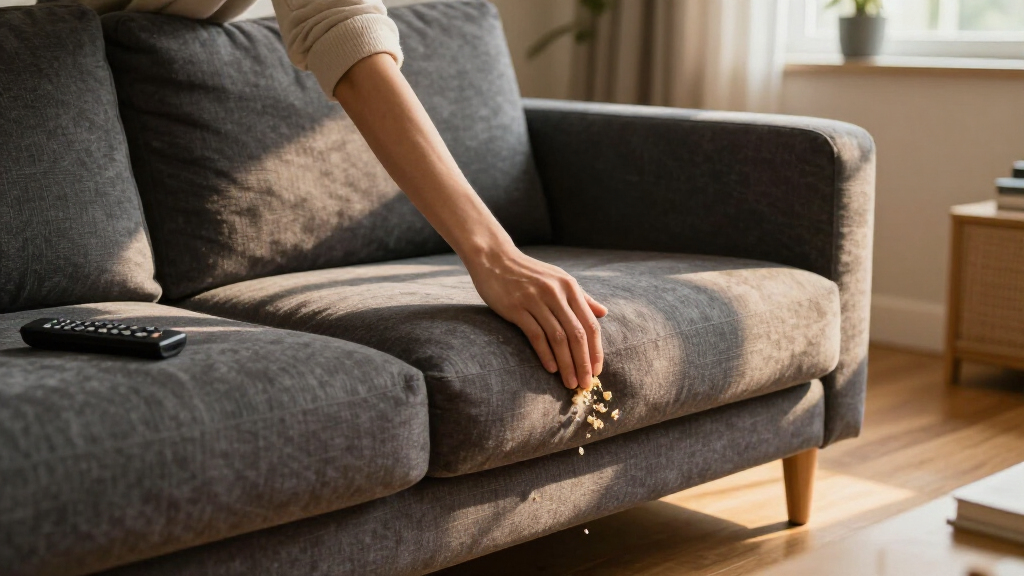
The guide attributes its basic cleaning method to Marla Mock, a cleaning expert and president of Molly Maid. It advises brushing the upholstery with a clean white towel or stiff brush to loosen dried material, then sprinkling baking soda over the sofa and leaving it for at least 20 minutes and up to an hour. The powder should then be vacuumed away with a brush attachment.
For remaining stains, Mock suggests mixing a teaspoon of dishwashing liquid, a tablespoon of white vinegar and a cup of warm water, then adding a teaspoon of baking soda. She recommends spraying the solution onto a white cloth rather than directly saturating the upholstery, and gently dabbing or rubbing the affected area. The guide says to let the sofa air-dry completely and avoid sitting on it for several hours or until it is dry.
Cleaning frequency depends on use and the type of sofa. Elizabeth Shields, operations manager of Super Cleaning Service Louisville, recommends a seasonal deep clean, according to the report. She says a weekly vacuum can help with routine upkeep and notes that removable covers may need deep cleaning only twice a year. For cushions, the guide recommends brushing first, spot-treating with minimal moisture and checking the care label before laundering covers.
Avoiding Damage During Sofa Cleaning
The practical issue is not simply removing visible dirt: upholstery can respond differently to water, solvents and friction. Following a generic cleaning recipe without checking the manufacturer’s instructions could lead to discoloration, shrinkage or other damage. The guide’s repeated emphasis on fabric-specific care gives readers a reason to check the sofa tag before applying any treatment.
Its advice also distinguishes light maintenance from deeper cleaning. Vacuuming, brushing and prompt spot treatment can address everyday debris, while a more thorough clean may take longer and require the upholstery to remain unused as it dries. That matters for households planning around a sofa that is used daily, particularly where pets, spills or removable covers are involved.
The recommendations are general household guidance, not a guarantee that a particular mixture is safe for every sofa. Readers should follow the maker’s care instructions and test any permitted cleaner on a small, inconspicuous area first. Valuable, delicate or badly stained upholstery may require a professional cleaner.
Products Worth Considering

eufy C28 Robot Vacuum and Mop with 15,000 Pa Suction

Dyson V15 Detect Cordless Stick Vacuum

Dyson Cyclone V10 Origin Cordless Vacuum
As an affiliate, we earn on qualifying purchases.
Check the Upholstery Care Code
The report says upholstery labels commonly use letter codes to indicate suitable cleaning methods. A W or WS code permits water-based upholstery cleaners; S or SW indicates that solvent cleaners are safe; and X means vacuuming and light brushing only, with water- and solvent-based cleaners to be avoided. The exact instructions on the product label remain the relevant guide for an individual sofa.
The article also notes that sofa covers may be washable, but readers should check the laundering advice before putting them in a machine. It cautions against hot water because it can shrink or fade some fabrics. The supplied source excerpt ends before its full cover-washing advice, so it does not establish further washing or drying instructions.
““Next up, sprinkle the entire couch with baking soda, and let it sit for at least 20 minutes, up to an hour.””
— Marla Mock, cleaning expert and president of Molly Maid, as quoted by Livingetc
What the Cleaning Advice Cannot Confirm
The supplied report does not identify a publication date, and its excerpt cuts off partway through the section on washing sofa covers. It therefore does not provide a complete account of machine-washing instructions. The article’s general cleaning mixture is not confirmed as suitable for every upholstery material, finish or stain, and no product-by-product compatibility testing is described.
The report also does not specify how readers should handle every stain type, including red wine, despite mentioning stain removal as a topic. Results may depend on the fabric, the age and nature of the stain, and the manufacturer’s care directions. Readers should not assume that a method suited to one sofa applies to another.
Check Labels Before Treating Stains
For readers applying the advice, the immediate next step is to find the sofa’s care label and follow its cleaning code and laundering instructions. Start with brushing or vacuuming, use only a cleaner compatible with the fabric, and test it on a hidden area before treating a visible stain. Avoid soaking upholstery, and let cleaned fabric dry fully before using the sofa again.
The source does not announce a follow-up study, product test or additional expert guidance. Any further recommendations from Livingetc or the sofa manufacturer would be needed to clarify fabric-specific methods or washing instructions not included in the supplied excerpt.
Key Questions
How often should a sofa be deep-cleaned?
Livingetc quotes cleaning expert Elizabeth Shields recommending a seasonal deep clean. She also describes a weekly vacuum as part of routine upkeep. Frequency can vary with use, pets, spills and the sofa maker’s care instructions.
What do the sofa cleaning codes mean?
According to the guide, W or WS allows water-based upholstery cleaners, S or SW allows solvent cleaners, and X calls for vacuuming and light brushing only. Check the actual label before cleaning.
Can I put sofa covers in the washing machine?
Some covers can be machine-washed, but the guide advises checking the manufacturer’s label first. It warns that hot water can shrink or fade some fabrics, and the supplied excerpt does not give complete washing instructions.
How should I treat a sofa stain?
The guide recommends using a compatible cleaner on a white cloth and gently dabbing rather than saturating the upholstery. Check the care code and test the cleaner on a hidden area first; the source does not confirm that one recipe works for every fabric or stain.
Source: rss