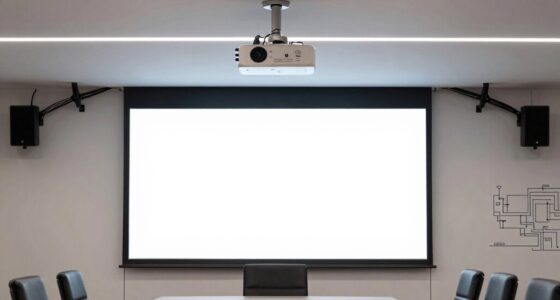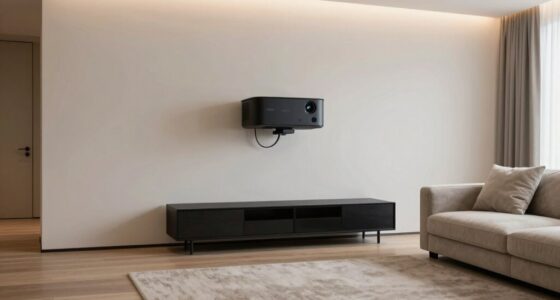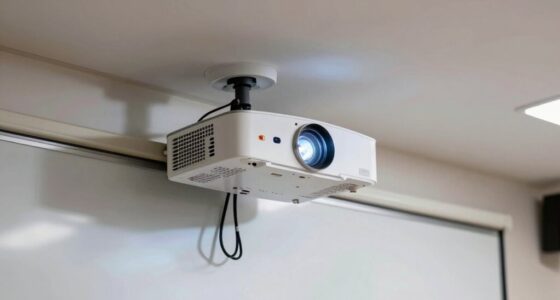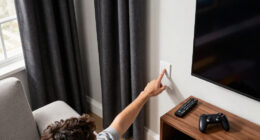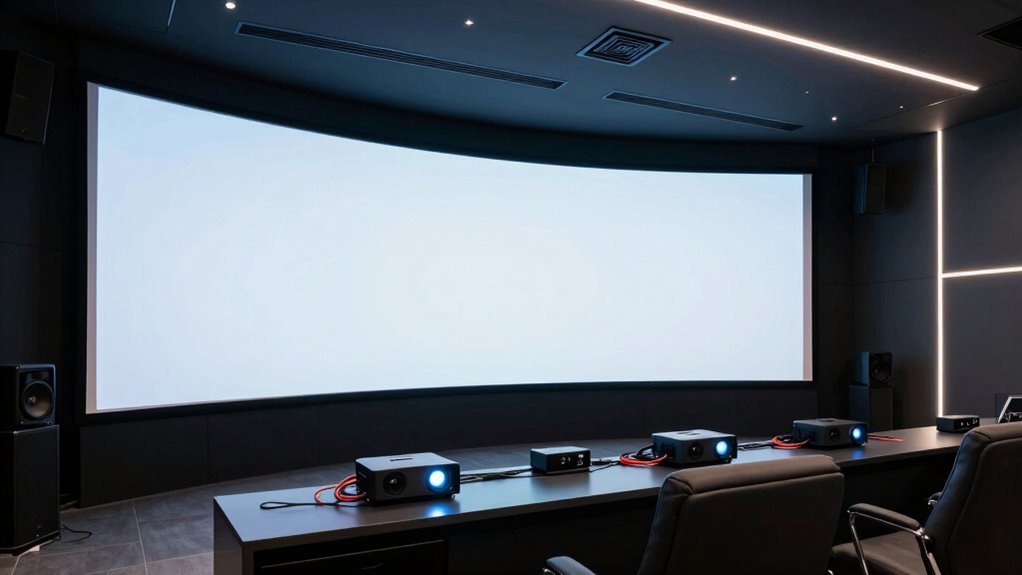
When planning your rear projection room, focus on ideal layout, minimizing ambient light, and choosing adjustable, indirect lighting to prevent glare and reflections. Proper equipment placement is key to maintaining sharp, vibrant images from different angles. Address acoustics with panels and soundproofing to improve sound clarity and reduce echo. Consider how lighting and sound treatments work together to create a balanced environment. To discover detailed tips for achieving the best setup, explore the next steps carefully.

Get business pricing on your home office setup
- Business-only prices and quantity discounts
- Tax-exempt purchasing
- Multiple users, one account, clear invoices
Key Takeaways
- Ensure optimal room layout to minimize ambient light and prevent projection washout.
- Use dimmable, indirect lighting to reduce glare and reflections on the projection surface.
- Strategically place acoustic treatments to improve sound clarity and reduce echo.
- Design room size and shape to balance lighting control and acoustic performance.
- Coordinate lighting and soundproofing to create a balanced environment for high-quality visuals and audio.
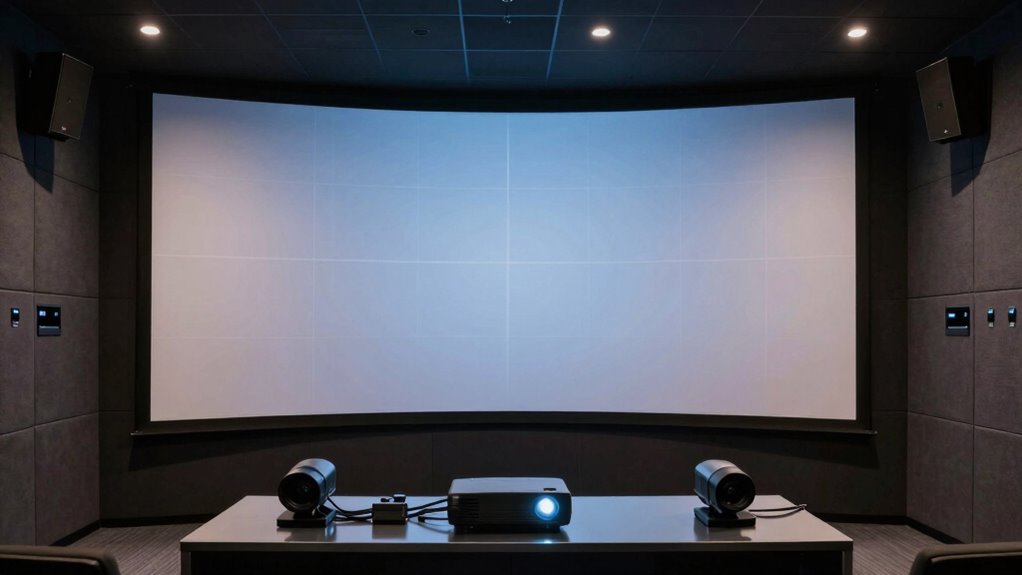
Planning a rear projection room requires careful attention to space, lighting, and equipment placement to guarantee ideal picture quality. You want to minimize ambient light that can wash out the projection, so consider installing dimmable, indirect lighting that doesn’t reflect off the screen. Focus on controlling light sources and selecting fixtures that won’t interfere with the projection surface. Proper lighting design ensures your projection remains sharp, colorful, and easy to view from different angles within the space. Additionally, choosing the right contrast ratio can significantly improve the depth and clarity of your images in varying lighting conditions.
Effective lighting design minimizes glare and enhances image clarity for optimal rear projection quality.
Equally important is acoustic treatment. A rear projection room often hosts audio-visual presentations or entertainment, so sound quality must be be crisp and immersive. Without proper acoustic treatment, echoes, reverberations, and background noise can distort audio, making dialogue hard to understand or music less impactful. To prevent this, add sound-absorbing materials such as acoustic panels, carpets, and curtains that reduce echo and dampen external noise. Position these materials strategically around the room—especially on walls and ceilings—to maximize sound clarity. Doing so creates a balanced environment where sight and sound complement each other, heightening the overall viewing experience. Incorporating soundproofing solutions can also help contain sound within the room, preventing disturbances from outside noise sources. Moreover, understanding the room’s size and shape can influence your choice of acoustic and lighting treatments, ensuring optimal sound and image quality. Also, considering the room’s ventilation system can help prevent unwanted noise from equipment or airflow from disrupting your audiovisual experience.
When planning the layout, think about how lighting and acoustics interact. For instance, placing soundproof panels near light fixtures can help absorb sound without affecting lighting design. Conversely, choosing light fixtures that don’t produce vibrations or noise will keep audio quality pristine. The room’s size and shape also influence your decisions. Larger spaces may require more extensive acoustic treatments and carefully planned lighting zones, while smaller rooms benefit from integrated lighting and soundproofing solutions to prevent echoing.
dimmable indirect LED lighting for home theater
As an affiliate, we earn on qualifying purchases.
As an affiliate, we earn on qualifying purchases.
Frequently Asked Questions
How Much Space Is Needed for Rear Projection Setup?
You’ll need at least 15 to 20 feet of space for a rear projection setup, depending on your screen size and placement. Make sure your room dimensions accommodate the screen placement, projector, and viewing distance. Keep enough room behind the projector for ventilation and maintenance. Proper planning guarantees a clear image and comfortable viewing. Measure carefully and adjust room layout to fit your specific screen size and projector model.
What Are the Best Projector Types for Room Planning?
You should consider LCD, DLP, or LCoS projectors for room planning, as they offer reliable projection technology suitable for various room sizes. LCD projectors provide bright, vivid images, while DLP models deliver sharp contrast and smooth motion. LCoS projectors combine qualities of both. Pay attention to screen materials like high-gain or matte finishes to optimize image quality, ensuring your projection technology aligns with your room’s lighting and space conditions for the best results.
How Do Lighting Conditions Affect Rear Projection Quality?
Lighting levels largely dictate your rear projection’s clarity. Bright ambient lighting can blur images, making the visuals less vivid and harder to see. To keep quality high, you need sufficient projector brightness—think powerful lumens—and controlled lighting conditions. Dim the lights or block out windows for better contrast. By managing ambient lighting and selecting a projector with the right brightness, you’ll guarantee your images stay sharp, striking, and stunning.
What Maintenance Is Required for Rear Projection Screens?
You need to regularly clean your rear projection screen with a soft, lint-free cloth to prevent dust buildup that can affect image clarity. Additionally, perform projector calibration periodically to ensure color accuracy and focus. Keep the projector’s lenses and filters clean, and check connections for stability. Routine maintenance like these keeps your rear projection system working smoothly, delivering sharp, vibrant images and prolonging the lifespan of your equipment.
Can Existing Rooms Be Adapted for Rear Projection?
Think of your room as a canvas awaiting new art; yes, existing rooms can be adapted for rear projection. You’ll need to optimize room acoustics to reduce echo, ensuring clear visuals. Focus on furniture placement to avoid obstructing the projection path and maintain a clean viewing area. With some adjustments, your space can transform seamlessly into a sleek rear projection environment, blending functionality with aesthetic harmony.
acoustic panels for room soundproofing
As an affiliate, we earn on qualifying purchases.
As an affiliate, we earn on qualifying purchases.
Conclusion
Planning your rear projection room carefully can dramatically enhance your viewing experience. Keep in mind that a well-designed space can improve image quality and reduce glare, making every movie night more enjoyable. Did you know that rear projection screens can be up to 50% brighter than front projection setups in well-optimized rooms? By paying attention to factors like lighting, screen placement, and room layout, you’ll create a perfect environment for immersive viewing that you’ll love for years to come.
rear projection screen with high contrast ratio
As an affiliate, we earn on qualifying purchases.
As an affiliate, we earn on qualifying purchases.
As an affiliate, we earn on qualifying purchases.
Columbus Day / Indigenous Peoples' Day Picks
long weekend sales
As an affiliate, we earn on qualifying purchases.