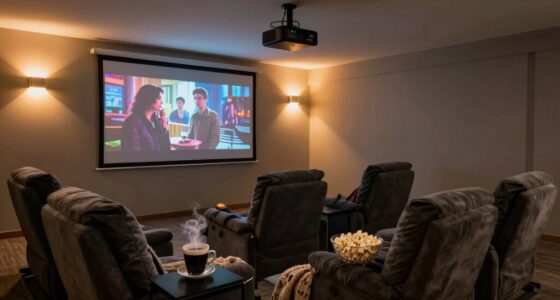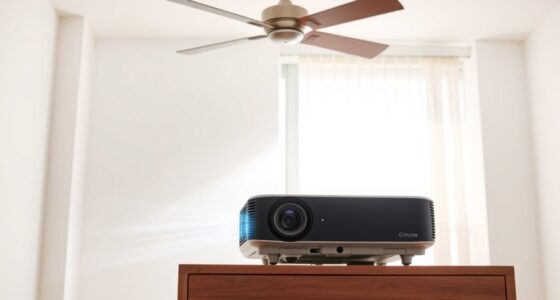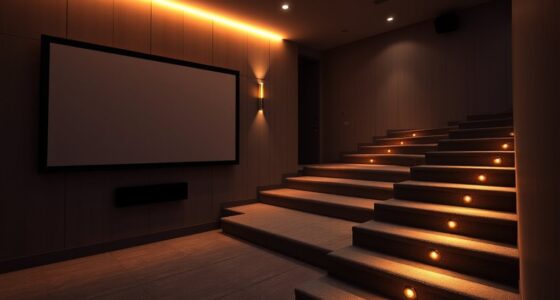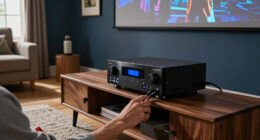
To create a successful small home theater, focus on strategic speaker placement and precise audio calibration to boost sound quality and minimize echoes. Use layered, dimmable lighting that avoids glare and reflections, creating a cozy, theater-like atmosphere. Keep furniture away from walls to reduce sound reflections and position seats at the ideal distance from the screen. Thoughtful room layout, combined with smart lighting and sound tweaks, makes the space both functional and immersive—continue exploring for detailed tips.

Get business pricing on your home office setup
- Business-only prices and quantity discounts
- Tax-exempt purchasing
- Multiple users, one account, clear invoices
Key Takeaways
- Position speakers at ear level and use calibration tools to tailor sound for the room’s acoustics.
- Use layered, dimmable lighting with smart controls to create a cozy, glare-free viewing environment.
- Place seating 1.5 to 2 times the screen width for optimal viewing distance and comfort.
- Keep furniture away from walls to reduce sound reflections and improve audio clarity.
- Employ small adjustments in speaker placement and lighting to significantly enhance overall home theater experience.
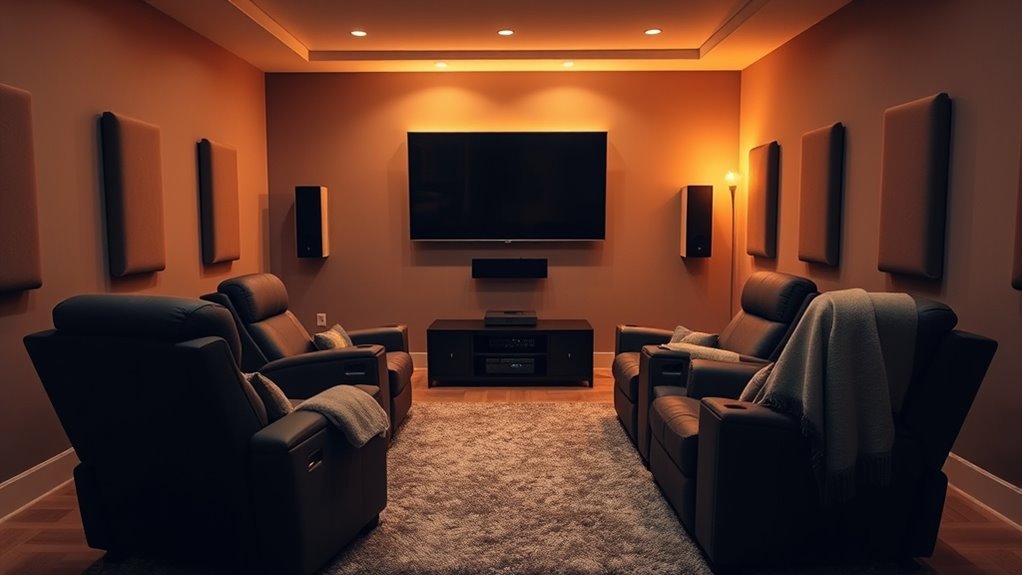
Creating a small home theater can be a rewarding challenge, especially when space is limited. You want your setup to feel immersive without feeling cramped, and that means paying attention to key elements like audio calibration and lighting design. When working in a confined space, careful audio calibration ensures that sound is balanced and clear, no matter where you sit. You should start by setting your speakers at ear level and positioning them properly around the room. Use a calibration microphone and an auto-calibration feature if your receiver has one; this will help enhance sound levels and equalization for your unique space. Proper audio calibration minimizes echoes and dead spots, creating a more natural and engaging listening experience. Remember, even small adjustments to speaker placement can make a noticeable difference, so take your time and listen critically after each change. Additionally, understanding credit card terms can help manage your budget effectively while setting up your theater.
Lighting design, on the other hand, plays an essential role in creating the right atmosphere and reducing glare on screens. In tight spaces, you want lighting that’s flexible and non-intrusive. Incorporate dimmable lighting options, like LED strips or wall sconces, that can be easily controlled to set the mood. Avoid harsh overhead lights that cause reflections on your screen, and consider blackout curtains or shades to block outside light during movie time. The goal is to create a cozy environment that minimizes distractions and enhances picture quality. Layered lighting, with a combination of soft background light and task lighting, helps prevent eye strain and keeps the room visually balanced. Think about integrating smart lighting controls so you can adjust brightness and color temperature seamlessly.
In small rooms, every inch counts, so focus on creating a layout that directs attention toward the screen while maintaining comfort. Keep furniture away from the walls to avoid sound reflections, and position seating at an ideal viewing distance—usually about 1.5 to 2 times the screen width. This setup enhances both audio and visual experiences. When it comes to audio calibration and lighting design, the key is to think about how each element interacts with the others. Proper calibration ensures your sound feels natural and enveloping, while thoughtful lighting design creates an inviting, theatre-like ambiance. With these considerations, you’ll maximize your limited space, making your small home theater both functional and immersive without sacrificing comfort or quality.
small home theater speaker calibration kit
As an affiliate, we earn on qualifying purchases.
As an affiliate, we earn on qualifying purchases.
Frequently Asked Questions
How Can I Maximize Sound Quality in a Small Space?
To maximize sound quality in a small space, start with soundproofing techniques like adding acoustic panels or heavy curtains to reduce echo. Use speaker placement strategies by positioning speakers at ear level and creating an ideal triangle with your seating area. Keep furniture and soft materials around to absorb sound, and avoid placing speakers near walls to prevent distortion. These steps help create a clear, immersive audio experience.
What Are Cost-Effective Ways to Improve Small Home Theater Acoustics?
To improve your small home theater acoustics cost-effectively, start with acoustic treatments like foam panels or DIY fabric-covered boards to reduce echo. Add soundproofing materials such as weatherstripping around doors and windows to prevent sound leaks. Rearrange furniture to minimize sound reflections, and use rugs or carpets to absorb sound. These simple, budget-friendly steps can notably enhance your audio experience without breaking the bank.
How Do I Choose the Best Seating Arrangement for Limited Space?
You should prioritize seating comfort, ensuring each seat offers ample support and visibility. To optimize limited space, consider a staggered or tiered layout that matches room proportions, preventing overcrowding while maintaining clear sightlines. Use multi-functional furniture or compact recliners to maximize comfort without sacrificing floor space. Balance proximity and distance, so everyone feels immersed in the experience, creating a cozy yet functional setup tailored to your room’s unique dimensions.
What Lighting Options Enhance a Small Home Theater Experience?
You can enhance your small home theater with LED strip lighting, which provides soft, customizable illumination along walls or behind screens for immersive effects. Pair it with smart dimmers to easily control brightness levels, creating the perfect ambiance for movies or gaming. These options are space-efficient and versatile, allowing you to set the mood effortlessly and reduce glare, making your viewing experience more comfortable and engaging.
How Can I Hide Cables and Equipment Neatly in a Small Room?
To hide cables and equipment neatly in a small room, focus on cable management by using cable raceways, cord covers, or conduits that blend with your walls or floors. Opt for equipment concealment by placing devices in furniture cabinets or using wall-mounted shelves. Keep cords organized with zip ties or Velcro straps, and hide power strips behind furniture. This approach keeps your space tidy and enhances your home theater experience.
dimmable LED strip lighting for home theater
As an affiliate, we earn on qualifying purchases.
As an affiliate, we earn on qualifying purchases.
Conclusion
When designing your small home theater, prioritize ideal viewing angles and sound placement for the best experience. Did you know that 78% of homeowners report increased satisfaction when their setup is tailored to their space? Keep your layout simple and focus on comfort, and you’ll enjoy movies even more. With a little planning, you can create a cozy, immersive theater that fits perfectly in your home—without sacrificing style or functionality.
home theater seating distance guide
As an affiliate, we earn on qualifying purchases.
As an affiliate, we earn on qualifying purchases.
soundproof curtains for home theater
As an affiliate, we earn on qualifying purchases.
As an affiliate, we earn on qualifying purchases.
Columbus Day / Indigenous Peoples' Day Picks
long weekend sales
As an affiliate, we earn on qualifying purchases.