
For most home theater buyers, I’d start with the Denon AVR-X1800H: its 7.2-channel layout and current video features make it a flexible centerpiece for a growing system. The Onkyo TX-NR6100 is a strong alternative for buyers who want network features and THX certification, while the Denon AVR-S570BT suits simpler 5.2-channel setups. The main tradeoff is between a straightforward receiver for a modest speaker layout and a more capable model that leaves room for surround or height channels. HDMI features, room size, setup complexity, and whether you need speakers included all affect the right choice. Read on for the full comparison and recommendations by buyer type.

Get business pricing on your home office setup
- Business-only prices and quantity discounts
- Tax-exempt purchasing
- Multiple users, one account, clear invoices
Complete the kit


Key Takeaways
- Seven-channel receivers give the clearest upgrade path: the Denon AVR-X1800H, Onkyo TX-NR6100, and Denon AVR-S770H offer more room to expand than the 5.2-channel options.
- HDMI capabilities vary across the lineup: newer 4K/120 and 8K support appears on several models, while the Sony STR-DH590 and Yamaha YHT-4950U focus on more basic 4K systems.
- Complete systems trade flexibility for convenience: the Yamaha YHT-4950U and YHT-4970U include speakers, while most entries require a separate speaker purchase.
- Similar model names can hide meaningful differences: compare the Yamaha RX300A with its renewed listing and the RX500A by condition, channel layout, and stated features before choosing.
- Channel count should match the room and plan: 5.2-channel models fit simpler layouts; 7.2-channel receivers are better suited to buyers planning additional surrounds or height speakers.
| Denon AVR-X1800H 7.2-Channel AV Receiver with Wi-Fi and Bluetooth | 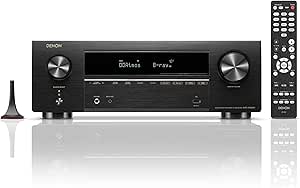 | Best Overall | Channels: 7.2 | Output power: 80 watts per channel | Video passthrough: 8K/60Hz and 4K/120Hz | VIEW LATEST PRICE | See Our Full Breakdown |
| Donner MAMP8 5.2-Channel AV Receiver with 4K HDR Pass-Through |  | Best for Analog Sources and Tone Controls | Channels: 5.2 | Speaker output: 75W × 2 front and 38W × 3 surround/center at 4Ω | Subwoofer support: 2 active subwoofers | VIEW LATEST PRICE | See Our Full Breakdown |
| Yamaha YHT-4950U 4K Ultra HD 5.1-Channel Home Theater System with Bluetooth |  | Best Complete Starter System | Audio configuration: 5.1-channel | Included components: AV receiver, five speakers, subwoofer, speaker wire | HDMI ports: 4 | VIEW LATEST PRICE | See Our Full Breakdown |
| Yamaha RX500A 7.2-Channel Home Theater AV Receiver |  | Best for Gaming and Network Streaming | Channels: 7.2 | Supported speaker layouts: 5.2.2 and 7.2 | Output power: 70 watts | VIEW LATEST PRICE | See Our Full Breakdown |
| Denon AVR-S570BT 5.2-Channel 8K AV Receiver |  | Best for a Straightforward 8K 5.2 System | Channels: 5.2 | Output power: 70 watts per channel | HDMI ports: 4 inputs, 1 output | VIEW LATEST PRICE | See Our Full Breakdown |
| Yamaha YHT-4970U 5.1-Channel Home Theater System with Dolby Atmos and 4K/120, 8K/60 HDMI |  | Best Complete 5.1 Package | Receiver: Yamaha RX300A | Audio channels: 5.1 | Included speakers: Two front, one center, and two surround speakers | VIEW LATEST PRICE | See Our Full Breakdown |
| Yamaha RX300A 5.2-Channel Home Theater AV Receiver with Dolby Atmos, 4K/120 and 8K/60 HDMI, and Bluetooth Multipoint |  | Best for Flexible 5.1.2 Setups | Channels: 5.2 | Output power: 70 watts | Supported layout: Up to 3.1.2-channel | VIEW LATEST PRICE | See Our Full Breakdown |
| Pioneer VSX-935 7.2-Channel Network AV Receiver |  | Best for Networked 7.2 Expansion | Channels: 7.2 | Output power: 80 watts per channel (8 ohms, 20 Hz–20 kHz, 2 channels driven) | Audio formats: Dolby Atmos, DTS:X, Dolby Surround, DTS Neural:X | VIEW LATEST PRICE | See Our Full Breakdown |
| Yamaha RX300A 5.2-Channel AV Receiver with Dolby Atmos, 4K/120 and 8K/60 HDMI, and Bluetooth Multipoint (Renewed) | | Best Renewed 5.2-Channel Pick | Channels: 5.2 | Power output: 70 watts | HDMI ports: 5 | VIEW LATEST PRICE | See Our Full Breakdown |
| Onkyo TX-NR6100 7.2-Channel THX Certified Network AV Receiver |  | Best for Gaming and Immersive Audio | Channels: 7.2 | Output power: 100 watts per channel | Audio formats: Dolby Atmos, DTS:X | VIEW LATEST PRICE | See Our Full Breakdown |
| Denon AVR-S770H 7.2-Channel 8K Home Theater Receiver |  | Best for Flexible Gaming and Streaming | Channels: 7.2 | Output power: 75 watts per channel | HDMI ports: 8 | VIEW LATEST PRICE | See Our Full Breakdown |
| Denon AVR-S670H 5.2-Channel 8K Home Theater Receiver |  | Best for Straightforward Five-Channel Systems | Channels: 5.2 | Output power: 75 watts per channel | Video support: 8K passthrough; 4K-to-8K upscaling | VIEW LATEST PRICE | See Our Full Breakdown |
| Sony STR-DH590 5.2-Channel 4K HDR Home Theater AV Receiver with Bluetooth |  | Best for Basic 4K Surround Setups | Channels: 5.2 | Output power: 725 watts | HDMI ports: 4 inputs, 1 output | VIEW LATEST PRICE | See Our Full Breakdown |
| Denon AVR-X1700H 7.2-Channel 8K AV Receiver, 80W per Channel, Built-in HEOS |  | Best for a More Powerful Seven-Channel Setup | Channels: 7.2 | Output power: 80 watts per channel | HDMI inputs: 6 | VIEW LATEST PRICE | See Our Full Breakdown |
| home theater AV receiver | Channels | Connectivity | Audio formats | Output power |
|---|---|---|---|---|
| Denon AVR-X1800H 7.2-Channel A | 7.2 | Wi-Fi, Bluetooth, AirPlay 2, HEOS | Dolby Atmos, DTS:X, DTS Virtual:X | 80 watts per channel |
| Donner MAMP8 5.2-Channel AV Re | 5.2 | Bluetooth 5.3, USB up to 64 GB, RCA, optical, coaxial, phono, FM | — | — |
| Yamaha YHT-4950U 4K Ultra HD 5 | — | HDMI, Ethernet, coaxial, optical, USB, auxiliary, Bluetooth | — | — |
| Yamaha RX500A 7.2-Channel Home | 7.2 | HDMI, optical, coaxial, analog, Wi-Fi, Bluetooth | Dolby Atmos, DTS:X | 70 watts |
| Denon AVR-S570BT 5.2-Channel 8 | 5.2 | Bluetooth, HDMI | Dolby TrueHD, DTS-HD Master | 70 watts per channel |
| Yamaha YHT-4970U 5.1-Channel H | — | — | Dolby Atmos, DTS Virtual:X | — |
| Yamaha RX300A 5.2-Channel Home | 5.2 | — | Dolby Atmos, DTS Virtual:X | 70 watts |
| Pioneer VSX-935 7.2-Channel Ne | 7.2 | Bluetooth, Wi-Fi, USB, HDMI, IR | Dolby Atmos, DTS:X, Dolby Surround, DTS Neural:X | 80 watts per channel (8 ohms, 20 Hz–20 kHz, 2 channels driven) |
| Yamaha RX300A 5.2-Channel AV R | 5.2 | Analog, Bluetooth, coaxial, HDMI, optical | Dolby Atmos, DTS Virtual:X | — |
| Onkyo TX-NR6100 7.2-Channel TH | 7.2 | Bluetooth, Wi-Fi | Dolby Atmos, DTS:X | 100 watts per channel |
| Denon AVR-S770H 7.2-Channel 8K | 7.2 | HDMI, Wi-Fi, Bluetooth, AirPlay 2, HEOS | Dolby Atmos, Dolby TrueHD, DTS:X, DTS Neural:X | 75 watts per channel |
| Denon AVR-S670H 5.2-Channel 8K | 5.2 | Wi-Fi, Bluetooth, HEOS | Dolby TrueHD, Dolby Digital, Dolby Digital Plus, DTS-HD Master Audio | 75 watts per channel |
| Sony STR-DH590 5.2-Channel 4K | 5.2 | Bluetooth, HDMI | — | 725 watts |
| Denon AVR-X1700H 7.2-Channel 8 | 7.2 | Wi-Fi, Bluetooth, Ethernet, HDMI, USB | Dolby Atmos, DTS:X, DTS Virtual:X | 80 watts per channel |
More Details on Our Top Picks
Denon AVR-X1800H 7.2-Channel AV Receiver with Wi-Fi and Bluetooth
The Denon AVR-X1800H is my most balanced pick for a home theater that needs immersive sound, current video support, and built-in streaming. Its 7.2 channels can support a 5.2.2 Dolby Atmos or DTS:X layout, while 8K/60Hz and 4K/120Hz passthrough suit newer TVs and game consoles. Compared with the five-channel Denon AVR-S570BT, it gives you more room to add height speakers and adds Wi-Fi, AirPlay 2, and HEOS for network listening. Its guided setup and color-coded connections also make a more involved system easier to wire. The tradeoff is scale: 80 watts per channel and its stated small-to-medium-room focus make it less compelling for a large room or demanding speakers. Choose it for a flexible system, not maximum power.
Pros:- Seven-channel layout supports Dolby Atmos and DTS:X height-speaker setups
- 8K/60Hz and 4K/120Hz passthrough accommodate compatible displays and consoles
- Wi-Fi, HEOS, AirPlay 2, and Bluetooth provide several listening options
- Guided setup and color-coded connections simplify installation
Cons:- Its 80-watt-per-channel rating and stated room focus may not suit large spaces
- Software update support date is listed as unknown
Best for: Home theater buyers building a 5.2.2 Atmos system who also want Wi-Fi music streaming and 4K/120Hz gaming support
Not ideal for: Owners of large rooms or power-hungry speakers who need more output headroom
- Channels:7.2
- Output power:80 watts per channel
- Video passthrough:8K/60Hz and 4K/120Hz
- HDMI inputs:6
- HDMI outputs:2
- Audio formats:Dolby Atmos, DTS:X, DTS Virtual:X
- Connectivity:Wi-Fi, Bluetooth, AirPlay 2, HEOS
Our verdict“Pick the AVR-X1800H for a versatile, streaming-ready Atmos system in a small or medium-sized room.”
Donner MAMP8 5.2-Channel AV Receiver with 4K HDR Pass-Through
The Donner MAMP8 suits buyers whose system centers on varied wired sources and direct sound adjustment. Alongside HDMI ARC, it has RCA, optical, coaxial, phono, USB, and FM connections, plus separate treble, midrange, and bass controls. That gives it a different emphasis from the Denon AVR-S570BT, which supports Dolby TrueHD and DTS-HD Master audio and is the stronger fit for movie soundtracks that use those formats. The MAMP8 supports up to five speakers and two active subwoofers, but its 4K HDR passthrough and ARC do not make up for its most significant limitation: no Dolby or DTS decoding. Check that your source can provide compatible audio before choosing it for a movie-focused setup. It works best when its broad input selection and manual tone controls matter more than surround-format support.
Pros:- Inputs include phono, RCA, optical, coaxial, USB, FM, and HDMI ARC
- Supports up to five speakers and two active subwoofers
- Separate treble, midrange, and bass controls allow direct tonal adjustment
- Bluetooth 5.3 adds wireless playback
Cons:- Does not support Dolby or DTS decoding
- USB storage support is limited to 64 GB
- Two HDMI inputs offer fewer connection points than the Denon AVR-S570BT’s five HDMI ports
Best for: Listeners connecting a mix of phono, analog, optical, and HDMI ARC sources who want hands-on tone controls
Not ideal for: Movie-focused buyers who need Dolby or DTS decoding for surround soundtracks
- Channels:5.2
- Speaker output:75W × 2 front and 38W × 3 surround/center at 4Ω
- Subwoofer support:2 active subwoofers
- Video:4K HDR pass-through
- HDMI ports:2 inputs, 1 output with ARC
- Connectivity:Bluetooth 5.3, USB up to 64 GB, RCA, optical, coaxial, phono, FM
- Dolby/DTS decoding:Not supported
Our verdict“Choose the MAMP8 for flexible source connections and manual tone adjustment if Dolby and DTS decoding are not requirements.”
Yamaha YHT-4950U 4K Ultra HD 5.1-Channel Home Theater System with Bluetooth
The Yamaha YHT-4950U is the easiest way in this group to get a full 5.1 setup from one purchase: the receiver comes with five speakers, a subwoofer, and speaker wire. That bundled hardware is its main advantage over the Denon AVR-S570BT, which is a receiver-only option and leaves speaker selection to you. Yamaha’s YPAO room optimization helps tune the included system to its placement, while 4K/60Hz passthrough with HDR and Dolby Vision covers common TV and film setups. The tradeoff is a more fixed starting point: it is a 5.1 system without the listed Dolby Atmos or DTS:X support found on the Denon AVR-X1800H. Bluetooth handles music streaming, but the listed connectivity does not include Wi-Fi. Choose this package for a straightforward wired surround system, not for expanding into height-channel audio.
Pros:- Includes the receiver, five speakers, subwoofer, and speaker wire
- YPAO room optimization assists with speaker setup
- Supports 4K/60Hz passthrough, HDR, and Dolby Vision
- Four HDMI ports provide connections for several video sources
Cons:- The listed system is 5.1-channel and does not include Atmos or DTS:X support
- Bluetooth is the only listed wireless music connection
- Included speakers require wired connections
Best for: First-time home theater buyers who want a receiver, speakers, subwoofer, and setup assistance in one package
Not ideal for: Buyers planning a Dolby Atmos upgrade or seeking Wi-Fi music streaming
- Audio configuration:5.1-channel
- Included components:AV receiver, five speakers, subwoofer, speaker wire
- HDMI ports:4
- Video support:4K Ultra HD pass-through at 60 frames per second; HDR, Dolby Vision, Hybrid Log-Gamma
- Connectivity:HDMI, Ethernet, coaxial, optical, USB, auxiliary, Bluetooth
- Room optimization:Yamaha YPAO
- Wattage:150 watts
Our verdict“Choose the YHT-4950U if you want a complete, assisted 5.1 setup without selecting speakers separately.”
Yamaha RX500A 7.2-Channel Home Theater AV Receiver
For a buyer who wants a seven-channel receiver with modern console support and plentiful ways to stream, the Yamaha RX500A makes a strong case. It handles 4K/120Hz and 8K/60Hz video, with VRR and ALLM for compatible gaming setups, and supports Dolby Atmos and DTS:X in layouts including 5.2.2. Wi-Fi streaming options such as Google Cast, AirPlay, and Spotify Connect distinguish it from the Denon AVR-S570BT, which has five channels and Bluetooth connectivity. The Yamaha’s stated 70-watt output is lower than the 80 watts listed for the Denon AVR-X1800H, so buyers with difficult speakers should compare their power needs. Automatic room correction is available, though using it means setting up the included microphone. This is a connectivity-rich pick when games and network audio share the system.
Pros:- Supports Dolby Atmos and DTS:X with 5.2.2 and 7.2 layouts
- 4K/120Hz, 8K/60Hz, VRR, and ALLM support compatible gaming setups
- Wi-Fi services include Google Cast, AirPlay, Spotify Connect, and TIDAL Connect
- Automatic room correction helps adapt sound to the listening space
Cons:- Listed output power is 70 watts, below the Denon AVR-X1800H’s 80 watts per channel
- Four HDMI inputs may constrain systems with many connected sources
- Room correction requires setting up the included microphone
Best for: Console gamers and streaming listeners who want a 5.2.2 Atmos-capable receiver with Wi-Fi services
Not ideal for: Buyers who prioritize higher listed output power or want more HDMI inputs than four
- Channels:7.2
- Supported speaker layouts:5.2.2 and 7.2
- Output power:70 watts
- HDMI ports:4 inputs, 1 output
- Video support:4K/120 and 8K/60
- Audio formats:Dolby Atmos, DTS:X
- Connectivity:HDMI, optical, coaxial, analog, Wi-Fi, Bluetooth
Our verdict“Pick the RX500A if gaming features and built-in network streaming matter more than extra output headroom.”
Denon AVR-S570BT 5.2-Channel 8K AV Receiver
The Denon AVR-S570BT is a sensible match for a conventional five-speaker setup that still needs current video and gaming support. Its five HDMI ports, including four 8K inputs, leave space for multiple sources, while VRR, QFT, and ALLM address compatible gaming gear. It also decodes Dolby TrueHD and DTS-HD Master audio. Compared with the Denon AVR-X1800H, this model has two fewer channels and lacks its listed Wi-Fi, HEOS, and AirPlay 2 connectivity, so it cannot serve the same 5.2.2 Atmos expansion plan. Bluetooth and listed music services cover simpler listening needs, and the setup assistant and EQ settings help with initial configuration. The tradeoff is a more limited wireless and speaker-growth path. Choose it for a 5.2 system where HDMI capacity matters more than height channels.
Pros:- Four 8K HDMI inputs support several connected video sources
- VRR, QFT, and ALLM support compatible gaming features
- Decodes Dolby TrueHD and DTS-HD Master audio
- Setup assistant and EQ settings help with configuration
Cons:- Five channels do not support a 5.2.2 height-speaker layout like the Denon AVR-X1800H
- Connectivity lists Bluetooth but not Wi-Fi, HEOS, or AirPlay 2
- Its 70-watt-per-channel rating is lower than the AVR-X1800H’s 80 watts per channel
Best for: Buyers assembling a five-speaker home theater with several HDMI sources and compatible 8K or gaming equipment
Not ideal for: Listeners who want a 5.2.2 Atmos upgrade path or built-in Wi-Fi music streaming
- Channels:5.2
- Output power:70 watts per channel
- HDMI ports:4 inputs, 1 output
- Video support:8K, HDR, HLG, Dolby Vision, HDR10+, Dynamic HDR
- Audio formats:Dolby TrueHD, DTS-HD Master
- Connectivity:Bluetooth, HDMI
- Gaming features:VRR, QFT, ALLM
Our verdict“Choose the AVR-S570BT for a well-connected 5.2 system when 8K inputs and gaming support matter more than Atmos expansion.”
Yamaha YHT-4970U 5.1-Channel Home Theater System with Dolby Atmos and 4K/120, 8K/60 HDMI
The YHT-4970U is the straightforward route to a matched 5.1 home theater: the package includes an RX300A receiver, five speakers, a powered subwoofer, and setup cables. That makes it a more complete starting point than the standalone Yamaha RX300A, which requires you to choose and buy speakers separately. It also brings 4K/120, 8K/60, eARC, Dolby Vision, and HDR10+, so its picture connections suit newer TVs and consoles. Automatic room correction can help balance sound for the room, while Dolby Atmos and DTS Virtual:X add height effects through supported configurations. The tradeoff is a fixed 5.1 speaker package and a 50.4-pound total weight; buyers seeking more expansion should compare the 7.2-channel Pioneer VSX-935 or Onkyo TX-NR6100.
Pros:- Includes the receiver, five speakers, and powered subwoofer for a complete 5.1 setup
- Supports 4K/120, 8K/60, eARC, Dolby Vision, and HDR10+
- Dolby Atmos and DTS Virtual:X support immersive audio formats
- Automatic room correction and included setup accessories simplify installation
Cons:- The included 5.1 speaker package offers less expansion flexibility than 7.2-channel receivers
- At 50.4 pounds, the full system takes effort to handle and requires space for multiple components
- Bluetooth Multipoint pairs with only two source devices
Best for: First-time home theater buyers who want a receiver, five speakers, and powered subwoofer in one package, plus current gaming and TV connections.
Not ideal for: Buyers who already own speakers, want to select each speaker themselves, or plan to expand beyond a 5.1 setup.
- Receiver:Yamaha RX300A
- Audio channels:5.1
- Included speakers:Two front, one center, and two surround speakers
- Subwoofer:Powered
- Audio formats:Dolby Atmos, DTS Virtual:X
- Video support:4K/120, 8K/60
- HDMI:4 inputs, 1 output; eARC/ARC
- Room correction:Automatic, with included setup microphone
Our verdict“Choose the YHT-4970U if you want a ready-to-build 5.1 home theater package with modern video support and do not need a larger speaker layout.”
Yamaha RX300A 5.2-Channel Home Theater AV Receiver with Dolby Atmos, 4K/120 and 8K/60 HDMI, and Bluetooth Multipoint
The RX300A fits buyers building a compact system from separate components, with support for layouts up to 3.1.2 and Dolby Atmos or DTS Virtual:X. Compared with the bundled Yamaha YHT-4970U, it leaves speaker choice to you, which suits an existing setup or a gradual upgrade, but it does not include speakers or a subwoofer. Its 4K/120 and 8K/60 video support, Dolby Vision, HDR10+, eARC, ALLM, and VRR make it a capable hub for a modern TV and game console. Automatic calibration helps with initial placement and levels. The main constraint is channel capacity: at 5.2 channels, it cannot match the broader layouts available from the Pioneer VSX-935 or Onkyo TX-NR6100. Bluetooth Multipoint is useful for two paired sources, but not a substitute for network streaming.
Pros:- Supports layouts up to 3.1.2 with Dolby Atmos and DTS Virtual:X
- Handles 4K/120, 8K/60, eARC, Dolby Vision, and HDR10+
- ALLM and VRR support suit compatible gaming setups
- Automatic calibration and a setup microphone help configure speakers
Cons:- 5.2-channel capacity limits expansion compared with the Pioneer VSX-935 and Onkyo TX-NR6100
- Speakers and subwoofer must be selected separately
- Bluetooth Multipoint pairs with two source devices, with no Wi-Fi listed
Best for: Home theater builders who already own speakers or want to choose their own and plan to use a 3.1.2 or smaller layout.
Not ideal for: Buyers planning a 7.1 or larger system, or anyone wanting a complete speaker package in the box.
- Channels:5.2
- Output power:70 watts
- Supported layout:Up to 3.1.2-channel
- HDMI ports:5 total: 4 inputs, 1 output
- Video support:4K/120 and 8K/60
- HDR formats:Dolby Vision, HDR10+
- Audio formats:Dolby Atmos, DTS Virtual:X
- Room correction:Automatic calibration with included setup microphone
Our verdict“Pick the RX300A if you want a modern, configurable 5.2-channel foundation and are comfortable supplying your own speakers.”
Pioneer VSX-935 7.2-Channel Network AV Receiver
The VSX-935 makes sense when a home theater needs more speaker channels and broad connections. Its 7.2-channel design supports larger layouts than the 5.2-channel Yamaha RX300A, while Dolby Atmos and DTS:X cover two major immersive formats. Eight HDMI ports give owners room to connect several sources, and Wi-Fi joins Bluetooth and USB for a network-ready setup. Its listed output is 80 watts per channel under a specific two-channel, 8-ohm measurement, so that figure should not be read as a guarantee of the same power with every channel driven. Compared with the Onkyo TX-NR6100, this Pioneer offers eight HDMI ports, while the Onkyo’s supplied details specify HDMI 2.1 gaming features and 4K/120 support. The VSX-935’s supplied specs do not list those gaming details, so buyers focused on them should check carefully.
Pros:- 7.2-channel capacity supports larger layouts than the 5.2-channel Yamaha RX300A
- Supports Dolby Atmos and DTS:X
- Eight HDMI ports accommodate multiple connected sources
- Includes Wi-Fi, Bluetooth, and USB connectivity
Cons:- The listed 80-watt figure applies to two driven channels under specified conditions
- Supplied specifications do not detail 4K/120 or HDMI 2.1 gaming support
- Software update support date is listed as unknown
Best for: Home theater owners who want a 7.2-channel receiver, network connectivity, and enough HDMI inputs for several source devices.
Not ideal for: Gamers who need explicitly listed 4K/120 and HDMI 2.1 features, or buyers who want a compact receiver with documented advanced gaming support.
- Channels:7.2
- Output power:80 watts per channel (8 ohms, 20 Hz–20 kHz, 2 channels driven)
- Audio formats:Dolby Atmos, DTS:X, Dolby Surround, DTS Neural:X
- HDMI ports:8
- Connectivity:Bluetooth, Wi-Fi, USB, HDMI, IR
- Dimensions:14.56 × 17.13 × 6.81 inches (D × W × H)
- Weight:20.7 pounds
- Warranty:1 year
Our verdict“Choose the VSX-935 if a 7.2-channel layout and many HDMI connections matter more to you than explicitly documented high-refresh gaming features.”
Yamaha RX300A 5.2-Channel AV Receiver with Dolby Atmos, 4K/120 and 8K/60 HDMI, and Bluetooth Multipoint (Renewed)
This renewed RX300A retains the core appeal of Yamaha’s current 5.2-channel design: Dolby Atmos and DTS Virtual:X, flexible layouts up to 3.1.2, plus 4K/120 and 8K/60 video with eARC and modern HDR support. Automatic calibration and guided setup can make a separate-speaker system easier to configure. Against the new Yamaha RX300A, the key difference in the supplied product details is the renewed condition and a 90-day limited warranty; buyers should weigh that shorter coverage when choosing. Like the new RX300A, it has less room to grow than the 7.2-channel Pioneer VSX-935 or Onkyo TX-NR6100. It also does not include speakers, and Bluetooth Multipoint handles two paired sources rather than replacing Wi-Fi streaming. This pick suits shoppers prioritizing the receiver’s listed feature set who accept renewed hardware and tighter channel limits.
Pros:- Supports Dolby Atmos, DTS Virtual:X, and layouts up to 3.1.2
- Includes 4K/120, 8K/60, eARC, Dolby Vision, and HDR10+ support
- Automatic room calibration and guided setup assist configuration
- Bluetooth Multipoint pairs with two source devices
Cons:- Renewed condition comes with a 90-day limited warranty
- 5.2-channel capacity offers less expansion than the Pioneer VSX-935 or Onkyo TX-NR6100
- Speakers and subwoofer are not included
Best for: Buyers who want the RX300A’s 5.2-channel features and already have speakers, and are comfortable choosing a renewed receiver with a 90-day warranty.
Not ideal for: Buyers who want longer warranty coverage, a complete speaker bundle, or room to expand to a 7.2-channel system.
- Channels:5.2
- Power output:70 watts
- HDMI ports:5
- Video support:4K/120 and 8K/60
- Audio formats:Dolby Atmos, DTS Virtual:X
- Connectivity:Analog, Bluetooth, coaxial, HDMI, optical
- Room calibration:Automatic, with included setup microphone
- Warranty:90-day limited
Our verdict“Consider this renewed RX300A if its 5.2-channel feature set fits your system and the shorter warranty is acceptable to you.”
Onkyo TX-NR6100 7.2-Channel THX Certified Network AV Receiver
The TX-NR6100 is the strongest fit here for buyers combining immersive sound with high-refresh gaming. THX Select certification sits alongside Dolby Atmos and DTS:X, while its HDMI 2.1 inputs support 4K/120Hz, VRR, ALLM, and QFT. That gives it a clearer gaming case than the supplied VSX-935 details, while its 7.2 channels offer more expansion room than the 5.2-channel Yamaha RX300A. Eight HDMI ports and three outputs provide options for a multi-source setup, and Wi-Fi and Bluetooth handle network and wireless connections. The listed 100 watts per channel and two-year parts-and-labor warranty round out the package. Buyers should note that only three inputs are specified as HDMI 2.1, and its large listed dimensions call for room in the cabinet.
Pros:- THX Select certified with Dolby Atmos and DTS:X support
- Three HDMI 2.1 inputs support 4K/120Hz, VRR, ALLM, and QFT
- 7.2-channel layout offers more expansion than the Yamaha RX300A
- Includes Wi-Fi, Bluetooth, and a two-year parts-and-labor warranty
Cons:- Only three of its eight HDMI ports are specified as HDMI 2.1 inputs
- Listed dimensions require substantial cabinet space
- The 10.4 kg weight and large listed size may complicate placement
Best for: Console gamers and home theater builders who want a 7.2-channel receiver with specified 4K/120 gaming features and immersive audio formats.
Not ideal for: Buyers who need every HDMI input to support HDMI 2.1 features, or who have limited cabinet space.
- Channels:7.2
- Output power:100 watts per channel
- Audio formats:Dolby Atmos, DTS:X
- HDMI:8 ports; 3 HDMI 2.1 inputs; 3 outputs
- Video support:8K, 4K/120Hz HDR
- Gaming features:VRR, ALLM, QFT
- Connectivity:Bluetooth, Wi-Fi
- Warranty:2 years parts and labor
Our verdict“Choose the TX-NR6100 if you want 7.2-channel immersive audio and specified high-refresh gaming support, with cabinet space for a full-size receiver.”
Denon AVR-S770H 7.2-Channel 8K Home Theater Receiver
I’d put the AVR-S770H high on the list for a living-room system that needs both modern gaming video and immersive surround sound. Its 7.2 channels can support a Dolby Atmos or DTS:X setup, while 4K/120Hz and 8K/60Hz passthrough suit compatible consoles and displays. Compared with the five-channel AVR-S670H, it leaves room to add height speakers for a more enveloping soundtrack. Wi-Fi, AirPlay 2, Bluetooth, and HEOS also give it broader listening options than a basic HDMI-and-Bluetooth receiver. The tradeoff is that its 75 watts per channel and seven amplified channels may not satisfy buyers planning a larger theater or demanding high output in a big room. I’d skip it if you only need a simple five-speaker setup.
Pros:- Seven channels support Dolby Atmos and DTS:X layouts
- 4K/120Hz and 8K/60Hz passthrough suit compatible gaming and video sources
- HEOS, Wi-Fi, AirPlay 2, and Bluetooth offer several streaming paths
- Audyssey room calibration can help tune sound for the listening space
Cons:- 75 watts per channel may be limiting for large rooms or demanding speakers
- Seven amplification channels cap expansion compared with higher-channel receivers
Best for: Console gamers and movie fans building a seven-channel Atmos system with network music streaming
Not ideal for: Buyers planning a larger theater with more than seven amplified channels or seeking a basic five-channel receiver
- Channels:7.2
- Output power:75 watts per channel
- HDMI ports:8
- Video passthrough:8K/60Hz, 4K/120Hz
- Audio formats:Dolby Atmos, Dolby TrueHD, DTS:X, DTS Neural:X
- HDR formats:HDR10+, HLG, HDR, Dolby Vision, Dynamic HDR
- Connectivity:HDMI, Wi-Fi, Bluetooth, AirPlay 2, HEOS
- Voice control:Amazon Alexa, Siri
Our verdict“Choose the AVR-S770H if you want a seven-channel Atmos receiver with current gaming passthrough and built-in streaming.”
Denon AVR-S670H 5.2-Channel 8K Home Theater Receiver
The AVR-S670H is a sensible fit when the plan is a conventional five-speaker theater, with no height channels to power. It supports 8K passthrough and 4K-to-8K upscaling, while VRR, ALLM, and QFT add useful compatibility for supported gaming gear. HEOS, Wi-Fi, and Bluetooth bring music streaming without requiring a separate streamer. Compared with the seven-channel AVR-S770H, this model gives up Atmos and DTS:X speaker expansion, so it is less suited to buyers chasing overhead effects. That narrower channel count can also keep a starter setup simpler, though it limits future upgrades. Its listed audio formats cover Dolby and DTS surround tracks, but the supplied specs do not list Dolby Atmos or DTS:X support. Buyers with compatible TVs or consoles also need those devices to use the gaming features.
Pros:- 8K passthrough and 4K-to-8K upscaling support newer video setups
- VRR, ALLM, and QFT are useful with compatible gaming devices
- HEOS, Wi-Fi, and Bluetooth provide built-in music streaming
- Supports Dolby TrueHD and DTS-HD Master Audio
Cons:- Five channels cannot power an Atmos or DTS:X height-speaker layout
- Gaming features depend on compatible TVs and source devices
Best for: Movie watchers and console owners who want a five-speaker setup with network streaming and gaming features
Not ideal for: Buyers who want Dolby Atmos or DTS:X height speakers, or who expect to expand beyond five amplified channels
- Channels:5.2
- Output power:75 watts per channel
- Video support:8K passthrough; 4K-to-8K upscaling
- HDMI features:ARC/eARC, VRR, ALLM, QFT, HDCP 2.3
- HDR formats:HDR10+, HLG, HDR, Dolby Vision, Dynamic HDR
- Audio formats:Dolby TrueHD, Dolby Digital, Dolby Digital Plus, DTS-HD Master Audio
- Connectivity:Wi-Fi, Bluetooth, HEOS
- Voice control:Amazon Alexa and other major voice agents
Our verdict“Pick the AVR-S670H for a streaming-friendly five-channel system if immersive height speakers are not part of your plan.”
Sony STR-DH590 5.2-Channel 4K HDR Home Theater AV Receiver with Bluetooth
I’d choose the Sony STR-DH590 for a modest 5.2-channel system where 4K HDR passthrough and straightforward connections matter more than network features or newer video formats. It includes four HDMI inputs, Bluetooth, FM radio, and a virtual surround mode that can broaden a two-speaker setup when a full speaker package is not practical. That flexibility makes it a different proposition from the network-ready Denon AVR-S670H, which adds Wi-Fi, HEOS, and 8K support. The Sony’s supplied data lists 725 watts of output power, an unusually high figure for a receiver in this class, so buyers should confirm the rating method before comparing it with per-channel ratings elsewhere. Its four HDMI inputs and lack of listed Wi-Fi streaming also make it less convenient for a system with many sources or app-based music habits.
Pros:- 4K HDR passthrough with HDCP 2.2 supports compatible video sources
- Bluetooth enables wireless music playback
- Virtual surround mode offers an option for a two-speaker setup
- FM radio and a headphone jack add simple listening options
Cons:- Four HDMI inputs provide less room for sources than the eight on the Denon AVR-S770H
- No Wi-Fi or network streaming is listed in the supplied specifications
- Virtual surround does not replace a full surround-speaker layout
Best for: Buyers assembling a basic 4K HDR system who want Bluetooth, FM radio, and a virtual surround option
Not ideal for: Owners of 8K displays, users with many HDMI sources, or listeners who want built-in Wi-Fi streaming
- Channels:5.2
- Output power:725 watts
- HDMI ports:4 inputs, 1 output
- Connectivity:Bluetooth, HDMI
- Audio inputs:4 stereo RCA
- Digital audio inputs:1 optical, 1 coaxial
- Dimensions:11.75 x 17 x 5.25 inches
- Weight:17.1 pounds
Our verdict“Choose the STR-DH590 for a simple 4K system with Bluetooth and radio, but look elsewhere for 8K or built-in network music.”
Denon AVR-X1700H 7.2-Channel 8K AV Receiver, 80W per Channel, Built-in HEOS
The AVR-X1700H pairs seven-channel Dolby Atmos and DTS:X playback with 80 watts per channel, making it a compelling choice for a more capable traditional theater. It also offers 8K/60Hz and select 4K/120Hz passthrough, plus built-in HEOS, Wi-Fi, Bluetooth, and Ethernet. Against the AVR-S770H, its listed power is higher and its Ethernet connection gives wired-network users another option; the S770H lists eight HDMI ports and AirPlay 2, neither of which appears in the X1700H data here. The X1700H has six HDMI inputs and one output, which may be enough for a focused setup but leaves fewer connections for several consoles and players. It also requires separate speakers and subwoofers, so this is the receiver component for buyers building a system, not a complete theater package.
Pros:- Seven channels support Dolby Atmos and DTS:X systems
- 80 watts per channel is higher than the listed output of the AVR-S770H
- 8K/60Hz and select 4K/120Hz passthrough cover compatible sources
- HEOS, Wi-Fi, Bluetooth, and Ethernet support flexible streaming and networking
Cons:- Six HDMI inputs may constrain systems with many connected sources
- One HDMI output limits setups that need separate display connections
- Speakers and subwoofers must be purchased separately
Best for: Home theater builders who want seven-channel Atmos playback, HEOS streaming, and wired Ethernet
Not ideal for: Buyers who need more than six HDMI inputs, multiple HDMI outputs, or a complete speaker package
- Channels:7.2
- Output power:80 watts per channel
- HDMI inputs:6
- HDMI outputs:1
- Video support:8K/60Hz, select 4K/120Hz passthrough
- Audio formats:Dolby Atmos, DTS:X, DTS Virtual:X
- Connectivity:Wi-Fi, Bluetooth, Ethernet, HDMI, USB
- Voice assistants:Amazon Alexa, Google Assistant, Apple Siri, Josh.ai
Our verdict“Choose the AVR-X1700H if you want a seven-channel Denon with higher listed power and Ethernet, and its six HDMI inputs fit your sources.”
How We Picked
I ranked these home theater AV receivers by how well their capabilities match common buyer needs: building a flexible system, getting current HDMI support, keeping setup manageable, or starting with speakers included. I weighed channel count, stated video and audio formats, networking and wireless options, and whether the listing is a receiver alone or a complete speaker system. These details affect both the system a buyer can build and the extra components they may need.
The top positions go to models that combine useful expansion room with broad connectivity, rather than maximizing a single specification. Simpler 5.2-channel receivers rank well for buyers who do not need added channels, but they offer less room to grow. Bundled systems earn a distinct place for convenience, while older or renewed options rank lower when their format support or condition may require closer checking. I treat stated model features as the basis for comparison; package contents and regional specifications should be confirmed in the listing.
Factors to Consider When Choosing Home Theater AV Receivers
I’d choose a receiver by mapping the system you plan to build, then checking where a specification changes daily use. These factors can help avoid paying for channels or connections that will sit unused.
Choose channels around the room and upgrade plan
Channel count describes the speaker layout the receiver can power, so start with the room and the speakers you can place sensibly. A 5.2-channel system can serve a conventional surround setup without requiring extra space for additional speakers. Seven-channel models make more sense if you expect to add rear surrounds or height speakers later. Do not assume a higher channel count creates a better result in a room where speaker placement is limited. Also check whether a model can process more channels than it amplifies, since those are different capabilities. Buy the layout you can install, with modest headroom if an upgrade is already part of your plan.
Match HDMI features to every source in the chain
Video support depends on the receiver, source device, cable, and display working together. If you use a recent game console or gaming PC, confirm support for the resolution and refresh rate you actually want, including which HDMI inputs provide it. For movie streaming and disc playback, prioritize the formats your television and sources share instead of treating an 8K label as a guarantee of better picture quality. Older receivers may still work well with a 4K television, but could require connecting a source directly to the display for certain signals. Count your sources before buying, since an otherwise capable receiver can leave you short on suitable inputs. Check the exact regional model specifications and firmware notes when a feature is a deciding factor.
Decide whether a bundle or receiver-only setup fits
A receiver and speaker bundle can simplify a first installation because the core components arrive together. It can also limit later changes if the included speakers do not suit your room or you want to replace only part of the system. Receiver-only models leave you free to choose speakers, but you must budget for a matched set and the cables or stands the room requires. Check whether a bundle includes a subwoofer and all the speakers implied by its channel description. A package name alone does not answer whether every component is in the box. Choose convenience when you want a coordinated starting point; choose separate components when speaker choice matters more.
Plan speaker placement before paying for height effects
Dolby Atmos support does not create overhead sound on its own; the system needs compatible speakers and a suitable layout. Some rooms can accommodate ceiling or upward-firing speakers, while others cannot do so without awkward placement or renovation. If height speakers are impractical, a receiver’s Atmos label may offer little immediate benefit. Think about seating position, ceiling height, open doorways, and where speaker wires can run. A well-placed conventional surround system can be a better fit than a more ambitious layout squeezed into the room. Make the speaker plan first, then pick the receiver that supports it.
Account for setup, controls, and network needs
Receiver setup can involve speaker distances, levels, input assignments, and room correction, so the interface and calibration tools matter as much as the feature list. A beginner may prefer a model with clear setup guidance and a simple set of connections, even if a more advanced unit offers extra modes. Network streaming and wireless features are useful when they replace a separate source or make everyday listening easier. They add less value if you already use a television or streaming box for audio. Check which control options and services are supported in your region, and whether the receiver requires a network connection for the functions you want. Leave space for ventilation and access to the rear connections before settling on a shelf or cabinet.
Frequently Asked Questions
Should I choose a 5.2-channel receiver or a 7.2-channel receiver?
I’d choose 5.2 channels when you want a standard surround system and do not expect to add more speakers. A 7.2-channel model is a better fit if your room can support extra surround or height speakers, or if you want more flexibility later. The second number refers to subwoofer outputs, but two outputs do not automatically mean two separate bass signals or a better result. Check the receiver’s specific bass management and channel processing details if that distinction matters to your setup. Room layout and speaker placement should guide the decision before the channel count does.
Will an 8K receiver improve the picture from my 4K television?
An 8K label by itself does not improve 4K image quality. Its practical value is compatibility with certain newer video signals and added flexibility if you replace your display or source later. For a 4K television, check whether the receiver passes the HDR formats and refresh rates your devices use. Gaming features can depend on the specific HDMI input and firmware, so confirm the model documentation rather than relying on the label. If your sources and screen are already well served by a 4K receiver, channel layout or room correction may matter more.
Is a speaker bundle a better first home theater purchase?
A bundle can be a sensible starting point if it includes the speakers you need and you value a single coordinated purchase. It is less attractive when you already own speakers or want to select each component yourself. Verify the exact box contents, since names such as “home theater system” do not always make the included speaker configuration obvious. Also check whether the receiver has the connections and capabilities you will want after replacing or adding speakers. A bundle saves planning effort, but it should still fit the room and your upgrade plans.
Can I use a receiver with my gaming console and soundbar?
A home theater receiver is built to power passive speakers, so it usually replaces a soundbar rather than acting as an add-on to one. You can connect a console to a compatible receiver and send video to the television, but support for high refresh rates and other gaming features varies by model and input. If you intend to keep the soundbar, check whether it accepts the audio connection you need from the television; many soundbars do not integrate as conventional receiver speakers. Plan the complete signal path from console to display and audio system before choosing. This avoids buying a receiver whose speaker setup does not match your existing equipment.
What should I check before buying a renewed receiver?
Confirm the listing’s condition description, included accessories, return terms, and warranty coverage. For a renewed unit, missing setup accessories or a remote can make installation harder even if the receiver itself is functional. Compare the exact model and specifications against the standard listing, since close model names can refer to different configurations. Check for the HDMI support and speaker layout your system needs, not just the headline feature list. If the condition or included items are unclear, a new unit with a clearer package may be the easier choice.
Conclusion
For the strongest all-around balance, I’d choose the Denon AVR-X1800H; its 7.2-channel layout suits buyers who want a capable centerpiece with room to expand. The Denon AVR-S570BT is a straightforward value pick for a simpler 5.2-channel setup, while the Onkyo TX-NR6100 is my premium choice for buyers drawn to network features and THX certification. Beginners who want speakers in the same package should look at the Yamaha YHT-4950U or YHT-4970U, after checking which bundle contents fit their plans. For newer gaming connections in a compact 5.2-channel system, the Yamaha RX300A is a focused option; buyers needing more speaker channels should compare it with the 7.2-channel picks. Match the receiver to the speakers you can place, the sources you own, and the upgrades you actually expect to make.
Halloween Picks
halloween
As an affiliate, we earn on qualifying purchases.