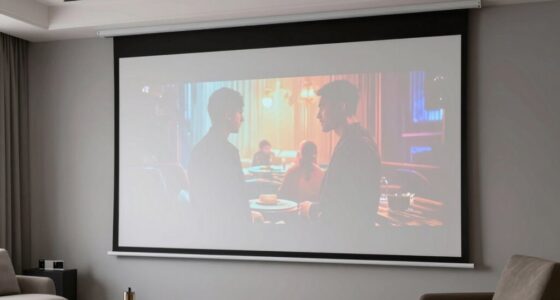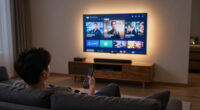
Grey projector screens exist for one reason: to deepen black levels and boost perceived contrast in rooms where a white screen makes dark scenes look washed out. If you have ambient light from windows or lamps, a grey screen absorbs some of that stray light instead of reflecting it back at you, which is why it is the go-to upgrade for living-room home theaters. The Elite Screens Aeon CineGrey 3D 120 earns my best overall pick for combining ambient-light rejection with a sleek fixed frame and wide viewing angles, while the SilverMagic 70% ALR material stands out as the best value if you want to build your own frame. At the premium end, the AWOL VISION 100-inch matte gray fixed frame offers a razor-thin bezel and 8K-friendly build quality. The main tradeoff in this category is brightness — grey screens with high gain like the SilverMagic 2.7X preserve punch but demand precise projector alignment, while low-gain matte options are more forgiving but dimmer. Keep reading for the full breakdown of which screen fits your room, projector, and budget.

Get business pricing on your home office setup
- Business-only prices and quantity discounts
- Tax-exempt purchasing
- Multiple users, one account, clear invoices
Complete the kit


Key Takeaways
- The Elite Screens Aeon CineGrey 3D won best overall because it balances ambient-light rejection, viewing angle, and fixed-frame build quality without the extreme gain of the SilverMagic fabrics, which demand tight projector placement.
- Gain is the dividing line in this lineup: the SilverMagic 2.7X material brightens aggressively but narrows usable viewing angles, while the AWOL VISION matte gray takes the opposite approach with forgiving 170° viewing at the cost of brightness.
- DIY options (SilverMagic material, Elite Screens Designer Cut, and the generic 69×118 ALR fabric) cut cost considerably but shift the burden of framing, tensioning, and flatness onto the buyer — mistakes here create wrinkles that ruin the contrast benefit.
- The golf simulator screen is a category outlier: its triple-layer impact construction suits projected golf and gaming, but its optical performance falls short of dedicated home-theater grey screens for movie watching.
- The portable 100-inch stand screen is the only truly mobile option here, and its 1.5 gain grey surface is a real upgrade over white portable screens — but it cannot match fixed ALR screens in a bright living room.
| AWOL VISION 100″ Fixed Frame Matte Gray Projector Screen |  | Best Overall | Screen Size: 100 inches diagonal | Aspect Ratio: 16:9 | Gain: 0.7 | VIEW ON AMAZON | See Our Full Breakdown |
| Elite Screens Aeon CineGrey 3D 120″ Fixed Frame (AR120DHD3) |  | Best Premium Pick | Screen Size: 120 inches diagonal | View Size: 105.4″ W x 59.6″ H | Aspect Ratio: 16:9 | VIEW ON AMAZON | See Our Full Breakdown |
| SilverMagic ALR Projector Screen Material, 100″ 16:9 Gray |  | Best for DIY Builders | Screen Size: 100 inches (100″ x 56.25″) | Aspect Ratio: 16:9 | Gain: 2.7x | VIEW ON AMAZON | See Our Full Breakdown |
| Elite Screens Designer Cut 135″ CineGrey Material (ZRM-135H-CINEGREY) |  | Best for Massive DIY Screens | Screen Size: 135 inches diagonal | View Size: 124″ W x 70″ H | Aspect Ratio: 16:9 | VIEW ON AMAZON | See Our Full Breakdown |
| VISULAPEX 100 Inch Portable Projector Screen with Stand (Grey) |  | Best Portable Pick | Screen Size: 100 inches diagonal | Aspect Ratio: 16:9 | Gain: 1.5 | VIEW ON AMAZON | See Our Full Breakdown |
| SilverMagic ALR Fixed Frame Gray Projector Screen, 120 inch 16:9 |  | Best Fixed-Frame Upgrade for Living Rooms | Screen Size: 120 inches diagonal | Aspect Ratio: 16:9 | Screen Finish: Matte gray (ALR) | VIEW ON AMAZON | See Our Full Breakdown |
| High Contrast Gray Golf Simulator Screen, Triple Layer Impact Screen |  | Best for Golf Simulators | Construction: Triple-layer impact fabric, fireproof | Screen Color: High contrast gray | Edging: Reinforced black webbing with double stitching | VIEW ON AMAZON | See Our Full Breakdown |
| Ambient Light Rejecting Projection Screen Fabric, 69×118 inch (Grey) |  | Best DIY Value | Material: Multi-layer EPPE/EVA polymer, 0.25mm thick | Dimensions: 69 x 118 inches (fits up to 130-inch 16:9) | Gain: 0.85 | VIEW ON AMAZON | See Our Full Breakdown |
| grey screens for better contrast | Screen Size | Aspect Ratio | Gain | Viewing Angle |
|---|---|---|---|---|
| AWOL VISION 100" Fixed Frame M | 100 inches diagonal | 16:9 | 0.7 | 170° |
| Elite Screens Aeon CineGrey 3D | 120 inches diagonal | 16:9 | 1.2 | 90° |
| SilverMagic ALR Projector Scre | 100 inches (100" x 56.25") | 16:9 | 2.7x | 30° |
| Elite Screens Designer Cut 135 | 135 inches diagonal | 16:9 | 1.0 | 160° |
| VISULAPEX 100 Inch Portable Pr | 100 inches diagonal | 16:9 | 1.5 | — |
| SilverMagic ALR Fixed Frame Gr | 120 inches diagonal | 16:9 | — | 160 degrees |
| High Contrast Gray Golf Simula | — | — | — | — |
| Ambient Light Rejecting Projec | — | — | 0.85 | 160 degrees |
More Details on Our Top Picks
AWOL VISION 100″ Fixed Frame Matte Gray Projector Screen
This is the pick that best balances the two things a grey screen actually has to do: deepen black levels without wrecking brightness. The 0.7-gain matte gray surface is a deliberate tradeoff — it absorbs stray light from windows and lamps rather than reflecting it, so dark scenes keep their shadow detail where a white screen would wash out. Compared with the SilverMagic ALR material, which pushes aggressive 2.7x gain, this model plays it neutral: colors stay honest and the 170° viewing angle means side seats don’t get a dimmed, tinted image. The multi-point spring-tensioned aluminum frame is another step up from tape-on materials — the surface stays perfectly flat, which is exactly what sharp 4K focus demands. The tradeoff is that the sub-1.0 gain demands a reasonably bright projector.
Pros:- Neutral 0.7-gain gray surface lowers black levels without color shift
- 170° viewing angle keeps side seats consistent
- Spring-tensioned aluminum frame guarantees a flat, wrinkle-free surface
- Works with both UST and long-throw projectors
- No moving parts or motor noise — always ready
Cons:- 0.7 gain dims the image and needs a brighter projector to compensate
- Fixed frame means permanent wall space and full assembly required
Best for: Home theater builders with a bright long-throw or UST projector who want reference-style contrast in a multi-seat room
Not ideal for: Owners of dim projectors or HDR content on low-lumen units — the 0.7 gain will darken the whole image
- Screen Size:100 inches diagonal
- Aspect Ratio:16:9
- Gain:0.7
- Viewing Angle:170°
- Resolution Support:4K, up to 8K
- Frame:Fixed aluminum, 1 in slim bezel
- Surface:Matte gray PVC
- Projector Compatibility:UST and long throw
Our verdict“The safest all-around choice for a dedicated or semi-dedicated theater where picture accuracy beats raw brightness.”
Elite Screens Aeon CineGrey 3D 120″ Fixed Frame (AR120DHD3)
If your living room has windows you can’t black out, this is the strongest ambient-light fighter in the lineup. The CineGrey 3D ALR surface rejects about 65% of incident light while holding a mild 1.2 gain, so daytime viewing stays watchable instead of milky. That puts it ahead of the AWOL VISION for bright rooms — the AWOL’s matte gray absorbs light evenly but rejects far less of it directionally — though it trails in seating flexibility, since the 90° viewing angle punishes wide rooms. The ISF certification is the differentiator here: color accuracy is held to a professional standard, which matters if you calibrate. The edge-free design gives it the look of a giant flat-panel TV rather than a framed screen. Just confirm your projector type — it rejects UST, short throw, and triple-laser units entirely.
Pros:- 65% ambient light rejection for daytime viewing
- ISF-certified color accuracy with 1.2 gain
- Edge-free design reads like a giant TV panel
- 4K/8K and active plus passive 3D ready
Cons:- Narrow 90° viewing angle limits wide seating arrangements
- Standard-throw projector compatibility only
Best for: Enthusiasts with standard-throw projectors in bright, uncontrollable family rooms who want calibrated color
Not ideal for: UST, short-throw, or triple-laser projector owners — the material is incompatible and will hotspot
- Screen Size:120 inches diagonal
- View Size:105.4″ W x 59.6″ H
- Aspect Ratio:16:9
- Gain:1.2
- Viewing Angle:90°
- Ambient Light Rejection:65%
- Frame:Fixed frame, edge-free, 6-piece split aluminum
- Compatibility:Standard throw only; 4K/8K HDR, active and passive 3D
Our verdict“The premium choice for bright-room home theaters where ambient light rejection and color fidelity are non-negotiable.”
SilverMagic ALR Projector Screen Material, 100″ 16:9 Gray
This roll of raw material exists for one buyer: the person building their own frame or stretching a screen directly onto a wall. Its party trick is a 2.7x gain — by far the highest here — which reflects the projector’s light aggressively back toward center seats. In a dark room that means a dramatically brighter image than the Elite Screens Designer Cut material, whose neutral 1.0 gain trades punch for evenness. The 70% ALR coating adds real contrast benefit with lights on, though the 30° usable viewing cone is the tightest in this roundup; anyone seated off-axis will see a dimmer picture. The patented wall-safe tape installs in about 10 minutes and the material can be trimmed to fit odd spaces — something no fixed-frame option like the AWOL VISION allows. High gain plus narrow viewing angle means hotspots and seat placement really matter.
Pros:- 2.7x gain brightens dim projectors dramatically at center
- Trimmable material fits custom frames and unusual spaces
- 70% ALR coating improves contrast with lights on
- Tensioned installation method avoids wrinkles and spider-web edges
Cons:- Extremely narrow 30° viewing angle
- Not compatible with UST projectors
- DIY install leaves room for user error on tensioning
Best for: DIYers who watch mostly from center seating with a dim projector that needs a brightness boost
Not ideal for: Wide rooms or group viewing — the 30° viewing cone leaves side seats with a visibly darker image
- Screen Size:100 inches (100″ x 56.25″)
- Aspect Ratio:16:9
- Gain:2.7x
- Viewing Angle:30°
- Ambient Light Rejection:70%
- Finish:Matte gray
- Installation:Wall-safe tape, DIY frame or wall mounted
- Compatibility:Standard throw only
Our verdict“A brightness-forward DIY material for solo or center-seat viewers who want gain and ALR without buying a finished screen.”
Elite Screens Designer Cut 135″ CineGrey Material (ZRM-135H-CINEGREY)
At 135 inches diagonal, this is the biggest surface in the roundup, and it comes as raw pre-cut cloth with no frame included — you supply the structure. The CineGrey material at 1.0 gain is the honest middle ground: unlike the SilverMagic sheet, it doesn’t inflate brightness or restrict viewing to a narrow cone, so a wide room with spread-out seating sees a uniform image through its 160° viewing angle. Compared with the Aeon CineGrey 3D, this is the older, simpler formula — contrast enhancement comes from the grey tint and black backing rather than true angular ALR, so it won’t fight a sunlit room as effectively. The black backing does block light penetration completely, and the multi-layer textured PVC handles 4K detail well. The catch is purely logistical: stretching 124 inches of cloth perfectly flat is a two-person job, and mistakes are permanent.
Pros:- 135-inch diagonal for true cinema scale on a budget
- Neutral 1.0 gain with a wide 160° viewing angle
- Black backing fully blocks light penetration
- Ships rolled for a wrinkle-free surface; cleanable with soap and water
Cons:- Frame not included — full DIY build required
- No genuine ALR treatment, so ambient light still washes the image
- Not compatible with triple-laser projectors
Best for: Hands-on builders who want a huge, evenly viewable screen on a custom frame in a light-controlled room
Not ideal for: Buyers wanting a finished product — no frame is included, and it lacks true ALR performance for bright rooms
- Screen Size:135 inches diagonal
- View Size:124″ W x 70″ H
- Aspect Ratio:16:9
- Gain:1.0
- Viewing Angle:160°
- Material:Multi-layer textured PVC, grey with black backing
- Frame:Not included
- Compatibility:4K Ultra HD, Active 3D; not triple-laser
Our verdict“The cheapest path to a very large, evenly lit grey screen — as long as you can build the frame and control your lighting.”
VISULAPEX 100 Inch Portable Projector Screen with Stand (Grey)
Every other option here is a permanent installation — this one packs into a carry bag at 11.44 pounds and sets up on a tripod in about two minutes. The grey PVC surface with a 1.5 gain and a 100% opaque black backing does reject a claimed 90% of ambient light, which makes it far more usable for a backyard movie night at dusk than any white pull-up screen. Against the AWOL VISION fixed frame, it obviously can’t match tensioned flatness or color neutrality — tripod screens live with slight surface movement in wind — but it goes where no wall-mounted screen can. The adjustable tripod height (71″–95″ floor to screen bottom) is a thoughtful touch for uneven outdoor ground or sightline-blocking furniture. Rigidity is the honest compromise: four diagonal braces help, but a freestanding 100-inch screen is still vulnerable to gusts and bumps.
Pros:- Fully portable at 11.44 pounds with included carry bag
- 2-minute setup with sturdy tripod and four diagonal braces
- 1.5 gain grey PVC with opaque black backing for real contrast outdoors
- Height adjustable from 71 to 95 inches for clear sightlines
Cons:- Freestanding design is less stable than wall-mounted screens, especially in wind
- Tripod tension can’t fully match fixed-frame surface flatness
Best for: Backyard movie hosts, campers, and presenters who need a contrast-friendly screen that travels
Not ideal for: Dedicated home theater owners — a tripod screen can’t match a fixed frame’s flatness or stability
- Screen Size:100 inches diagonal
- Aspect Ratio:16:9
- Gain:1.5
- Material:Grey PVC, non-transparent black backing
- Ambient Light Rejection:Over 90% (claimed)
- Stand:Tripod, height adjustable 71″–95″
- Weight:11.44 pounds
- Setup Time:About 2 minutes
Our verdict“The only pick here that belongs in the trunk of a car — ideal for outdoor and mobile viewing where grey-screen contrast still matters.”
SilverMagic ALR Fixed Frame Gray Projector Screen, 120 inch 16:9
This pick makes the most sense for buyers who want a permanently installed, tension-flat gray screen without paying flagship-tier money. SilverMagic’s matte gray surface is tuned for standard and long throw projectors, and unlike Fresnel or retro-reflective designs it keeps a wide, uniform image with no hotspots — a real advantage over the Elite Screens Aeon CineGrey 3D, which is more demanding about viewing position. The rigid aluminum frame with a slim quarter-inch bezel eliminates the waves and wrinkles that plague roll-down screens. The tradeoff is fixed-frame permanence: it can’t retract, and at roughly 104 inches wide it dominates a wall. Its ambient-light rejection is also milder than the Aeon CineGrey 3D’s, so a very bright sunlit room will still wash out the image somewhat.
Pros:- Perfectly flat tensioned surface with no waves or wrinkles
- Wide uniform viewing angle without hotspotting
- Slim 1/4-inch bezel looks clean in modern rooms
- 3-year warranty with US-based support
Cons:- Fixed frame means no retracting — it permanently occupies the wall
- Light rejection is gentler than premium ALR screens like the Aeon CineGrey 3D
Best for: Homeowners with a dedicated wall and a standard-throw projector who watch in moderate ambient light
Not ideal for: Renters or anyone needing a retractable screen — the fixed frame is a permanent installation
- Screen Size:120 inches diagonal
- Aspect Ratio:16:9
- Screen Finish:Matte gray (ALR)
- Throw Compatibility:Standard and long throw (non-UST)
- Viewing Angle:160 degrees
- Frame:Fixed aluminum alloy, 1/4-inch bezel
- Mounting:Wall mount
- Warranty:3 years
Our verdict“The strongest choice if you have the wall space and want a flat, hotspot-free gray screen for everyday living-room viewing.”
High Contrast Gray Golf Simulator Screen, Triple Layer Impact Screen
Not every gray screen is for movie night — this one exists because golf simulators punish screens with real golf balls, and a home-theater surface like the SilverMagic fixed frame would be destroyed on the first drive. The triple-layer fireproof construction absorbs impact, cuts noise, and adds flame-retardant safety, while the gray finish delivers deeper blacks and less ambient-light washout than white impact screens, which matter when a launch monitor and room lights are running. Attachment is the standout detail: 40–48 high-density grommets with a ball bungee at each point spread tension evenly so the fabric survives repeated high-impact shots. The tradeoffs are real — impact fabric trades image crispness for toughness, showing more texture than a dedicated cinema screen, and you have to build the frame and bungee system yourself.
Pros:- Gray finish improves contrast and resists ambient-light washout
- Triple-layer build withstands repeated ball strikes
- Grommets with individual ball bungees allow precise tension tuning
- Flame-retardant and noise-reducing
Cons:- DIY assembly required — no frame included
- Image sharpness is softer than dedicated projection screens
Best for: Golf simulator builders who need a durable gray screen that holds contrast under room lighting
Not ideal for: Home theater purists — impact fabric is textured and less sharp than dedicated cinema surfaces like the AWOL VISION fixed frame
- Construction:Triple-layer impact fabric, fireproof
- Screen Color:High contrast gray
- Edging:Reinforced black webbing with double stitching
- Grommets:40–48 metal eyelets, 10–12 inch spacing
- Attachment:One ball bungee per grommet
- Intended Use:Golf simulation, home or commercial
Our verdict“The clear pick if your gray screen needs to survive golf balls, not just movie nights.”
Ambient Light Rejecting Projection Screen Fabric, 69×118 inch (Grey)
Compared with buying a finished product like the SilverMagic fixed frame, this raw EPPE fabric is the cheapest route to a large, high-contrast gray screen — if you’re willing to build it. The 0.85 gain gray surface lifts contrast and color saturation in lit rooms, and the black backing layer stops light bleed from behind, which matters on shared walls. Its 125 line-pairs/mm resolution keeps 4K detail intact, and the wide 160-degree diffusion suits multi-seat rooms. But this is strictly a DIY fixed-frame material: it arrives on a long reel, cannot be hung directly, and needs a wooden frame with even tension on all sides. Note the projector requirement — below 2,000 ANSI lumens the gray surface dims the image, and it’s unusable for rear, short-throw, or ultra-short-throw setups, so the AWOL VISION screen is the better fit for UST owners.
Pros:- Black backing blocks rear light interference
- Large cut supports screens up to 130 inches diagonal
- Full 160-degree viewing angle with even diffusion
- REACH-compliant, odor-free polymer material
Cons:- Requires building your own frame — no mounting hardware or frame included
- Ships rolled on a 74-inch reel that’s awkward to store and handle
- Needs a projector of at least 2,000 ANSI lumens to look bright
Best for: Handy DIYers with a bright standard-throw projector who want a big gray screen on a budget
Not ideal for: Anyone with an ultra-short-throw or short-throw projector, or a dim projector under 2,000 ANSI lumens
- Material:Multi-layer EPPE/EVA polymer, 0.25mm thick
- Dimensions:69 x 118 inches (fits up to 130-inch 16:9)
- Gain:0.85
- Resolution Support:125 line pairs/mm, 4K Ultra HD
- Viewing Angle:160 degrees
- Backing:Black rear layer blocks light penetration
- Throw Compatibility:Standard throw front projection only
Our verdict“The value play for builders with capable projectors and basic woodworking skills — everyone else should buy a finished screen.”

How We Picked
I evaluated each screen through the lens that matters for this roundup: how well it improves perceived contrast in real-world rooms. That meant prioritizing ambient-light rejection performance, gain characteristics, and how each surface renders black levels alongside color accuracy. A screen with high gain but poor off-axis performance scores differently than a matte grey that handles wide seating arrangements, because those serve opposite rooms. I also weighed build quality — fixed aluminum frames, tensioning systems, and material thickness — since a wavy or wrinkled grey surface undermines the very contrast you are buying it for.
Usability and versatility rounded out the criteria. Fixed-frame screens demand wall space and permanent installation, while DIY material and portable options trade polish for flexibility and lower cost, so I ranked them according to who each format genuinely suits rather than treating convenience as universally good. Finally, I favored screens that pair well with the projectors buyers actually own, including standard-throw and UST models, and flagged compatibility limits where they exist. The ranking reflects a simple logic: the best overall pick is the one with the fewest compromises across the most common setups, and every pick below it wins for a specific buyer type rather than being a lesser version of the top choice.
| grey screens for better contrast | Frame |
|---|---|
| AWOL VISION 100" Fixed Frame M | Fixed aluminum, 1 in slim bezel |
| Elite Screens Aeon CineGrey 3D | Fixed frame, edge-free, 6-piece split aluminum |
| SilverMagic ALR Projector Scre | — |
| Elite Screens Designer Cut 135 | Not included |
| VISULAPEX 100 Inch Portable Pr | — |
| SilverMagic ALR Fixed Frame Gr | Fixed aluminum alloy, 1/4-inch bezel |
| High Contrast Gray Golf Simula | — |
| Ambient Light Rejecting Projec | — |
Factors to Consider When Choosing Grey Screens For Better Contrast
Choosing a grey screen is less about finding the darkest surface and more about matching the screen to your projector, your room, and how permanently you want to install it. These are the factors that separate a satisfying purchase from an expensive disappointment.Gain: The Brightness-vs-Contrast Tradeoff
Gain measures how much light a screen reflects compared with a standard white reference, and it is the single most misunderstood spec in this category. A high-gain grey screen like a 2.7X material bounces more light back toward the viewer, which keeps the image punchy in bright rooms — but that light is concentrated into a narrower cone, so viewers seated far off to the side see a dim, contrast-poor image. A low-gain matte grey around 0.8 to 1.0 trades peak brightness for even coverage across a wide seating area. The mistake most buyers make is assuming higher gain is always better; if your projector is already bright, extra gain can push highlights into harshness while doing nothing for shadow detail. Match gain to your projector’s output and your seating layout before anything else.
Ambient Light Rejection and Your Room
Not every grey screen rejects ambient light — some are simply grey-tinted surfaces that darken the whole image rather than selectively fighting stray light. True ALR (ambient light rejecting) materials use optical layering to absorb light coming from off-axis sources like windows and ceiling fixtures while reflecting the projector’s direct light, which is what actually restores black levels during daytime viewing. Before buying, sit in your room at the hour you actually watch movies and note where light hits the screen wall. If light strikes the screen from the same direction as the projector, even the best ALR fabric cannot save you — repositioning the projector or adding blackout curtains is cheaper and more effective. Buyers with controlled, darkened rooms often do not need ALR at all and can save money with a simple matte grey surface.
Throw Distance and Projector Compatibility
This is where mismatched purchases happen. Standard-throw ALR screens are engineered to reject light from above and the sides while accepting light from a projector mounted across the room — point an ultra-short-throw projector at one and much of the image light gets rejected along with the ambient light. UST projectors need surfaces designed to accept light from below the screen, which is why screens like the AWOL VISION explicitly list UST compatibility. Check your projector’s throw ratio and mounting position before falling in love with a screen surface. Also confirm the screen supports your resolution needs; while most grey fabrics handle 4K fine, material texture and coating quality determine whether you see fine detail or a slightly grainy image at large sizes.
Fixed Frame, DIY Material, or Portable
Format determines both performance ceiling and effort level. A fixed-frame screen tensions the fabric perfectly flat across an aluminum frame, which is what preserves the smooth, artifact-free surface that grey screens need to show their contrast advantage. DIY raw material costs much less and lets you build custom sizes, but you are responsible for framing, tensioning, and mounting — a slightly loose stretch produces waves that catch light and destroy black uniformity. Portable stand screens make sense for backyard movie nights or multi-room use, but their unsupported fabric and tripod design mean noticeably worse surface flatness than anything wall-mounted. My rule: buy fixed frame if the screen has a permanent home, buy material only if you are handy, and buy portable only if mobility is non-negotiable.
Screen Size and Viewing Distance
Bigger is not automatically better, and grey screens make size mistakes more visible because their contrast benefit depends on your eyes resolving the improved black levels. A common guideline is sitting roughly 1.2 to 1.5 times the screen diagonal for movies; at 120 inches, that puts your couch around 12 to 15 feet back. If you sit closer than that, a 135-inch screen can overwhelm the room and expose surface texture and pixel structure. Size also interacts with brightness — the same projector lighting a 135-inch screen produces a dimmer image per square foot than on a 100-inch, which matters more on low-gain grey surfaces. Measure your wall and your seating distance, then buy the largest size that keeps both brightness and comfort in check.
Specialty Use Cases: Golf Sims and Outdoor Movie Nights
Some grey screens are built for impact rather than image fidelity, and mixing up these categories leads to regret. A triple-layer golf simulator screen is designed to absorb ball strikes, so it is thick, rugged, and acoustically dead — but its surface is not optically optimized for movie contrast, and it will not match a home-theater fabric for black levels or uniformity. Conversely, taking a delicate fixed-frame theater screen outdoors invites wind damage and warping. If your primary use is simulation or gaming with occasional movie nights, the impact screen is the pragmatic choice. If movies come first and golf is a someday project, buy the theater screen and rent or defer the sim setup — one screen rarely does both jobs well.
Frequently Asked Questions
Does a grey screen actually improve contrast, or does it just darken the whole image?
A grey screen improves perceived contrast primarily by raising the black floor of the room rather than lowering the projector’s output — the grey surface reflects less ambient and projected light in dark areas of the image, so blacks look deeper even though the projector has not changed. The tradeoff is that a plain grey screen also reflects less light overall, which dims highlights too; that is why premium options add optical coatings or micro-structures that reject off-axis ambient light while keeping the projector’s direct light bright. If you buy a basic grey surface without ambient-light rejection, you get deeper blacks but a dimmer overall picture, which works well with a bright projector. With ALR designs, you get both deeper blacks and maintained punch, which explains the price gap across this lineup. So the answer depends on the screen’s construction, not just its color.
Can I use a standard-throw ALR grey screen with an ultra-short-throw projector?
Generally no, and this is one of the most common and costly mismatch mistakes. Standard-throw ALR screens reject light arriving from above and the sides, which is exactly the geometry an ultra-short-throw projector uses, since it sits directly below the screen firing upward. The result is a dramatically dim image with strange hotspots and color shifts. You need a screen explicitly rated for UST projectors, which uses a different optical structure — often a lenticular layer — that accepts light from below while still rejecting ceiling and window light. In this lineup, the AWOL VISION fixed frame lists both UST and long-throw compatibility, making it the safer choice if you might switch projector types later. Always check the throw-type rating before buying any ALR surface.
Is DIY grey screen material worth the savings compared with a fixed frame?
DIY material makes sense if you enjoy building things and already have (or can borrow) framing tools, because the raw fabric typically costs a fraction of a finished fixed-frame screen at the same size. What you take on is full responsibility for flatness: the fabric must be stretched evenly across a rigid frame with consistent tension, because wrinkles and waves catch light and visibly ruin the grey screen’s contrast advantage. Building a frame is a weekend project involving lumber or aluminum extrusion, accurate measurements, and some trial and error on tensioning. If any of that sounds tedious, the finished fixed frame pays for itself in time saved and guaranteed results. Also note that DIY materials vary in coating quality, so buy from a brand with published gain and ALR specs rather than an unbranded fabric.
Will a grey screen help in a room with direct sunlight?
Only partially, and it depends on where the sun hits. ALR grey screens are engineered to fight diffuse and off-axis light — lamps, windows to the side, overhead fixtures — and they do that job well enough for daytime sports and casual viewing. Direct sunlight striking the screen head-on is a different problem, because that light arrives from nearly the same angle the screen is designed to reflect, and no fabric can fully overcome it. In that scenario the better investment is light control: blackout curtains or blinds combined with even a modest grey screen will outperform a premium ALR screen fighting raw sunlight. If permanent darkness is impossible, pair the strongest ALR option here with angled blinds, and reposition seating so windows sit behind the projector rather than beside the screen.
What size grey screen should I get for my room?
Start with your seating distance rather than your wall size, because oversizing a grey screen both overwhelms viewers and spreads your projector’s light thinner, which softens the brightness that grey surfaces already reduce. A reliable guideline is seating distance of roughly 1.2 to 1.5 times the diagonal: a 120-inch screen wants viewers around 12 to 15 feet away, while 100 inches suits 10 to 12 feet. Next, measure your wall height — you need the screen’s center near eye level when seated, plus room for speakers or a soundbar below, which rules out 135-inch screens in rooms with low ceilings. Also confirm your projector can fill the chosen size from its mounting position by checking its throw ratio. When in doubt, go one size down; a slightly smaller, brighter image with strong contrast beats a giant, dim one.
Conclusion
The right grey screen comes down to your room, your projector, and how much installation effort you will tolerate. For the best overall pick, the Elite Screens Aeon CineGrey 3D 120 delivers the most balanced contrast improvement with a clean fixed-frame build that suits the widest range of home theaters. If value is the priority, the SilverMagic 70% ALR raw material gets you true ambient-light rejection at a DIY price — provided you are willing to build or buy a frame. The AWOL VISION 100-inch fixed frame is my premium recommendation, best for buyers who want a slim, finished look and UST compatibility in a refined living space.
For beginners and casual viewers, the portable 100-inch stand screen removes installation anxiety entirely and works indoors or out, while the SilverMagic 120-inch fixed-frame ALR suits dedicated home-theater owners who want a no-build, wall-mounted grey screen in a larger size. Two special cases round out the lineup: the golf simulator impact screen for simulation and gaming setups where durability outranks image fidelity, and the Elite Screens Designer Cut material for custom-size installations that standard screens cannot fit. Whatever you choose, match the screen to your throw type and lighting conditions first — that single decision matters more than any spec on the box.
Columbus Day / Indigenous Peoples' Day Picks
long weekend sales
As an affiliate, we earn on qualifying purchases.