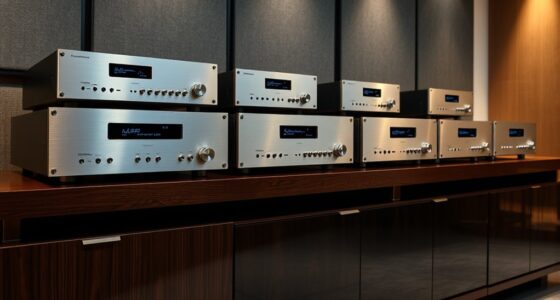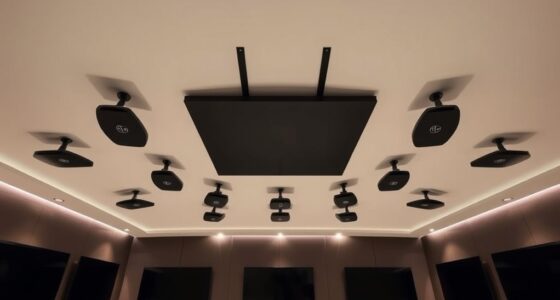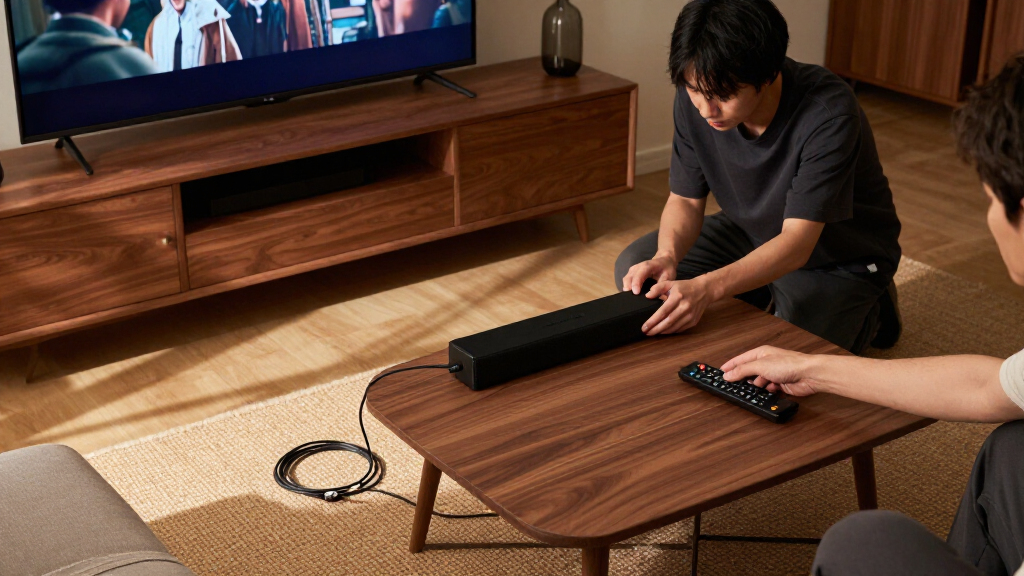

Among these home theater soundbars, I’d make the ULTIMEA 5.1.2-Channel Dolby Atmos Soundbar System my best overall pick for buyers seeking a more immersive, multichannel setup. The LG S40TR is a strong alternative if you want rear speakers included, while the Amazon Fire TV Soundbar Plus suits viewers who prefer a simpler bar with a built-in subwoofer. The main tradeoff is between compact, easy-to-place bars and systems that take more space but add a subwoofer or dedicated surround speakers. I compared all 15 for their theater potential, setup demands, and fit for different rooms and budgets. Read on for the full breakdown and help matching a soundbar to your setup.

Get business pricing on your home office setup
- Business-only prices and quantity discounts
- Tax-exempt purchasing
- Multiple users, one account, clear invoices
Complete the kit



Key Takeaways
- The ULTIMEA 5.1.2 system leads on theater ambition: its multichannel Dolby Atmos configuration makes it a better fit for immersive viewing than the roundup’s 2.0 bars, though it calls for more setup and space.
- Rear speakers change the room experience: the LG S40TR and TCL S65K include surround speakers, giving them a more direct route to rear-channel effects than virtual surround models.
- Built-in bass is a convenience tradeoff: the Samsung HW-B400F and Fire TV Soundbar Plus keep components consolidated, while separate subwoofer systems offer a dedicated bass unit at the cost of extra placement needs.
- Simple bars fit smaller or simpler setups: the Sony HTS100F, Bose TV Speaker, and Amazon Fire TV Soundbar are easier to accommodate than multichannel kits, but they provide less physical surround coverage.
- Feature labels do not tell the whole story: Dolby Atmos or DTS Virtual:X support can shape processing, but room layout, speaker placement, and the number of physical channels still affect the experience.
| Sony HTS100F 2.0-Channel Compact Soundbar with Bluetooth |  | Best for Small Rooms | Audio channels: 2.0 | Connectivity: HDMI ARC, optical, Bluetooth, USB | Bluetooth range: 10 meters | VIEW LATEST PRICE | See Our Full Breakdown |
| Assistrust KY-8000 Detachable Soundbar for TV |  | Best for Flexible Placement | Power output: 80W | Drivers: 4 | Audio output: Stereo, 2 channels | VIEW LATEST PRICE | See Our Full Breakdown |
| Sony HT-S40R 5.1-Channel Home Theater Soundbar System |  | Best for Rear-Speaker Surround | Audio channels: 5.1 | Maximum output power: 600 watts | Connectivity: HDMI, optical, analog, Bluetooth, USB | VIEW LATEST PRICE | See Our Full Breakdown |
| Amazon Fire TV Soundbar Plus, 3.1-Channel Soundbar with Built-In Subwoofer, Dolby Atmos and DTS:X |  | Best All-in-One Upgrade | Channels: 3.1 | Subwoofer: Built-in | Surround formats: Dolby Atmos, DTS:X | VIEW LATEST PRICE | See Our Full Breakdown |
| ULTIMEA 5.1.2-Channel Dolby Atmos Soundbar System |  | Best for Atmos Channel Detail | Channels: 5.1.2 | Audio format: Dolby Atmos | Surround speakers: 2 | VIEW LATEST PRICE | See Our Full Breakdown |
| Saiyin Soundbar with Subwoofer for TV and PC |  | Best for Bass on a Simple Setup | Audio output: Stereo | Subwoofer: Dedicated 5-inch subwoofer | Soundbar size: 16.9 inches | VIEW LATEST PRICE | See Our Full Breakdown |
| Samsung HW-B400F 2.0-Channel Soundbar with Built-In Subwoofer |  | Best for a Neat Samsung TV Setup | Channels: 2.0 | Built-in subwoofer: Yes | Maximum output power: 40 watts | VIEW LATEST PRICE | See Our Full Breakdown |
| TCL S45H 2.0 Sound Bar with Dolby Atmos and DTS Virtual:X |  | Best for Virtual Surround Formats | Channels: 2.0 | Power output: Up to 100 W | Audio formats: Dolby Atmos, DTS Virtual:X | VIEW LATEST PRICE | See Our Full Breakdown |
| Maraawa 120W Sound Bar with Wired Subwoofer |  | Best for a Wired Bass Upgrade | Output power: 120 watts | Soundbar size: 30 inches | Subwoofer: Wired | VIEW LATEST PRICE | See Our Full Breakdown |
| ULTIMEA 2.1-Channel Soundbar with Wireless Subwoofer and App Control |  | Best for App-Based Sound Tuning | Channels: 2.1 | Peak output: 240 W | Frequency response: 45 Hz–18 kHz | VIEW LATEST PRICE | See Our Full Breakdown |
| ULTIMEA Poseidon M60 5.1-Channel Dolby Atmos Soundbar System |  | Best for Flexible Atmos Setup | Channels: 5.1 | Peak power: 300 W | Drivers: 6 total, including five built-in speakers and a wired subwoofer | VIEW LATEST PRICE | See Our Full Breakdown |
| Amazon Fire TV Soundbar, 2.0 Channel with DTS Virtual:X, Dolby Audio, and Bluetooth |  | Best for Fire TV Simplicity | Speaker channels: 2.0 | Dimensions: 24 × 3.5 × 2.5 inches | Weight: 3.97 lbs | VIEW LATEST PRICE | See Our Full Breakdown |
| Bose TV Speaker Compact Soundbar with Bluetooth and HDMI-ARC, Black |  | Best Compact Dialogue Pick | Audio output mode: Stereo | Drivers: Two angled full-range drivers and a center tweeter | Connectivity: Bluetooth, HDMI-CEC, optical audio, AUX | VIEW LATEST PRICE | See Our Full Breakdown |
| LG S40TR 4.1-Channel Home Theater Soundbar with Wireless Subwoofer and Rear Speakers |  | Best for Physical Surround | Channels: 4.1 | Included components: Soundbar, wireless subwoofer, rear surround speakers | Audio formats: Dolby Digital, DTS Digital | VIEW LATEST PRICE | See Our Full Breakdown |
| TCL S65K 5.1-Channel Soundbar System with Dolby Atmos, DTS:X, Wireless Subwoofer and Surround Speakers |  | Best Feature-Rich Surround System | Audio channels: 5.1 | Maximum output power: 630 watts | Subwoofer driver: 6.5 inches | VIEW LATEST PRICE | See Our Full Breakdown |
| home theater soundbar | Connectivity |
|---|---|
| Sony HTS100F 2.0-Channel Compa | HDMI ARC, optical, Bluetooth, USB |
| Assistrust KY-8000 Detachable | Bluetooth 5.0, ARC, optical, AUX |
| Sony HT-S40R 5.1-Channel Home | HDMI, optical, analog, Bluetooth, USB |
| Amazon Fire TV Soundbar Plus | — |
| ULTIMEA 5.1.2-Channel Dolby At | HDMI eARC, Bluetooth 5.4 |
| Saiyin Soundbar with Subwoofer | — |
| Samsung HW-B400F 2.0-Channel S | — |
| TCL S45H 2.0 Sound Bar with Do | HDMI eARC/ARC, optical, Bluetooth, AUX |
| Maraawa 120W Sound Bar with Wi | Bluetooth 5.3, ARC, optical, AUX |
| ULTIMEA 2.1-Channel Soundbar w | — |
| ULTIMEA Poseidon M60 5.1-Chann | HDMI eARC, Bluetooth 5.4 |
| Amazon Fire TV Soundbar | — |
| Bose TV Speaker Compact Soundb | Bluetooth, HDMI-CEC, optical audio, AUX |
| LG S40TR 4.1-Channel Home Thea | — |
| TCL S65K 5.1-Channel Soundbar | Bluetooth, USB, Wi-Fi, HDMI, wireless |
More Details on Our Top Picks
Sony HTS100F 2.0-Channel Compact Soundbar with Bluetooth
The Sony HTS100F suits a compact TV setup where clearer dialogue and simpler connections matter more than room-filling surround effects. Its 2.0-channel layout and slim, wall-mountable body take up less space than the Sony HT-S40R system, which adds rear speakers and a separate subwoofer for a more enveloping presentation. HDMI ARC can simplify TV control, while voice enhancement helps bring speech forward when dialogue gets lost in a mix. Bluetooth and USB add ways to play audio beyond the TV. The tradeoff is limited channel separation and no dedicated subwoofer, so action scenes and music won’t have the same low-end impact as larger systems. I’d choose it for a modest room, but skip it if surround sound is the goal.
Pros:- Slim, wall-mountable design fits tight TV spaces
- HDMI ARC, optical, Bluetooth, and USB provide flexible connections
- Voice enhancement helps dialogue stand out
- S-Force Pro Front Surround and Bass Reflex speaker add processing and bass support
Cons:- Two-channel audio cannot match the Sony HT-S40R’s rear-speaker surround presentation
- No separate subwoofer for stronger low-frequency impact
Best for: Viewers with a small living room or bedroom TV who want clearer dialogue and a wall-mountable soundbar
Not ideal for: Movie fans seeking rear-channel surround effects or deep, dedicated subwoofer bass
- Audio channels:2.0
- Connectivity:HDMI ARC, optical, Bluetooth, USB
- Bluetooth range:10 meters
- Mounting:Wall-mountable
- Frequency response:64.4 Hz
- Color:Black
- Warranty:1 year
Our verdict“Choose the HTS100F for a compact setup where dialogue clarity and easy TV connection matter more than cinematic surround.”
Assistrust KY-8000 Detachable Soundbar for TV
The Assistrust KY-8000 is the flexible placement pick for buyers who want a straightforward stereo upgrade that can adapt to different TV arrangements. Its detachable design and 17-inch size give it a placement advantage over the fixed, slim Sony HTS100F, while Bluetooth 5.0, ARC, optical, and AUX cover common TV and device connections. Movie, music, and news modes, plus automatic volume boost, give listeners simple ways to tune everyday viewing without relying on a phone app. The stated 80W output and four drivers describe its hardware, but the product data doesn’t specify a subwoofer or bass performance, so I wouldn’t choose it for thunderous movie effects. Compared with the Amazon Fire TV Soundbar Plus, it offers more placement flexibility but lacks a dedicated center channel and named immersive formats.
Pros:- Detachable design allows flexible placement
- Bluetooth 5.0, ARC, optical, and AUX support varied sources
- Movie, music, and news equalizer modes tailor playback by content
- Automatic volume boost can help quieter sounds remain audible
Cons:- Stereo output lacks the dedicated center channel of the Fire TV Soundbar Plus
- No subwoofer or separate bass specifications are provided
Best for: TV owners who need a small stereo bar that can be repositioned or detached and want several input options
Not ideal for: Home theater buyers prioritizing Dolby Atmos, a dedicated center channel, or clearly specified subwoofer performance
- Power output:80W
- Drivers:4
- Audio output:Stereo, 2 channels
- Equalizer modes:Movie, music, news
- Connectivity:Bluetooth 5.0, ARC, optical, AUX
- Speaker size:17 inches
- Power source:AC
- Warranty:18 months
Our verdict“Pick the KY-8000 when flexible placement and connection choices matter more than dedicated surround or bass hardware.”
Sony HT-S40R 5.1-Channel Home Theater Soundbar System
For viewers who want sound to extend behind the couch, the Sony HT-S40R makes a stronger home theater case than compact two-channel options such as the Sony HTS100F. Its 5.1-channel setup with rear speakers gives effects and ambience dedicated places around the room, while the listed 600-watt maximum output points to a system designed for a larger presentation. HDMI, optical, analog, Bluetooth, and USB provide several ways to connect sources, and selectable modes plus dialogue enhancement cover different kinds of viewing. The tradeoff is a more involved setup than an all-in-one bar: the rear speakers need a place in the room, and the system’s dimensions call for more space. Compared with the ULTIMEA 5.1.2 system, it has rear-channel hardware but lacks the listed up-firing Atmos drivers.
Pros:- 5.1 channels and rear speakers create a more enveloping layout than stereo bars
- 600-watt maximum output supports a larger-scale presentation
- HDMI, optical, analog, Bluetooth, and USB offer varied connections
- Selectable sound modes and dialogue enhancement suit different content
Cons:- Rear speakers require extra room and setup compared with the HTS100F
- Does not list the up-firing Atmos drivers included with the ULTIMEA 5.1.2 system
Best for: Movie watchers with room for rear speakers who want distinct surround effects from a 5.1 system
Not ideal for: Small-room viewers who want a single compact bar or a system with listed Dolby Atmos height channels
- Audio channels:5.1
- Maximum output power:600 watts
- Connectivity:HDMI, optical, analog, Bluetooth, USB
- Subwoofer connectivity:Wireless
- Dimensions:13.66 × 33.22 × 9.76 in (D × W × H)
- Item weight:454 g
- Warranty:1 year
Our verdict“Choose the HT-S40R if rear-speaker surround is your priority and your room can accommodate the extra components.”
Amazon Fire TV Soundbar Plus, 3.1-Channel Soundbar with Built-In Subwoofer, Dolby Atmos and DTS:X
The Amazon Fire TV Soundbar Plus is an appealing step up for buyers who want more cinematic processing without a collection of separate speakers. Its 3.1 channels include a dedicated center channel for dialogue and a built-in subwoofer, a more self-contained arrangement than the Sony HT-S40R’s rear-speaker system. Dolby Atmos and DTS:X support add immersive-format decoding, while Movie, Music, Sports, and Night modes make it easier to tailor sound to the room and time of day. HDMI eARC/ARC and optical cover TV connections, and Bluetooth handles phone or tablet streaming. The central compromise is physical: a single bar can’t place rear speakers around the listener like the HT-S40R. Some Fire TV audio settings also depend on a compatible model, so the full feature set may vary by setup.
Pros:- Built-in subwoofer keeps bass hardware within the soundbar
- Dedicated center channel gives dialogue a defined channel
- Dolby Atmos and DTS:X support immersive formats
- Four audio modes include a Night option for lower-impact listening
Cons:- Single-bar layout cannot place physical rear speakers like the Sony HT-S40R
- Some Fire TV audio settings are available only with select models
Best for: TV owners who want a simple, single-bar installation with a center channel, built-in bass, and immersive audio format support
Not ideal for: Buyers seeking physical rear speakers or guaranteed access to every Fire TV audio setting on any television
- Channels:3.1
- Subwoofer:Built-in
- Surround formats:Dolby Atmos, DTS:X
- Dimensions:37 × 5.2 × 2.5 in
- Weight:8.8 lbs
- EQ modes:Movie, Music, Sports, Night
- Ports:HDMI, optical, AC, USB-A
- Bluetooth:Yes
Our verdict“Choose the Soundbar Plus for a tidy TV upgrade that combines dialogue focus, built-in bass, and immersive format support.”
ULTIMEA 5.1.2-Channel Dolby Atmos Soundbar System
The ULTIMEA 5.1.2 is the most channel-focused option here for buyers who want both rear surround and height effects. Its up-firing Atmos drivers, two surround speakers, and wired 5.25-inch subwoofer give it a more expanded speaker layout than the Amazon Fire TV Soundbar Plus, whose bass is built into one bar. HDMI eARC is listed for lossless audio transmission, while CEC synchronization can coordinate TV power, volume, and input. The companion app adds a 10-band equalizer, 121 presets, and adjustable channel levels for hands-on tuning. That flexibility comes with setup and format tradeoffs: the subwoofer is wired, and the system does not support DTS. Compared with Sony’s HT-S40R, this ULTIMEA adds two height channels and app controls, but it requires buyers to work within its Dolby Atmos format support.
Pros:- 5.1.2 layout combines rear surrounds with up-firing Atmos drivers
- HDMI eARC supports lossless audio transmission
- App includes a 10-band equalizer, 121 presets, and channel-level adjustment
- CEC synchronization coordinates soundbar controls with the TV
Cons:- Not compatible with DTS
- Wired subwoofer constrains placement compared with wireless-subwoofer systems
Best for: Home theater enthusiasts who want rear and height channels, eARC, and detailed app-based sound adjustment
Not ideal for: Viewers with DTS-heavy sources or those who need a wireless subwoofer and simpler tuning
- Channels:5.1.2
- Audio format:Dolby Atmos
- Surround speakers:2
- Subwoofer:5.25-inch wired
- Connectivity:HDMI eARC, Bluetooth 5.4
- App control:10-band equalizer, 121 presets, 13-step level adjustment
- Mounting:Tabletop or wall mount
- DTS compatibility:Not compatible
Our verdict“Pick the ULTIMEA 5.1.2 if you want height and rear channels with extensive app tuning and can accommodate its wired subwoofer.”
Saiyin Soundbar with Subwoofer for TV and PC
The dedicated 5-inch subwoofer gives this stereo system a physical bass speaker, a useful distinction from the Samsung HW-B400F, which keeps its woofer inside the soundbar. That separate unit can add weight to films and music, while Bluetooth, optical, and auxiliary inputs make it adaptable to TVs and PCs. Three equalizer modes offer a straightforward way to adjust for different content without an app. The tradeoff is format support: it does not support Dolby or DTS, so it is a basic stereo choice for compatible sources rather than a fit for buyers seeking newer surround formats. Setup also depends on connecting the subwoofer to its labeled SUB OUT port. I’d pick it when a separate bass unit matters more than surround processing.
Pros:- Dedicated 5-inch subwoofer adds a separate source of bass
- Bluetooth, optical, and auxiliary connections suit TVs and PCs
- Three equalizer modes provide simple content adjustments
- Remote and wall-mounting hardware are included
Cons:- No Dolby or DTS audio format support
- Subwoofer must connect to the labeled SUB OUT port
Best for: TV and PC owners who want a separate subwoofer, simple sound modes, and several common connection options.
Not ideal for: Home theater buyers seeking Dolby or DTS decoding, or anyone who wants a one-piece system with no subwoofer connection to manage.
- Audio output:Stereo
- Subwoofer:Dedicated 5-inch subwoofer
- Soundbar size:16.9 inches
- Connections:Bluetooth, optical, auxiliary
- Bluetooth range:10 meters
- Mounting:Wall mount
- Dimensions:17.55 × 12.52 × 5.71 inches
- Warranty:More than one year
Our verdict“Choose the Saiyin if you want a separate subwoofer and basic stereo connectivity, and can do without Dolby or DTS support.”
Samsung HW-B400F 2.0-Channel Soundbar with Built-In Subwoofer
The built-in woofer makes the HW-B400F a tidy choice for viewers who want more bass presence without placing a separate subwoofer beside the TV. Its dialogue enhancement targets voice clarity, and compatible Samsung TV owners can control key functions with their existing remote. That makes it a simpler living-room fit than the Saiyin, whose separate subwoofer adds a box and a cable to place. The Samsung is a 2.0-channel system, though, so it gives up the dedicated bass unit and broader input list described for the Saiyin. Some control features also depend on having a compatible Samsung TV. I’d choose it for a restrained setup focused on everyday TV dialogue, not for buyers building a surround sound system.
Pros:- Built-in woofer keeps the system compact
- Dialogue enhancement is aimed at clearer voices
- Compatible Samsung TV remote controls key functions
- Lightweight soundbar weighs 4.6 pounds
Cons:- Some functions are limited to compatible Samsung TVs
- 2.0-channel layout has no separate subwoofer
Best for: Samsung TV owners who want clearer dialogue and some built-in bass without adding a separate subwoofer.
Not ideal for: Viewers seeking a separate subwoofer, a documented range of external connections, or a multi-speaker surround setup.
- Channels:2.0
- Built-in subwoofer:Yes
- Maximum output power:40 watts
- Dimensions:4.21 × 25.23 × 2.62 inches
- Weight:4.6 pounds
- Mounting:Wall mount
- Power source:Corded electric
- Warranty:1 year manufacturer warranty
Our verdict“Pick the HW-B400F for a simple Samsung TV pairing with built-in bass and dialogue enhancement.”
TCL S45H 2.0 Sound Bar with Dolby Atmos and DTS Virtual:X
Among these compact systems, the TCL S45H is the clearest fit for buyers who want Dolby Atmos and DTS Virtual:X processing without a multi-speaker kit. Its AI Sonic room calibration is designed to adjust the sound for the listening position, while HDMI eARC/ARC simplifies TV connection compared with the Saiyin’s listed optical, auxiliary, and Bluetooth inputs. The 2.0-channel layout keeps the installation lean, but it has no separate subwoofer listed; the Maraawa and ULTIMEA options include one for more dedicated bass. Virtual surround processing can broaden the presentation, but it does not add physical rear speakers. I’d favor the TCL for format support and an easy HDMI connection, while buyers prioritizing bass or true surround should look elsewhere.
Pros:- Supports Dolby Atmos and DTS Virtual:X
- AI Sonic calibration adjusts audio for the room and listening position
- HDMI eARC/ARC joins optical, Bluetooth, and AUX connectivity
- Includes HDMI cable, remote, and wall-mount kit
Cons:- 2.0-channel design has no separate subwoofer listed
- Virtual surround effects are simulated without extra speakers
Best for: Viewers who want Dolby Atmos and DTS Virtual:X processing, room calibration, and HDMI eARC/ARC in a slim soundbar.
Not ideal for: Movie fans prioritizing a separate subwoofer or physical rear speakers for dedicated bass and surround channels.
- Channels:2.0
- Power output:Up to 100 W
- Audio formats:Dolby Atmos, DTS Virtual:X
- Connectivity:HDMI eARC/ARC, optical, Bluetooth, AUX
- Dimensions:31.89 in W × 2.36 in H × 3.86 in D
- Included accessories:HDMI cable, power cord, remote with batteries, wall-mount kit
Our verdict“Choose the S45H if format support and HDMI eARC/ARC matter more to you than a separate subwoofer or physical surround speakers.”
Maraawa 120W Sound Bar with Wired Subwoofer
The Maraawa pairs a 30-inch soundbar with a wired subwoofer, making it a straightforward step up for viewers who want a separate bass unit but do not need the TCL S45H’s Dolby Atmos and DTS Virtual:X processing. Its listed 120-watt output and range of ARC, optical, AUX, and Bluetooth 5.3 connections cover common TV and device setups. Placement can be on a stand or wall-mounted, though the subwoofer’s cable limits how freely it can be positioned compared with the wireless unit in the ULTIMEA 2.1. The published frequency response is given only as 20 kHz, which offers little detail about the low end this system is meant to improve. I’d consider it for a basic TV setup where wired bass and flexible mounting matter more than format credentials.
Pros:- Wired subwoofer provides a separate bass component
- ARC, optical, AUX, and Bluetooth 5.3 connections
- Can sit on a stand or be wall-mounted
- Remote control is included
Cons:- Subwoofer cable constrains placement
- Frequency response is listed only as 20 kHz
Best for: TV owners who want a separate wired subwoofer, common connection choices, and desktop or wall placement.
Not ideal for: Buyers who need a wireless subwoofer, clearly specified bass response, or Dolby Atmos and DTS format support.
- Output power:120 watts
- Soundbar size:30 inches
- Subwoofer:Wired
- Connectivity:Bluetooth 5.3, ARC, optical, AUX
- Mounting:Desktop or wall mount
- Frequency response:20 kHz
- Warranty:1 year
Our verdict“The Maraawa suits buyers who want a separate wired subwoofer and flexible mounting with standard TV connections.”
ULTIMEA 2.1-Channel Soundbar with Wireless Subwoofer and App Control
The wireless subwoofer gives the ULTIMEA 2.1 more placement flexibility than the wired Maraawa, while the 10-band app equalizer offers far more adjustment than the Saiyin’s three preset modes. Its VoiceMX processing targets dialogue, and the stated 45 Hz lower frequency response gives buyers a clearer bass reference than the Maraawa’s limited 20 kHz listing. The 240 W figure is peak output, so it should not be read as a directly comparable measure of everyday loudness. One practical gap is that the product data does not specify wired input options, which may matter for TV connections; its Bluetooth 6.0 streaming is documented. I’d choose it for hands-on tuning and flexible subwoofer placement, provided its connection setup matches the TV.
Pros:- Wireless subwoofer allows more flexible placement
- 10-band app equalizer includes 121 preset EQ matrices
- VoiceMX processing targets dialogue clarity
- Bluetooth 6.0 supports wireless streaming
Cons:- Wired input and TV connection options are not specified
- 240 W is listed as peak output, not a stated continuous rating
Best for: TV viewers who want a wireless subwoofer, app-based equalizer control, and dedicated dialogue processing.
Not ideal for: Buyers who need confirmed HDMI, optical, or other wired TV inputs before choosing a soundbar.
- Channels:2.1
- Peak output:240 W
- Frequency response:45 Hz–18 kHz
- Maximum sound pressure level:95 dB
- Subwoofer driver:18 mm high-excursion driver
- Subwoofer cabinet volume:6.5 L
- Bass optimization range:45–150 Hz
- Equalizer:10-band with 121 preset EQ matrices
- Bluetooth:6.0
Our verdict“Choose the ULTIMEA if app-based tuning and wireless subwoofer placement suit you and its unspecified wired inputs fit your setup.”
ULTIMEA Poseidon M60 5.1-Channel Dolby Atmos Soundbar System
The Poseidon M60 brings 5.1-channel playback and Dolby Atmos to a setup that does not need separate rear speakers. Its wired wooden subwoofer adds a dedicated bass source, while HDMI eARC provides a straightforward connection to a compatible TV. Compared with the LG S40TR, the M60 avoids rear-speaker placement, but gives up the LG’s physical speakers behind the listener. The app’s 10-band EQ and surround adjustments are useful for tailoring dialogue and effects to a room; they also mean more setup choices than a basic bar like the Bose TV Speaker. The tradeoff is a wired subwoofer and virtualized surround rather than sound coming from the back of the room. I’d rank it for buyers who want a feature-rich, simpler Atmos layout.
Pros:- 5.1-channel Dolby Atmos system works without separate rear speakers
- App offers a 10-band EQ and adjustable surround settings
- Voice enhancement helps dialogue stand out
- HDMI eARC and Bluetooth 5.4 support TV and wireless audio connections
Cons:- Wired subwoofer limits where it can be placed
- No rear speakers for physical surround effects
Best for: TV owners who want Dolby Atmos and adjustable surround sound without placing rear speakers around the room
Not ideal for: Viewers seeking physical rear-channel effects or a wire-free subwoofer connection
- Channels:5.1
- Peak power:300 W
- Drivers:6 total, including five built-in speakers and a wired subwoofer
- Frequency response:45 Hz–18 kHz
- Maximum SPL:99 dB
- Subwoofer cabinet:5.3 L tuned wooden cabinet
- Connectivity:HDMI eARC, Bluetooth 5.4
- App controls:10-band graphic EQ, 121 sound presets, 13 surround levels
Our verdict“Choose the Poseidon M60 if you want adjustable Atmos sound with fewer speaker placements than the LG S40TR requires.”
Amazon Fire TV Soundbar, 2.0 Channel with DTS Virtual:X, Dolby Audio, and Bluetooth
This compact bar is a straightforward step up from built-in TV speakers, with dialogue, movie, and music modes plus DTS Virtual:X for a wider impression from a 2.0 setup. HDMI eARC/ARC and optical give it practical TV connections, and the included HDMI cable and wall kit make setup less of a scavenger hunt. Against the Bose TV Speaker, it offers virtual surround processing and a supplied HDMI cable; Bose instead has a center tweeter and a dialogue-focused remote. Neither replaces a system with a dedicated subwoofer and rear speakers, such as the LG S40TR. The Fire TV bar’s modest channel count is the main limit for home theater: effects remain virtual, and bass has no separate subwoofer. I’d pick it for an uncomplicated TV or Fire TV setup.
Pros:- DTS Virtual:X and Dolby Audio add processing beyond basic stereo
- HDMI eARC/ARC and optical provide two TV connection options
- Bluetooth supports audio streaming from phones and tablets
- Includes HDMI cable, remote, and wall mounting kit
Cons:- 2.0-channel design lacks separate rear channels
- No dedicated subwoofer for deeper low-frequency effects
Best for: Fire TV and smart TV owners who want clearer everyday audio, simple connections, and an included HDMI cable
Not ideal for: Movie watchers who want a dedicated subwoofer, physical rear speakers, or discrete surround channels
- Speaker channels:2.0
- Dimensions:24 × 3.5 × 2.5 inches
- Weight:3.97 lbs
- Surround sound:DTS Virtual:X and Dolby Digital
- EQ modes:Movies, Music, Dialogue
- Ports:HDMI, Optical, AC, USB-A
- Bluetooth:Supported
- Included:Remote, HDMI cable, power cable, 2 AAA batteries, wall mounting kit, quick start guide
Our verdict“Pick this Fire TV Soundbar for a compact, easy TV audio upgrade, but choose the LG S40TR for physical surround speakers and a subwoofer.”
Bose TV Speaker Compact Soundbar with Bluetooth and HDMI-ARC, Black
The Bose TV Speaker is built around a compact footprint and clearer dialogue, with two angled full-range drivers and a center tweeter aimed at making voices easier to follow. It fits more readily beneath a crowded screen than the larger systems here, and its included remote offers direct dialogue and bass controls. Compared with the Amazon Fire TV Soundbar, Bose puts more emphasis on voice clarity and offers AUX alongside optical and HDMI-CEC; Amazon adds DTS Virtual:X processing and includes an HDMI cable. The Bose remains a stereo bar, though, so it cannot match the LG S40TR for physical rear-channel effects. HDMI cable, wall brackets, and the optional bass module are separate purchases. I’d choose it for a small room where speech intelligibility and flexible placement outrank surround scale.
Pros:- Center tweeter and dialogue mode focus on vocal clarity
- Compact dimensions suit limited space below a TV
- Bluetooth, HDMI-CEC, optical, and AUX support varied sources
- Can pair with a compatible Bose Bass Module 500 or 700
Cons:- Stereo output cannot reproduce the LG S40TR’s physical rear surround
- HDMI cable, wall brackets, and bass module are sold separately
Best for: Apartment dwellers and dialogue-focused viewers who need a small soundbar with simple controls
Not ideal for: Home theater buyers who want included rear speakers, a dedicated subwoofer, or immersive multichannel sound
- Audio output mode:Stereo
- Drivers:Two angled full-range drivers and a center tweeter
- Connectivity:Bluetooth, HDMI-CEC, optical audio, AUX
- Dimensions:2.21 in H × 23.38 in W × 4.02 in D
- Mounting:Wall mount or tabletop placement
- Remote control:Included; dialogue mode and bass boost
- Compatible subwoofers:Bose Bass Module 500 or 700
- Power cord length:5 ft
Our verdict“Choose the Bose TV Speaker for compact placement and voice clarity, and look to the LG S40TR if surround effects matter more.”
LG S40TR 4.1-Channel Home Theater Soundbar with Wireless Subwoofer and Rear Speakers
The LG S40TR makes the strongest case here for buyers who want sound behind the seating position: it includes rear surround speakers and a wireless subwoofer. That physical layout can make movie effects feel more anchored around the room than the ULTIMEA Poseidon M60, which offers 5.1-channel Atmos without rear speakers. The LG also supports Dolby Digital and DTS Digital, with voice enhancement and sound up-mixing for everyday TV programs. Its 4.1 channels do not include the listed Dolby Atmos support of the TCL S65K, so it is less suited to buyers chasing newer height-effect formats. There are practical setup constraints: the rear speakers connect to each other by wire, one needs AC power, and some TV integration features depend on select LG models. I’d rank it for conventional surround coverage over format breadth.
Pros:- Includes rear surround speakers and a wireless subwoofer
- Dolby Digital and DTS Digital support common movie sound formats
- Voice enhancement and up-mixing help with everyday TV audio
- Compatible LG TV remote can control the system
Cons:- Rear speakers connect to each other by wire, and one requires AC power
- Some TV integration features work only with select LG models
- Does not list Dolby Atmos or DTS:X support like the TCL S65K
Best for: Movie viewers with space behind their seating and nearby outlets who want included rear speakers
Not ideal for: People who need a fully wireless rear setup or want Dolby Atmos and DTS:X support
- Channels:4.1
- Included components:Soundbar, wireless subwoofer, rear surround speakers
- Audio formats:Dolby Digital, DTS Digital
- Audio output mode:Surround
- Mounting type:Tabletop mount
- Soundbar dimensions:28.4 × 2.5 × 3.4 in
- Subwoofer dimensions:6.7 × 12.6 × 9.9 in
- Additional inputs:Optical input, USB port
Our verdict“Choose the LG S40TR if physical rear speakers matter more than Atmos and DTS:X format support.”
TCL S65K 5.1-Channel Soundbar System with Dolby Atmos, DTS:X, Wireless Subwoofer and Surround Speakers
The TCL S65K combines 5.1 channels, Dolby Atmos, and DTS:X with a wireless subwoofer and surround speakers, giving it the broadest listed home theater format support in this group. A built-in center channel and AI room calibration are intended to help dialogue and room balance, while RAY DANZ acoustics shape the soundstage. Compared with the LG S40TR, TCL adds Atmos and DTS:X support and lists a 630-watt maximum output; LG’s specified formats are Dolby Digital and DTS Digital. The ULTIMEA Poseidon M60 also supports Atmos, but does not include rear speakers and uses a wired subwoofer. TCL’s surround package still needs access to outlets, and some features, including ChoruSound, depend on a compatible TCL TV. I’d place it first for buyers prioritizing format coverage and a full speaker package.
Pros:- Supports both Dolby Atmos and DTS:X
- Includes wireless subwoofer and surround speakers
- Built-in center channel and tweeter support dialogue clarity
- AI room calibration adapts sound to the space
Cons:- System still requires access to power outlets
- Some features, including ChoruSound, require a compatible TCL TV
Best for: Home theater buyers seeking Atmos and DTS:X playback with included surround speakers and room calibration
Not ideal for: Buyers with limited outlet access or those who want every listed feature to work with any TV brand
- Audio channels:5.1
- Maximum output power:630 watts
- Subwoofer driver:6.5 inches
- Connectivity:Bluetooth, USB, Wi-Fi, HDMI, wireless
- Mounting type:Wall mount
- Power source:Corded electric
- Included surround components:Wireless subwoofer and surround speakers
- Room adjustment:AI room calibration
Our verdict“Choose the TCL S65K for the widest listed format support and a complete surround package, provided its power and TV feature requirements fit your room.”

How We Picked
I ranked these soundbars by how well their configurations serve home theater use: channel count, presence of a subwoofer and rear speakers, and support for formats such as Dolby Atmos or DTS:X. I also weighed practical fit, including how many components need space, whether a system has a built-in or separate subwoofer, and whether a compact bar can suit a smaller TV area. These factors help distinguish a straightforward audio upgrade from a system designed to create a more enveloping room presentation.
The ranking favors systems with a clear theater advantage while accounting for the setup they demand. The ULTIMEA 5.1.2 system places first for its ambitious multichannel configuration; the LG S40TR and TCL S65K rank strongly for including rear speakers. Simpler 2.0 bars remain useful picks for smaller rooms and less involved setups, but they rank lower for surround coverage. I treat format support as one part of the comparison, not a substitute for physical speakers or a room that can accommodate them.
Factors to Consider When Choosing Home Theater Soundbars
Before choosing a soundbar, I’d start with the room and listening habits rather than the most impressive format name. A theater-style system can add immersion, but only if its speakers fit the space and you can place them sensibly. These broader checks can help prevent mismatched purchases.
Match the channel layout to your room
Channel numbers describe speaker roles, but they do not tell you whether your room can make good use of them. A 2.0 bar keeps the setup simple, while a 5.1 system adds dedicated surround channels and a subwoofer. More channels can help create a wider, more directional presentation, but rear speakers need suitable positions around the seating area. In an open-plan room, one side of the listening space may have no practical speaker location. Before buying, sketch where the TV, seats, power outlets, and speakers can go. If the layout makes rear placement awkward, a simpler bar may deliver a better everyday fit.
Choose between built-in and separate bass
A built-in subwoofer reduces the number of components and cables, which can matter in a small apartment or a tidy media console. A separate subwoofer gives bass its own enclosure and lets you position it apart from the bar, but it occupies floor space and may need a nearby outlet. Deep bass can add weight to movie effects, yet it may carry through shared walls or floors. If you watch late at night, think about whether strong low frequencies suit your household. Check the intended subwoofer placement before ordering, especially if furniture blocks likely locations. The best arrangement is one you can live with, not simply the one with the largest component count.
Separate physical surround from virtual processing
Virtual surround processing attempts to make sound seem wider or more spatial using speakers housed in the bar. Dedicated rear speakers place sound behind or beside the listener more directly. The virtual approach is easier to install and avoids running extra speaker cables across a room. Physical surround can better suit films where directional effects matter, provided the seating and speakers are positioned well. Dolby Atmos and DTS:X support can also depend on compatible content and the system’s speaker design. Check both the format support and the actual channel arrangement, rather than treating a format badge as a guarantee of overhead or rear effects.
Check connections against your TV and other devices
Compatibility starts with the ports on both the TV and soundbar. HDMI ARC or eARC can simplify TV audio and remote control, while optical connections may work with older televisions but offer different format support. Bluetooth is handy for music playback, yet it is not a replacement for a reliable TV audio connection. If you use a streaming box, game console, or disc player, decide which device will connect to which input before buying. Confirm the TV can pass the audio formats you want to use. A soundbar’s listed decoding features help only when the rest of the signal path supports them too.
Decide how much setup you want to manage
Every extra speaker brings another placement decision, and some systems add more cables or configuration steps. A one-piece bar is usually easier to unpack, connect, and keep out of the way. Detachable or modular designs can adapt to different spaces, but check how they are intended to be arranged before assuming they will work as a single conventional bar. App controls can make tuning more accessible, though they may add another device and setup step. Think about who will operate the system day to day, especially if several people use the TV. A system that is easy for the household to control can be a better fit than a more elaborate kit that rarely gets adjusted.
Pay for the feature that fixes your main limitation
Extra capability is useful when it addresses a real problem, such as weak dialogue, missing bass, or a lack of surround effects. If TV voices are the main issue, a clear center-channel design may matter more than rear speakers. If films feel flat, a subwoofer or physical surround channels may be a more relevant upgrade. A compact room may not benefit much from a large multicomponent system, particularly when seating is close to the bar. Also check whether the soundbar has controls for dialogue or nighttime listening if those features matter in your home. I’d prioritize the limitation you notice most often, then avoid paying for components that your room or habits cannot use.
Frequently Asked Questions
Do I need rear speakers for a home theater soundbar?
No, a bar without rear speakers can still improve TV audio and use virtual processing to widen the presentation. Rear speakers are a better fit when you want sound effects to come from behind the seating area and can place them there. They add components, cables, and setup decisions, so they may be inconvenient in a narrow or open room. For dialogue and general TV viewing, a simpler bar may be sufficient. Choose based on your room layout and how often you watch films that benefit from surround effects.
Will Dolby Atmos work with any TV and streaming device?
No. Atmos playback depends on the soundbar supporting the format, the TV or connected device passing it through, and the content providing an Atmos track. Connection type and device settings can affect what reaches the soundbar. Even with compatible equipment, the perceived effect depends on the bar’s speaker design and room placement. Check the specifications for every device in the audio chain before choosing a model for Atmos. If your current TV cannot pass the format, a compatible source connected directly to the soundbar may be another route, if the bar has the needed inputs.
Is a separate subwoofer worth the extra space?
It can be, if you want stronger low-frequency impact for films and have a practical place for the subwoofer. A separate unit lets you position the bass source independently, but it takes up room and may need a power connection. Built-in bass keeps the setup neater and can suit smaller spaces or households that prefer restrained low end. Consider neighbors and nighttime viewing too, since bass can travel through walls and floors. The right choice depends on whether fuller movie effects matter more to you than a compact footprint.
Can a 2.0 soundbar still be a good choice for movies?
Yes. A 2.0 bar can improve clarity and volume over many TV speakers while keeping installation straightforward. It will not provide the same physical surround coverage as a system with rear speakers, and models without a separate subwoofer may have less low-frequency impact. That tradeoff can be worthwhile in a small room, for a bedroom TV, or when you mainly watch dialogue-led programs. Check whether it has the connections and controls your TV setup needs. Choose a multichannel system when a more enveloping film presentation is a priority.
How should I choose between a simple bar and a multichannel system?
Start with how much of your listening time is devoted to movies and whether your room supports multiple speakers. A simple bar is easier to place and suits mixed TV use, smaller spaces, and minimal cable runs. A multichannel system makes more sense if you want effects around the seating area and can position the additional speakers. Consider setup complexity as well as sound: more components create more placement and connection decisions. If possible, measure the available space and identify speaker locations before deciding which type fits.
Conclusion
I’d choose the ULTIMEA 5.1.2 system as best overall for buyers seeking an ambitious home theater setup, and the LG S40TR as best for physical surround with a straightforward kit thanks to its included rear speakers. For a simpler route, the Amazon Fire TV Soundbar Plus is a strong pick for its 3.1-channel layout and built-in subwoofer; the Samsung HW-B400F is a compact value-minded option for viewers who want fewer components. Beginners should start with a 2.0 bar such as the Amazon Fire TV Soundbar or Sony HTS100F, while small-room buyers may prefer the compact Bose TV Speaker. For dedicated surround, compare the LG and TCL S65K against the ULTIMEA systems and choose by speaker placement, connections, and the complexity you’re ready to manage.