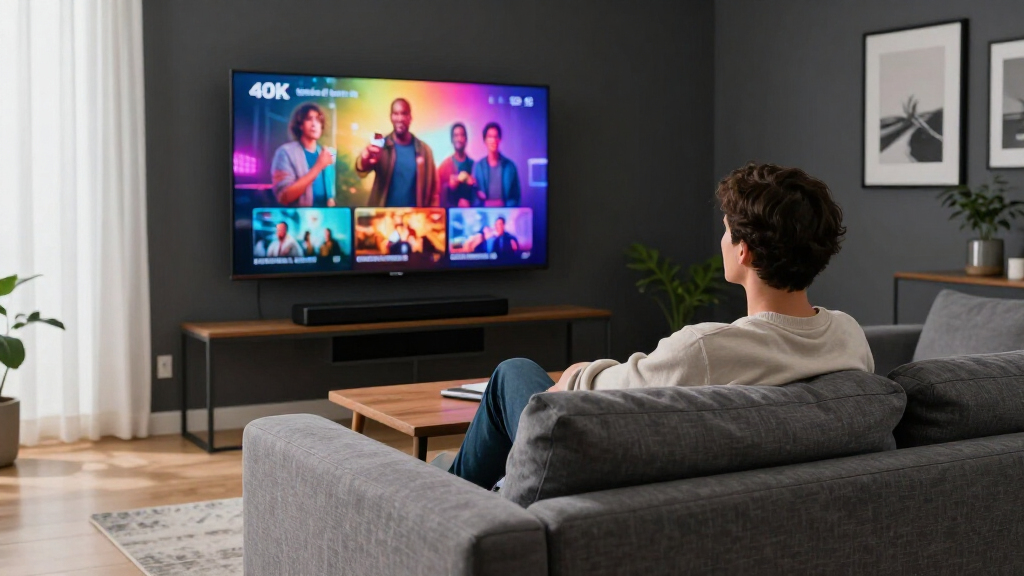

Shopping for 4K OLED TVs for media rooms comes down to one core tradeoff: screen size versus picture quality at your budget. For a dedicated media room where lights are dim and movies dominate, the Samsung 77-Inch S85F OLED stands out as my best overall pick thanks to its theater-scale footprint and strong contrast handling. If you want flagship quality with less set-up friction, the LG 83-inch C6H bundle delivers a massive panel plus cables and extended protection in one box, while the LG 65-inch C5 is the smarter value play for mid-sized rooms. Smaller spaces and gaming-first setups are better served by compact OLEDs like the Sony A90K and LG 48-inch C6, which punch above their size in black-level performance. Read on for the full breakdown, including which models are worth the premium and which ones you can safely skip.

Get business pricing on your home office setup
- Business-only prices and quantity discounts
- Tax-exempt purchasing
- Multiple users, one account, clear invoices
Complete the kit



Key Takeaways
- The Samsung 77-inch S85F earned the top spot because panel size and contrast matter most in a dark media room — its closest rival, the LG 65-inch C5, costs less but gives up a full foot of diagonal screen real estate.
- Two products in this lineup are not actually OLED: the LG 65-inch QNED73B and the Roku 55-inch Select Series are QLED/Mini LED sets included as budget comparisons, and they only make sense if price trumps black-level performance for you.
- Roku‘s 2026 Pro Series OLEDs are the easiest entry point for buyers who value a simple interface over advanced calibration — a genuine tradeoff, since picture presets are more limited than on Sony or LG panels.
- The 42-inch options (LG C6 and Samsung S90H) are priced close to larger panels, so they only justify themselves in secondary media spaces or very tight rooms — do not buy them for a primary theater setup.
- Sony‘s XR-processor models (A90K, A80K) process motion and film content better than similarly priced rivals, which matters if your media room doubles as a sports-watching space.
| LG 65-Inch QNED73B Mini LED 4K Smart TV, HDR10 Pro & AI Processor |  | Best Budget-Friendly Big Screen Alternative | Screen Size: 65 inches | Resolution: 4K | Backlighting: Mini LED | VIEW LATEST PRICE | See Our Full Breakdown |
| Sony 48 Inch A90K BRAVIA XR 4K HDR OLED Smart Google TV |  | Best Compact Premium Pick for Movie Lovers | Screen Size: 48 inches | Display Technology: OLED | Resolution: 4K HDR | VIEW LATEST PRICE | See Our Full Breakdown |
| Samsung 77-Inch Class OLED 4K S85F Series Smart TV (2025 Model) |  | Best Big-Screen Statement for Dedicated Media Rooms | Screen Size: 77 inches | Display Technology: OLED | Resolution: 4K | VIEW LATEST PRICE | See Our Full Breakdown |
| Roku 55-Inch Select Series 4K QLED Smart TV |  | Best Entry-Level Streaming Pick | Screen Size: 55 inches | Resolution: 4K (2160p) | Display Technology: QLED | VIEW LATEST PRICE | See Our Full Breakdown |
| LG 48-Inch Class OLED evo AI 4K C6 Series Smart TV, 2026 Model |  | Best for Serious Gamers in Small Spaces | Screen Size: 48 inches | Resolution: 4K | Processor: Alpha 11 AI Processor Gen3 | VIEW LATEST PRICE | See Our Full Breakdown |
| Roku 55-Inch Pro Series 4K OLED Smart TV (2026 Model) |  | Best for Streaming-First Viewers | Screen Size: 55 inches | Resolution: 4K OLED | Refresh Rate: 120Hz | VIEW LATEST PRICE | See Our Full Breakdown |
| Sony 65 Inch BRAVIA XR A80K OLED 4K HDR Smart Google TV |  | Best for Movie Nights | Screen Size: 65 inches | Display Technology: OLED | Resolution: 4K | VIEW LATEST PRICE | See Our Full Breakdown |
| Sony 48 Inch BRAVIA 6 OLED 4K HDR Smart Google TV with Gemini |  | Best Compact Premium Pick | Screen Size: 48 inches | Display Technology: OLED | Resolution: 4K HDR | VIEW LATEST PRICE | See Our Full Breakdown |
| LG 42-Inch Class OLED evo AI 4K C6 Series Smart TV, 2026 Model |  | Best for Serious Gamers | Screen Size: 42 inches | Resolution: 4K | Display Technology: OLED evo | VIEW LATEST PRICE | See Our Full Breakdown |
| Samsung 42-Inch Class S90H Series OLED 4K Smart TV (2026 Model) |  | Best for Bright Rooms | Screen Size: 42 inches | Display Technology: OLED | Resolution: 4K | VIEW LATEST PRICE | See Our Full Breakdown |
| LG 65-Inch OLED evo AI 4K C5 Series Smart TV (OLED65C5PUA, 2025) |  | Best Overall for Dedicated Media Rooms | Screen Size: 65 inches | Resolution: 4K | Panel Technology: OLED evo, self-lit pixels | VIEW LATEST PRICE | See Our Full Breakdown |
| LG 83″ OLED evo AI C6H 4K Smart TV 2026 Bundle with HDMI Cables & Extended Protection |  | Best Premium Showpiece for Large Media Rooms | Screen Size: 83 inches | Resolution: 4K | Panel Technology: OLED evo with Brightness Booster Pro | VIEW LATEST PRICE | See Our Full Breakdown |
| Roku 65-Inch Pro Series Smart TV 4K OLED 120Hz 2026 |  | Best Value OLED for Streaming-First Viewers | Screen Size: 65 inches | Resolution: 4K OLED | Panel Technology: OLED | VIEW LATEST PRICE | See Our Full Breakdown |
| 4k OLED TVs for media room | Screen Size | Resolution | Refresh Rate | Processor |
|---|---|---|---|---|
| LG 65-Inch QNED73B Mini LED 4K | 65 inches | 4K | 60Hz | A7 AI Processor 4K Gen9 |
| Sony 48 Inch A90K BRAVIA XR 4K | 48 inches | 4K HDR | — | Cognitive Processor XR |
| Samsung 77-Inch Class OLED 4K | 77 inches | 4K | 120Hz | NQ4 AI Gen2 |
| Roku 55-Inch Select Series 4K | 55 inches | 4K (2160p) | — | — |
| LG 48-Inch Class OLED evo AI 4 | 48 inches | 4K | 165Hz | Alpha 11 AI Processor Gen3 |
| Roku 55-Inch Pro Series 4K OLE | 55 inches | 4K OLED | 120Hz | — |
| Sony 65 Inch BRAVIA XR A80K OL | 65 inches | 4K | 120Hz | — |
| Sony 48 Inch BRAVIA 6 OLED 4K | 48 inches | 4K HDR | — | — |
| LG 42-Inch Class OLED evo AI 4 | 42 inches | 4K | 165Hz | Alpha 11 AI Processor Gen3 |
| Samsung 42-Inch Class S90H Ser | 42 inches | 4K | — | NQ4 AI GEN3 |
| LG 65-Inch OLED evo AI 4K C5 S | 65 inches | 4K | 120Hz native, up to 144Hz VRR | α9 AI Processor Gen8 |
| LG 83" OLED evo AI C6H 4K Smar | 83 inches | 4K | 120Hz native, up to 165Hz | α11 AI Processor 4K Gen3 |
| Roku 65-Inch Pro Series Smart | 65 inches | 4K OLED | 120Hz | — |
More Details on Our Top Picks
LG 65-Inch QNED73B Mini LED 4K Smart TV, HDR10 Pro & AI Processor
This option stands out as the value play for large media rooms where budget matters more than perfect blacks. Mini LED backlighting and Quantum Dot color get you a bright, punchy 65-inch picture at a price well below the Samsung S85F or Sony A90K, and the A7 AI Processor does respectable work upscaling older cable and streaming content. The tradeoff is fundamental: without self-lit pixels, contrast can’t match any OLED in this lineup, and the 60Hz refresh rate makes fast-moving sports and action feel less smooth than the 120Hz Samsung. Compared with the Roku Select Series, though, it delivers a bigger screen, Mini LED precision, and gaming support via FreeSync Premium. This model is better suited to buyers who want size and brightness for daytime viewing rather than a true home-theater experience after dark.
Pros:- 65-inch Mini LED panel with strong brightness for well-lit rooms
- Quantum Dot and NanoCell color for vivid, saturated picture
- AI upscaling improves older non-4K content
- FreeSync Premium and ALLM support for casual gaming
Cons:- 60Hz refresh rate makes fast action and sports less smooth than 120Hz rivals
- No self-lit pixels, so black levels and contrast trail every OLED here
Best for: Budget-conscious households who want maximum screen size and bright daytime viewing without paying OLED prices
Not ideal for: Home-theater enthusiasts who watch in a dark room and want true infinite contrast — a QNED panel simply can’t match the LG C6 or Sony A90K there
- Screen Size:65 inches
- Resolution:4K
- Backlighting:Mini LED
- HDR:HDR10 Pro
- Processor:A7 AI Processor 4K Gen9
- Refresh Rate:60Hz
- Smart Platform:webOS
Our verdict“Buy this if screen size per dollar and bright-room performance matter more to you than OLED-grade contrast.”
Sony 48 Inch A90K BRAVIA XR 4K HDR OLED Smart Google TV
For a smaller media room or den, the A90K punches far above its 48-inch size. The Cognitive Processor XR delivers reference-grade color and motion handling, and Acoustic Surface Audio+ turns the screen itself into the speaker — a genuine advantage over the LG OLED evo C6, whose built-in sound is thinner and more processing-dependent. HDMI 2.1 with 4K/120Hz, VRR, and ALLM means it keeps pace with modern consoles too, though the C6’s 165Hz panel outruns it for competitive gaming. The main tradeoffs are price per inch — you pay flagship money for a compact screen — and the usual OLED burn-in risk with static content like news tickers. Compared with the Sony 48-inch BRAVIA 6 also in this roundup, the A90K’s premium panel and audio justify its higher tier for cinephiles.
Pros:- Reference-grade OLED picture with deep blacks and natural color
- Acoustic Surface Audio+ and Dolby Atmos for standout built-in sound
- Full HDMI 2.1 gaming suite: 4K/120Hz, VRR, ALLM
- Google TV with broad app support and AirPlay 2
Cons:- Premium price for a compact 48-inch screen
- OLED panels can develop burn-in with prolonged static content
Best for: Movie-focused viewers with a smaller media room who want flagship picture and sound quality without a 65-inch panel
Not ideal for: Value-driven buyers — this costs flagship money at 48 inches, and larger screens like the LG C5 65-inch deliver more screen per dollar
- Screen Size:48 inches
- Display Technology:OLED
- Resolution:4K HDR
- Processor:Cognitive Processor XR
- HDR Support:HDR, Dolby Vision
- Gaming Features:HDMI 2.1, 4K/120Hz, VRR, ALLM
- Audio:Acoustic Surface Audio+, Dolby Atmos
Our verdict“The A90K makes the most sense for cinephiles who prioritize picture and audio quality over raw screen size.”
Samsung 77-Inch Class OLED 4K S85F Series Smart TV (2025 Model)
If your media room has the wall space, this is the flagship centerpiece pick. At 77 inches, it dwarfs everything else in this batch — the LG QNED73B gives up eight inches and all of its OLED contrast advantage, and even the LG C5 65-inch feels modest by comparison. The NQ4 AI Gen2 processor does smart upscaling of sub-4K sources, and Motion Xcelerator with a native 120Hz refresh rate keeps fast action clean. The tradeoffs are real: a premium price, no Dolby Vision support (Samsung backs HDR10+ instead, so Dolby Vision content falls back to basic HDR), and audio that — despite Object Tracking Sound Lite — still benefits from a soundbar. This pick makes the most sense for buyers building a dedicated theater space where screen impact is the priority.
Pros:- Massive 77-inch OLED panel with true blacks and high contrast
- NQ4 AI Gen2 processor upscales lower-resolution content effectively
- Native 120Hz refresh with Motion Xcelerator for clean fast action
- Slim, gallery-style design that suits modern media walls
Cons:- No Dolby Vision support — HDR10+ only
- Premium price well above mid-size OLEDs in this lineup
Best for: Owners of dedicated home theaters with 8+ feet of viewing distance who want maximum cinematic impact from OLED contrast
Not ideal for: Small or multipurpose rooms — at 77 inches it overwhelms close seating, and the premium price is wasted if you sit under 8 feet away
- Screen Size:77 inches
- Display Technology:OLED
- Resolution:4K
- Refresh Rate:120Hz
- HDR Format:HDR10+
- Processor:NQ4 AI Gen2
- Motion Technology:Motion Xcelerator
Our verdict“Choose the S85F if your room and budget can handle a 77-inch OLED and cinematic scale is the goal.”
Roku 55-Inch Select Series 4K QLED Smart TV
This model earns its spot as the easiest way into a 4K media room. The Roku platform is arguably the simplest smart interface on the market — no hunting through menus the way webOS or Google TV sometimes forces — and setup takes minutes rather than the feature-dense configuration the LG C6 demands. QLED color with HDR10 produces a bright, pleasant picture for casual streaming. The honest tradeoff: this is not an OLED. Blacks look gray next to the Roku Pro Series OLED elsewhere in this roundup, HDR support is basic HDR10 rather than Dolby Vision, and audio is unspecified enough that a soundbar is a smart add-on. Compared with the LG QNED73B, you give up screen size and Mini LED brightness but gain a friendlier interface and typically a lower price. It’s a starter TV, and a good one.
Pros:- Roku interface is among the easiest to navigate and fastest to set up
- QLED panel with HDR10 delivers bright, colorful casual viewing
- Voice control via multiple assistants plus AirPlay support
- Frameless design that looks more expensive than it is
Cons:- LED-based panel can’t match the contrast of the OLED models here
- Basic HDR10 only, with no Dolby Vision and unspecified audio quality
Best for: Streamers and secondary-room buyers who value dead-simple setup and interface over picture-quality extremes
Not ideal for: Dark-room movie watchers — without OLED contrast or Dolby Vision, it trails the Sony A90K and LG C6 noticeably in home-theater conditions
- Screen Size:55 inches
- Resolution:4K (2160p)
- Display Technology:QLED
- HDR:HDR10
- Smart TV Platform:Roku
- Connectivity:Bluetooth, Wi-Fi, Apple AirPlay
Our verdict“Pick this if simplicity and price lead your priorities; skip it if cinematic contrast is non-negotiable.”
LG 48-Inch Class OLED evo AI 4K C6 Series Smart TV, 2026 Model
This is the gaming-spec champion of the compact tier. A 165Hz refresh rate and 0.1ms response time outpace everything else in this roundup — the Sony A90K, itself a strong gaming TV at 4K/120Hz, simply can’t match that responsiveness, and PC gamers with modern GPUs will notice the difference immediately. The Alpha 11 AI Processor Gen3 and Dolby Vision also make it a fine movie screen, with the same self-lit-pixel contrast that defines LG’s OLED line. The tradeoffs: webOS 2026’s AI-heavy feature set assumes internet connectivity and leans on subscriptions, the sheer number of settings can overwhelm casual users, and at 48 inches it costs more than larger non-OLED options like the LG QNED73B. This option stands out for a gaming den or dorm-turned-media-room where speed matters most.
Pros:- 165Hz refresh rate and 0.1ms response time for near-zero lag
- OLED evo panel with Perfect Black and Dolby Vision contrast
- Alpha 11 AI Processor Gen3 for strong upscaling and picture processing
- webOS 2026 with broad streaming and AI features
Cons:- Feature-dense setup and subscription-dependent smart platform can overwhelm casual users
- Premium price for a 48-inch screen
Best for: Console and PC gamers with a small media room who want the fastest panel response available
Not ideal for: Casual viewers who just want to stream shows — the gaming-focused specs go unused, and the setup complexity plus price are hard to justify
- Screen Size:48 inches
- Resolution:4K
- Processor:Alpha 11 AI Processor Gen3
- Refresh Rate:165Hz
- Response Time:0.1ms
- HDR:Dolby Vision
- Audio:Dolby Atmos
- Smart Platform:webOS 2026
Our verdict“If gaming performance in a compact space is the priority, the C6 is the clear pick over every rival here.”
Roku 55-Inch Pro Series 4K OLED Smart TV (2026 Model)
For buyers whose media room revolves around apps rather than cable boxes, this Roku Pro Series earns its place by making the interface the star. The Roku platform is among the simplest smart TV systems available, and the remote’s voice control, backlit buttons, and remote finder solve everyday annoyances that Sony and LG models often leave to a phone app. Picture-wise, the 120Hz OLED panel with Dolby Vision and Atmos holds its own against the Sony BRAVIA XR A80K for movie nights, though Sony’s XR processing still squeezes out more refined motion handling. The two-height stand is a thoughtful touch for soundbar placement. Tradeoffs are real: this is priced above Roku’s own Select Series QLED, and like every OLED here, static content carries burn-in risk.
Pros:- Vibrant 4K OLED picture with deep blacks and rich colors
- 120Hz refresh rate keeps sports and gaming smooth
- Roku’s interface is the easiest smart platform to live with
- Thoughtful remote with voice control, backlighting, and a finder function
Cons:- Costs notably more than Roku’s own Select Series QLED, which covers basics for less
- OLED panels can develop burn-in with prolonged static content
Best for: Streamers and casual viewers who want a dead-simple interface with premium OLED picture at a midsize screen
Not ideal for: Home theater enthusiasts who want the most sophisticated motion processing — Sony’s XR chipset does that job better
- Screen Size:55 inches
- Resolution:4K OLED
- Refresh Rate:120Hz
- HDR Format:Dolby Vision
- Audio:Dolby Atmos
- Connectivity:Bluetooth
- Stand Options:Two height settings
- Design:Ultra-thin profile
Our verdict“Buy this if you want OLED picture quality without fighting a complicated smart TV interface — skip it if processing finesse is your priority.”
Sony 65 Inch BRAVIA XR A80K OLED 4K HDR Smart Google TV
When the media room exists primarily for films, the A80K’s XR Processor is the differentiator. Its AI-driven scene analysis adjusts contrast and color frame by frame, which is why movies look more cinematic here than on the Roku Pro Series despite both using OLED panels. Add IMAX Enhanced certification and a 3,000,000:1 contrast ratio from self-lit pixels, and dark-room viewing reaches a level the smaller Sony BRAVIA 6 can’t match at 48 inches — this 65-inch panel simply fills a dedicated theater space better. The built-in sound is rich enough to delay a soundbar purchase. The catch is price: at this tier, buyers are paying a premium over LG’s C-series options for processing rather than raw specs, and burn-in risk remains inherent to the panel type.
Pros:- Class-leading XR processing that refines picture quality in real time
- IMAX Enhanced and Dolby Vision support for true cinematic playback
- 65-inch size fills a dedicated media room properly
- Sleek design with unusually capable built-in sound
Cons:- Premium price well above similarly sized competitors
- OLED burn-in risk with static images over long periods
Best for: Film lovers building a dedicated dark-room theater who prioritize color accuracy and cinematic formats over value
Not ideal for: Budget-conscious buyers — the same money buys larger screens elsewhere with fewer processing refinements
- Screen Size:65 inches
- Display Technology:OLED
- Resolution:4K
- Refresh Rate:120Hz
- Contrast Ratio:3,000,000:1
- Smart Platform:Google TV
- Aspect Ratio:16:9
Our verdict“This is the pick for a movie-first media room where processing quality and cinematic formats justify the premium.”
Sony 48 Inch BRAVIA 6 OLED 4K HDR Smart Google TV with Gemini
The BRAVIA 6 carves out a niche the larger sets can’t: it delivers Sony-grade OLED quality in a 48-inch frame suited to smaller media rooms, bedrooms, or dens. Over 8 million self-lit pixels produce the contrast and color accuracy Sony is known for, and the inclusion of four HDMI 2.1 ports means a console, PC, and soundbar can all connect at full bandwidth — something the Roku Pro Series doesn’t emphasize. Google TV with Gemini handles search and voice commands cleanly, and DTS:X support is a rarity among streaming-focused rivals. Compared with the LG 42-inch C6, it trades a bit of gaming-oriented speed for Sony’s more naturalistic picture tuning. The two-position stand helps when a soundbar sits below.
Pros:- Four HDMI 2.1 ports for simultaneous console, PC, and audio connections
- Google TV with Gemini simplifies browsing and voice search
- DTS:X support alongside Dolby Vision and Atmos
- Two-position adjustable stand accommodates soundbars
Cons:- Capped at 48 inches with no larger size in this lineup
- Advanced feature set can overwhelm casual viewers who just want to watch
Best for: Apartment dwellers or secondary-room buyers who want premium OLED and full HDMI 2.1 connectivity in a space-saving size
Not ideal for: Owners of large dedicated media rooms — 48 inches will feel undersized at typical theater seating distances
- Screen Size:48 inches
- Display Technology:OLED
- Resolution:4K HDR
- Smart Platform:Google TV with Gemini
- HDMI Ports:4 (HDMI 2.1)
- Supported Formats:Dolby Vision, Dolby Atmos, DTS:X
- Stand:Two-position adjustable
Our verdict“A compact, connectivity-rich OLED for smaller rooms — choose it over the 42-inch models if ports matter more than size.”
LG 42-Inch Class OLED evo AI 4K C6 Series Smart TV, 2026 Model
Gamers get the most aggressive spec sheet here of anything in this batch: a 165Hz refresh rate paired with a 0.1ms response time, plus G-SYNC and FreeSync support. Against the Samsung 42-inch S90H, which matches the 165Hz figure, the C6 counters with LG’s Alpha 11 AI Processor Gen3 and dual-platform flexibility — webOS 2026 alongside Google Gemini integration. Perfect-black OLED rendering makes dimly lit game scenes legible in ways LED sets like the LG QNED73B can’t replicate. The customizable gallery display is a nice bonus that disguises the TV as art when idle. The compromises: those gaming credentials cost a premium at this small screen size, and buyers pairing it with a PC will need a graphics card capable of feeding 4K at high refresh rates to actually use them.
Pros:- 165Hz refresh rate and 0.1ms response time for competitive gaming
- G-SYNC and FreeSync support eliminates screen tearing
- Alpha 11 AI Processor Gen3 delivers refined upscaling and picture tuning
- Customizable gallery mode doubles the TV as wall art
Cons:- Premium price for the screen size
- A capable PC graphics card is required to exploit 4K 165Hz gaming
Best for: PC and console gamers with capable hardware who want competitive-grade responsiveness in a small OLED
Not ideal for: Movie-first buyers on a budget — the gaming specs go unused and a larger screen would serve them better per dollar
- Screen Size:42 inches
- Resolution:4K
- Display Technology:OLED evo
- Processor:Alpha 11 AI Processor Gen3
- Refresh Rate:165Hz
- Response Time:0.1ms
- Smart Platform:webOS 2026, Google Gemini
- HDR Format:Dolby Vision
Our verdict“If gaming performance is the deciding factor and 42 inches fits the room, this is the strongest spec-per-inch choice in the lineup.”
Samsung 42-Inch Class S90H Series OLED 4K Smart TV (2026 Model)
What separates the S90H from the LG C6 it competes with most directly is glare-free technology — a genuine advantage for media rooms with windows or lamps that would wash out a reflective panel. Samsung pairs that with AI 4K upscaling driven by the NQ4 AI GEN3 processor, so older cable and streaming content looks sharper than it has any right to, and the AI Motion Enhancer Pro keeps fast action clean. Gaming support mirrors the LG at 165Hz with G-SYNC and FreeSync Premium Pro, making the choice between them largely about environment and ecosystem rather than speed. Buyers should temper expectations on two fronts: 165Hz gaming demands a compatible PC, and upscaling quality varies with the source material — heavily compressed streams will still show their limits.
Pros:- Glare-free screen technology performs in rooms other OLEDs struggle with
- 165Hz refresh rate with G-SYNC and FreeSync Premium Pro
- NQ4 AI GEN3 processor upscales legacy content toward 4K quality
- AI Motion Enhancer Pro reduces blur in fast-paced scenes
Cons:- 4K 165Hz gaming requires a PC with a compatible graphics card
- Upscaling results depend heavily on source quality
- Performance varies with connected devices and content
Best for: Buyers with sunlit or lamp-lit media rooms who need reflection control without giving up OLED blacks or gaming speed
Not ideal for: Owners of older GPUs or console-only gamers — much of the 165Hz headline goes untapped without a capable PC
- Screen Size:42 inches
- Display Technology:OLED
- Resolution:4K
- HDR Format:HDR+
- Processor:NQ4 AI GEN3
- Gaming Features:165Hz, G-SYNC, FreeSync Premium Pro
- Reflections:Glare Free technology
- Model Year:2026
Our verdict“The right 42-inch OLED when reflections are your enemy — pick the LG C6 instead only if glare isn’t a concern.”
LG 65-Inch OLED evo AI 4K C5 Series Smart TV (OLED65C5PUA, 2025)
The C5 hits the sweet spot most media rooms actually need: a 65-inch OLED evo panel, four full HDMI 2.1 ports, and gaming performance — 0.1ms response, 144Hz VRR, G-Sync and FreeSync — that rivals dedicated gaming monitors. Compared with the Roku 65-Inch Pro Series, the C5 offers far richer processing through its α9 AI Processor Gen8, which refines motion and upscaling for film content, not just games. And unlike the LG 83-inch C6H bundle, it delivers nearly the same flagship experience at a price that leaves room in the budget for a soundbar or seating. The tradeoffs are real, though: the premium pricing stings, and digging through webOS 25 settings to dial in the picture takes patience. Still, this is the pick I’d point most buyers toward.
Pros:- Self-lit pixels deliver deep blacks and vivid color for dark-room movie nights
- Four HDMI 2.1 ports with 144Hz VRR and 0.1ms response time handle consoles and PCs simultaneously
- Art Gallery Mode turns the TV into wall art when not in use
- Dolby Vision and Atmos support for a full cinematic experience
Cons:- Premium price sits well above mid-range OLEDs like the Roku Pro Series
- Advanced AI and webOS settings require setup time to get right
- No larger size option if your room demands a bigger panel
Best for: Home theater enthusiasts who want flagship OLED picture and gaming performance at a mainstream size and price
Not ideal for: Buyers on tight budgets or those wanting a truly massive screen — the 65-inch panel and premium price are bettered by the 83-inch C6H for big rooms
- Screen Size:65 inches
- Resolution:4K
- Panel Technology:OLED evo, self-lit pixels
- Processor:α9 AI Processor Gen8
- Refresh Rate:120Hz native, up to 144Hz VRR
- HDR:Dolby Vision
- HDMI Inputs:4 x HDMI 2.1
- Smart Platform:webOS 25
Our verdict“If you want one TV that does movies, sports, and gaming equally well in a typical media room, this is the safest premium spend on this list.”
LG 83″ OLED evo AI C6H 4K Smart TV 2026 Bundle with HDMI Cables & Extended Protection
When a dedicated media room can handle it, nothing matches the impact of an 83-inch OLED. This C6H pairs its massive panel with Brightness Booster Pro and Hyper Radiant Color Tech, addressing the one weakness smaller OLEDs like the LG C5 can’t fully overcome: peak brightness in rooms with ambient light. Its 165Hz gaming refresh even edges past the C5’s 144Hz ceiling. The bundle sweetens the deal with HDMI cables and an extended protection plan — genuinely useful on a TV this expensive — but you’re paying for that convenience up front. At 72.5 inches wide and nearly 73 pounds, plan for two-person installation and verify your wall or stand can carry it. This is the statement purchase; the C5 is the sensible one.
Pros:- Brightest, most color-rich picture in this lineup thanks to Brightness Booster Pro
- 165Hz refresh rate with G-Sync support for high-end PC gaming
- Bundle includes HDMI cables and extended protection for long-term peace of mind
- α11 AI Processor 4K Gen3 delivers the most advanced upscaling of the group
Cons:- Enormous footprint and 72.8-pound weight make placement and mounting a project
- Bundle pricing pushes the total cost well above every other pick here
- Feature depth means a steeper setup learning curve than simpler options
Best for: Owners of large, light-controlled media rooms who want a flagship theater centerpiece with accessories included
Not ideal for: Small or multi-purpose rooms — at 83 inches and premium bundle pricing, it overwhelms both the space and modest budgets
- Screen Size:83 inches
- Resolution:4K
- Panel Technology:OLED evo with Brightness Booster Pro
- Processor:α11 AI Processor 4K Gen3
- Refresh Rate:120Hz native, up to 165Hz
- HDR Support:HDR10, Dolby Vision, Hybrid Log Gamma
- HDMI Ports:4
- Width:72.5 inches
Our verdict“Choose this only if your room and budget are truly big — for everyone else, the C5 delivers 90% of the experience for far less hassle.”
Roku 65-Inch Pro Series Smart TV 4K OLED 120Hz 2026
Not every media room needs flagship processing, and that’s exactly where this Roku Pro Series earns its spot. You still get the OLED fundamentals — perfect blacks, rich color, a 120Hz panel for sports and gaming — but wrapped in the simplest interface of any TV here. Where the LG C5 asks you to navigate webOS 25 menus to tame AI features, Roku gets you streaming within minutes of unboxing, and the included remote with voice control and backlit buttons beats what most competitors include at any price. Compared with the Roku 55-inch Pro Series, the extra 10 inches matter in a media room context. The compromises: picture processing and motion handling fall short of LG’s α9 chip, and there’s no cutting-edge HDMI 2.1 gaming feature set for serious enthusiasts.
Pros:- Genuine OLED contrast and color at a friendlier price than the LG C5
- Roku interface is the easiest to use and set up in this roundup
- 120Hz panel handles fast sports and casual gaming well
- Backlit voice remote with a remote-finder feature is genuinely useful in a dark media room
Cons:- Picture processing and motion smoothing trail LG’s AI-driven processors
- Fewer advanced gaming features than HDMI 2.1-focused competitors
Best for: Streamers and casual viewers who want genuine OLED quality without wrestling with complex settings or flagship pricing
Not ideal for: Hardcore gamers and home theater calibration fans — it lacks the VRR depth and processing power of the LG C5 or C6H
- Screen Size:65 inches
- Resolution:4K OLED
- Panel Technology:OLED
- Refresh Rate:120Hz
- HDR:Dolby Vision
- Audio:Dolby Atmos
- Remote:Voice control, backlit buttons, remote finder
- Design:Ultra-thin profile, tool-less adjustable stands
Our verdict“This is the smart pick if you mostly stream and want OLED blacks without paying for gaming hardware you’ll never use.”

How We Picked
My ranking logic for this roundup starts with the media room context itself: a controlled-light environment where OLED’s perfect blacks and off-angle viewing can be fully appreciated. That changes the weight of each criterion. Contrast and black uniformity come first, followed by screen size relative to price, because a dedicated room with proper seating distance rewards larger panels far more than a bright living room does. Processing quality — how well each TV handles film grain, motion, and upscaling — was the third filter, since media rooms are for movie nights first.
From there I weighed smart platform usability, HDMI 2.1 bandwidth for console gaming, and long-term considerations like burn-in risk mitigation and warranty coverage. Value was judged holistically: the LG 65-inch C5 ranks above more feature-laden rivals because its price-to-picture ratio is excellent, while the 83-inch C6H bundle earns its premium slot for buyers who want a turnkey large-format setup. Models with weaker smart platforms or limited calibration options ranked lower even when panel quality was competitive — in a media room, you will interact with the interface every single viewing session.
Factors to Consider When Choosing 4k OLED TVs For Media Rooms
Before settling on a specific model, it helps to understand what actually separates a good media room OLED from an expensive mistake. These are the factors that shaped my rankings, and the ones most buyers underweight when comparing spec sheets.Match Screen Size to Seating Distance, Not Your Budget Ceiling
The most common error in media room planning is buying a panel that is too small for the seating distance. A 65-inch TV viewed from twelve feet away feels underwhelming no matter how good its contrast ratio is; the general guideline is one inch of diagonal per foot of distance for cinematic immersion, slightly less if the room doubles as casual viewing space. This is why the 77-inch and 83-inch models rank so highly here — a dedicated media room is the one environment where panel size genuinely changes the experience. Conversely, buying a 42-inch set for a primary theater setup wastes the OLED advantage, since you will be straining to see the detail the panel is capable of. Measure your room first, then shop within that size class, and resist the urge to downsize purely to save money — the size upgrade delivers more perceived improvement than a spec bump ever will.
True OLED Versus OLED-Labeled Alternatives
This roundup deliberately includes a QNED and a QLED model because the marketing language around these terms confuses buyers every year. OLED panels light each pixel individually, producing the perfect blacks that make dark-room movie viewing exceptional. QLED and QNED sets use LED backlights with quantum-dot enhancement — brighter in sunlit rooms, but they cannot match OLED contrast, and that difference is magnified in a dark media room. The tradeoff is real in both directions: backlit panels resist burn-in, hit higher peak brightness, and cost less per inch. If your media room has uncontrollable daylight or you watch a lot of static-content channels, a Mini LED option like the QNED73B is a defensible choice. If the room gets dark and movies are the priority, the OLED premium pays for itself every viewing session.
HDMI 2.1 and Refresh Rate for Gaming Media Rooms
A media room that hosts a PlayStation 5 or Xbox Series X needs full HDMI 2.1 bandwidth — 48Gbps across multiple ports, 4K at 120Hz, and low input modes. LG’s C-series and the Roku Pro Series handle this well, but port count varies, and a single 2.1 port becomes a bottleneck once you add a soundbar and a console. Buyers should also check whether the TV passes full-bandwidth audio formats like eARC for Dolby Atmos through to an audio system, since most media rooms eventually add one. Refresh rate matters less for film watchers but a great deal for sports fans — motion processing quality, which Sony does best in this lineup, reduces blur on fast pans. Decide now whether gaming is a primary or occasional use, because it changes which models represent good value.
Smart Platform Lock-In Is a Long-Term Decision
Unlike a soundbar or a streaming stick, you cannot easily swap a TV’s operating system, so the interface you buy is the interface you live with for five to seven years. Roku’s platform is the simplest and least cluttered, which is why the Roku Pro Series ranks well for beginners — but it offers less calibration depth than webOS or Google TV. Sony’s Google TV models excel at content discovery and integrate cleanly if you already use Google hardware, at the cost of more ads and preinstalled apps. LG’s webOS sits in between with strong gaming features but a homepage that has grown busier over the years. None of these are dealbreakers, but buyers who hate fiddling with menus should weight this factor more heavily than they probably do.
Brightness, ABL, and Burn-In Realities
OLED panels dim their brightest elements to protect longevity — a behavior called automatic brightness limiting that becomes visible in sustained bright scenes or long sports broadcasts. Newer generations like LG’s OLED evo and Samsung’s QD-OLED mitigate this well, which is part of why the 2025 and 2026 models dominate the top of this list. Burn-in risk is lower than early OLED days but not zero: static channel logos, news tickers, and HUD-heavy gaming over thousands of hours can leave residual images. Mitigations like pixel refresh cycles and screen-shift features are standard now, and the extended protection included with the LG 83-inch bundle adds a safety net worth having on a panel that expensive. For mixed-use households, vary your content and you will likely never notice; for a news-channel-all-day household, choose a backlit panel instead.
Soundbars, Bundles, and Total Cost of Ownership
OLED panels are thin by design, which means built-in speakers are almost universally mediocre — budget for a soundbar or receiver from day one rather than discovering it after setup. This is where bundle deals deserve attention: the LG 83-inch C6H package includes HDMI cables and extended protection, items that would cost hundreds separately on a panel that size. Also factor in a quality HDMI 2.1 cable if you game, since bargain cables can fail to carry full bandwidth. Wall-mounting an 83-inch OLED requires rated hardware and ideally two people, so include installation in your mental budget. Comparing sticker prices alone systematically underestimates what a media room actually costs to complete, and the models that ship as complete packages often close the gap on more than price.
Frequently Asked Questions
Is the Samsung 77-inch S85F worth the premium over the LG 65-inch C5?
It depends almost entirely on your seating distance. If your couch sits nine feet or farther from the screen, the extra twelve inches of diagonal makes a visible difference in immersion and justifies the price gap for a dedicated media room. At closer distances, the C5’s OLED evo panel delivers nearly the same black-level and motion performance in a cheaper, more manageable package. The S85F also runs Samsung’s Tizen platform, which some buyers prefer over webOS for its cleaner layout. If you sit close and do not need the size, save the money and put it toward a soundbar — that upgrade will be more noticeable than the panel difference.
Why are the 42-inch OLEDs almost as expensive as larger models?
OLED pricing scales poorly at small sizes because the panel fabrication cost does not shrink proportionally with area — you are paying mostly for the underlying technology, not the glass. That makes 42-inch sets like the LG C6 and Samsung S90H poor value for a primary media room, where a 55- or 65-inch panel costs only modestly more. Where they make sense is secondary spaces: a bedroom overflow screen, a compact den, or a desk-adjacent gaming setup where OLED response time matters more than scale. If your media room is genuinely small — under ten feet deep with seating close to the wall — a 42-inch OLED is a defensible choice. Otherwise, treat these as niche options rather than value picks.
Should I buy the Roku OLED or an LG C-series for the same money?
The Roku Pro Series OLEDs win on simplicity: the interface is the least cluttered of any option here, setup takes minutes, and there is less to configure wrong. The LG C-series wins on depth — more HDMI 2.1 bandwidth flexibility, finer calibration controls, better gaming features, and generally stronger processing. If everyone in your household just wants to press one button and watch Netflix, the Roku is honestly the better user experience. If you tinker with picture settings, game on consoles, or care about filmmaker modes, the C-series rewards the extra learning curve. Both have genuine OLED picture quality, so the decision is about the ecosystem you want to live inside, not raw image performance.
Is the 83-inch LG bundle a gimmick or a real deal?
The bundle structure is more practical than gimmicky at this price tier. Certified high-speed HDMI cables rated for full 2.1 bandwidth genuinely cost real money, and extended protection on a five-figure-adjacent panel addresses the one risk OLED buyers worry about most — panel failure and burn-in disputes. An 83-inch screen also amplifies any defect, so coverage has more expected value than it would on a 55-inch set. The honest caveat is that the underlying TV suits only large rooms with seating twelve feet or more away; at closer distances the pixel density advantage disappears and the size becomes overwhelming. If your space fits it, the bundle removes the usual post-purchase nickel-and-diming; if it does not, step down to the 77-inch S85F instead.
Do I need a Sony processor if I mostly watch movies?
Sony’s XR processing earns its reputation on motion handling and film grain retention — content looks natural rather than over-processed, and fast pans in sports or action films stay cleaner than on most rivals. For pure movie watchers, the advantage is real but subtler than the price difference suggests; LG and Samsung panels are close enough that most viewers would struggle to identify the difference in a blind comparison. Where Sony pulls ahead is mixed content: sports broadcasts, older upscaled material, and animated content all benefit more visibly from the extra processing. If your media room hosts Sunday football as often as movie night, the A80K or the Bravia 6 justifies its premium. If it is strictly cinematic viewing, the LG C-series delivers comparable film performance for less.
Conclusion
The right pick from this lineup depends less on spec sheets than on your room and habits. For most buyers, the Samsung 77-inch S85F is the best overall choice — it pairs a true theater-scale panel with the contrast and brightness that a dark media room rewards. The best value is the LG 65-inch C5, which delivers flagship-adjacent picture quality at a price that leaves room in the budget for audio. The best premium option is the LG 83-inch C6H bundle, a complete large-format package for rooms with the depth to do it justice, and the Sony A80K earns the premium-processing slot for sports-heavy households.
For beginners, the Roku 65-inch Pro Series OLED offers the friendliest setup and interface of any true OLED here, while the Sony A90K and LG 48-inch C6 are the compact picks for gaming dens and secondary spaces. And if your room fights you on brightness rather than darkness, the LG QNED73B stands out as the backlit alternative that trades perfect blacks for peak brightness and a lower price. Measure your room, be honest about how you watch, and one of these thirteen will be the obvious answer.