
TL;DR

Get business pricing on your home office setup
- Business-only prices and quantity discounts
- Tax-exempt purchasing
- Multiple users, one account, clear invoices
House Beautiful published advice from Irish interior designers on seven features they say make homes feel warmer and more personal. The suggestions include Georgian architectural details, natural materials, a fireplace as a gathering point, and combining old belongings with newer design; the article presents them as design ideas, not measured evidence of results.
House Beautiful has published seven design ideas drawn from Irish homes, including using natural materials, arranging furniture around a fireplace and mixing older belongings with contemporary pieces. The report quotes Galway-based designer Niamh McKenna and designer Julianne Kelly, who describe how Ireland’s climate, architecture and domestic traditions inform their approach.
Kelly recommends retaining or drawing inspiration from Georgian details, such as high ceilings, ornate cornicing, sash windows, fireplaces and paneled doors. She says these features can give rooms a sense of history and permanence. The article points readers to Dublin’s Merrion Square as a place to see Georgian architecture and painted doors.
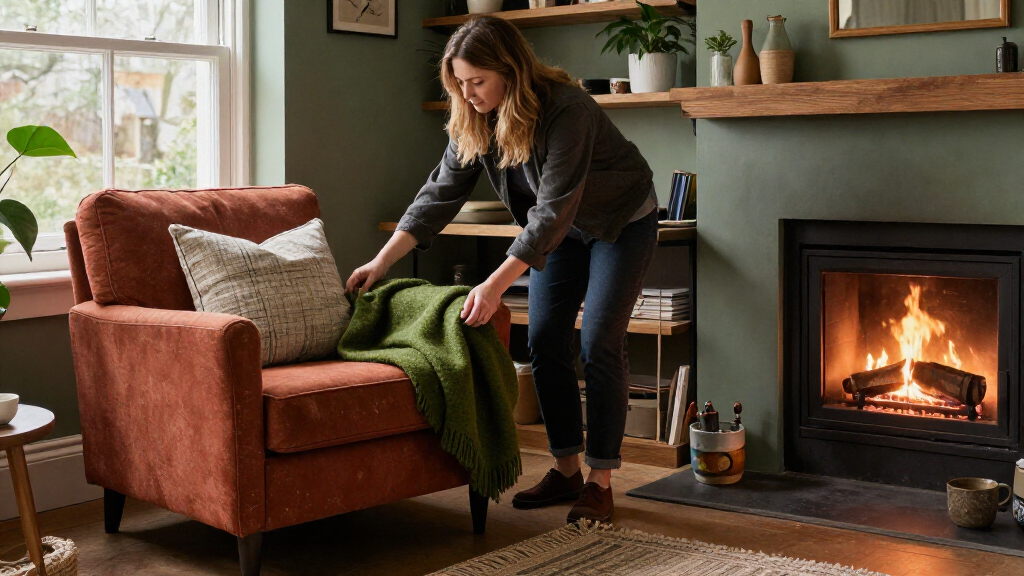
For interiors influenced by the Irish landscape, Kelly uses greenery, stone, timber, wool and linen, alongside colors drawn from the surroundings. She says natural textiles can add warmth and a sense of calm. Another suggestion is to treat the fireplace as a room’s focal point. Kelly and McKenna say arranging seating around a hearth can encourage conversation instead of centering the room on a television.
The remaining ideas focus on combining old and new, giving practical rooms such as kitchens and bathrooms careful design attention, and responding to local architecture and climate. McKenna describes Irish homes as traditionally needing to be functional and adaptable to cold, damp and changeable weather, while Kelly says many Irish clients want to keep sentimental possessions and incorporate them into a room.
Comfort Built Into Everyday Rooms
The designers’ advice is relevant to readers looking for ways to make rooms feel more welcoming without treating comfort as separate from function. The report connects seating arrangements, materials and personal objects with how people use a home: a fireplace can become a gathering point, while durable natural finishes can suit busy spaces.
Its practical message is to adapt ideas to the home rather than copy a particular look. A fireplace need not be wood-burning or ornate to serve as a focal point, according to the article; likewise, a smaller home can combine storage and daily use with thoughtful materials and details. These are designers’ recommendations, not findings from a survey or a guarantee that a given change will improve comfort for every household.
Products Worth Considering

Levoit Core 600S-P Smart Air Purifier for Large Rooms

Blueair Blue Pure 211i Max Air Purifier for Large Rooms

Bose Lifestyle Ultra Wireless Home Speaker, White Smoke
As an affiliate, we earn on qualifying purchases.
Climate and Georgian Influences
The source places the advice in Ireland’s cold, damp and unpredictable climate, which McKenna says has shaped the need for comfortable, adaptable homes. She also notes that traditional homes are often smaller, so rooms must work for everyday life. The article links this practical approach with natural materials and attention to hardworking areas such as kitchens and bathrooms.
It also points to Ireland’s architectural history. During the Georgian era, from the early 1700s to the early 1800s, Dublin saw substantial redevelopment, according to the report’s reference to History Ireland. Kelly says features from that period remain a source of inspiration. The report does not establish how widespread each practice is across Irish homes; it presents perspectives from two designers.
“These details give a room a sense of history and permanence.”
— Julianne Kelly, designer, speaking to House Beautiful
How Widely These Ideas Apply
The report offers two designers’ perspectives, not a representative study of Irish interiors or evidence that these choices produce specific outcomes. It does not provide survey data, cost estimates or comparisons between homes that use these ideas and those that do not. The article also gives no publication date in the supplied source material, and it is unclear how the suggestions translate to homes with different layouts, budgets or climates.
Adapting the Ideas at Home
House Beautiful’s report does not announce a product launch, policy change or scheduled follow-up. Readers can take the suggestions as design options to adapt: preserve a period feature where possible, add natural textures, arrange seating to support conversation, or incorporate meaningful older objects. The source provides no specific next milestone beyond sharing the designers’ guidance.
Key Questions
What are the seven design ideas in the report?
The ideas are to draw on Georgian details, bring natural materials and colors indoors, make a fireplace a focal point, mix old and new, design practical rooms with care, and account for the home’s architecture and climate. The report groups these into seven design themes, although some overlap.
Which designers are quoted?
The report quotes Julianne Kelly and Niamh McKenna, a Galway-based designer. Their comments describe their own design approaches and observations of clients’ homes.
Does the report say every Irish home follows these styles?
No. It presents advice and observations from two designers. It does not include data showing how common the styles are across Irish households.
What does the report recommend for a fireplace?
Kelly and McKenna suggest making the hearth a natural focal point and arranging furniture around it to support gathering and conversation. The report says the fireplace can be ornate or simple; it does not require a particular fuel or design.
Source: housebeautiful.com