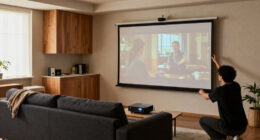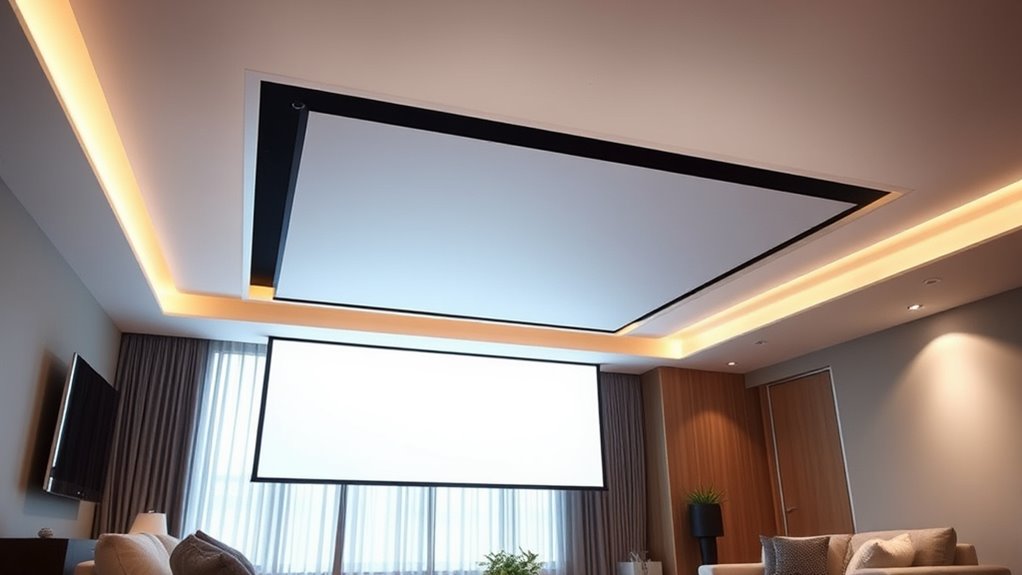
Shopping for screens for ceiling projection means choosing between three main formats: motorized electric screens that descend with a remote, manual pull-down screens that trade convenience for a lower price, and portable foldable screens for occasional use. My top pick is the DINAH 120 Inch Electric Projector Screen with Remote, which pairs a large 16:9 viewing area with smooth motorized operation at a price point that undercuts most motorized rivals. If you want to spend less, the Elite Screens Manual B M100H is the strongest manual option thanks to its 4K/8K-ready surface and reliable retraction mechanism, while the SUPER DEAL 80-inch foldable screen covers outdoor and occasional indoor viewing for a fraction of the cost. The core tradeoff in this category is convenience versus price, followed closely by screen size versus room height, since larger screens need generous drop distance to sit at a comfortable viewing height. Read on for the full breakdown of all 14 screens and which one fits your room, projector, and budget.

Get business pricing on your home office setup
- Business-only prices and quantity discounts
- Tax-exempt purchasing
- Multiple users, one account, clear invoices
Complete the kit


Key Takeaways
- Motorized screens (DINAH, VIVOHOME 100-inch Motorized, 100-inch RF Remote model) dominated the top spots because ceiling projection setups benefit most from remote-controlled drop and retraction without touching the screen.
- VIVOHOME dominates this lineup by volume, but its color variants matter: the black-cased versions blend into dark ceilings and home theaters, while white cases suit bright offices and classrooms.
- Screen format separated the field more than size — the 1:1 VIVOHOME 120-inch screens suit presentations and older content, while every 16:9 option is the better match for movies, gaming, and streaming.
- Manual pull-down screens from Elite Screens (Manual B and Manual Series M80UWH) beat similarly sized VIVOHOME manuals on mechanism quality and surface flatness, making them the smarter buy for permanent home theater use.
- The 72-inch and 80-inch models make sense only for small rooms or offices with low ceilings; anything under 100 inches wastes the potential of ceiling-mounted projection in a typical living room.
- Only one product in the lineup (the SUPER DEAL foldable) works well outdoors, so buyers wanting backyard movie nights should not overpay for wall-mounted electric models.
| DINAH 120 Inch Electric Projector Screen with Remote |  | Best Motorized Pick | Screen Size: 120 inches diagonal | Viewing Area: 87W x 49H inches | Aspect Ratio: 16:9 | VIEW ON AMAZON | See Our Full Breakdown |
| SUPER DEAL 80 Inch 16:9 HD Manual Pull Down Projection Screen |  | Best Budget Pick | Screen Size: 80 inches diagonal | Viewing Area: 73W x 46H inches | Aspect Ratio: 16:9 | VIEW ON AMAZON | See Our Full Breakdown |
| VIVOHOME 100 Inch 16:9 Pull Down Projector Screen, Black |  | Best Low-Profile Design | Screen Size: 100 inches diagonal | Viewing Area: 87W x 49H inches | Overall Size: 92 x 59 inches | VIEW ON AMAZON | See Our Full Breakdown |
| VIVOHOME 100 Inch 16:9 Pull Down Projector Screen, White |  | Best Value 100-Inch | Screen Size: 100 inches diagonal | Viewing Area: 87W x 49.2H inches | Overall Size: 92.1W x 57.5H inches | VIEW ON AMAZON | See Our Full Breakdown |
| VIVOHOME 72 Inch 16:9 Manual Pull Down Projector Screen, White |  | Best for Small Rooms | Screen Size: 72 inches diagonal | Aspect Ratio: 16:9 | Viewing Surface: 63W x 35.4H inches | VIEW ON AMAZON | See Our Full Breakdown |
| VIVOHOME 120 Inch 1:1 Pull Down Projector Screen, White |  | Best for Square-Format Presentations | Screen Size: 120 inches diagonal | Aspect Ratio: 1:1 | Viewing Surface: 84 x 84 inches | VIEW ON AMAZON | See Our Full Breakdown |
| VIVOHOME 80 Inch 16:9 Pull Down Projector Screen, White |  | Best Value Pick | Screen Size: 80 inches diagonal | Aspect Ratio: 16:9 | Viewing Surface: 70 x 40 inches | VIEW ON AMAZON | See Our Full Breakdown |
| VIVOHOME 80 Inch 16:9 Pull Down Projector Screen, Black |  | Best for Bright Rooms | Screen Size: 80 inches diagonal | Aspect Ratio: 16:9 | Viewing Surface: 69.7W x 39.4H inches | VIEW ON AMAZON | See Our Full Breakdown |
| VIVOHOME 120 Inch 1:1 Pull Down Projector Screen, Black |  | Best for Large Venues | Screen Size: 120 inches diagonal | Aspect Ratio: 1:1 | Viewing Surface: 83.9 x 83.9 inches | VIEW ON AMAZON | See Our Full Breakdown |
| 100 Inch Motorized Projector Screen with RF Remote, 16:9 HD, Silver Case |  | Best Overall Motorized Pick | Screen Size: 100 inches diagonal | Aspect Ratio: 16:9 | Viewing Area: 87″ W x 48.8″ H | VIEW ON AMAZON | See Our Full Breakdown |
| 80 Inch 16:9 Portable Manual Pull-Down Projector Screen |  | Best Budget-Friendly Starter | Screen Size: 80 inches diagonal | Aspect Ratio: 16:9 | Viewing Angle: 160 degrees | VIEW ON AMAZON | See Our Full Breakdown |
| Elite Screens Manual Series 80-Inch Pull Down Projector Screen with Auto Lock (M80UWH) |  | Best Build Quality in a Manual Screen | Screen Size: 80 inches diagonal | Aspect Ratio: 16:9 | Viewing Area: 69.7″ W x 39.2″ H | VIEW ON AMAZON | See Our Full Breakdown |
| VIVOHOME 100 Inch 16:9 Motorized Projector Screen, White |  | Best for Bright Rooms | Screen Size: 100 inches diagonal | Aspect Ratio: 16:9 | Screen Dimensions: 87″ W x 48.8″ H | VIEW ON AMAZON | See Our Full Breakdown |
| screens for ceiling projection | Screen Size | Aspect Ratio | Mounting | Viewing Angle |
|---|---|---|---|---|
| DINAH 120 Inch Electric Projec | 120 inches diagonal | 16:9 | Ceiling or wall mount | 160 degrees |
| SUPER DEAL 80 Inch 16:9 HD Man | 80 inches diagonal | 16:9 | Wall mount (hooks, ropes, or brackets) | 160 degrees |
| VIVOHOME 100 Inch 16:9 Pull Do | 100 inches diagonal | 16:9 | Wall or ceiling mount (hardware not included) | 160 degrees |
| VIVOHOME 100 Inch 16:9 Pull Do | 100 inches diagonal | 16:9 | Ceiling or wall mount | 160 degrees |
| VIVOHOME 72 Inch 16:9 Manual P | 72 inches diagonal | 16:9 | Wall or ceiling | 160 degrees |
| VIVOHOME 120 Inch 1:1 Pull Dow | 120 inches diagonal | 1:1 | Wall or ceiling (hardware not included) | 160 degrees |
| VIVOHOME 80 Inch 16:9 Pull Dow | 80 inches diagonal | 16:9 | Wall or ceiling (hardware not included) | 160 degrees |
| VIVOHOME 80 Inch 16:9 Pull Dow | 80 inches diagonal | 16:9 | Wall or ceiling | 160 degrees |
| VIVOHOME 120 Inch 1:1 Pull Dow | 120 inches diagonal | 1:1 | Wall or ceiling | 160 degrees |
| 100 Inch Motorized Projector S | 100 inches diagonal | 16:9 | Wall or ceiling | 160 degrees |
| 80 Inch 16:9 Portable Manual P | 80 inches diagonal | 16:9 | Wall or ceiling | 160 degrees |
| Elite Screens Manual Series 80 | 80 inches diagonal | 16:9 | Wall or ceiling (L-brackets sold separately) | 180 degrees |
| VIVOHOME 100 Inch 16:9 Motoriz | 100 inches diagonal | 16:9 | Ceiling or wall mount | 160 degrees |
More Details on Our Top Picks
DINAH 120 Inch Electric Projector Screen with Remote
The DINAH 120-inch electric screen is the only motorized option in this batch, and that difference defines it. Where the VIVOHOME 100 Inch pull-down requires a manual yank and a locking mechanism, this model lowers and retracts at the press of a remote — which matters most when the screen hangs from a ceiling high enough that reaching a pull handle gets awkward. The 120-inch diagonal also buys a genuinely cinematic footprint for dedicated home theater rooms. The tradeoff is weight and complexity: at roughly 12 kg with a motor inside, installation is a two-person job, and a motorized unit is simply more things that can fail over a decade than a spring-roller design like the Elite Screens Manual B. There is no smart-home integration or trigger port here either, so automation-minded buyers may find the remote the ceiling of its convenience.
Pros:- Motorized drop-down with included remote for effortless ceiling operation
- 120-inch diagonal delivers a true home-cinema footprint
- 4K and 3D-ready surface with a 160-degree viewing angle
- Retracts fully out of sight, keeping rooms clean when not in use
Cons:- Roughly 12 kg motorized assembly makes ceiling installation a two-person job
- No projector-trigger port or smart-home integration for automated setups
- Motor adds long-term failure points that simple manual rollers avoid
Best for: Home theater owners who want a large 120-inch image that disappears into the ceiling at the touch of a button
Not ideal for: Budget-conscious buyers or renters — it is heavy, motorized hardware that demands secure mounting and offers no portability
- Screen Size:120 inches diagonal
- Viewing Area:87W x 49H inches
- Aspect Ratio:16:9
- Operation:Motorized with remote control
- Mounting:Ceiling or wall mount
- Viewing Angle:160 degrees
- Screen Finish:Matte white
- Weight:11.79 kg (about 26 lbs)
Our verdict“This pick makes the most sense for permanent home theater installs where remote-controlled retractability justifies the extra weight and cost.”
SUPER DEAL 80 Inch 16:9 HD Manual Pull Down Projection Screen
For a first projector setup, the SUPER DEAL 80-inch manual screen covers the basics without asking much in return. The 1.1 gain CineWhite-style surface with a fully black-backed PVC layer keeps light from bleeding through, and the black masking border does real work sharpening perceived contrast — a feature cheaper fixed screens often skip. Compared with the VIVOHOME 80-inch pull-down, this one leans harder on versatility: it can be hung with hooks, ropes, or brackets, making it a plausible backyard-movie-night option, not just a ceiling fixture. The catch is the size and mechanism. Eighty inches feels small once you have seen the Elite Screens Manual B at 100 inches, and the auto-lock mechanism adjusts only in 2-inch steps, so fine height tuning takes patience. The housing also feels more utilitarian than the VIVOHOME’s metal casing.
Pros:- Black-backed, anti-crease PVC surface with 1.1 gain for solid image pop
- Multiple hanging options (hooks, ropes, brackets) allow indoor and outdoor use
- Black masking border visibly improves contrast
- Compatible with standard, short-throw, and UHD/HD projectors
Cons:- 80-inch diagonal is modest for a primary home theater
- Auto-lock adjusts only in 2-inch increments, limiting precise height placement
- Wall-mount housing is lighter-duty than the metal casings on VIVOHOME models
Best for: First-time projector owners and casual viewers who want a functional pull-down screen for movies, gaming, or presentations without a big commitment
Not ideal for: Dedicated home theater builders — the 80-inch size and budget housing will feel limiting next to 100-inch and motorized alternatives
- Screen Size:80 inches diagonal
- Viewing Area:73W x 46H inches
- Aspect Ratio:16:9
- Operation:Manual pull-down with auto-lock
- Mounting:Wall mount (hooks, ropes, or brackets)
- Viewing Angle:160 degrees
- Gain:1.1
- Material:PVC, black-backed
Our verdict“A sensible, low-commitment entry point for casual projection that outgrows serious theater ambitions quickly.”
VIVOHOME 100 Inch 16:9 Pull Down Projector Screen, Black
The VIVOHOME 100-inch in black is functionally the same screen as its white-cased sibling, but the black casing changes where it belongs. Against a dark ceiling in a media room or theater, the housing practically disappears — something the white VIVOHOME 100-inch cannot claim, since a white case tends to catch the eye (and projector spill light) overhead. Image-wise, you get a matte white 3-layer PVC surface rated for up to 8K, a self-locking roller that holds at any height, and a metal case that survives shipping and handling better than the SUPER DEAL’s lighter housing. Two gripes keep it from a higher spot: mounting hardware is not included, so budget a hardware-store trip, and the PVC emits a noticeable odor for the first few days that demands airing out before movie night.
Pros:- Black metal casing blends into dark ceilings and media rooms
- Self-locking roller holds securely at any drop height
- 3-layer crease-resistant PVC supports 4K and 8K playback
- Waterproof, wipe-clean surface for long-term durability
Cons:- Mounting screws and brackets are not included
- Noticeable PVC odor for the first several days after unboxing
- Manual operation only — no motorized option at this size in this lineup
Best for: Media room and home theater owners with darker ceilings who want the casing to blend in rather than stand out
Not ideal for: Bright, white-ceilinged living spaces — the black case will stand out more, and buyers wanting plug-and-play mounting will be annoyed by missing hardware
- Screen Size:100 inches diagonal
- Viewing Area:87W x 49H inches
- Overall Size:92 x 59 inches
- Aspect Ratio:16:9
- Operation:Manual pull-down with self-lock
- Mounting:Wall or ceiling mount (hardware not included)
- Viewing Angle:160 degrees
- Weight:13 lbs
Our verdict“The right 100-inch choice when aesthetics matter as much as image, provided your ceiling is dark enough to hide it.”
VIVOHOME 100 Inch 16:9 Pull Down Projector Screen, White
This is the straightforward workhorse of the group: 100 inches of 16:9 screen with a self-locking manual roller, ceiling or wall mounting, and a price that undercuts the Elite Screens Manual B by a healthy margin. The white casing suits standard light ceilings, and the matte surface handles 4K and 3D sources cleanly at a 160-degree viewing angle — enough for wide living-room seating. Compared with the DINAH electric 120-inch, you give up remote-controlled luxury and twenty inches of diagonal, but you also give up motor failure risk and a heavyweight install; one person can hang this in an afternoon. The compromises mirror the black version: no included mounting hardware, an initial material odor, and a roller that demands a gentle hand — yanking it shortens the mechanism’s life. For most living rooms, 100 inches at a 9.2-foot viewing distance is the sweet spot anyway.
Pros:- 100-inch diagonal hits the sweet spot for typical living-room viewing distances
- Self-locking mechanism allows flexible drop heights without a motor
- Ceiling and wall mounting options with a compact roll-up design
- 3-layer PVC surface resists creases, moisture, and temperature swings
Cons:- Mounting screws and L-brackets sold separately
- Initial PVC odor requires airing out
- Manual roller needs careful handling to avoid wear on the lock
Best for: Living-room movie and gaming households who want a big, reliable 100-inch image at a modest price
Not ideal for: Buyers who want zero fuss — missing hardware and a break-in odor mean it is not truly install-and-go
- Screen Size:100 inches diagonal
- Viewing Area:87W x 49.2H inches
- Overall Size:92.1W x 57.5H inches
- Aspect Ratio:16:9
- Operation:Manual pull-down with self-lock
- Mounting:Ceiling or wall mount
- Viewing Angle:160 degrees
- Weight:13 lbs
- Casing:White, alloy steel and PVC
Our verdict“The best balance of size, reliability, and cost for everyday ceiling-mounted projection in ordinary rooms.”
VIVOHOME 72 Inch 16:9 Manual Pull Down Projector Screen, White
Not every ceiling-mount setup lives in a big living room, and that is exactly where this 72-inch model earns its spot. Its compact casing — under 5.5 feet wide and under 10 pounds — makes it far easier to anchor to a bedroom or office ceiling than the VIVOHOME 120-inch 1:1, which demands a wall over 7.5 feet wide before you even think about mounting. The self-locking pull mechanism means you can drop the screen partway when ceiling height is limited, something a fixed-frame screen can never do. The 16:9 surface matches streaming content natively, so no wasted letterboxing. Compared with the 80-inch VIVOHOME, you give up some image scale, but you gain simpler installation and a lighter load on ceiling anchors. Just know that a 72-inch diagonal is modest for movie nights with more than two viewers.
Pros:- Compact and lightweight, the easiest ceiling mount in the VIVOHOME pull-down range
- Self-locking mechanism allows partial height drops for low ceilings
- 3-layer waterproof PVC resists creases and temperature swings
- Handles 4K and 8K sources with a wide 160-degree viewing angle
Cons:- Image size is modest — underwhelming for group movie viewing
- Noticeable odor when first unpacked that needs time to air out
Best for: Apartment dwellers and bedroom projector users with limited wall width and low ceilings
Not ideal for: Home theater enthusiasts who want a big-screen cinema feel — 72 inches is closer to a large TV than a theater image
- Screen Size:72 inches diagonal
- Aspect Ratio:16:9
- Viewing Surface:63W x 35.4H inches
- Viewing Angle:160 degrees
- Screen Finish:Matte white, 3-layer PVC
- Mounting:Wall or ceiling
- Weight:9.9 pounds
- Warranty:1 year
Our verdict“Pick this if ceiling or wall space is tight and you want a clean retractable 16:9 screen without installation headaches.”
VIVOHOME 120 Inch 1:1 Pull Down Projector Screen, White
The 1:1 square aspect ratio is the whole story here. While nearly every other screen in this lineup, like the VIVOHOME 80-inch 16:9, is built for widescreen movies, this one exists for people projecting slides, charts, documents, and legacy 4:3 content that gets cropped or shrunken on 16:9 fabric. A teacher or presenter can drop the surface to whatever height the content needs thanks to the self-locking manual mechanism, then roll it away completely. The 84 x 84-inch surface is genuinely huge, so verify your room: the housing alone spans roughly 90 inches wide and 92 inches tall when fully deployed. Compared with the black 120-inch version, this white model suits darkened rooms and dedicated AV spaces where ambient light rejection matters less. Mounting hardware is not included, which adds a step the 72-inch model avoids.
Pros:- Massive 120-inch square surface ideal for slides and presentations
- Self-locking design holds at any drop height for flexible positioning
- Waterproof, wipe-clean PVC with metal housing for durability
- Supports 3D, 1080P, 4K, and 8K signals with a 160-degree viewing angle
Cons:- Very large footprint — needs a room with ample width and ceiling height
- Mounting screws and L-brackets are not included
- 1:1 format wastes material when watching widescreen content
Best for: Classrooms, meeting rooms, and churches projecting slides or 4:3 content on a big square surface
Not ideal for: Movie-first buyers — 1:1 wastes screen area on widescreen films, leaving wide unused bands above and below the image
- Screen Size:120 inches diagonal
- Aspect Ratio:1:1
- Viewing Surface:84 x 84 inches
- Overall Dimensions:Approx. 90 x 92 inches
- Viewing Angle:160 degrees
- Screen Finish:Matte white, 3-layer PVC
- Mounting:Wall or ceiling (hardware not included)
- Certifications:CE, GCC, RoHS
Our verdict“This makes sense only if your content is square or 4:3 — movie watchers should choose a 16:9 VIVOHOME model instead.”
VIVOHOME 80 Inch 16:9 Pull Down Projector Screen, White
This 80-inch model hits the sweet spot in VIVOHOME’s manual range, and that balance is why it stands out for value. It is large enough that movies feel bigger than any TV, yet its 75 x 49-inch overall footprint is dramatically easier to ceiling-mount than the VIVOHOME 120-inch 1:1, which practically requires a dedicated space. Against the 72-inch version, you gain a noticeably larger 16:9 image without a meaningful jump in installation difficulty. The 70 x 40-inch widescreen surface pairs with a 160-degree viewing angle, so seating off to the side does not kill the picture. The manual self-locking design keeps things simple — no remote, no motor, nothing to fail — which is exactly the point for buyers who want reliability over convenience. The tradeoff is that you must walk over and pull it yourself every time, and like its siblings it ships without mounting screws.
Pros:- Balanced size — big enough for movies, small enough for easy mounting
- Self-locking mechanism holds position reliably at any height
- Crease-resistant 3-layer PVC handles humidity and temperature changes
- Wipes clean and rolls up out of sight when not in use
Cons:- Manual operation requires physically pulling the screen each time
- Screws and mounting brackets not included in the box
Best for: First-time projector owners who want big widescreen movie nights on a modest budget and simple hardware
Not ideal for: Buyers who want push-button convenience — a motorized option like the DINAH 120-inch electric screen is the better fit for couch-side operation
- Screen Size:80 inches diagonal
- Aspect Ratio:16:9
- Viewing Surface:70 x 40 inches
- Overall Dimensions:Approx. 75 x 49 inches
- Viewing Angle:160 degrees
- Screen Finish:Matte white, 3-layer PVC
- Mounting:Wall or ceiling (hardware not included)
- Supported Resolutions:3D, 1080P, 4K, 8K, Full HD
Our verdict“The most sensible pick for most households — widescreen, ceiling-friendly, and dependable without paying for features you may not need.”
VIVOHOME 80 Inch 16:9 Pull Down Projector Screen, Black
Same size, same 16:9 geometry, but the black housing and darker surface treatment change who this screen is for. Where the white 80-inch VIVOHOME performs best in a dim room, this version is described by the maker as an ALR-style surface, meaning it tolerates lamps, daylight, and general ambient light far better — picture contrast holds up instead of washing out. For a living room where blackout curtains are unrealistic, that difference is not cosmetic; it decides whether afternoon viewing is watchable. The steel casing also disappears against dark walls or a dark ceiling, a real plus when the screen stays mounted in plain view. The tradeoffs mirror its white sibling: manual pull-down operation and no included mounting hardware. Compared with the Elite Screens Manual Series 80-inch, you give up some brand pedigree but gain a light-taming surface at a friendlier size-to-purpose match for everyday rooms.
Pros:- ALR-leaning surface maintains contrast under ambient light
- Black casing blends into dark ceilings and walls when mounted
- Same reliable self-locking manual mechanism as the white version
- Sturdy alloy steel housing protects the roller long-term
Cons:- Darker surface can dim the image in fully light-controlled rooms
- Manual operation with no motorized drop option
- Initial unpacking odor typical of PVC construction
Best for: Living-room movie watchers who cannot control daylight or ambient lighting
Not ideal for: Dedicated dark home theaters — in a light-controlled room, the white 80-inch model delivers a brighter image for less
- Screen Size:80 inches diagonal
- Aspect Ratio:16:9
- Viewing Surface:69.7W x 39.4H inches
- Overall Dimensions:74.8W x 48.2H inches
- Viewing Angle:160 degrees
- Screen Finish:Matte black ALR-style
- Mounting:Wall or ceiling
- Weight:9.8 pounds
Our verdict“Choose this over the white version when lamps and daylight are part of your viewing reality, not your enemy you can eliminate.”
VIVOHOME 120 Inch 1:1 Pull Down Projector Screen, Black
When the venue is big — a hall, church, banquet room, or outdoor gathering — this is the ceiling-mount screen built for it. The 84 x 84-inch square surface throws an image visible from the back of a crowded room, and at 14.6 pounds it is the heaviest model in this batch, which tells you the housing and roller are built to span that width without sagging. Unlike the white 120-inch 1:1 version, the black finish and ALR-style surface help the projected image survive venue lighting, since presentations rarely happen in full darkness. Compared with the DINAH 120-inch electric screen, you lose remote convenience, but a manual mechanism is one fewer thing to fail when the screen gets mounted high and left in place for years. Be realistic about installation: this is a two-person job, and you will need your own hardware. Expect some off-gassing when it first unrolls.
Pros:- Enormous 120-inch square image readable from the back of large rooms
- Black ALR-style surface copes with partially lit venues
- Reinforced steel housing resists sagging across the wide span
- Self-locking mechanism allows partial drops to clear podiums or stages
Cons:- At nearly 15 pounds and 90 inches wide, installation demands two people and a solid ceiling
- Mounting hardware not included
- 1:1 format is inefficient for widescreen movie content
Best for: Churches, event halls, and large classrooms needing a big square screen that survives venue lighting
Not ideal for: Home movie setups — the square format, heavy weight, and venue-oriented design are overkill for a living room
- Screen Size:120 inches diagonal
- Aspect Ratio:1:1
- Viewing Surface:83.9 x 83.9 inches
- Overall Dimensions:89.8W x 92.1H inches
- Viewing Angle:160 degrees
- Screen Finish:Matte black ALR-style
- Mounting:Wall or ceiling
- Weight:14.6 pounds
Our verdict“A venue-grade manual screen for large rooms and events — skip it entirely if this is for a home theater.”
100 Inch Motorized Projector Screen with RF Remote, 16:9 HD, Silver Case
For a ceiling-mounted home theater setup, a motorized screen changes the whole experience: you press a button from the couch and the screen descends into position, then disappears when you’re done. This option stands out for combining that convenience with a 100-inch 16:9 surface and a 9.8-inch black drop, which matters for ceiling installs because it lets you fine-tune image height without moving the projector. The whisper-quiet motor and RF remote put it ahead of every manual pull-down in this lineup, including the Elite Screens Manual Series M80UWH, which offers similar picture quality but demands a physical tug every time. The tradeoff is complexity — motors and remotes are simply more things that can fail over a spring mechanism, and you’ll need power routed to the ceiling. Compared with the VIVOHOME 100 Inch Motorized, this one’s advantage is the generous black drop and inline wired switch backup if the remote goes missing.
Pros:- RF remote plus wired inline switch gives two reliable control methods
- 9.8-inch black drop allows precise image positioning on ceiling installs
- Wrinkle-free 1.1 gain matte white surface handles 4K content well
- 160-degree viewing angle keeps color consistent from off-center seats
Cons:- Motorized mechanism adds long-term failure risk and requires nearby power
- Total case size of 97 x 60 inches is bulky for smaller rooms
- Heavier and more involved to install than manual alternatives
Best for: Homeowners building a dedicated living room theater who want push-button convenience from a ceiling mount
Not ideal for: Buyers on a tight budget or renters who can’t run power to a ceiling mount — a manual pull-down like the VIVOHOME 100 Inch does the same job for less
- Screen Size:100 inches diagonal
- Aspect Ratio:16:9
- Viewing Area:87″ W x 48.8″ H
- Total Size:97″ W x 60″ H (with 9.8″ black drop)
- Gain:1.1
- Viewing Angle:160 degrees
- Material:PVC matte white
- Control:RF remote + inline wired switch
- Mounting:Wall or ceiling
Our verdict“This is the pick for anyone who wants true theater-style automation at a 100-inch size without stepping up to premium ALR screens.”
80 Inch 16:9 Portable Manual Pull-Down Projector Screen
Not everyone needs motorized luxury, and this 80-inch manual pull-down makes the case for keeping things simple. It covers the basics well: a matte white fabric surface with black borders for contrast, a wide 160-degree viewing angle, and a lightweight build that can travel between rooms or even head outdoors. Compared with the Elite Screens M80UWH, it lacks the auto-lock mechanism and premium MaxWhite 2 material, but it includes installation hardware in the box — the Elite’s L-brackets are sold separately, which adds to the true cost of ownership. Against the motorized 100 Inch Silver Case model, the appeal here is straightforward: fewer parts, less weight on your ceiling, and a much easier install. The compromise is the pull-down mechanism itself, which will wear with repeated use and can develop bounce or retraction issues that motorized units avoid.
Pros:- Lightweight enough to move between indoor and outdoor setups
- Black borders boost perceived contrast over bare white screens
- Installation parts and tools included in the box
- Simple mechanism with almost nothing to break early on
Cons:- Spring mechanism will degrade with frequent cycling
- No stand included — must be wall or ceiling mounted
- Basic fabric surface lacks the backing and gain quality of premium materials
Best for: First-time projector owners and casual movie or gaming nights who want a big picture without a big investment
Not ideal for: Daily-use home theater builders — the manual spring mechanism wears faster than motorized options like the 100 Inch RF Remote model
- Screen Size:80 inches diagonal
- Aspect Ratio:16:9
- Viewing Angle:160 degrees
- Material:Matte white fabric with black border
- Type:Manual pull-down retractable
- Mounting:Wall or ceiling
- Usage:Indoor and outdoor
Our verdict“A sensible entry point that gets you a genuine 80-inch widescreen experience, as long as you accept a pull cord instead of a remote.”
Elite Screens Manual Series 80-Inch Pull Down Projector Screen with Auto Lock (M80UWH)
Elite Screens has a reputation for a reason, and the M80UWH shows it in the details: an auto-locking mechanism that stops at multiple heights, a black-backed MaxWhite 2 surface for uniform brightness, and GREENGUARD certifications that matter if the screen lives in a bedroom or classroom. The 180-degree viewing angle actually beats both the 80 Inch budget pull-down and the 100 Inch motorized Silver Case model, each rated at 160 degrees — a real advantage for wide rooms with side seating. Where it asks for discipline is projector placement: this screen is long-throw only, so anyone with a short-throw or ultra-short-throw unit must look elsewhere. Compared with the motorized picks in this roundup, the manual operation means a small daily ritual, but the 2-year warranty and lifetime tech support from an ISO9001 manufacturer offset much of the reliability concern.
Pros:- Auto-lock mechanism stops precisely at multiple drop heights
- MaxWhite 2 surface with black backing delivers uniform 1.1 gain brightness
- 180-degree viewing angle, the widest in this lineup
- 2-year US warranty plus lifetime tech support
Cons:- Not compatible with short-throw or ultra-short-throw projectors
- L-brackets for ceiling installation sold separately
- Manual pull-down lacks the convenience of motorized rivals
Best for: Quality-focused buyers pairing a standard long-throw projector with a durable, warranty-backed manual screen
Not ideal for: Short-throw or ultra-short-throw projector owners — the screen surface simply isn’t compatible with those light angles
- Screen Size:80 inches diagonal
- Aspect Ratio:16:9
- Viewing Area:69.7″ W x 39.2″ H
- Screen Material:MaxWhite 2 matte white, black backed
- Gain:1.1
- Viewing Angle:180 degrees
- Mounting:Wall or ceiling (L-brackets sold separately)
- Resolution Support:8K / 4K Ultra HD, 3D ready
- Warranty:2-year / 3-year ENR-G (US purchases)
Our verdict“The most refined manual screen here — worth it for long-throw setups where surface quality and support matter more than remote-control convenience.”
VIVOHOME 100 Inch 16:9 Motorized Projector Screen, White
The standout feature here is the ALR — ambient light rejecting — surface, which no other screen in this roundup offers. If your projector shares space with lamps, blinds, or daytime light, an ALR material keeps the image watchable where a standard matte white like the 100 Inch RF Remote Silver Case model washes out. That single difference justifies its premium positioning among motorized picks: same 100-inch 16:9 scale, same ceiling-mount flexibility and remote-controlled drop, but far better performance in imperfect conditions. The tradeoffs are worth weighing. ALR surfaces typically narrow the effective viewing angle compared with the 180-degree spread on the Elite Screens M80UWH, so seats far off to the side may see dimming. At 17 pounds with a 95.7-inch-wide housing, it also demands a solid ceiling anchor point, and the alloy steel and PVC construction, while sturdy, makes this a permanent fixture rather than something you’ll move around.
Pros:- ALR surface rejects ambient light for daytime or lamp-on viewing
- Motorized drop with remote control matches pricier theater installs
- 100-inch 16:9 image at true home cinema scale
- Rigid alloy steel housing feels built for permanent mounting
Cons:- ALR material typically narrows the usable viewing angle versus matte white
- 17-pound housing requires a robust ceiling anchor across nearly 8 feet
- Premium positioning may not justify the cost in fully dark rooms
Best for: Buyers with living rooms that can’t be fully darkened who still want a 100-inch motorized picture
Not ideal for: Dedicated dark home theater rooms — the ALR premium buys little benefit when you can control light, and a standard white screen performs just as well
- Screen Size:100 inches diagonal
- Aspect Ratio:16:9
- Screen Dimensions:87″ W x 48.8″ H
- Overall Dimensions:95.7″ W x 58.9″ H
- Item Weight:17 pounds
- Surface Type:ALR matte white
- Viewing Angle:160 degrees
- Control:Remote control, motorized
- Mounting:Ceiling or wall mount
Our verdict“The right choice when daylight or room lighting is your biggest enemy and you refuse to watch movies in the dark.”

How We Picked
I evaluated each screen through the specific demands of ceiling projection setups: mounting flexibility, drop distance, surface flatness, and how easily the screen deploys when your projector hangs from the ceiling rather than sitting on a table. Electric models were judged on motor noise, remote reliability, and how cleanly the screen retracts into its case; manual models were judged on retraction spring quality and whether the screen stays flat over months of use without curling at the edges. Size and aspect ratio were weighed against realistic room constraints, since a 120-inch screen demands serious wall width and drop height that many buyers underestimate.
The ranking favors screens that pair a 4K-compatible matte surface with dependable hardware, which is why Elite Screens’ manual offerings rank above cheaper manual rivals despite similar listed dimensions. Motorized screens rank highest overall because the ceiling-projection use case — often paired with a ceiling-mounted projector and a seated viewing position — benefits most from remote operation. Budget and compact options appear lower not because they are bad products, but because they serve narrower rooms and buyers.
| screens for ceiling projection | Mounting |
|---|---|
| DINAH 120 Inch Electric Projec | Ceiling or wall mount |
| SUPER DEAL 80 Inch 16:9 HD Man | Wall mount (hooks, ropes, or brackets) |
| VIVOHOME 100 Inch 16:9 Pull Do | Wall or ceiling mount (hardware not included) |
| VIVOHOME 100 Inch 16:9 Pull Do | Ceiling or wall mount |
| VIVOHOME 72 Inch 16:9 Manual P | Wall or ceiling |
| VIVOHOME 120 Inch 1:1 Pull Dow | Wall or ceiling (hardware not included) |
| VIVOHOME 80 Inch 16:9 Pull Dow | Wall or ceiling (hardware not included) |
| VIVOHOME 80 Inch 16:9 Pull Dow | Wall or ceiling |
| VIVOHOME 120 Inch 1:1 Pull Dow | Wall or ceiling |
| 100 Inch Motorized Projector S | Wall or ceiling |
| 80 Inch 16:9 Portable Manual P | Wall or ceiling |
| Elite Screens Manual Series 80 | Wall or ceiling (L-brackets sold separately) |
| VIVOHOME 100 Inch 16:9 Motoriz | Ceiling or wall mount |
Factors to Consider When Choosing Screens For Ceiling Projection
Choosing a ceiling projection screen involves more than picking a size and hoping it fits. Below are the factors that actually determine whether you will be happy with your screen two years from now.Motorized vs. Manual: What the Convenience Actually Costs
The biggest decision is whether you want a motorized screen that descends at the press of a remote or a manual pull-down you operate by hand. Motorized models cost meaningfully more but pair naturally with ceiling setups — if your projector is already mounted high, walking across the room to yank a screen down breaks the whole experience. Manual screens have fewer failure points, however; there is no motor to burn out and no remote to lose, and a quality spring mechanism can outlast an entry-level motor. The common mistake is buying a cheap motorized screen to save money, then living with a sluggish, noisy motor. If you go motorized, spend enough to get smooth operation; if budget is tight, a well-built manual screen is the better long-term buy than a bargain electric one.
Drop Distance and Viewing Height: The Most Overlooked Measurement
When a screen mounts at ceiling level, the black drop — the blank border between the mounting bar and the viewing surface — determines where your image actually sits. A 100-inch screen mounted flush to an eight-foot ceiling can place the image too high for comfortable seated viewing, causing neck strain during long movies. Measure from your ceiling down to where the top of the image should begin (roughly at seated eye level for the bottom third of the screen, not the top). Some screens include generous black drop; others start the image almost immediately, which is fine for high-ceiling rooms but a problem for standard eight-foot ceilings. This single measurement causes more returns and regrets in this category than any other, so check the screen’s mounting specs before clicking buy.
Aspect Ratio: 16:9 Versus 1:1 Depends on Your Content
Nearly all home content — streaming, gaming, sports, Blu-ray — is produced in 16:9 widescreen, which makes it the right choice for almost every home theater buyer. The 1:1 square format still sold by VIVOHOME in 120-inch sizes exists for a reason: business presentations, slide decks, and some classroom content work better on a square surface, and 1:1 screens can be pulled partway to show a smaller image. The mistake home buyers make is choosing 1:1 because it looks bigger on paper, then watching every movie with ugly letterboxing bars. Unless you specifically present slides or legacy content, choose 16:9 and match your projector’s native output to it.
Screen Size: Bigger Is Not Automatically Better
Screen size should be dictated by two things: your seating distance and your projector’s brightness. A 120-inch image viewed from eight feet away is overwhelming, while the same screen at fifteen feet feels immersive. Similarly, a budget projector that looks fine on 80 inches will look washed out when stretched to 120 inches because the same light output is spread across more surface. A useful rule: divide your seating distance in inches by two for a comfortable maximum screen size. Buyers routinely buy the biggest screen their wall fits and then discover their projector cannot fill it with a watchable image — match the screen to the whole system, not the wall.
Surface Gain, Color, and Case Finish
Most screens in this category use a matte white surface with gain around 1.0, meaning they reflect light evenly without hotspotting — this is what you want for ceiling-mounted projection in rooms with some ambient light. Matte white performs well across wide viewing angles, so off-center seating still gets a consistent picture. The case color is a smaller but real decision: black cases disappear against dark ceilings and above home theaters, while white cases look cleaner in offices and bright classrooms. Also check whether the screen has a black backing, which prevents light from passing through and washing out the image when the screen hangs in front of a window or bright wall.
Installation Reality Check
Every screen in this roundup requires solid anchoring into a ceiling joist, stud, or bracket — drywall alone will not hold a 120-inch screen’s weight over time. Before buying, check whether your mounting location has access to structural support and whether power is reachable for motorized models, since running a power cable across a ceiling often becomes the hardest part of the project. Heavier electric screens realistically need two people to install safely. Also confirm the screen’s fully extended length clears any furniture, speakers, or wall-mounted items below it. Buyers who plan the install backwards — screen first, wiring second — end up with extension cords draped across ceilings.
Frequently Asked Questions
Can I mount a pull-down projector screen from the ceiling instead of the wall?
Yes — every manual and motorized screen in this roundup supports ceiling mounting, and it is the most common installation for permanent home theater setups. The key is anchoring into ceiling joists or using a properly rated bracket, because even an 80-inch screen with a metal case carries surprising weight when fully extended. You will also want to verify the screen’s mounting brackets are included, since some budget models ship with wall hardware only and require a separate ceiling kit. Plan the drop distance before drilling so the image lands at seated eye level rather than near the ceiling. Motorized models add the requirement of nearby power, which is often the more complicated part of a ceiling install than the mounting itself.
Is a motorized screen worth the extra cost over a manual pull-down?
For a dedicated home theater with a ceiling-mounted projector, usually yes — the remote-controlled drop completes the setup and removes the one manual step in an otherwise automated room. If you watch occasionally, present in an office, or are outfitting a classroom where the screen stays down most of the day, a manual screen does the same job for less money with fewer components that can fail. The honest middle ground is that a quality manual screen like the Elite Screens Manual B beats a cheap motorized screen in both picture stability and longevity. Decide based on how often you will raise and lower it: daily cycles justify a motor, weekly use often does not.
What size screen do I need for ceiling projection in a normal living room?
For most living rooms with seating around ten to thirteen feet from the screen, a 100-inch 16:9 screen is the sweet spot — large enough for a cinematic feel without demanding a huge wall or an unusually bright projector. Step up to 120 inches only if your seating distance is thirteen feet or more and your projector has the light output to fill the larger surface. In smaller rooms or offices, the 72-inch and 80-inch options in this lineup make more sense and avoid overwhelming the space. Remember that ceiling mounting adds a height constraint: a 120-inch screen plus adequate drop needs roughly seven feet of vertical clearance, which rules out standard eight-foot ceilings unless seating is close.
Does the case color — black or white — actually matter?
It affects nothing about image quality, but it noticeably affects how the screen looks in your room when retracted. A black case disappears against a dark ceiling and matches most home theater aesthetics, which is why several models in this lineup offer both finishes. A white case blends into office drop ceilings, bright classrooms, and living rooms with white trim. Some buyers also find that a black case shows less dust and discoloration over years of ceiling mounting. Choose based on where the screen will spend the 90 percent of its life that it is rolled up — if that bothers you visually every day, no image-quality advantage will compensate.
Can I use one of these ceiling screens outdoors?
Only the SUPER DEAL foldable screen in this lineup is genuinely suited to outdoor use, since it needs no mounting and sets up anywhere with a frame or support. Wall- and ceiling-mounted screens are not designed for wind, moisture, or ground-level setup, and dragging a permanent screen outside defeats the purpose of buying one. If backyard movie nights are even an occasional goal, the smarter play is a cheap portable screen for outdoors plus a mounted screen indoors, rather than trying to make one screen do both. Motorized models in particular should never be used exposed to weather — the motor and electrical components are not weather-sealed. Match the screen to the location, not the other way around.
Conclusion
After comparing all 14 screens, the right choice comes down to how you watch and where you install. For the best overall pick, the DINAH 120 Inch Electric Projector Screen delivers the combination that matters most for ceiling projection: remote-operated deployment, a large 16:9 surface, and home theater scale without a premium price. The VIVOHOME 100 Inch Motorized Screen is a close alternative if you prefer its case style or availability.
For the best value, the Elite Screens Manual B M100H offers the best surface quality and mechanism per dollar in the lineup — a smarter buy than cheaper manuals that cut corners on flatness. Beginners and first-time projector owners should start with the VIVOHOME 72-inch or 80-inch manual pull-downs, which are inexpensive enough to learn on before committing to a bigger investment. For small rooms and offices, the Elite Screens M80UWH with its auto-lock mechanism keeps positioning simple and repeatable. And for outdoor or occasional use, the SUPER DEAL foldable screen is the only option here that makes sense. Whatever you choose, measure your drop distance and seating position first — the best screen is the one that fits your room, not the biggest one on the list.