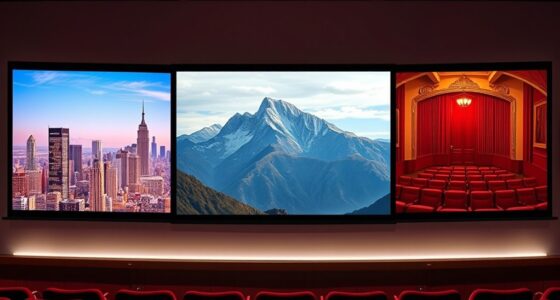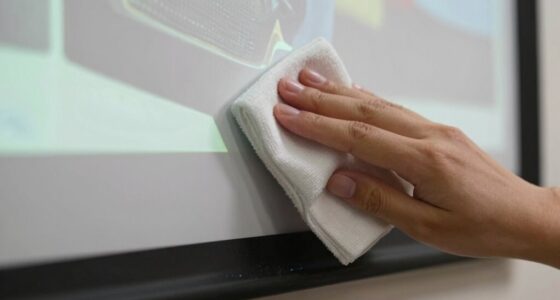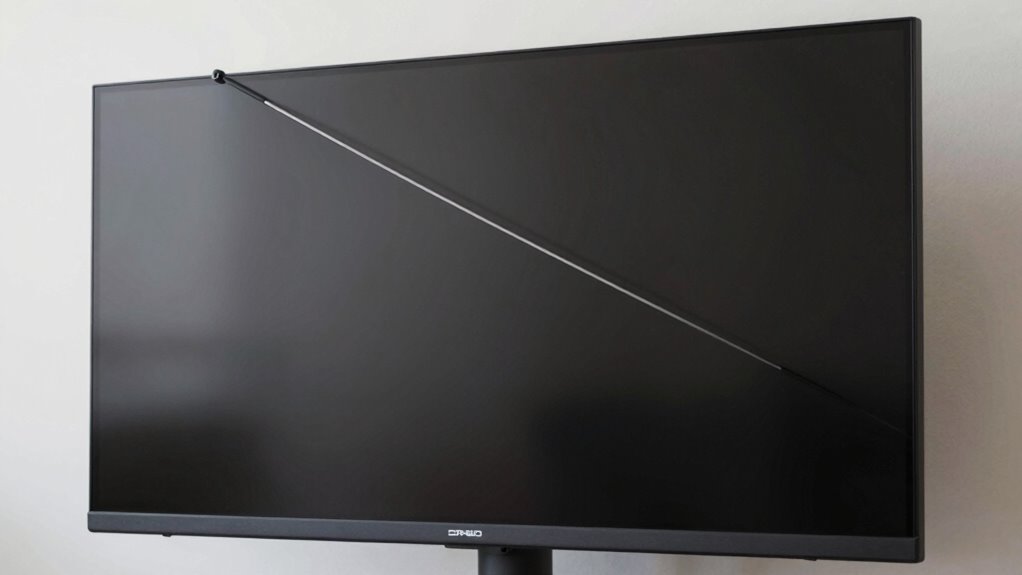

Screen tensioning solves surface irregularities that can distort images, such as wrinkles, waves, and slack. It helps you achieve a smooth, flat display surface, ensuring sharper visuals with accurate colors and contrast. Proper tension distributes stress evenly, preventing tears and extending the display’s lifespan. It also makes installation easier and maintains durability over time. Keep exploring to discover how tensioning can improve your display’s overall quality and longevity.

Get business pricing on your home office setup
- Business-only prices and quantity discounts
- Tax-exempt purchasing
- Multiple users, one account, clear invoices
Key Takeaways
- Eliminates wrinkles, waves, and distortions for a smooth, clear display surface.
- Distributes stress evenly to prevent material deformation and tears.
- Maintains consistent tension, reducing sagging and prolonging screen lifespan.
- Enhances image quality by ensuring color accuracy and minimizing visual imperfections.
- Facilitates proper installation and handling, preventing overstretching or damage during setup.
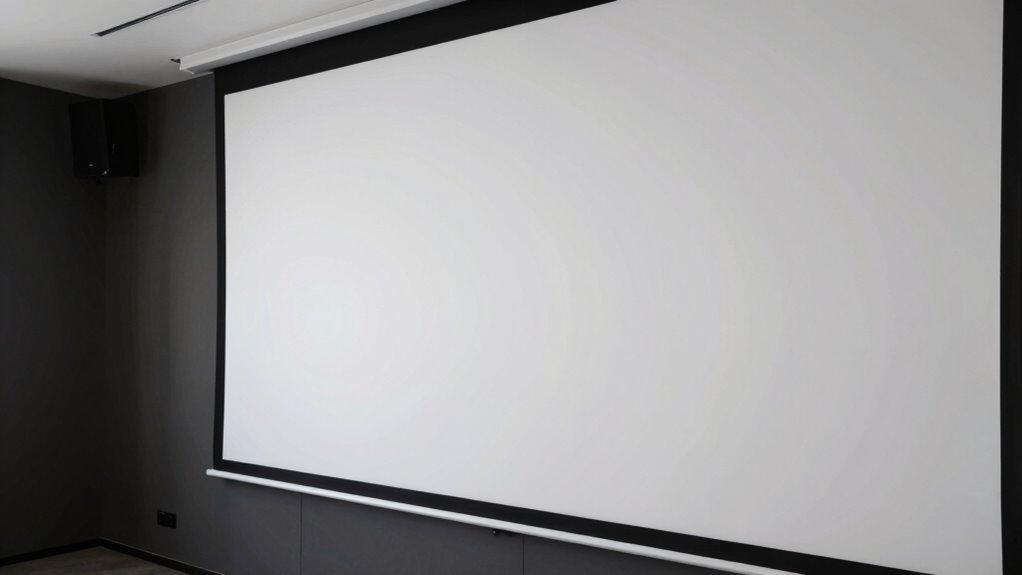
Proper screen tensioning can markedly enhance your display quality by ensuring a smooth, flat surface that minimizes distortions and wrinkles. When you’re setting up a high-quality screen, whether for commercial or personal use, the installation process plays a key role. A well-executed tensioning process ensures the material remains taut and evenly distributed, preventing sagging or bubbling that can distort images. If you neglect proper tension, your display may suffer from uneven surfaces that cause visual imperfections, reducing clarity and immersion. That’s why understanding what screen tensioning actually solves is essential for achieving the best possible visual experience.
Proper tensioning ensures a smooth, flat display surface for optimal clarity and minimal distortions.
One of the primary issues tensioning addresses is surface unevenness. Without proper tension, your screen material can develop wrinkles, slack, or waves that interfere with image sharpness. These imperfections aren’t just aesthetic flaws—they can distort colors, reduce contrast, and compromise clarity. Tensioning corrects these problems by pulling the material tight and securing it evenly across the frame. This not only improves visual quality but also prolongs the lifespan of the screen. When you maintain proper tension, the material is less prone to sagging over time, which means fewer adjustments and less frequent replacements. Additionally, consistent tension helps to maintain the integrity of the display under varying environmental conditions. Proper tensioning also helps prevent the development of material deformation, which can occur if the material isn’t evenly stretched during installation.
Material durability is another fundamental aspect that tensioning helps preserve. When a screen isn’t properly tensioned, excessive strain can localize on certain areas, leading to premature wear or tears. Conversely, a correctly tensioned surface distributes stress evenly, reducing the risk of damage. This uniform stress distribution extends the durability of your screen material, saving you money and effort over the long term. Proper tensioning also makes cleaning and maintenance easier, as the smooth surface is less likely to trap dust or debris, keeping your display looking pristine longer. Additionally, material characteristics influence the tensioning process, as some fabrics or films are more elastic and need specific handling to avoid overstretching or tearing. By properly tensioning your screen during installation, you set the foundation for a durable, visually impeccable display that maintains its quality over time.
high-quality screen tensioning kit
As an affiliate, we earn on qualifying purchases.
As an affiliate, we earn on qualifying purchases.
Frequently Asked Questions
Does Tensioning Affect Screen Lifespan?
Tensioning definitely affects your screen lifespan because proper tensioning techniques help prevent sagging and wrinkles that can stress the screen material. When you maintain correct tension, your screen stays smooth and reduces wear over time, extending its life. Using the right tensioning methods ensures even distribution of stress, which keeps the screen material in good condition longer. So, yes, good tensioning directly contributes to a longer-lasting, high-quality screen.
Can Tensioning Improve Image Quality?
Tensioning tightens your screen like a skilled seamstress, smoothing out wrinkles that cause image distortion. When you properly tension it, you’ll notice improved brightness uniformity, making every pixel shine equally. It’s like tuning a musical instrument—sharpens clarity and sharpness. By preventing sagging and wrinkles, tensioning guarantees your visuals stay crisp, vibrant, and distortion-free, giving you a clearer, more immersive viewing experience that truly reflects the quality your display can offer.
Is Tensioning Necessary for All Screen Types?
Tensioning isn’t necessary for all screen types, but it’s essential for those with less material flexibility, like certain fixed-frame screens. Using proper tensioning techniques guarantees your screen remains flat and wrinkle-free, which improves image quality. If a screen’s material is highly flexible, tensioning may be less critical. Assess your screen’s material and frame type to determine whether tensioning will help maintain a smooth, high-quality viewing surface.
How Often Should Screens Be Re-Tensioned?
You should re-tension your screens when you notice sagging or loose fabric, typically every 1-2 years depending on usage and material durability. Regular re-tensioning helps maintain proper frame alignment and prevents damage over time. Keep an eye on the screen’s tautness, especially in high-traffic or outdoor areas, to guarantee a clear view and extend the lifespan of your screen. Proper maintenance keeps your setup looking sharp and functioning well.
Does Tensioning Impact Screen Installation Costs?
Tensioning can substantially impact your screen installation costs, acting like a double-edged sword. Proper tensioning boosts cost efficiency by reducing the need for future adjustments, but it can also increase installation complexity if done improperly. When you invest in correct tensioning techniques, you streamline the process, saving money and time. However, improper tensioning might lead to extra costs from reinstallation or repairs, so it’s essential to get it right the first time.
As an affiliate, we earn on qualifying purchases.
Conclusion
By now, you see that screen tensioning is essential for a crisp, clear display—like the perfectly taut sails of a Viking ship. It keeps your screen smooth, reduces distortion, and enhances image quality, making your viewing experience truly legendary. Don’t let loose or slack ruin your visual journey; instead, embrace proper tensioning. Just as a well-tuned trebuchet hits its mark, your screen will perform flawlessly, standing the test of time and countless battles of everyday use.
As an affiliate, we earn on qualifying purchases.
projection screen tensioning system
As an affiliate, we earn on qualifying purchases.
As an affiliate, we earn on qualifying purchases.
Fall Picks
fall essentials
As an affiliate, we earn on qualifying purchases.