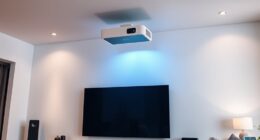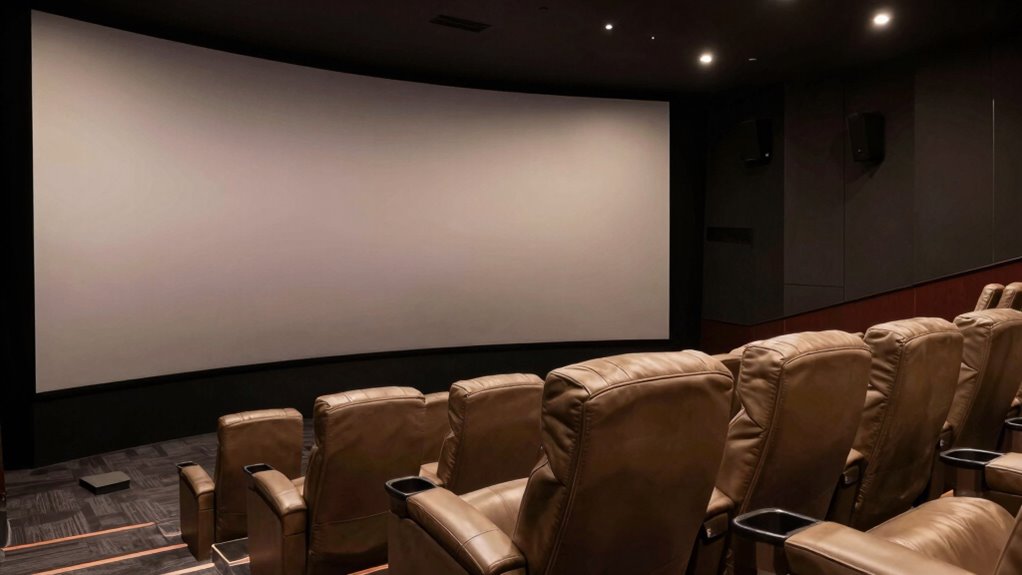
Higher screen gain reflects more light, making images appear brighter, which can reduce your seating options, especially in rooms with ambient light. Lower gain screens diffuse light, providing wider viewing angles and more seating flexibility. However, high gain screens can create hot spots, limiting where you can sit without sacrificing image quality. Adjusting screen gain influences your seating choices considerably, and understanding these effects helps you optimize your theater space—all while discovering how to maximize your viewing comfort and quality.

Get business pricing on your home office setup
- Business-only prices and quantity discounts
- Tax-exempt purchasing
- Multiple users, one account, clear invoices
Key Takeaways
- Higher gain screens reflect more light, allowing brighter images from closer or varied seating positions.
- Elevated screen gain can create hot spots, limiting seat placement to avoid image distortion.
- Lower gain screens offer wider viewing angles, enhancing seating flexibility across the room.
- Screen gain influences brightness consistency, affecting where viewers can sit without sacrificing image quality.
- Combining screen gain with appropriate lighting and acoustics maximizes seating options and viewing comfort.
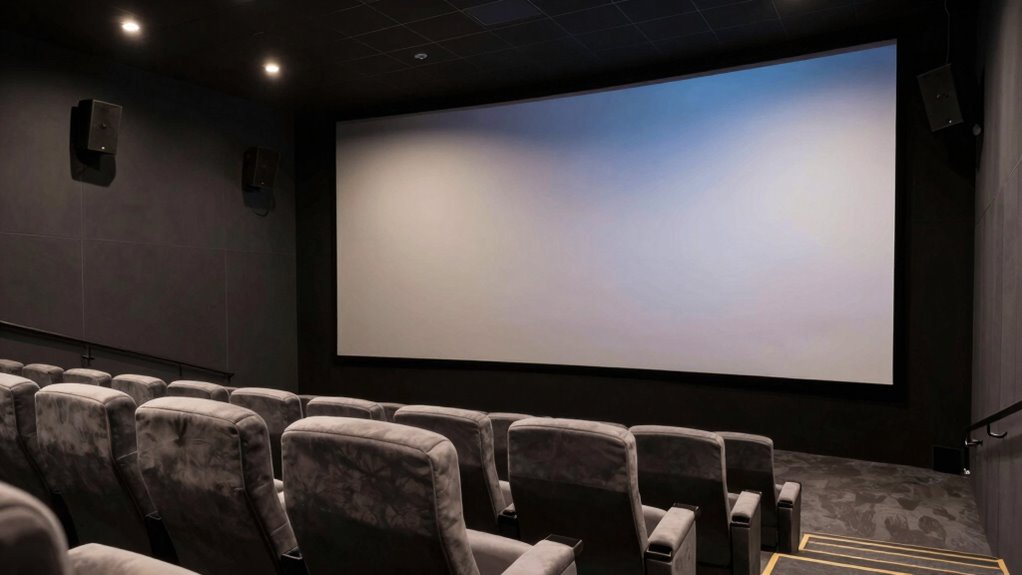
When designing a theater room, understanding how screen gain affects image brightness is fundamental, especially if you want to maximize seating flexibility. Screen gain measures how much light the screen reflects relative to a standard whiteboard. A higher gain screen reflects more light, making images appear brighter, which is particularly useful if your room has ambient light or if you want to guarantee visible images from various seating positions. Conversely, a lower gain screen offers a more diffuse reflection, providing wider viewing angles and reducing hot spots, though it may require a darker environment for ideal brightness. This interplay directly influences where you can place seats without compromising picture quality, allowing you to design a flexible seating layout that adapts to your preferences.
To enhance the viewing experience, it’s essential to incorporate effective acoustic treatment alongside controlling lighting conditions. Acoustic treatment reduces echoes and improves sound clarity, guaranteeing everyone hears with precision regardless of where they sit. When combined with appropriate screen gain choices, acoustic treatments can prevent sound reflections from interfering with image quality, particularly in rooms with high ceilings or hard surfaces. Properly treated acoustics create an immersive environment that encourages flexible seating arrangements, as you won’t need to worry about sound distortion from different angles. Additionally, understanding contrast ratio can help you select the right projector settings to optimize image quality across various seating options. Implementing proper room layout can further optimize sightlines and acoustic performance, ensuring a seamless viewing experience. Moreover, selecting the appropriate projection technology can further tailor the room for maximum flexibility and quality. Incorporating soundproofing techniques can also help minimize external noise disruptions, enhancing overall room versatility.
Lighting control also plays an important role in maximizing seating flexibility. A well-designed lighting system allows you to adjust ambient light levels, minimizing glare and reflections on the screen that could otherwise affect brightness and image clarity. When your lighting is dimmable and strategically positioned, you can position seats closer to the screen or in areas with less light interference, without sacrificing image quality. This control over lighting environments complements your choice of screen gain, ensuring bright images from various seating positions and lighting conditions. Ultimately, your goal is to create a versatile space where seating can be repositioned without sacrificing visual or acoustic quality. By selecting the right screen gain and integrating sound treatments along with smart lighting control, you can design a theater room that adapts to your needs. Whether you want to seat many viewers or provide an intimate viewing experience, understanding how these elements work together helps you craft a room that’s adaptable, comfortable, and delivers a high-quality cinematic experience no matter where you sit.
As an affiliate, we earn on qualifying purchases.
Frequently Asked Questions
Does Screen Gain Affect Picture Brightness or Contrast?
Yes, screen gain affects picture brightness and contrast. Higher gain screens reflect more light, making images appear brighter but potentially causing uneven brightness due to screen reflection issues. Lower gain screens offer better image uniformity, reducing reflections and glare, which improves contrast consistency. Your seating placement can influence how these factors play out, so choosing the right gain helps maintain ideal picture quality and minimizes issues with screen reflection and image uniformity.
Can High Gain Screens Cause Glare or Hot Spots?
High gain screens can cause glare or hot spots, impacting your viewing experience. You might notice bright spots or reflections that make glare management difficult, leading to visual fatigue over time. To avoid these issues, position your seating carefully and control ambient lighting. Opting for a moderate gain screen often provides a balanced brightness level, reducing glare and ensuring a more comfortable, immersive movie experience without straining your eyes.
Is Screen Gain Suitable for All Projector Types?
Think of screen gain as the spotlight on your movie night stage. It’s not suitable for all projector types because high gain screens reflect more light, which can cause hotspots—like uneven lighting on a stage. Your screen material’s reflectivity and viewing angles matter; some screens focus light forward, suitable for short-throw projectors, while others spread it out, ideal for larger rooms. Match your projector’s brightness and your room setup for the best experience.
How Does Room Size Influence Optimal Screen Gain Choice?
Room size greatly influences your ideal screen gain choice because larger rooms require higher gain screens to maintain brightness and image clarity, especially with ambient light. Smaller rooms benefit from lower gain screens to prevent glare and maintain good contrast. Consider your room’s acoustics and seating arrangement when choosing gain, ensuring everyone has a clear view and optimal sound experience. Adjusting screen gain helps create a comfortable, immersive theater environment tailored to your space.
What Are the Maintenance Differences Between High and Low Gain Screens?
Think of your screen as a mirror reflecting your care. High gain screens symbolize a polished, delicate surface needing gentle cleaning to maintain their shine, while low gain screens resemble a sturdy shield, built for durability. High gain screens often require more frequent cleaning to prevent image degradation, whereas low gain screens boast greater screen durability and less maintenance. You’ll find that low gain screens are more forgiving and easier to upkeep over time.
As an affiliate, we earn on qualifying purchases.
Conclusion
Think of screen gain as the lighthouse guiding your seating choices. A higher gain shines brighter, illuminating the front rows with clarity, but risking glare for those further back. A lower gain offers a softer glow, expanding your seating horizon. By understanding this symbol of light and shadow, you’re empowered to craft a theater space that balances brilliance with comfort, ensuring every seat holds a perfect view—your personal harbor of cinematic joy.
acoustic treatment panels for home theater
As an affiliate, we earn on qualifying purchases.
As an affiliate, we earn on qualifying purchases.
dimmable LED lighting for theater room
As an affiliate, we earn on qualifying purchases.
As an affiliate, we earn on qualifying purchases.
Fall Picks
fall essentials
As an affiliate, we earn on qualifying purchases.