Ambient light rejecting screens really do work to reduce glare and reflections, especially in bright environments. They help improve image clarity, contrast, and color vibrancy by absorbing or deflecting ambient light away from your line of sight. While their effectiveness can vary based on ambient lighting and projector brightness, many users report noticeable improvements in well-lit spaces. If you want to discover how these screens can enhance your viewing experience, you’ll find the details interesting.

Get business pricing on your home office setup
- Business-only prices and quantity discounts
- Tax-exempt purchasing
- Multiple users, one account, clear invoices
Key Takeaways
- They significantly reduce glare and reflections in well-lit environments, improving image clarity and contrast.
- Effectiveness varies based on ambient light levels, projector brightness, and screen quality.
- Designed to absorb or deflect ambient light, they enhance color vibrancy without complete darkness.
- Not foolproof; in extremely bright settings, performance may be limited.
- Overall, they can improve viewing experiences, especially in mixed or bright lighting conditions.
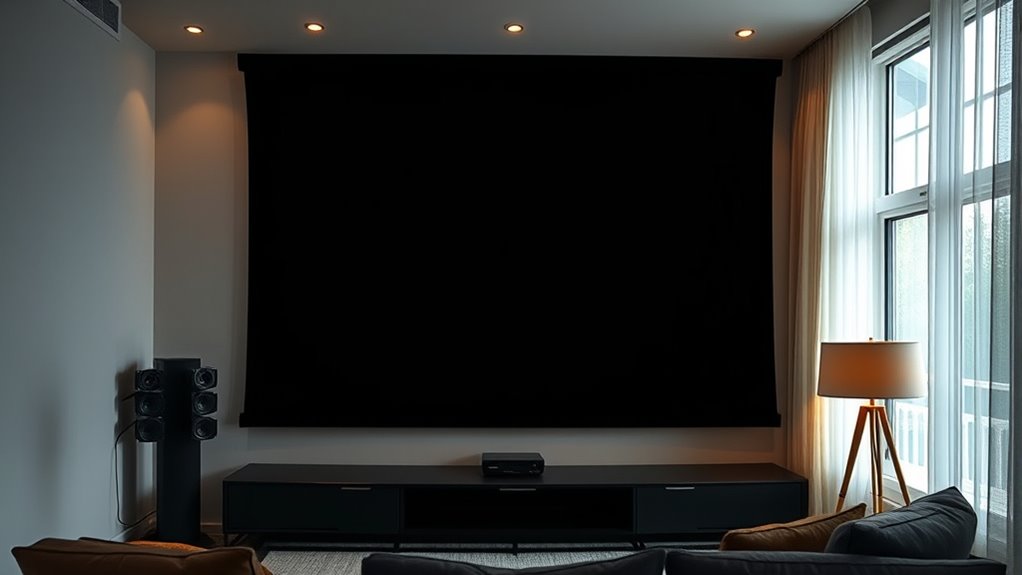
Ambient light rejecting screens are designed to improve your viewing experience by reducing glare and reflections from surrounding light sources. When you’re watching movies, giving a presentation, or gaming, ambient light can wash out your images, making details harder to see and colors less vibrant. These screens are engineered specifically to mitigate that issue, allowing you to enjoy clearer, brighter visuals even in well-lit environments. Their effectiveness hinges on understanding how projection technology and screen materials work together to combat ambient light.
Ambient light rejecting screens reduce glare and reflections, ensuring clearer, brighter visuals even in well-lit spaces.
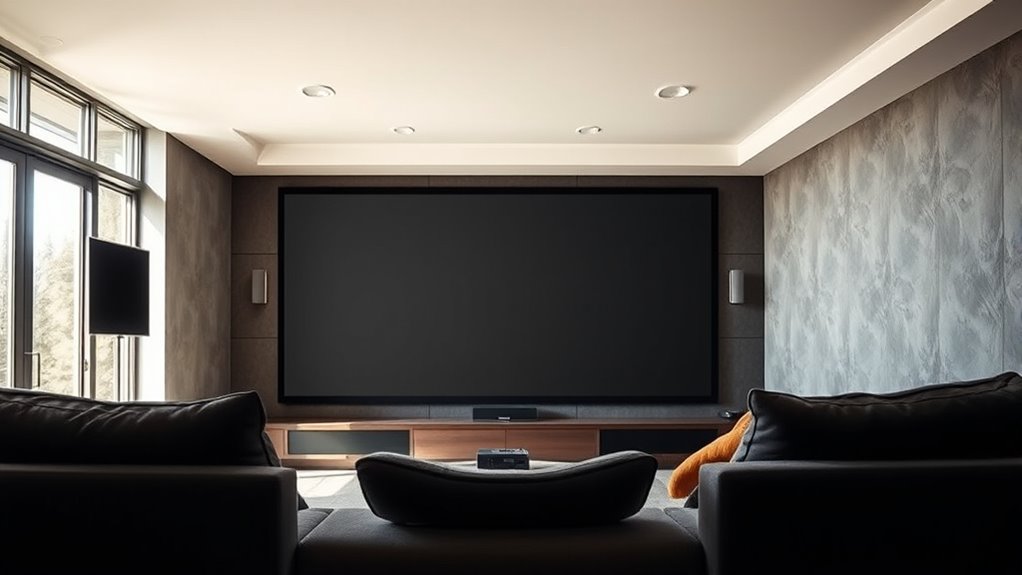
Projection technology plays a vital role in how well an ambient light rejecting screen performs. Unlike traditional screens, which reflect ambient light and create glare, these specialized screens are built to absorb or deflect ambient light away from your line of sight. They often feature optical coatings or microstructures designed to manage light paths, ensuring that the projected image remains sharp and vivid. The goal is to enhance contrast and color accuracy without needing a completely dark room, making them ideal for spaces like conference rooms, classrooms, or living rooms with lots of windows.
Screen materials are equally important in determining how well an ambient light rejecting screen functions. These screens are typically made from advanced optical fabrics or layered plastics embedded with microstructures that selectively reflect or absorb ambient light. The materials are engineered to maximize the reflection of the projected image toward your eyes while minimizing the reflection of external light sources. High-quality screen materials often incorporate specialized coatings that boost the screen’s ability to reject ambient light, enhancing contrast and color richness. When selecting a screen, you’ll find that the quality of the materials directly impacts how much glare reduction you’ll experience and how vibrant the images appear.
Additionally, the effectiveness of ambient light rejecting screens can be influenced by the light management capabilities of the screen, which are designed to optimize contrast and color fidelity even in bright environments. While some skepticism exists about how well these screens work in every lighting condition, many users report noticeable improvements in image clarity, especially in bright environments. The combination of projection technology and superior screen materials allows these screens to perform remarkably well, even in spaces that aren’t darkened completely. They’re not foolproof, and their effectiveness depends on factors like the ambient light level, the projector’s brightness, and the quality of the screen itself. Still, for anyone who frequently deals with unwanted glare, investing in an ambient light rejecting screen can make a significant difference.
ambient light rejecting projector screen
As an affiliate, we earn on qualifying purchases.
As an affiliate, we earn on qualifying purchases.
Frequently Asked Questions
How Do Ambient Light Rejecting Screens Compare in Price?
Ambient light rejecting screens tend to be more expensive than standard screens, but the cost comparison varies based on quality and size. You’ll find that affordability factors include brand reputation and screen features. While they cost more upfront, many users find the improved visibility worth the investment, especially in bright environments. Consider your viewing needs and budget to determine if the extra cost aligns with the benefits these screens offer.
Are There Specific Projectors Best Suited for These Screens?
You should look for projectors with high contrast ratios and brightness levels compatible with ambient light rejecting screens. Short-throw or ultra-short-throw projectors often work well, simplifying installation considerations. Make certain the projector’s resolution matches your screen’s capabilities for the best image quality. Always check the projector’s compatibility specs and guarantee proper placement to minimize ambient light interference, so you get the best performance from your ambient light rejecting screen.
Do These Screens Work Equally Well Outdoors and Indoors?
While ambient light rejecting screens handle indoor brightness beautifully, outdoor glare can still pose challenges. You might find they work well in shaded outdoor areas, but bright sunlight often diminishes their effectiveness. For the best experience, use them where lighting conditions are controlled or consider additional shading solutions. Ultimately, their true strength lies in environments where ambient light is manageable, giving you vivid images both indoors and in certain outdoor settings.
How Durable Are Ambient Light Rejecting Screens Over Time?
Ambient light rejecting screens are quite durable if you choose high-quality screen material. Over time, they resist scratches and fading better than standard screens. However, you’ll need to follow proper maintenance requirements, like regular cleaning with a soft cloth and avoiding harsh chemicals, to preserve their effectiveness. With proper care, these screens can last several years, maintaining their anti-glare properties and visual clarity even with frequent use.
Can Ambient Light Rejecting Screens Be Used for 3D Projection?
Think of ambient light rejecting screens as the perfect canvas for 3D projection; yes, they can be used effectively. When paired with polarized glasses, these screens enhance the 3D experience by reducing glare and improving contrast. They’re designed to handle 3D content, making your visuals clearer and more immersive. Just make certain your projector supports 3D and polarized glasses for the best results, turning your space into a cinematic playground.
glare reducing projection screen
As an affiliate, we earn on qualifying purchases.
As an affiliate, we earn on qualifying purchases.
Conclusion
So, after exploring ambient light rejecting screens, do they truly live up to the hype? They can considerably improve your viewing experience by reducing glare and enhancing image clarity, especially in bright environments. But remember, no screen is perfect—your environment and needs matter. Isn’t it worth investing a little extra for a clearer, more immersive picture? Ultimately, you deserve a display that works with you, not against you. Are you ready to upgrade your viewing experience?
high contrast ambient light rejecting screen
As an affiliate, we earn on qualifying purchases.
As an affiliate, we earn on qualifying purchases.
anti-reflective projection screen for bright rooms
As an affiliate, we earn on qualifying purchases.
As an affiliate, we earn on qualifying purchases.
Fall Picks
fall essentials
As an affiliate, we earn on qualifying purchases.