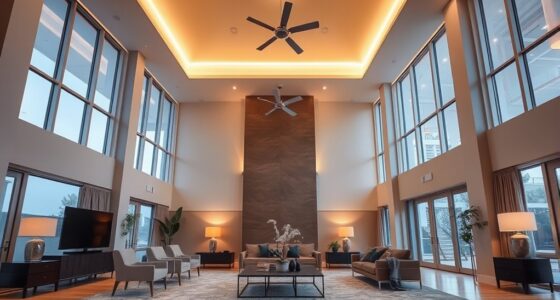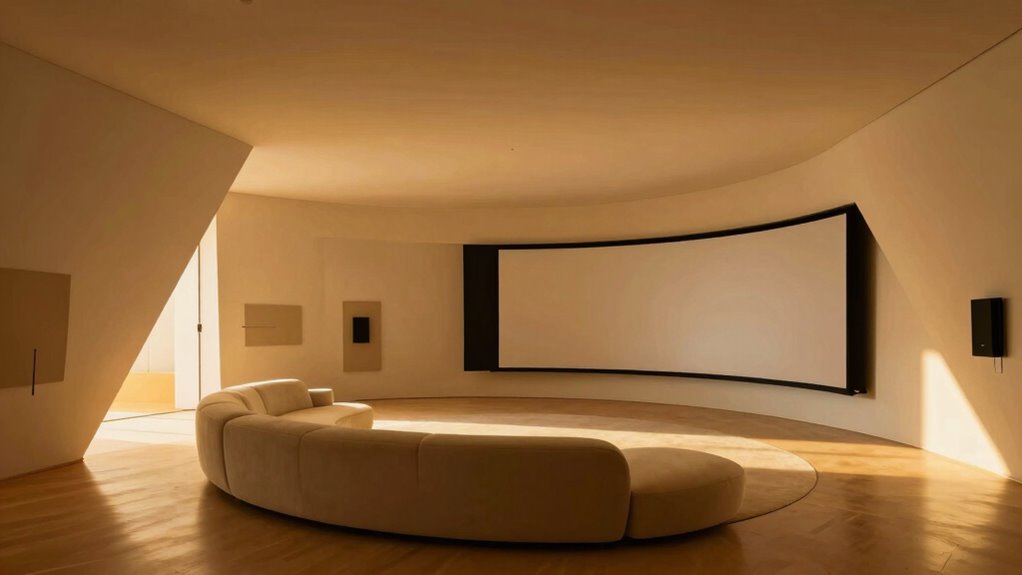

Your room’s shape greatly influences how sound travels and how images appear, often more than you realize. The geometry affects reflections, echoes, and diffusion, which can muddy sound quality or distort visuals. Sharp corners and irregular surfaces can cause shadows, distortions, or muddled acoustics. Thoughtful design, including surface treatments, can improve clarity. By understanding how room shape impacts both audio and visuals, you can create a space that sounds and looks just right—more than you might expect.
Play games included with Prime
Start a Prime free trial and play with Amazon Luna on your devices.
As an affiliate, we earn on qualifying purchases.
Key Takeaways
- Room shape influences sound reflections, causing echoes or muddled audio if not properly designed.
- Irregular geometries can distort visuals by altering light reflection and screen image projection.
- Sharp corners and flat surfaces create acoustic and visual distortions, reducing clarity and viewing comfort.
- Surface treatments help mitigate distortions caused by complex room geometries.
- Thoughtful architectural design enhances both sound quality and visual accuracy through shape and surface considerations.
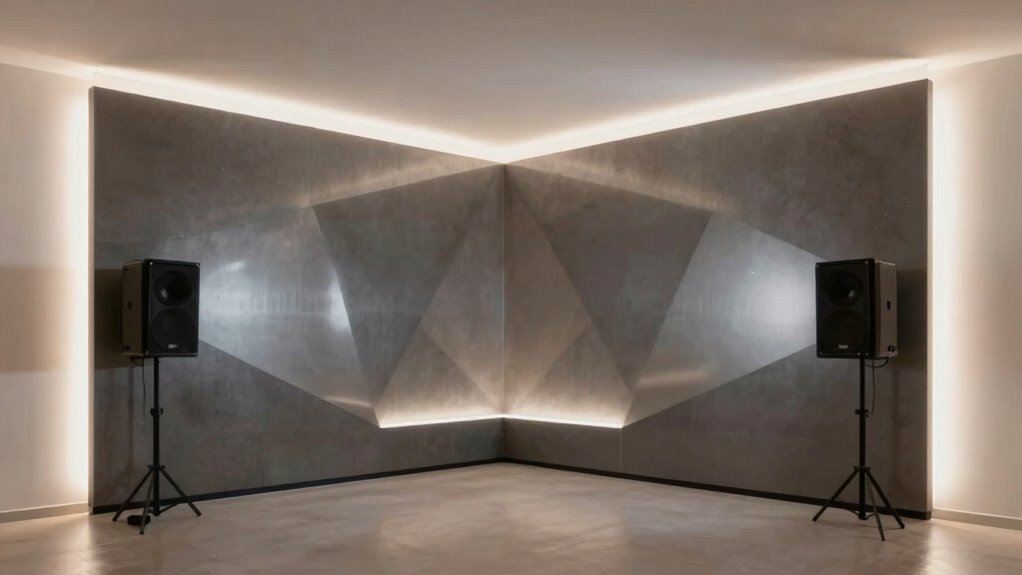
Have you ever wondered how the shape of a room can influence your audio experience and viewing clarity? It’s more significant than most people realize. The shape determines how sound waves bounce around, creating what we call acoustic reflections. If your room has sharp corners, flat walls, or irregular surfaces, these reflections can cause echoes or muddled sound, making it harder to hear dialogue clearly or enjoy music with fidelity. Conversely, a well-designed shape can help absorb or diffuse sound, resulting in clearer audio and a more immersive experience. The problem is that many overlook how the room’s geometry affects sound quality, assuming that quality depends solely on speakers or acoustics treatment. But the shape itself plays a fundamental role in how sound waves travel, reflect, and ultimately reach your ears. Room shape significantly influences both sound and visual perception, often more than homeowners realize. Additionally, understanding how different architectural features impact acoustics can help optimize your space for better sound quality. Even subtle variations in room dimensions can influence how sound interacts within the space, highlighting the importance of thoughtful design choices. Recognizing the impact of room geometry on acoustics can lead to more effective strategies for sound management and enhancement.
At the same time, the shape influences visual clarity in ways you might not expect. Certain room geometries can lead to visual distortion, especially if the walls or surfaces aren’t properly aligned. For instance, irregularly shaped rooms or those with angled walls can cause images on your screen to appear skewed or warped. This happens because the shape alters the way light reflects off surfaces and reaches your eyes. When light rays bounce unevenly, the picture may seem stretched, compressed, or distorted, diminishing your viewing experience. This effect is subtle but impactful, especially when watching high-definition content or using large screens. You may not immediately notice the visual distortion, but it can cause eye strain and reduce your overall enjoyment. Additionally, the surface treatments used on walls can influence how light and sound behave, further impacting both audio and visual quality. Proper surface treatments can help mitigate these issues by controlling reflections and diffusion.
Understanding how the room shape affects both audio and visual clarity emphasizes the importance of thoughtful design. You want a space that minimizes problematic acoustic reflections, keeping sound crisp and distinct, while also preventing visual distortion that can compromise picture quality. This isn’t just about aesthetics; it’s about creating an environment optimized for the best possible experience. When you consider the shape of your room during planning or remodeling, you’re taking a crucial step toward enhancing sound clarity and visual accuracy. It’s also helpful to be aware of how room acoustics and lighting conditions interact with the architecture to influence overall perception. Small adjustments in room shape, wall angles, or surface treatments can make a significant difference, transforming your space into a true haven for both audio and viewing pleasure.
As an affiliate, we earn on qualifying purchases.
Frequently Asked Questions
How Does Room Shape Influence Sound Quality in Home Theaters?
The shape of your home theater room influences sound quality by affecting acoustic reflections and sound absorption. A rectangular room can cause sound waves to bounce, creating echoes that distort audio clarity. Conversely, irregular shapes help diffuse sound, reducing reflections. Adding sound-absorbing panels minimizes echoes, ensuring clearer audio. So, choosing a room shape that balances reflections and absorption improves your listening experience and overall sound quality.
Can Room Shape Affect the Clarity of Dialogue in Audio Systems?
Imagine your room as a noisy echo chamber, where sound reflection turns clear dialogue into a muddled mess. The shape influences how sound waves bounce, either amplifying or muffling speech. Poor acoustic absorption lets echoes linger, blurring words. To keep dialogue crisp, you need a room shape that minimizes reflections and maximizes absorption, ensuring every word reaches your ears as intended—no more shouting over the acoustical chaos.
Are Irregular Room Shapes Better for Sound Distribution?
Irregular room shapes often improve sound distribution because they scatter sound waves more effectively, reducing echoes and dead spots. You can enhance this by carefully arranging furniture to avoid blocking sound paths and ensuring lighting doesn’t create glare or distractions. When you combine an irregular shape with thoughtful furniture placement, you create a more even, immersive audio experience and better viewing environment, making your space both functional and enjoyable.
How Does Ceiling Height Interact With Room Shape for Audio?
Did you know that rooms with higher ceilings can reduce sound reflection issues by up to 30%? Ceiling height interacts with room shape to influence ceiling acoustics considerably. Taller ceilings create more space for sound to dissipate, minimizing shape reflections that can cause echo or muddiness. Conversely, lower ceilings in irregularly shaped rooms can amplify these reflections, impacting sound clarity. So, balancing ceiling height with room shape is key for ideal audio quality.
What Design Tips Optimize Room Shape for Viewing Experiences?
You should focus on strategic furniture placement to enhance sightlines and reduce glare, ensuring a clear viewing experience. Choose lighting design that minimizes reflections on screens, like dimmable lights or indirect fixtures. Consider angling furniture to match the room’s shape, which improves acoustics and visual comfort. These adjustments help create a perfect environment for viewing, making the most of your room’s shape and enhancing your overall experience.
light diffusion panels for rooms
As an affiliate, we earn on qualifying purchases.
As an affiliate, we earn on qualifying purchases.
Conclusion
Understanding how room shape influences sound and visuals is like revealing a hidden secret in your own space. When you choose or modify your room’s shape thoughtfully, you’re tuning the environment to sing in harmony, not discord. Don’t underestimate the power of a simple change—your audio and viewing experience can transform from a muffled echo or blurry mess into a crystal-clear symphony. Embrace the shape, and let your space truly come alive.
high-definition TV wall mount with tilt
As an affiliate, we earn on qualifying purchases.
As an affiliate, we earn on qualifying purchases.
As an affiliate, we earn on qualifying purchases.
Fall Picks
fall essentials
As an affiliate, we earn on qualifying purchases.