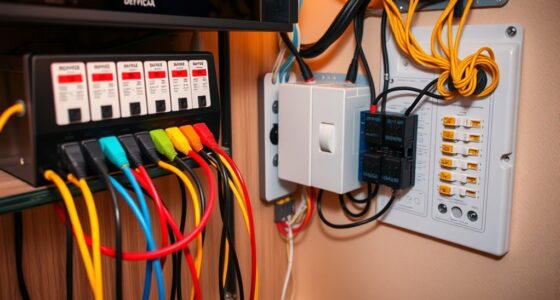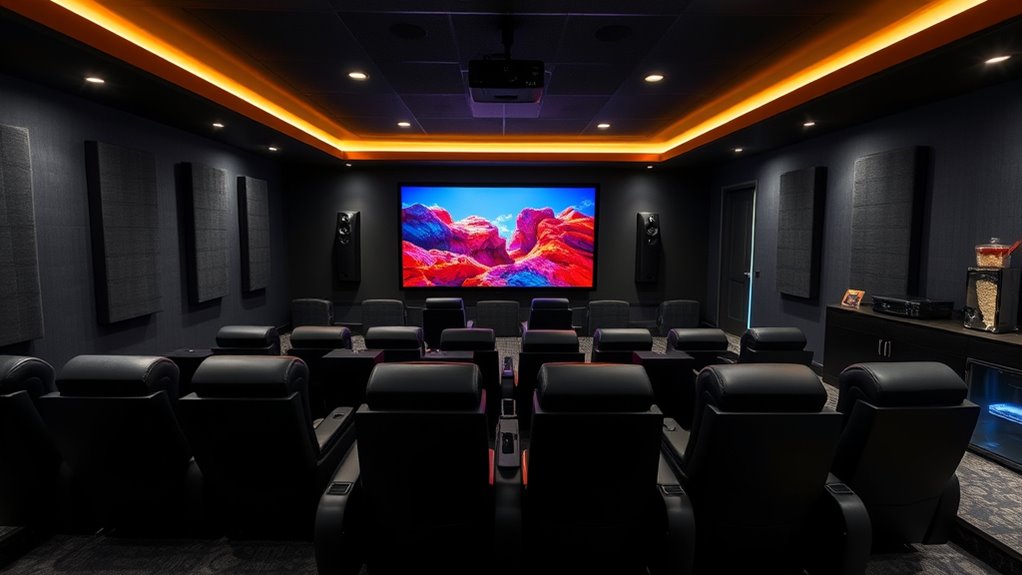

To convert your garage or basement into a home theater, start by cleaning and clearing the space, then install soundproofing with materials like drywall, vinyl, and acoustic panels to block noise. Next, focus on lighting by adding dimmable fixtures and blackout curtains, and set up comfortable seating arranged for ideal viewing distances. Finish with proper equipment placement and decoration to enhance sound and picture quality—continue exploring to learn how to create a truly immersive home theater experience.
Open a free Amazon Business account
Business pricing, bulk buying and tax-exempt orders.
As an affiliate, we earn on qualifying purchases.
Key Takeaways
- Assess and clear the space, ensuring proper insulation and soundproofing to minimize noise transfer.
- Install soundproof drywall, acoustic panels, and sealing measures around doors and vents.
- Optimize lighting with dimmable fixtures and blackout curtains for a comfortable viewing environment.
- Arrange seating for optimal sightlines and sound, considering tiered or angled layouts.
- Set up audio-visual equipment, calibrate speakers, and add finishing touches like carpets and decorative elements.
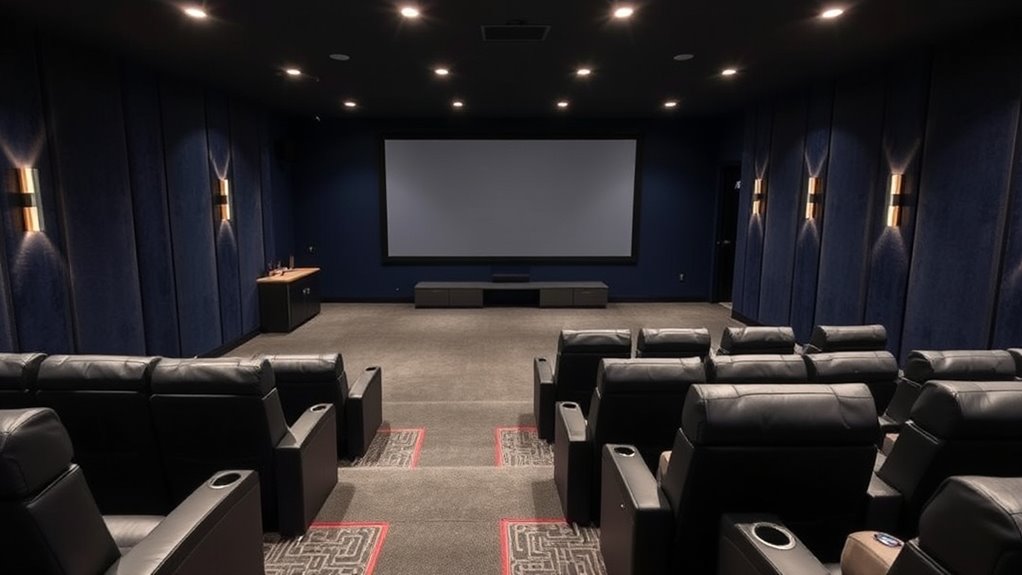
Ever wondered how to transform your garage or basement into a perfect home theater? The key to creating an immersive experience starts with soundproofing techniques. You want to keep outside noise out and prevent your audio from disturbing the rest of your home. To do this effectively, start by sealing gaps around doors, windows, and any vents with weatherstripping or acoustic caulk. Consider installing soundproof drywall or adding mass-loaded vinyl to walls to block sound transmission. Flooring also matters; thick carpets or foam tiles help absorb noise and reduce echo. You might even add acoustic panels to walls—these are designed to absorb sound waves and improve audio clarity, making your movie nights more enjoyable. Proper soundproofing sets the stage for a true home theater experience by eliminating distractions and ensuring crisp audio. Additionally, understanding soundproofing techniques can help you select the most effective methods for your space.
Once your space is soundproofed, focus on your seating arrangements. Comfort and ideal viewing angles are essential. You’ll want to position your seating so everyone has a clear line of sight to the screen, ideally in a tiered layout if your ceiling height allows. Arrange seats in a semi-circular or angled formation to maximize viewing comfort and minimize neck strain. Consider investing in plush recliners or sectional sofas that allow you to stretch out and relax. Place seats at an appropriate distance from the screen—generally, about 1.5 to 2.5 times the diagonal size of your display—for the best viewing experience. Keep in mind that the placement of seats also impacts sound quality; avoid blocking speakers or vents that might interfere with audio clarity. Adding side tables or cup holders can enhance comfort, making your home theater feel like a true premium cinema experience.
Lighting plays a critical role as well. Install dimmable lights or LED strips that you can control easily, ensuring you can create the perfect ambiance for movies or gaming sessions. Blackout curtains or shades also help eliminate outside light, preventing glare and enhancing picture quality on your screen. Remember, the goal is to craft a space where you’re immersed in your entertainment without external interruptions. Combining thoughtful soundproofing with well-planned seating arrangements sets the foundation for a home theater that’s both functional and fun. With these steps, you’ll turn your garage or basement into a dedicated space that rivals any commercial cinema, making every movie night a special occasion.
soundproof drywall for home theater
As an affiliate, we earn on qualifying purchases.
As an affiliate, we earn on qualifying purchases.
Frequently Asked Questions
What Is the Average Cost to Convert a Garage or Basement Into a Theater?
The average cost to convert your garage or basement into a theater ranges from $10,000 to $50,000, depending on your budget considerations and material costs. You’ll want to factor in expenses for soundproofing, acoustic treatments, lighting, and comfortable seating. Keep in mind that higher-end materials and advanced technology can considerably increase costs. Planning your budget carefully ensures you get the best results without overspending.
How Long Does the Entire Conversion Process Typically Take?
The entire conversion usually takes about 4 to 8 weeks, depending on your project’s scope. You’ll set a clear project timeline, with renovation milestones like framing, wiring, and finishing. As you progress through each phase, expect some delays, but sticking to your schedule keeps the project moving smoothly. Regular communication with contractors helps you stay on track and guarantees your home theater is ready within your desired timeframe.
What Permits or Approvals Are Needed for This Renovation?
Getting permits is like maneuvering a maze—you need patience and attention. You’ll typically require building permits to ensure your project meets safety standards and complies with building codes. Check zoning regulations to confirm your renovation aligns with local rules, especially if transforming a garage or basement. Contact your city or county planning department early, as approval processes vary and may involve inspections or additional documentation.
How Can I Soundproof My Home Theater Effectively?
To soundproof your home theater effectively, start by installing soundproofing materials like mass-loaded vinyl or dense drywall to block noise transfer. Use acoustic treatments such as foam panels, bass traps, and diffusers to absorb sound and reduce echoes. Seal gaps around doors and windows with weatherstripping or acoustic seals. Combining these materials and treatments creates a quiet, immersive environment while minimizing noise disturbance to other areas.
What Are the Best Lighting Options for a Home Theater?
You should focus on lighting design that minimizes glare and creates a cozy atmosphere. Opt for dimmable LED bulbs, which offer energy efficiency and adjustable brightness. Incorporate wall sconces, cove lighting, or recessed lights to evenly illuminate the space without interfering with your screen view. Use warm-colored bulbs to reduce eye strain, and consider smart lighting systems for seamless control during your movie nights.
As an affiliate, we earn on qualifying purchases.
Conclusion
Think of your transformed garage or basement as a cozy, private cinema, where every detail is like a brushstroke creating your masterpiece. With patience and care, you’ve built a sanctuary that’s uniquely yours—like planting a seed and watching it grow into a lush, inviting retreat. Now, your home theater is ready to be enjoyed, a perfect escape from the world outside. Sit back, relax, and let the show begin in your very own slice of movie paradise.
As an affiliate, we earn on qualifying purchases.
As an affiliate, we earn on qualifying purchases.
Fall Picks
fall essentials
As an affiliate, we earn on qualifying purchases.