If you want a sharper, more vibrant picture with deeper blacks, a laser projector is the better fit, especially for a dedicated home theater or outdoor use, thanks to its high brightness and low maintenance. However, if you’re on a tight budget or need a projector for occasional use, a lamp model might work, but it requires bulb replacements and offers lower contrast. To choose the best option for your space, consider your environment, usage, and long-term costs—more details follow.

Get business pricing on your home office setup
- Business-only prices and quantity discounts
- Tax-exempt purchasing
- Multiple users, one account, clear invoices
Key Takeaways
- Laser projectors provide sharper images, higher contrast, and vibrant colors, ideal for cinematic home theaters.
- Lamp projectors are more budget-friendly upfront and suitable for casual or outdoor use with lower brightness needs.
- Laser projectors require less maintenance and have a longer lifespan, making them better for long-term, dedicated setups.
- For bright or outdoor environments, laser projectors with high lumen output ensure clearer images.
- Consider your budget, room lighting, and desired image quality to choose between the cost-effective lamp projector and the premium laser option.
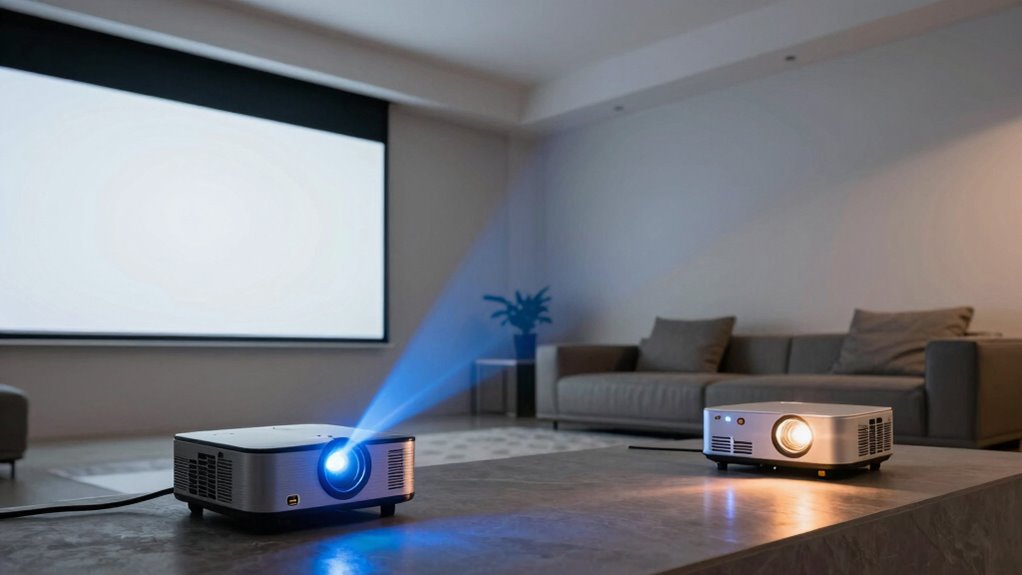
When choosing between a laser projector and a lamp projector, understanding their key differences can help you make an informed decision. If you’re setting up a home theater, the right projector can elevate your movie nights, while for outdoor displays, durability and brightness become essential factors. Laser projectors typically offer sharper images, higher contrast ratios, and longer-lasting performance, making them a popular choice for immersive home theater experiences. They produce vibrant colors and deeper blacks, which can considerably enhance your viewing pleasure, especially when watching high-definition content. Plus, laser projectors generally require less maintenance since they don’t need bulb replacements, saving you time and money over the years. If your space is dedicated to a home theater, a laser projector’s ability to deliver cinematic quality with minimal fuss makes it an appealing option.
On the other hand, lamp projectors tend to be more affordable upfront, making them attractive if you’re on a tight budget or just starting out. They’re versatile and widely available, with a variety of models suited for different environments. For outdoor displays, lamp projectors can work well, but you’ll want to pay attention to their brightness levels. During the day or in well-lit outdoor spaces, a lamp projector might struggle to produce a clear image unless it has a very high lumen output. This can limit their effectiveness for outdoor use unless you’re planning to project at night or in shaded areas. Additionally, lamp projectors often have shorter lifespans and require periodic bulb replacements, which can add ongoing costs and inconvenience. If you’re primarily interested in casual outdoor display or occasional viewing, a lamp projector could suffice, but for regular use in larger or brighter outdoor spaces, a laser projector’s durability might be the better investment, especially considering the lifetime of the light source.
Furthermore, understanding the contrast ratio capabilities of each projector type can help you select the best option for your specific viewing environment. Both types can support various screen sizes, but laser projectors often deliver a larger, more vivid image with minimal distortion. This is especially true for environments that benefit from high brightness levels, such as outdoor settings. Ultimately, your choice depends on the environment, budget, and how often you plan to use the projector. If you want a low-maintenance, high-quality image for your home theater or outdoor display, a laser projector is likely the superior option. However, if you’re looking for an affordable, flexible solution for occasional use, a lamp projector might meet your needs just fine.
As an affiliate, we earn on qualifying purchases.
Frequently Asked Questions
Which Projector Type Offers Better Color Accuracy?
Laser projectors generally offer better color accuracy because they provide higher color saturation and more consistent brightness. Their advanced projector calibration guarantees vibrant, precise colors over time. Lamp projectors might struggle with color accuracy due to bulb degradation and limited calibration options. If you want vivid, true-to-life images, a laser projector is the better choice, as it maintains superior color fidelity throughout its lifespan.
How Do Maintenance Costs Compare Over Time?
Think of maintenance costs as the steady heartbeat of your projector’s life. Laser projectors often symbolize longevity, with lower ongoing expenses thanks to fewer bulb replacements and reduced filter needs, making them a cost-effective choice over time. Lamp projectors might seem cheaper initially but can become costly as bulbs burn out and filters need changing. Your decision hinges on a clear cost comparison, considering longevity factors for the long haul.
Can Laser Projectors Function Effectively in Bright Rooms?
Yes, laser projectors work effectively in bright rooms because they produce high brightness levels, overcoming ambient lighting challenges. They minimize screen reflections, maintaining clear images even with lots of light. Unlike lamp projectors, laser models deliver consistent brightness and color accuracy in well-lit environments. So, if your room has substantial ambient lighting, a laser projector guarantees you get vibrant, sharp visuals without needing to dim the lights constantly.
What Is the Typical Lifespan of Each Projector Type?
Think of projector lifespan like a marathon runner—laser projectors typically go 20,000 to 30,000 hours, while lamp projectors usually last 5,000 to 10,000 hours. Laser models often have fewer installation challenges, but they might be noisier during operation. Lamp projectors are quieter but require more frequent bulb replacements, which can be a pain. Choose based on your patience for maintenance and how long you want your projector to run smoothly.
Are Laser Projectors More Energy-Efficient Than Lamp Projectors?
Laser projectors are generally more energy-efficient than lamp projectors, meaning they consume less power during operation. This lower energy consumption not only reduces your electricity bills but also lessens environmental impact by cutting down on energy use. You’ll find laser projectors produce bright images with less energy, making them a smarter choice if you want a device that’s both eco-friendly and cost-effective over time.
As an affiliate, we earn on qualifying purchases.
Conclusion
Choosing between a laser and lamp projector is like picking the perfect paintbrush for your masterpiece. If you crave vibrant colors and a sleek, modern vibe, the laser projector is your bright, steady hand. But if you prefer a budget-friendly option that still paints your room with clarity, the lamp projector is like a trusty brush, ready to bring your movies to life. Whichever you pick, your home theater will become a canvas of unforgettable moments.
As an affiliate, we earn on qualifying purchases.
As an affiliate, we earn on qualifying purchases.
Fall Picks
fall essentials
As an affiliate, we earn on qualifying purchases.