To hide wires for your ceiling-mounted projector, run the cables through the ceiling joists or space above the ceiling by cutting small holes, then use fish tape or wire pullers to guide the cables smoothly. Conceal the wires with paint-matched raceways or conduits along the ceiling or walls to keep everything neat and safe. Securing wires with clips prevents tangling or damage. Keep these tips in mind, and you’ll discover even more ways to create a clean, professional setup.

Get business pricing on your home office setup
- Business-only prices and quantity discounts
- Tax-exempt purchasing
- Multiple users, one account, clear invoices
Key Takeaways
- Run the projector’s power and HDMI cables through ceiling joists or utilize in-wall wiring for a clean look.
- Use ceiling raceways or conduits painted to match the ceiling to conceal wires effectively.
- Cut small holes in the ceiling to access wiring pathways, then patch and paint for seamless concealment.
- Secure cables with clips or ties inside the ceiling to prevent sagging or hanging wires.
- Follow safety and building code regulations when installing or hiding in-wall wiring for compliance.

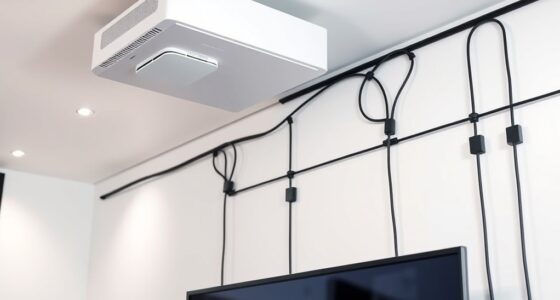
A ceiling-mounted projector offers a sleek, unobtrusive way to enjoy your home theater or presentation space, but exposed wires can quickly undermine its clean look. To maintain a polished appearance, you need effective wire concealment techniques that blend seamlessly into your ceiling and walls. One straightforward approach is to run the cables through the ceiling joists, which allows you to hide the wires above the ceiling line. You can access the space by cutting a small hole in the drywall or ceiling tile, then use fish tape or a wire puller to guide the cables through. Once the wires are in place, patch and paint the hole for a seamless finish. Alternatively, installing a cable raceway or conduit along the ceiling and walls is a practical solution. These channels can be painted to match your ceiling or wall color, making them less noticeable. They also provide a safe, organized pathway for the wires, preventing tangles and accidental damage.
When planning your wiring, safety precautions are paramount. Always turn off the power supply before working with electrical wires to avoid shocks or short circuits. Use insulated tools and double-check that you’re working on the correct circuit. If you’re running wires through a wall or ceiling, ensure you avoid existing electrical wiring, plumbing, or ductwork to prevent hazards. If you’re unsure about the wiring process, consider consulting a professional electrician. Properly secured wires are less likely to hang loosely or cause tripping hazards, so use cable clips or ties to keep everything neat and secure. Additionally, understanding the contrast ratio and its impact on image quality can help you choose the right projector for your setup, ensuring a clear and vibrant picture without the distraction of exposed wires or clutter. For added safety and efficiency, familiarize yourself with building codes related to in-wall wiring and installation practices.
A thorough understanding of in-wall wiring regulations can help you avoid potential violations and ensure your setup adheres to safety standards.
Products Worth Considering

Arlo Ultra 4K HDR Wireless Security Camera (3rd Gen), 3-Camera Kit with SmartHub

Arlo Pro Wireless Security Camera, 2K HDR, 6th Gen, 4-Camera Kit

Philips Hue Starter Kit with Bridge Pro and 4 Retrofit LED Recessed Downlights
As an affiliate, we earn on qualifying purchases.
Frequently Asked Questions
What Tools Are Needed for Hiding Ceiling Wires?
To achieve wire concealment, you’ll need tools like a stud finder, drywall saw, measuring tape, and a drill. A wire fish tape or flexible drill bit helps guide wires through ceilings safely. Remember safety precautions: turn off power, wear protective gear, and double-check for electrical wires before drilling. These tools and precautions guarantee a neat, secure setup without risking damage or injury during your ceiling-mounted projector installation.
How Much Does It Cost to Hide Wires Professionally?
Hiding wires professionally is like painting a masterpiece; it takes skill and the right tools. Typically, the cost estimation for wire concealment ranges from $200 to $1,000, depending on the complexity and materials used. Factors such as ceiling type, length of wires, and whether you opt for in-wall or surface raceways influence the overall price. Investing in professional wire concealment guarantees a clean, seamless look that enhances your space’s aesthetic.
Can Hiding Wires Affect Projector Performance?
Hiding wires won’t affect your projector’s performance if you focus on proper cable organization and wire insulation. Keep cables neat and avoid tangling, which prevents signal interference. Use quality cable covers or conduits to protect wires from damage and guarantee clear signal transmission. Well-organized and insulated cables reduce the risk of overheating or signal loss, so your projector performs at its best without any issues caused by hidden wiring.
How Long Does It Take to Hide Wires in a Ceiling?
Think of cable management as weaving a hidden tapestry; it can take anywhere from a few hours to a full day, depending on your space and experience. You’ll want to carefully plan your route, install ceiling anchors, and conceal wires for aesthetic enhancement. Rushing might cause messes, but patience guarantees a seamless look. With the right tools and steps, you’ll transform your setup into a sleek, cable-free sanctuary in no time.
Are There Safety Concerns When Hiding Ceiling Wires?
Yes, there are safety concerns when hiding ceiling wires. You need to guarantee proper insulation to prevent electrical hazards like short circuits or shocks. Also, consider fire safety; use fire-resistant conduit and avoid overloading circuits. Always follow electrical codes, and if you’re unsure, consult a professional. Properly secured wiring reduces risks and keeps your setup safe, ensuring that hiding wires doesn’t compromise your home’s safety.
Conclusion
By hiding your projector wires, you create a sleek, professional look that enhances your space’s aesthetic. For example, imagine installing your projector in a home theater, with wires concealed behind the ceiling using a conduit system. This not only keeps everything tidy but also prevents accidental damage. With the right planning and tools, you can achieve a clean, clutter-free setup that looks polished and functions flawlessly, elevating your viewing experience.