
Outdoor projection seems simple, but wind, light, and power issues quickly complicate things. Wind can shake your setup or cause instability, while ambient light from streetlights or the moon washes out your images. Power fluctuations or outages can ruin your event if you’re unprepared. Proper planning, securing equipment, and choosing the right location help, but these challenges remain. Stay with us to discover effective ways to tackle these outdoor hurdles and achieve a clear projection.
Key Takeaways
- Properly position screens to maximize visibility and minimize obstructions for clearer outdoor projections.
- Secure equipment and use wind shields to prevent instability caused by gusts and environmental factors.
- Choose locations with minimal ambient light to enhance projection clarity and visibility.
- Ensure reliable, weatherproof power sources and backup plans to maintain continuous operation.
- Plan ahead and incorporate environmental controls to adapt to changing weather and lighting conditions.
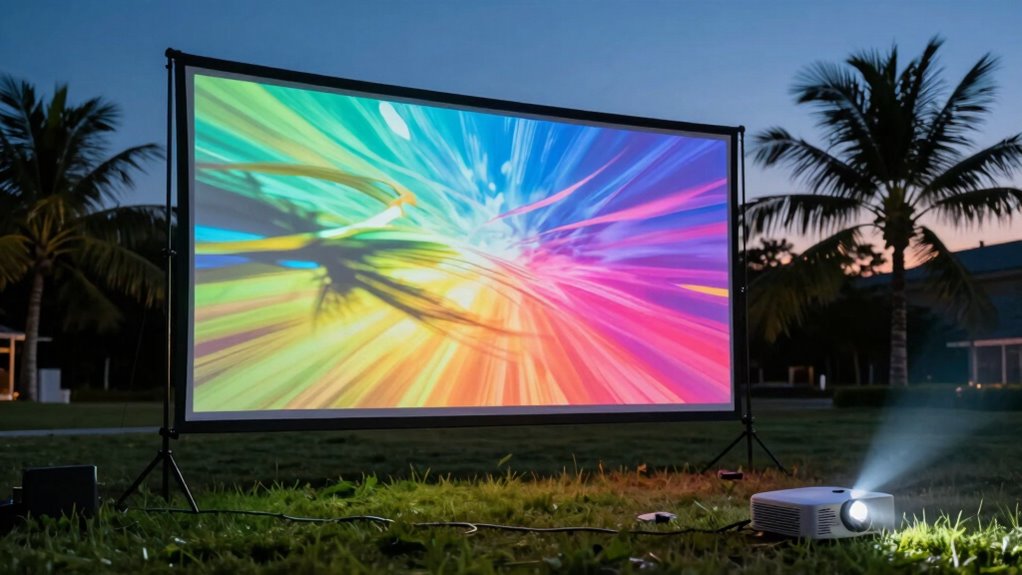
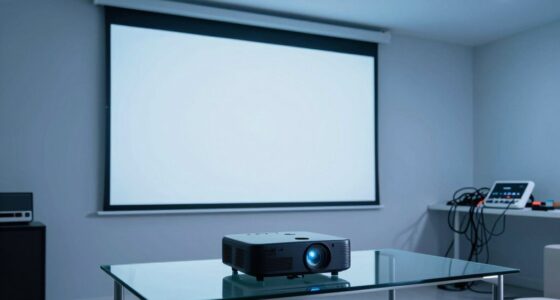
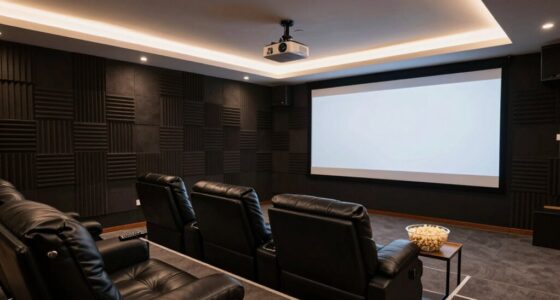
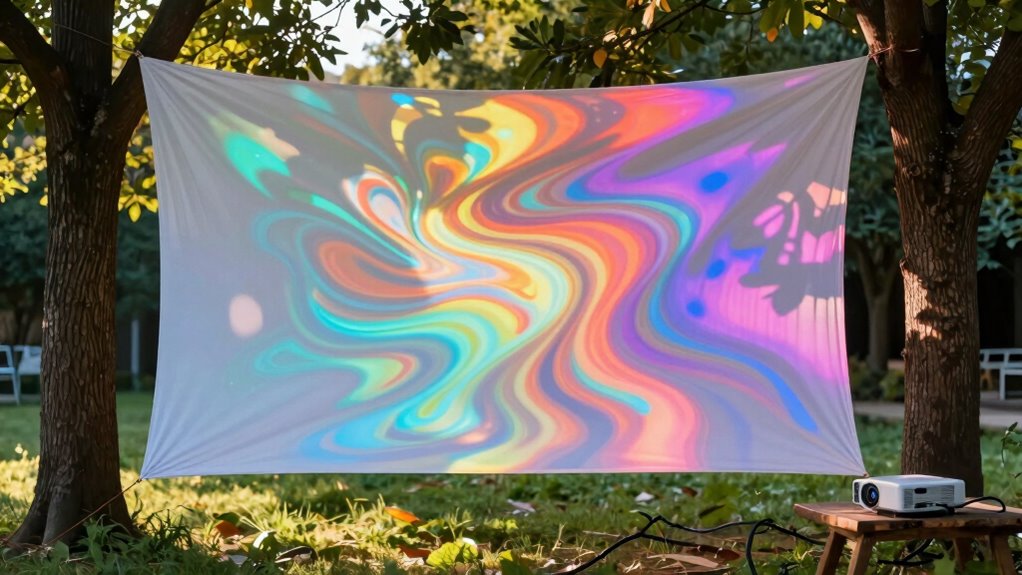
Have you ever wondered why outdoor projections often fall short of expectations? It’s usually because the environment introduces challenges that are easy to overlook in planning but become glaring issues during the event. One of the most vital aspects is screen placement. You need to think carefully about where you set up your screen, ensuring it’s visible from all angles and not obstructed by trees, poles, or structures. Positioning the screen at the right height and angle helps maximize visibility and prevents distortion or shadowing, which can ruin the viewing experience. But even with perfect placement, weather considerations can throw a wrench into your plans. Wind is a common culprit, especially when it picks up, causing the screen or projection equipment to shake or sway. This makes your visuals blurry or unstable, and in some cases, it can even damage your gear. Securing the screen and equipment properly helps, but you also need to monitor the forecast and be ready to adapt if conditions worsen. Light pollution is another obstacle you need to take into account. Ambient light from nearby streetlights, passing cars, or even the moon can wash out your projection, making it hard for viewers to see the images clearly. You might think a dark night solves this problem, but sometimes, even minimal light can interfere, so choosing a location with minimal ambient light is essential. Power supply is often underestimated in outdoor setups; you’ll need reliable power sources to keep your projector running smoothly. Fluctuations in power can cause flickering or shutdowns, ruining your presentation. Make sure your power cables are weatherproof and your generator, if used, has enough capacity and fuel. When it comes to screen placement, you also have to take into account how wind can influence the stability of your setup. Using weighted bases, stakes, or tension cables can help keep everything steady. And don’t forget to keep an eye on the weather forecast leading up to your event—rain, high winds, or fog can all derail your plans at the last minute. Even if the weather looks clear, sudden gusts can shake your setup, so always have a backup plan. Understanding environmental factors is key to ensuring a successful outdoor projection. Outdoor projection might seem straightforward at first, but when wind, light, and power are involved, things quickly become complex. With careful planning around screen placement and weather considerations, you can improve your chances of delivering a successful outdoor viewing experience. Still, flexibility and vigilance are key, so stay prepared to adapt as conditions change. Recognizing the importance of digital frames and interactive murals can also enhance your outdoor presentation options and engagement. Incorporating environmental control measures like wind shields or light-blocking screens can further improve your setup’s resilience against outdoor elements. Additionally, understanding how environmental factors interact can help you anticipate issues before they arise, ensuring a smoother event. Properly managing power sources and backup plans is essential to prevent disruptions during your outdoor projection.
outdoor projector screen with wind resistance
As an affiliate, we earn on qualifying purchases.
As an affiliate, we earn on qualifying purchases.
Frequently Asked Questions
What Is the Best Projector for Outdoor Use?
You should choose a projector with strong projection techniques and equipment durability for outdoor use. Look for models with high brightness (lumens) to combat ambient light and weather resistance features to withstand wind and elements. Portable, waterproof projectors with sturdy build quality and reliable power options are ideal. This guarantees your outdoor projection remains clear and functional, even when environmental factors challenge your setup.
How Do I Prevent Weather Damage to Outdoor Projection Equipment?
You should batten down the hatches to protect your outdoor projection equipment from weather damage. Weatherproofing equipment involves using waterproof covers, sealed enclosures, and rust-resistant materials. Also, prioritize installation safety by securing all gear firmly and avoiding setup in harsh conditions. Regular inspections help catch vulnerabilities early. By taking these steps, you keep your equipment safe, extend its lifespan, and ensure your outdoor projection stays clear of weather-related mishaps.
What Are the Ideal Wind Conditions for Outdoor Projections?
You should aim for calm wind conditions, ideally less than 5 mph, to minimize wind impact on your outdoor projection. Stronger breezes can cause equipment instability and distort the image. Keep an eye on weather forecasts, and avoid projecting during gusty winds. Also, consider how light interference from nearby sources can affect visibility, so choose a site with minimal ambient light for the clearest projection experience.
How Much Power Supply Is Needed for Large Outdoor Projections?
For large outdoor projections, you’ll need a substantial power supply—typically, around 10-20 kW, depending on your equipment. For example, a 100-foot outdoor screen using high-lumen projectors might consume significant energy; ensuring your power capacity can handle this load is essential. You should plan for higher energy consumption, and verify your electrical setup can sustain the power demands without interruptions, especially if you’re running multiple projectors or additional lighting.
Can Outdoor Projections Be Synchronized With Sound Systems?
Yes, outdoor projections can be synchronized with sound systems. You’ll need a solid audio setup, including speakers and a mixer, to guarantee sound synchronization. Connect your projector to your audio source using appropriate cables, and use synchronization software if needed. Make sure your sound system’s latency matches your projection timing, so visuals and audio stay perfectly aligned, creating an immersive experience for your audience.
weatherproof outdoor projector power supply
As an affiliate, we earn on qualifying purchases.
As an affiliate, we earn on qualifying purchases.
Conclusion
So, next time you dream of outdoor movie nights, remember—it’s all sunshine and laughter until wind, light,, and power crash the party. Who knew that just projecting a film outside would require the patience of a saint and the patience of a saint? But hey, if you enjoy playing a game of “Can I Keep the Screen Up?” then, by all means, go ahead. Just don’t say we didn’t warn you about the outdoor projection adventures!
outdoor projector screen stabilizer kit
As an affiliate, we earn on qualifying purchases.
As an affiliate, we earn on qualifying purchases.
As an affiliate, we earn on qualifying purchases.