TL;DR

Get business pricing on your home office setup
- Business-only prices and quantity discounts
- Tax-exempt purchasing
- Multiple users, one account, clear invoices
Apartment Therapy published a report on four living-room decorating rules that four interior designers say are not right for every home. Their alternatives focus on personal character, sociable furniture layouts, flexible TV placement and rooms designed for everyday use.
Apartment Therapy has published a report in which four interior designers question familiar living-room rules, including keeping rooms light and airy, pushing sofas against walls, mounting TVs above fireplaces and maintaining a picture-perfect appearance. The advice is not presented as a set of universal design rules; the designers argue that decisions should reflect a room’s layout, character and how people use it.
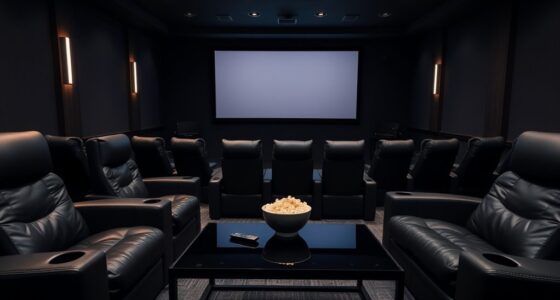
Designer Athiana Makar of Studio Clae challenges the expectation that living rooms should be bright and pale to appear larger. She says darker colors, rich woods, natural materials and layered lighting can give a space warmth and intimacy. Claire Sá, co-founder of De Rosee Sa, also questions the idea that a room must recede visually to be desirable. The report’s point is not that light colors are wrong, but that they are not mandatory.
Jacqueline Gonçalves of MOKSA Studio disputes the convention of lining every piece of furniture along the room’s perimeter. She says that arrangement can leave awkward gaps and disconnect the seating. Her suggested alternative is to consider floating the sofa away from the wall and grouping seating and tables more closely, where the room permits.
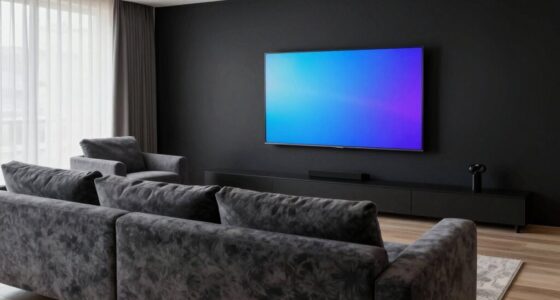
Gonçalves also advises against automatically placing a television above the fireplace, saying the screen can sit too high and dominate the room when switched off. She suggests considering another position, concealing the screen in furniture or choosing an art-style television. A separate point from Meghan Meehan of Hudson East Design is that a living room need not look staged: it should be comfortable enough for family and guests to use without worrying about moving a pillow or leaving a magazine out.
Designing for How Rooms Feel
The recommendations matter to readers because living rooms often need to serve several purposes, from conversation and relaxation to television viewing. Treating popular styling conventions as requirements can lead to choices that do not suit a home’s proportions or the people using it. The designers instead encourage homeowners to weigh comfort, function and personal taste alongside appearance.
The report also makes clear that these are professional opinions, not measured findings or building standards. A dark palette will not suit everyone, and moving a sofa into the center of a room may not work in a small or awkward layout. The practical takeaway is to test advice against the particular space rather than follow a social-media image as a template.
Products Worth Considering

Philips Hue Play HDMI Sync Box 4K with 65-Inch Play Gradient Light Strip

Samsung QN65LS03FAFXZA 65 The Frame QLED 4K Art Mode Vision AI Smart TV (2025)

Philips Hue Play Screen Sync and 65-Inch Play Gradient Smart TV Light Strip
As an affiliate, we earn on qualifying purchases.
Four Rules Under Review
The Apartment Therapy report, written by Kelsey Mulvey, says she asked four designers what they considered the worst living-room decorating advice they had heard. It frames the discussion against the volume of styling tips shared online and the difficulty of furnishing a room that is both frequently used and expected to look attractive.
The designers’ responses address four distinct expectations: that a room should be light and airy; that a sofa belongs against a wall; that a TV belongs above a fireplace; and that a living room should remain immaculate. The report does not claim these choices never work. It presents them as defaults worth questioning, with alternatives to consider when they better fit a home.
“Thoughtfully grouping seating and tables closer together encourages conversation and can make a room feel both more intimate and spacious.”
— Jacqueline Gonçalves, MOKSA Studio
Advice Depends on the Room
The report does not provide measurements, cost comparisons or tests showing that one layout or color scheme works better across homes. It also does not establish that the four conventions are broadly followed, or that designers universally reject them. The recommendations are attributed to the individuals interviewed, and their suitability depends on the room.
For example, a sofa may need to sit against a wall to preserve circulation, while a fireplace may be the only practical location for a television. The source does not discuss room dimensions, accessibility needs, rental restrictions or particular household requirements. Those details remain for homeowners to weigh before changing a layout.
Try Changes Before Committing
The report sets out options rather than announcing a design standard or a follow-up project. Readers considering a change can start with reversible choices: test a new sofa position, adjust lighting, or add color and texture before repainting or buying furniture. Any TV relocation should account for viewing height, sightlines and available wall or furniture space.
No additional interviews, studies or updates are specified in the source material. For now, the central advice is to judge a living room by whether it supports the people who use it, not only by whether it matches a popular image. Further developments are not indicated in the report.
Key Questions
What four living-room rules do the designers question?
They challenge the ideas that every room must be light and airy, sofas should always hug the wall, televisions belong above fireplaces, and living rooms should look picture-perfect.
Does the report say light colors or wall-side sofas are always wrong?
No. The designers argue that these choices are not right for every room. The report presents alternatives, not universal rules against particular colors or layouts.
Where does Jacqueline Gonçalves suggest putting a sofa?
She suggests considering a floating arrangement, with the sofa set away from the wall and closer to other seating and tables. Whether that works depends on the room’s size and circulation.
Why does Gonçalves advise against a TV above a fireplace?
She says the screen may end up too high and can look like a large black box when it is off. She proposes other placements, concealed furniture or an art-style television as alternatives.
What does the report say a lived-in living room should feel like?
Designer Meghan Meehan says a room should be comfortable to use, not simply attractive in photographs. Her advice is to allow ordinary signs of use rather than treating the space like a showroom.
Source: apartmenttherapy.com