
Complete the kit


Get business pricing on your home office setup
- Business-only prices and quantity discounts
- Tax-exempt purchasing
- Multiple users, one account, clear invoices
Key Takeaways
- Models with 8K/60Hz and 4K/120Hz support are now standard in mid-range units, making them safer long-term investments for next-gen gaming consoles.
- There is a clear performance gap between 5.2-channel entry-level units and 7.2-channel or higher models regarding Dolby Atmos height channel processing.
- Brand-specific streaming ecosystems like Denon HEOS and Yamaha MusicCast often add more daily utility than raw wattage specifications for casual listeners.
- THX certification, found in models like the Onkyo TX-RZ50, correlates with better dynamic range and stability in larger rooms compared to non-certified rivals.
- Budget options often sacrifice HDMI eARC implementation or limit the number of high-bandwidth ports, which can restrict future audio formats.
| Onkyo TX-NR6100 7.2-Channel THX Certified Network AV Receiver, Black |  | Best Overall for Gaming and Atmos Expansion | Channels: 7.2 | Audio formats: Dolby Atmos, DTS:X | THX certification: THX Select | VIEW LATEST PRICE | See Our Full Breakdown |
| Yamaha YHT-4970U 5.1-Channel Home Theater System with Dolby Atmos, 4K/120 & 8K Support, HDMI eARC, Bluetooth Multipoint |  | Best Complete Package for First-Time Setups | Included system: RX300A receiver, five speakers, powered subwoofer, cables | Audio channels: 5.1 | Audio formats: Dolby Atmos, DTS Virtual:X | VIEW LATEST PRICE | See Our Full Breakdown |
| Denon AVR-S670H 5.2-Channel 8K Home Theater Receiver, 75W per Channel |  | Best Networked Five-Channel Receiver | Channels: 5.2 | Output power: 75 watts per channel | HDMI ports: 8 | VIEW LATEST PRICE | See Our Full Breakdown |
| Denon AVR-S570BT 5.2-Channel 8K AV Receiver |  | Best Simple Receiver for HDMI-Heavy Setups | Channels: 5.2 | Output power: 70 watts per channel | HDMI ports: 5 total: 4 inputs and 1 output | VIEW LATEST PRICE | See Our Full Breakdown |
| Yamaha RX500A 7.2-Channel AV Receiver with Dolby Atmos, 4K/120 and 8K/60 HDMI, Wi-Fi, and Streaming |  | Best for Flexible Atmos Layouts and Wireless Music | Channels: 7.2 | Speaker configurations: 5.2.2, 7.2 | Output power: 70 watts | VIEW LATEST PRICE | See Our Full Breakdown |
| Denon AVR-X1800H 7.2 Channel AV Stereo Receiver (80W x 7), WiFi, Bluetooth | 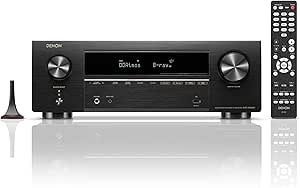 | Best for Gaming and Connected 3D Audio | Channels: 7.2 | Power output: 80W per channel | HDMI inputs: 4; 3 support 8K/60Hz and 4K/120Hz | VIEW LATEST PRICE | See Our Full Breakdown |
| Sony STR-DH590 5.2-Channel 4K HDR AV Receiver with Bluetooth |  | Best for a Straightforward 5.2 Setup | Channels: 5.2 | HDMI ports: 4 inputs, 1 output | Video support: 4K HDR pass-through, HDCP 2.2 | VIEW LATEST PRICE | See Our Full Breakdown |
| Yamaha YHT-4950U 5.1-Channel Home Theater System with 4K Ultra HD and Bluetooth |  | Best Complete Speaker-and-Receiver Package | Channel configuration: 5.1 | Included components: AV receiver, 5 speakers, subwoofer, speaker wire | Total wattage: 150 watts | VIEW LATEST PRICE | See Our Full Breakdown |
| Donner MAMP8 5.2 Channel Surround Sound AV Receiver |  | Best for Phono and Manual EQ Controls | Channel configuration: 5.2 | HDMI ports: 2 inputs, 1 output | Video support: 4K HDR pass-through | VIEW LATEST PRICE | See Our Full Breakdown |
| Onkyo TX-RZ50 9.2-Channel THX-Certified AV Receiver |  | Best for Advanced System Expansion | Channels: 9.2; processing up to 11.2 channels | Certification: THX | Room correction: Dirac Live | VIEW LATEST PRICE | See Our Full Breakdown |
| Pyle 5.2-Channel Home Theater Receiver with Bluetooth and 4K Pass-Through |  | Best for Basic Surround and Extra Inputs | Channels: 5.2 | Maximum power: 1,000 watts (measurement conditions not specified) | HDMI ports: 4 | VIEW LATEST PRICE | See Our Full Breakdown |
| Donner MAMP4 5.1-Channel Stereo Receiver with Bluetooth 5.3 |  | Best for Karaoke and Small Events | Channels: 5.1 | Speaker support: 5 speakers and 1 subwoofer | RMS output: 60 W per left/right speaker; 25 W each for surround and center speakers | VIEW LATEST PRICE | See Our Full Breakdown |
| Denon AVR-X1700H 7.2-Channel AV Receiver with HEOS |  | Best for Multiroom Streaming | Channels: 7.2 | Output power: 80 watts per channel | HDMI inputs / outputs: 6 inputs / 1 output | VIEW LATEST PRICE | See Our Full Breakdown |
| Yamaha RX300A 5.2-Channel Home Theater AV Receiver |  | Best for Guided Setup in a Compact System | Channel configuration: 5.2 | Output power: 70 watts | Speaker layouts: Up to 3.1.2 channels | VIEW LATEST PRICE | See Our Full Breakdown |
| Onkyo TX-NR5100 7.2-Channel 8K AV Receiver |  | Best for HDMI 2.1 Gaming | Channels: 7.2 | Output power: 80 watts | HDMI ports: 4 | VIEW LATEST PRICE | See Our Full Breakdown |
| home theater AV receiver | Channels | HDMI ports | Video support | Audio formats |
|---|---|---|---|---|
| Onkyo TX-NR6100 7.2-Channel TH | 7.2 | — | — | Dolby Atmos, DTS:X |
| Yamaha YHT-4970U 5.1-Channel H | — | — | — | Dolby Atmos, DTS Virtual:X |
| Denon AVR-S670H 5.2-Channel 8K | 5.2 | 8 | 8K pass-through; 8K upscaling of 4K content | Dolby TrueHD, Dolby Digital, Dolby Digital Plus, DTS-HD Master Audio |
| Denon AVR-S570BT 5.2-Channel 8 | 5.2 | 5 total: 4 inputs and 1 output | — | Dolby TrueHD, DTS-HD Master Audio |
| Yamaha RX500A 7.2-Channel AV R | 7.2 | 5 total: 4 inputs, 1 output | 4K/120, 8K/60 | Dolby Atmos, DTS:X |
| Denon AVR-X1800H 7.2 Channel A | 7.2 | — | 8K/60Hz, 4K/120Hz, Dolby Vision, HDR10+, HLG, Dynamic HDR | Dolby Atmos, DTS:X, DTS Virtual:X, Height Virtualization |
| Sony STR-DH590 5.2-Channel 4K | 5.2 | 4 inputs, 1 output | 4K HDR pass-through, HDCP 2.2 | — |
| Yamaha YHT-4950U 5.1-Channel H | — | 4 | 4K Ultra HD at 60fps, HDR, Dolby Vision, HLG, HDCP 2.2 | — |
| Donner MAMP8 5.2 Channel Surro | — | 2 inputs, 1 output | 4K HDR pass-through | — |
| Onkyo TX-RZ50 9.2-Channel THX- | 9.2; processing up to 11.2 channels | 8 | — | — |
| Pyle 5.2-Channel Home Theater | 5.2 | 4 | 4K Ultra HD and 3D pass-through | — |
| Donner MAMP4 5.1-Channel Stere | 5.1 | — | — | — |
| Denon AVR-X1700H 7.2-Channel A | 7.2 | — | 8K/60Hz and select 4K/120Hz pass-through | Dolby Atmos, DTS:X, DTS Virtual:X |
| Yamaha RX300A 5.2-Channel Home | — | 5 total (4 inputs, 1 output) | 4K/120 and 8K/60 | Dolby Atmos and DTS Virtual:X |
| Onkyo TX-NR5100 7.2-Channel 8K | 7.2 | 4 | 8K and 4K/120Hz pass-through | Dolby Atmos, DTS-HD Master Audio, DTS:X, Dolby TrueHD |
More Details on Our Top Picks
Onkyo TX-NR6100 7.2-Channel THX Certified Network AV Receiver, Black
The Onkyo TX-NR6100 is my strongest fit for a living room that needs both modern gaming connections and room to grow into surround sound. Its 7.2-channel layout supports Dolby Atmos and DTS:X, while THX Select certification adds a theater-focused distinction absent from the five-channel Denon AVR-S670H. Three listed HDMI 2.1 inputs support 4K/120Hz and 8K/60Hz video, with VRR, ALLM, and QFT helping compatible games run smoothly. Wi-Fi, Bluetooth, and several streaming services also make it more self-contained than the Bluetooth-only Yamaha YHT-4970U package. The tradeoff is a bulky chassis and conflicting output figures in the supplied data: 100 watts per channel is listed alongside a separate 210-watt figure. I would choose it for capability, not spec-sheet simplicity.
Pros:- Seven-channel amplification supports Dolby Atmos and DTS:X layouts.
- THX Select certification gives it a theater-oriented distinction.
- Three listed HDMI 2.1 inputs support 4K/120Hz, 8K/60Hz, VRR, ALLM, and QFT.
- Wi-Fi, Bluetooth, and multiple music services provide flexible streaming.
Cons:- The supplied specifications conflict, listing 100 watts per channel and a separate 210-watt output figure.
- Large listed dimensions may make placement difficult in a shallow media cabinet.
- The software update support date is unspecified.
Best for: Gamers and home theater builders who want 4K/120Hz connections, network streaming, and a seven-channel path to Atmos speakers.
Not ideal for: Buyers who need a compact receiver, a complete speaker bundle, or a clear, consistent power specification before purchasing.
- Channels:7.2
- Audio formats:Dolby Atmos, DTS:X
- THX certification:THX Select
- HDMI connectivity:8 total; 3 HDMI 2.1 inputs and 3 HDMI outputs listed
- HDMI bandwidth:40 Gbps
- Video pass-through:8K/60Hz, 4K/120Hz with HDR
- Output power:100 watts per channel listed; a separate 210-watt figure also appears in the supplied data
- Connectivity and streaming:Wi-Fi, Bluetooth; Amazon Music, Deezer, Pandora, Spotify, TIDAL, TuneIn
Our verdict“Choose the TX-NR6100 if you want a gaming-ready seven-channel receiver with THX certification and can live with an unclear power listing.”
Yamaha YHT-4970U 5.1-Channel Home Theater System with Dolby Atmos, 4K/120 & 8K Support, HDMI eARC, Bluetooth Multipoint
The Yamaha YHT-4970U is the straightforward pick for a buyer who wants a matched system rather than a receiver-shopping project: the package includes the RX300A receiver, five speakers, a powered subwoofer, and cables. That makes it a different proposition from the Onkyo TX-NR6100, which offers seven channels and built-in Wi-Fi but requires separate speakers. Yamaha lists Dolby Atmos and DTS Virtual:X, automatic room correction, and HDMI 2.1 features such as 4K/120, 8K/60, eARC, and current gaming modes. The supplied information identifies the system as 5.1, so it does not offer the same stated expansion path as a 7.2 receiver. It also lacks built-in Wi-Fi and relies on Bluetooth for wireless streaming; its 50.4-pound package may take effort to position.
Pros:- Includes the receiver, five speakers, a powered subwoofer, and necessary cables.
- Automatic room correction helps adapt the included system to the listening space.
- Supports 4K/120, 8K/60, eARC, Dolby Vision, and HDR10+.
- Bluetooth Multipoint allows two devices to pair simultaneously.
Cons:- No built-in Wi-Fi; wireless music streaming relies on Bluetooth.
- The 5.1-channel package is less expandable than the seven-channel Onkyo TX-NR6100.
- The listed 50.4-pound weight can make handling and setup less convenient.
Best for: First-time home theater buyers who want a receiver, five speakers, and a powered subwoofer in one coordinated package.
Not ideal for: Buyers who want built-in Wi-Fi streaming, a lighter installation, or the seven-channel speaker expansion offered by the Onkyo TX-NR6100.
- Included system:RX300A receiver, five speakers, powered subwoofer, cables
- Audio channels:5.1
- Audio formats:Dolby Atmos, DTS Virtual:X
- HDMI and video:HDMI 2.1; 4K/120, 8K/60
- HDR and TV connection:Dolby Vision, HDR10+, eARC
- Room setup:Automatic room correction
- Wireless connectivity:Bluetooth Multipoint; no built-in Wi-Fi listed
- Weight:50.4 pounds
Our verdict“Pick the YHT-4970U if you want a ready-to-install speaker-and-receiver bundle more than network streaming or a larger channel layout.”
Denon AVR-S670H 5.2-Channel 8K Home Theater Receiver, 75W per Channel
The Denon AVR-S670H is the better fit for a compact system that prioritizes connected listening and current video support over adding height speakers. It offers Wi-Fi, HEOS, and Bluetooth, plus Alexa compatibility, giving it a broader network-streaming setup than the Bluetooth-only Denon AVR-S570BT. Its 5.2 channels and 75 watts per channel are suited to a conventional surround arrangement, while 8K pass-through, 4K-to-8K upscaling, eARC, and VRR, ALLM, and QFT keep it current for TVs and game consoles. The limit is clear: unlike the seven-channel Onkyo TX-NR6100, this Denon cannot serve a stated 5.2.2 Atmos layout. Buyers should also request warranty details, which are not provided in the supplied data.
Pros:- Wi-Fi, HEOS, and Bluetooth support several ways to stream music.
- 8K pass-through and 4K-to-8K upscaling support newer display setups.
- VRR, ALLM, and QFT address compatible gaming systems.
- Dolby and DTS high-definition audio decoding supports movie surround tracks.
Cons:- Five amplifier channels do not provide the expansion offered by the Onkyo TX-NR6100.
- Warranty details must be requested from customer service.
- The listed 75 watts per channel is lower than the TX-NR6100’s listed 100 watts per channel, though the supplied Onkyo figures are inconsistent.
Best for: TV and console owners building a five-channel system who want Wi-Fi, HEOS streaming, and Alexa compatibility.
Not ideal for: Buyers planning height speakers or a seven-channel Atmos layout, or those who need warranty terms clearly specified before purchase.
- Channels:5.2
- Output power:75 watts per channel
- HDMI ports:8
- Video support:8K pass-through; 8K upscaling of 4K content
- Audio formats:Dolby TrueHD, Dolby Digital, Dolby Digital Plus, DTS-HD Master Audio
- HDR formats:HDR10+, HLG, HDR, Dolby Vision, Dynamic HDR
- Connectivity:Bluetooth, Wi-Fi, HEOS, HDMI ARC/eARC
- Gaming and voice control:VRR, ALLM, QFT; Amazon Alexa compatible
Our verdict“Choose the AVR-S670H for a connected five-channel theater with modern gaming and video support, but skip it if you plan to add height channels.”
Denon AVR-S570BT 5.2-Channel 8K AV Receiver
The Denon AVR-S570BT keeps the setup focused: five amplifier channels, Bluetooth, and four HDMI 2.1 inputs for a TV, console, and other video sources. That input count is the standout against the Yamaha RX500A, which lists four HDMI inputs too, but adds seven-channel Atmos/DTS:X support and Wi-Fi streaming. Denon’s five-channel design is a sensible match for a standard surround system, with Dolby TrueHD and DTS-HD Master Audio for movie sound and VRR, QFT, and ALLM for compatible games. It also includes HDR and Dolby Vision support, streaming services, and an on-screen setup assistant. The tradeoff is fewer expansion options and no Wi-Fi listed; compared with the Denon AVR-S670H, it also gives up HEOS and network connectivity.
Pros:- Four HDMI 2.1 inputs support multiple connected video sources.
- 8K support, Dolby Vision, HDR10+, and other listed HDR formats suit modern displays.
- VRR, QFT, and ALLM support compatible gaming setups.
- On-screen setup assistance, app control, and a remote simplify operation.
Cons:- Five channels limit expansion compared with the Yamaha RX500A and Onkyo TX-NR6100.
- Bluetooth is listed, but built-in Wi-Fi is not.
- The software update support date is unspecified.
Best for: Buyers with several HDMI-connected sources who want a straightforward five-channel receiver for a conventional surround setup.
Not ideal for: Atmos builders seeking seven amplified channels or listeners who want Wi-Fi, HEOS, or broader network streaming like the Denon AVR-S670H.
- Channels:5.2
- Output power:70 watts per channel
- HDMI ports:5 total: 4 inputs and 1 output
- HDMI and video:HDMI 2.1 with 8K support
- Audio formats:Dolby TrueHD, DTS-HD Master Audio
- Video formats:HDR, HLG, Dolby Vision, HDR10+, Dynamic HDR
- Gaming features:VRR, QFT, ALLM
- Connectivity and streaming:Bluetooth; Spotify, TIDAL, Pandora, TuneIn, Deezer
Our verdict“Pick the AVR-S570BT when HDMI input capacity and simple five-channel operation matter more than Wi-Fi streaming or Atmos expansion.”
Yamaha RX500A 7.2-Channel AV Receiver with Dolby Atmos, 4K/120 and 8K/60 HDMI, Wi-Fi, and Streaming
The Yamaha RX500A makes sense for buyers who want seven-channel speaker flexibility without giving up built-in network streaming. It supports 5.2.2 or 7.2 layouts, Dolby Atmos, and DTS:X, so it can serve either an Atmos height-speaker arrangement or a conventional seven-channel surround setup. Automatic room correction with an included microphone helps tailor the system to the room, while Wi-Fi streaming includes Spotify Connect, Google Cast, AirPlay, and other listed services. Compared with the Onkyo TX-NR6100, Yamaha also supports 4K/120 and 8K/60, but lists just four HDMI inputs, one HDMI output, and 70 watts of output power. That makes it less appealing for source-heavy systems or buyers prioritizing higher listed output. Bluetooth Multipoint adds convenience, but does not replace those wired limits.
Pros:- Supports both 5.2.2 Atmos and 7.2 speaker configurations.
- Dolby Atmos and DTS:X provide immersive surround format support.
- Wi-Fi streaming includes Spotify Connect, Google Cast, AirPlay, and other services.
- Automatic room correction includes a setup microphone.
Cons:- Four HDMI inputs and one output may constrain systems with many sources or displays.
- Listed output power is 70 watts, below the TX-NR6100’s listed 100 watts per channel.
- The supplied data lists 4K/120 and 8K/60 support but does not specify the number of HDMI 2.1 inputs.
Best for: Home theater builders choosing between a 5.2.2 Atmos layout and 7.2 surround who also want Wi-Fi music streaming.
Not ideal for: Owners with many HDMI sources, those needing multiple HDMI outputs, or buyers who prefer the Onkyo TX-NR6100’s higher listed per-channel output.
- Channels:7.2
- Speaker configurations:5.2.2, 7.2
- Output power:70 watts
- HDMI ports:5 total: 4 inputs, 1 output
- Video support:4K/120, 8K/60
- Audio formats:Dolby Atmos, DTS:X
- Connectivity:HDMI, optical, coaxial, analog, Wi-Fi, Bluetooth
- Streaming and room correction:Spotify Connect, Google Cast, AirPlay, TIDAL Connect, Qobuz Connect; automatic correction with included microphone
Our verdict“Choose the RX500A if flexible seven-channel speaker layouts and Wi-Fi streaming matter more than extra HDMI capacity or higher listed output.”
Denon AVR-X1800H 7.2 Channel AV Stereo Receiver (80W x 7), WiFi, Bluetooth
The Denon AVR-X1800H is a strong fit for a living room built around modern consoles, a 4K/120Hz display, and immersive surround sound. Its 7.2-channel layout supports Dolby Atmos and DTS:X, while height virtualization offers another route to a sense of overhead sound when speaker placement is limited. Three of its four HDMI inputs handle 8K/60Hz and 4K/120Hz signals, and VRR and low-latency gaming features help keep compatible setups responsive. Compared with the Sony STR-DH590, it offers newer video support, more channels, and HEOS multi-room streaming; the Sony is a simpler 5.2-channel choice. The tradeoff is just four HDMI inputs and no phono input, so a large source collection or direct vinyl connection may call for another component.
Pros:- Three HDMI inputs support 8K/60Hz and 4K/120Hz video, with VRR and low-latency gaming features.
- Dolby Atmos, DTS:X, and height virtualization provide several paths to 3D-style surround sound.
- HEOS, Wi-Fi, Bluetooth, and AirPlay 2 support music playback and multi-room listening.
- Two subwoofer outputs and Zone 2 pre-outs offer useful system expansion options.
Cons:- Four HDMI inputs can be limiting when a TV setup has several consoles and source devices.
- No dedicated phono input for connecting a turntable directly.
Best for: Console gamers and movie fans building a 7.2-channel system with 4K/120Hz video, height effects, and multi-room music streaming.
Not ideal for: Buyers with more than four HDMI sources or vinyl listeners who need a built-in phono input.
- Channels:7.2
- Power output:80W per channel
- HDMI inputs:4; 3 support 8K/60Hz and 4K/120Hz
- HDMI outputs:1
- Video support:8K/60Hz, 4K/120Hz, Dolby Vision, HDR10+, HLG, Dynamic HDR
- Audio formats:Dolby Atmos, DTS:X, DTS Virtual:X, Height Virtualization
- Wireless:Wi-Fi, Bluetooth, AirPlay 2, HEOS
- Subwoofer outputs:2
Our verdict“Choose the AVR-X1800H if gaming-friendly HDMI, 3D audio, and network streaming matter more than extra inputs or a built-in phono connection.”
Sony STR-DH590 5.2-Channel 4K HDR AV Receiver with Bluetooth
The Sony STR-DH590 suits buyers who want a conventional 5.2-channel receiver for a 4K HDR television without stepping up to a more elaborate networked model. It passes 4K HDR video with HDCP 2.2 and includes four HDMI inputs, Bluetooth streaming, FM radio, and a selection of analog and digital audio connections. Its virtual surround feature is designed around a two-speaker arrangement, which makes it a different sort of compromise from a receiver driving a full surround-speaker layout. Compared with the Denon AVR-X1800H, the Sony gives up 7.2-channel expansion, newer 8K/4K120 video features, and Wi-Fi streaming, but its simpler feature set may suit a modest system. The provided power figure is listed as 725 watts without a channel-by-channel rating, so it is difficult to use for direct power comparisons.
Pros:- 4K HDR pass-through and HDCP 2.2 support suit compatible televisions and source devices.
- Four HDMI inputs accommodate several connected sources.
- Bluetooth, FM radio, stereo RCA, optical, and coaxial connections cover common listening needs.
- Virtual surround sound offers a simulated surround effect from a two-speaker setup.
Cons:- The 5.2-channel configuration does not match the expansion options of the Denon AVR-X1800H.
- No Wi-Fi or multi-room streaming is listed.
- The stated 725-watt output lacks a channel-by-channel rating, making power comparisons difficult.
Best for: Buyers assembling a modest 5.2-channel system around a 4K HDR TV who want Bluetooth, FM radio, and familiar wired connections.
Not ideal for: Gamers seeking 4K/120Hz or 8K pass-through, and listeners who want Wi-Fi streaming or a larger Atmos-capable setup.
- Channels:5.2
- HDMI ports:4 inputs, 1 output
- Video support:4K HDR pass-through, HDCP 2.2
- Listed output power:725 watts
- Connectivity:Bluetooth, HDMI
- Audio inputs:4 stereo RCA
- Digital audio inputs:1 optical, 1 coaxial
- Dimensions:11.75 × 17 × 5.25 inches
Our verdict“Pick the STR-DH590 for a basic 4K HDR home theater with Bluetooth and FM, but skip it if you need newer gaming video support or network audio.”
Yamaha YHT-4950U 5.1-Channel Home Theater System with 4K Ultra HD and Bluetooth
Unlike the receiver-only picks here, the Yamaha YHT-4950U arrives as a coordinated 5.1-channel system with five speakers, a subwoofer, and speaker wire. That makes it a practical starting point for buyers who want a full surround setup without matching separate components. YPAO room optimization helps calibrate the system to its placement, while 4K/60Hz pass-through and HDR formats including Dolby Vision keep it compatible with many current TV setups. Against the receiver-only Sony STR-DH590, Yamaha includes the speakers and subwoofer; the Sony leaves those choices to the buyer. The package’s main limits are its lack of Wi-Fi and multi-room streaming, plus 4K/60Hz rather than the 4K/120Hz support offered by the Denon AVR-X1800H. Its listed 51.8-pound weight also makes moving the full kit less convenient.
Pros:- Includes the receiver, five speakers, subwoofer, and speaker wire for a ready-to-assemble 5.1 system.
- YPAO room optimization helps adjust speaker setup to the listening space.
- Supports 4K/60Hz pass-through, HDR, Dolby Vision, and HDCP 2.2.
- Bluetooth and multiple wired connection types support basic music and AV sources.
Cons:- No Wi-Fi or wireless multi-room streaming is listed.
- 4K/60Hz video support lacks the higher refresh-rate gaming support found on the Denon AVR-X1800H.
- The full system’s listed weight is 51.8 pounds, making relocation less convenient.
Best for: First-time home theater buyers who want a matched 5.1 speaker package, room calibration, and straightforward 4K HDR support in one purchase.
Not ideal for: Owners who already have speakers, buyers seeking Wi-Fi or multi-room music, and gamers who need 4K/120Hz pass-through.
- Channel configuration:5.1
- Included components:AV receiver, 5 speakers, subwoofer, speaker wire
- Total wattage:150 watts
- HDMI ports:4
- Video support:4K Ultra HD at 60fps, HDR, Dolby Vision, HLG, HDCP 2.2
- Connectivity:HDMI, Ethernet, coaxial, optical, USB, auxiliary, Bluetooth
- Room optimization:Yamaha YPAO
- System weight:51.8 pounds
Our verdict“Choose the YHT-4950U if you need a matched 5.1 system with setup assistance, not if you already own speakers or want advanced streaming and gaming features.”
Donner MAMP8 5.2 Channel Surround Sound AV Receiver
The Donner MAMP8 takes a different route from the format-focused receivers in this roundup: its appeal is a broad mix of physical inputs and hands-on tone adjustment. A built-in phono input gives turntable owners a direct connection, while treble, midrange, and bass controls let listeners shape the sound without relying on a networked setup. It also offers Bluetooth 5.3 and 4K HDR pass-through, but the HDMI count stops at two inputs. That is a sharper limitation than the Denon AVR-X1800H, which has four inputs and support for Dolby Atmos and DTS:X. The MAMP8 does not decode Dolby or DTS formats, a significant restriction for movie systems built around encoded surround soundtracks. It makes more sense as a flexible, manually adjusted audio hub than as a feature-rich immersive cinema receiver.
Pros:- Built-in phono input supports direct turntable connection.
- Bluetooth 5.3 and USB, RCA, optical, coaxial, and FM connections provide varied source options.
- Treble, midrange, and bass controls allow hands-on sound adjustment.
- 4K HDR pass-through supports compatible video sources.
Cons:- No Dolby or DTS decoding, limiting compatibility with common home theater surround soundtracks.
- Only two HDMI inputs, fewer than the four on the Sony STR-DH590 and Denon AVR-X1800H.
- The stated output ratings differ by speaker position and are specified at 4Ω, so they are not directly comparable to uniform per-channel ratings.
Best for: Turntable owners building a simple home theater and stereo setup who value a phono input, Bluetooth, and direct EQ adjustments.
Not ideal for: Movie-focused buyers who need Dolby or DTS decoding, more than two HDMI sources, or a broad set of immersive surround formats.
- Channel configuration:5.2
- HDMI ports:2 inputs, 1 output
- Video support:4K HDR pass-through
- Wireless:Bluetooth 5.3
- Other connections:USB, RCA, optical, coaxial, phono, FM
- Audio adjustment:Treble, midrange, and bass controls
- Warranty:1 year
Our verdict“The MAMP8 is a fit for a mixed turntable-and-TV setup with manual controls, but its format support and two HDMI inputs make it a weak match for a surround-first cinema system.”
Onkyo TX-RZ50 9.2-Channel THX-Certified AV Receiver
The Onkyo TX-RZ50 is the most expansion-minded receiver in this group. Its 9.2-channel speaker configuration and processing for up to 11.2 channels give system builders room to add speakers beyond the 7.2-channel Denon AVR-X1800H, while Dirac Live room correction provides a substantial calibration tool for complex rooms. THX certification, eight HDMI ports, and three HDMI outputs also make it better suited to multi-source systems with more than one display. Its 8K/4K video transfer is listed at 40 Gbps, and streaming support covers several named services. The tradeoffs are its larger, heavier chassis and the absence of detailed channel-by-channel power ratings in the supplied data. Compared with the Yamaha YHT-4950U package, it offers a much broader receiver platform but does not include speakers or a subwoofer.
Pros:- 9.2-channel operation and processing for up to 11.2 channels support substantial system expansion.
- Dirac Live room correction offers advanced calibration for challenging room acoustics.
- Eight HDMI ports and three HDMI outputs suit multi-source and multi-display installations.
- THX certification and 8K/4K video transfer support a feature-rich home theater build.
Cons:- The supplied power information lacks detailed channel-by-channel ratings.
- At 36.1 pounds, it is heavier than a basic receiver and may be harder to place or move.
- It is a receiver only, unlike the Yamaha YHT-4950U package, which includes speakers and a subwoofer.
Best for: Home theater builders planning a large multi-speaker layout, multiple displays, and room correction for a demanding listening space.
Not ideal for: Buyers seeking an all-in-one speaker package, a compact receiver, or clear channel-by-channel power figures before choosing speakers.
- Channels:9.2; processing up to 11.2 channels
- Certification:THX
- Room correction:Dirac Live
- HDMI ports:8
- HDMI outputs:3
- Video transfer:8K/4K at 40 Gbps
- Output power:120 watts
- Weight:36.1 pounds
Our verdict“Choose the TX-RZ50 for a large, expandable theater where room correction and connection capacity matter more than simplicity or an included speaker set.”
Pyle 5.2-Channel Home Theater Receiver with Bluetooth and 4K Pass-Through
I’d look at the Pyle when the priority is a straightforward 5.2 setup with useful extras, rather than modern immersive formats or network streaming. Its four HDMI ports, 4K and 3D pass-through, Bluetooth, USB playback, and FM radio cover a range of everyday sources; the two microphone inputs also make it more flexible for announcements or casual karaoke than the Denon AVR-X1700H. That flexibility comes with limits: the listed 1,000-watt maximum is not qualified with per-channel or operating-condition details, so it is hard to use as a meaningful power comparison. Unlike the Denon, it has no listed Dolby Atmos or DTS:X support. I’d choose it for basic surround and varied connections, but skip it if gaming formats, immersive audio, or clearly specified amplification are priorities.
Pros:- Supports a 5.2-channel speaker setup with an RCA subwoofer output
- Four HDMI ports pass through 4K Ultra HD and 3D video
- Bluetooth, USB playback, and FM radio provide several listening options
- Two microphone inputs add flexibility for karaoke or announcements
Cons:- The 1,000-watt maximum is not defined by channel or measurement conditions
- No Dolby Atmos or DTS:X support is listed
- No Wi-Fi or network music services are listed
Best for: Buyers building a basic 5.2 home theater who also want Bluetooth, USB playback, FM radio, or microphone inputs.
Not ideal for: Viewers seeking Dolby Atmos or DTS:X, modern HDMI gaming features, or clearly documented per-channel power.
- Channels:5.2
- Maximum power:1,000 watts (measurement conditions not specified)
- HDMI ports:4
- Video support:4K Ultra HD and 3D pass-through
- Wireless connectivity:Bluetooth
- Audio playback:MP3 and WAV
- Inputs:USB, DAC digital interface, 2 × 1/4-inch microphone
- Outputs:HD output and RCA subwoofer output
- Other features:FM radio, remote control, overcurrent, short-circuit, and overvoltage protection
Our verdict“Choose the Pyle for basic 5.2 surround and extra microphone and media inputs, not for immersive audio or current gaming features.”
Donner MAMP4 5.1-Channel Stereo Receiver with Bluetooth 5.3
The Donner MAMP4 is the unusual choice here: I’d pick it for a room that needs a 5.1 speaker arrangement plus microphone controls, not as the main hub for a typical HDMI-based theater. Two microphone inputs, Talk Over, adjustable echo, and treble, midrange, and bass controls suit karaoke and speaking events better than the Pyle, which offers microphones but lacks these listed sound adjustments. It also has Bluetooth 5.3 and optical and coaxial inputs for connecting audio sources. The main catch is significant for movie watchers: this receiver has no HDMI input and decodes PCM only, with no Dolby or DTS support. That makes it less suitable than the Denon AVR-X1700H for surround sound from modern movie sources. Choose the Donner when its microphone features matter more than home-theater format compatibility.
Pros:- Supports five speakers and one subwoofer in a 5.1 arrangement
- Bluetooth 5.3 plus optical, coaxial, USB, RCA, AUX, and AC-3 inputs
- Dual microphone jacks, Talk Over, and adjustable echo suit karaoke and speeches
- Treble, midrange, and bass controls allow basic sound adjustment
Cons:- No HDMI input for direct connection of common theater sources
- PCM-only decoding excludes Dolby and DTS formats
- Remote control batteries are not included
Best for: Karaoke hosts and buyers setting up a small media or event room with five speakers, a subwoofer, and wired microphones.
Not ideal for: Home theater buyers who need HDMI switching or Dolby and DTS decoding from Blu-ray players, streaming devices, or game consoles.
- Channels:5.1
- Speaker support:5 speakers and 1 subwoofer
- RMS output:60 W per left/right speaker; 25 W each for surround and center speakers
- Bluetooth:Version 5.3
- Inputs:Optical, coaxial, USB (up to 64 GB), RCA, AC-3, AUX, FM, 2 microphone inputs
- Audio decoding:PCM only; Dolby and DTS decoding not supported
- Controls:Treble, midrange, bass, echo, and Talk Over
- HDMI input:None
Our verdict“Pick the MAMP4 for microphone-led karaoke or small events, but choose a receiver such as the Denon AVR-X1700H for an HDMI-centered movie system.”
Denon AVR-X1700H 7.2-Channel AV Receiver with HEOS
I’d put the Denon AVR-X1700H high on the list for buyers who want a capable movie receiver that also serves as a networked music hub. Its 7.2-channel layout and Dolby Atmos and DTS:X support offer a more flexible surround foundation than the 5.2-channel Pyle, while HEOS Built-in adds wireless and multi-room streaming. Six HDMI inputs and listed 8K/60Hz and select 4K/120Hz pass-through help accommodate several sources, and voice assistant compatibility can simplify everyday control. There are clear limits: it has only one HDMI output, which may not suit a setup feeding multiple displays, and the listing does not include physical height channels, so immersive formats do not automatically mean overhead speakers are present. Compared with the Onkyo TX-NR5100, the Denon’s standout distinction is HEOS and broad assistant support rather than its listed gaming features.
Pros:- 7.2-channel configuration supports Dolby Atmos and DTS:X formats
- Six HDMI inputs and listed 8K/60Hz and select 4K/120Hz pass-through
- HEOS Built-in supports wireless and multi-room music streaming
- Compatible with Amazon Alexa, Google Assistant, and Apple Siri
Cons:- One HDMI output limits direct connection to a single display
- The listed specifications do not include physical height channels
- Select 4K/120Hz pass-through is narrower than an unqualified claim of support across all inputs
Best for: Home theater owners who want 7.2-channel immersive audio, multiroom music through HEOS, and voice-assistant control.
Not ideal for: Buyers who need two HDMI display outputs or want a receiver listing physical height-channel amplification as part of the package.
- Channels:7.2
- Output power:80 watts per channel
- HDMI inputs / outputs:6 inputs / 1 output
- Video support:8K/60Hz and select 4K/120Hz pass-through
- Audio formats:Dolby Atmos, DTS:X, DTS Virtual:X
- Connectivity:Bluetooth, Ethernet, HDMI, USB, Wi-Fi
- Streaming:HEOS Built-in
- Voice assistants:Amazon Alexa, Google Assistant, Apple Siri
Our verdict“Choose the AVR-X1700H if HEOS multiroom streaming and voice control matter as much as 7.2-channel movie playback.”
Yamaha RX300A 5.2-Channel Home Theater AV Receiver
The Yamaha RX300A makes the most sense for someone building a smaller, carefully guided theater system rather than planning for seven channels. Its automatic calibration and guided setup help tune the sound to the room without requiring as much manual adjustment, while Dolby Atmos and DTS Virtual:X support layouts up to 3.1.2 channels. For gaming and newer displays, 4K/120 and 8K/60 support, Dolby Vision, HDR10+, eARC, ALLM, and VRR give it a stronger video feature set than the Pyle. The tradeoff is expansion: its 5.2-channel configuration is less flexible than the 7.2-channel Denon AVR-X1700H or Onkyo TX-NR5100 if you later want a larger speaker layout. It also has five HDMI ports total, with four inputs and one output. I’d favor it for straightforward setup and current video support, not for a system built to grow beyond its channel limit.
Pros:- Automatic calibration and guided setup simplify room tuning
- Supports Dolby Atmos and DTS Virtual:X with layouts up to 3.1.2
- 4K/120, 8K/60, Dolby Vision, HDR10+, ALLM, and VRR support
- Bluetooth Multipoint pairs two source devices
Cons:- 5.2-channel configuration offers less expansion than the Denon AVR-X1700H or Onkyo TX-NR5100
- Four HDMI inputs and one output may be limiting for source-heavy systems
- Warranty details require contacting customer service
Best for: First-time theater builders who want guided setup, automatic room calibration, and immersive audio in a 5.2-channel system.
Not ideal for: Buyers planning a 7.2-channel layout or wanting more speaker expansion than the receiver’s 5.2-channel configuration allows.
- Channel configuration:5.2
- Output power:70 watts
- Speaker layouts:Up to 3.1.2 channels
- HDMI ports:5 total (4 inputs, 1 output)
- Video support:4K/120 and 8K/60
- HDR formats:Dolby Vision and HDR10+
- Audio formats:Dolby Atmos and DTS Virtual:X
- Connectivity:HDMI, Bluetooth, coaxial, optical, analog
- Room correction:Automatic calibration with included setup microphone
Our verdict“Choose the RX300A for guided setup and modern video features in a compact 5.2-channel theater, not for a larger expandable system.”
Onkyo TX-NR5100 7.2-Channel 8K AV Receiver
For a theater that doubles as a gaming setup, I’d shortlist the Onkyo TX-NR5100 for its 4K/120Hz pass-through and HDMI 2.1 gaming features. VRR, ALLM, and QFT are aimed at smoother, more responsive play, while 7.2 channels and Dolby Atmos and DTS:X give it room for an immersive movie system too. Compared with the Yamaha RX300A, the Onkyo offers a 7.2-channel configuration rather than a 5.2-channel one, making it the more flexible fit for buyers planning additional speakers. Its listed four HDMI ports are a restraint for anyone with many consoles and players, and the product data does not specify how those inputs divide by video capability. Bluetooth aptX HD, Chromecast, AirPlay 2, and DTS Play-Fi broaden music options, though the listing does not specify Wi-Fi. I’d choose it for gaming and format flexibility, not for a large bank of HDMI sources.
Pros:- Supports 4K/120Hz pass-through, VRR, ALLM, and QFT
- 7.2 channels with Dolby Atmos and DTS:X support
- eARC and Bluetooth with aptX HD
- Chromecast built-in, AirPlay 2, and DTS Play-Fi provide several streaming options
Cons:- Four HDMI ports may be restrictive for systems with several consoles and players
- The product data does not specify which HDMI inputs support each video feature
- Wi-Fi is not listed among the supplied connectivity specifications
Best for: Console and PC gamers building a 7.2-channel theater who want 4K/120Hz pass-through, VRR, and ALLM.
Not ideal for: Buyers with many HDMI sources or those who need a clearly specified Wi-Fi connection and input-by-input video capability.
- Channels:7.2
- Output power:80 watts
- HDMI ports:4
- Video support:8K and 4K/120Hz pass-through
- Gaming features:VRR, ALLM, QFT
- Audio formats:Dolby Atmos, DTS-HD Master Audio, DTS:X, Dolby TrueHD
- Connectivity:Bluetooth with aptX HD, eARC
- Streaming services:Chromecast built-in, AirPlay 2, DTS Play-Fi
- Dimensions and weight:12.9 × 17.13 × 6.3 inches; 8.4 kg
Our verdict“Pick the TX-NR5100 for a gaming-focused 7.2-channel theater with modern HDMI features, provided four HDMI ports are enough for your sources.”
How We Picked
My selection process prioritized models that offer a balance of current connectivity standards and proven amplifier stability. I evaluated each receiver based on its channel configuration (5.2 vs. 7.2 vs. 9.2), as this dictates the maximum surround sound format supported. I also weighed the importance of video pass-through capabilities, specifically looking for HDMI 2.1 features like 4K/120Hz and VRR, which are critical for gamers. Build quality and interface usability were secondary but significant factors, ensuring that the software experience did not detract from the audio performance.Factors to Consider When Choosing Home Theater AV Receivers
Selecting an AV receiver is less about finding the one with the highest specs and more about matching the device to your room’s acoustic reality and your usage habits.Channel Count and Room Size
The number of channels determines how many speakers you can drive. A 5.2-channel receiver supports two subwoofers but only five main speakers, suitable for small to medium rooms. If you want true Dolby Atmos with height channels, you need at least a 7.2-channel unit to power front, rear, and height speakers simultaneously. Mismatching channel count with room size is a common error; driving a large space with underpowered 5.2 units leads to distortion, while a 9.2-channel monster in a bedroom is wasted potential.HDMI Standards and Gaming Features
Not all HDMI ports are created equal. For 2027, verify that the receiver supports HDMI 2.1 with 4K at 120Hz and Variable Refresh Rate (VRR). Some budget models may advertise 8K support but only on one port, or lack eARC for high-bitrate lossless audio from your TV. If you own a PS5, Xbox Series X, or high-end PC, investing in a model with full-bandwidth HDMI 2.1 ports prevents bottlenecks and future-proofs your setup for higher resolutions.Room Correction Technology
Automatic room calibration is the single biggest upgrade for audio quality. Premium systems like Audyssey MultEQ XT32 or YPAO use a microphone to measure your room’s acoustics and adjust frequency response accordingly. Entry-level models often have basic correction that fixes major peaks but ignores complex reflections. If your room has hard surfaces or irregular shapes, prioritize a receiver with advanced calibration software over one with slightly higher wattage.Streaming Ecosystems and Multi-Room Audio
Modern receivers are hubs for music, not just movies. Consider which ecosystem fits your existing gear: HEOS for Denon, MusicCast for Yamaha, or Chromecast built-in for broader compatibility. If you already own wireless speakers from a specific brand, sticking to that brand’s receiver allows for seamless multi-room audio control. Ignoring this integration can lead to fragmented control schemes, requiring multiple apps just to change the volume in different parts of the house.Power Output vs. Speaker Sensitivity
Wattage numbers are often marketing fluff. What matters is continuous power into all channels driven at low distortion. A 75-watt receiver paired with high-sensitivity speakers (90dB+) can fill a room more effectively than a 100-watt receiver with inefficient speakers. Check your speakers’ sensitivity rating before buying; if you have low-sensitivity floor-standing towers, you need a receiver with robust current delivery, not just high peak wattage numbers.Frequently Asked Questions
Do I really need an 8K receiver if my TV is only 4K?
Yes, for most buyers in 2027, an 8K-compatible receiver is a wise choice even with a 4K TV. This is because the HDMI 2.1 specification that enables 8K also unlocks critical 4K gaming features like 4K/120Hz, Variable Refresh Rate (VRR), and Auto Low Latency Mode (ALLM). A receiver that supports 8K is inherently built with the latest video processing chips, ensuring it handles future video formats and high-bandwidth audio streams without bottlenecks. It is less about the 8K resolution itself and more about having the latest connectivity standards.Is it better to buy a separate amplifier or a receiver with more channels?
For the vast majority of home theater setups, a receiver with more channels is the better choice. Modern receivers have significantly improved internal amplification, and external amplifiers are typically only necessary for very large rooms, low-sensitivity speakers, or audiophiles seeking specific sound signatures. Buying a 9.2-channel receiver allows you to drive height channels for Dolby Atmos directly, whereas adding a separate amp often requires complex wiring and adds cost without a proportional improvement in immersion for mid-sized rooms.How important is THX certification on an AV receiver?
THX certification is a strong indicator of build quality and performance consistency, particularly in models like the Onkyo TX-NR6100. It guarantees that the receiver meets specific standards for distortion, frequency response, and sound pressure levels. While non-certified receivers can sound excellent, THX-certified units are generally more reliable in delivering stable power across all channels simultaneously. If you are building a high-end system and want assurance that the receiver will not be the weak link in dynamic movie scenes, THX certification is a valuable filter.Can I use a 5.2-channel receiver for Dolby Atmos?
Technically, yes, but with significant limitations. A 5.2-channel receiver can decode Dolby Atmos signals and use virtualization to simulate height effects using your existing five speakers. However, it cannot drive dedicated height or ceiling speakers, which are required for true object-based Atmos immersion. If you want a genuine 3D soundstage where sounds move above you, you need a 7.2-channel or higher receiver to physically connect those additional speakers. Virtual Atmos is a compromise, not a replacement.Why do some receivers have fewer HDMI inputs than others?
The number of HDMI inputs is a cost-cutting measure in budget models. High-end units like the Onkyo TX-RZ50 offer more ports to accommodate multiple sources like gaming consoles, streaming boxes, Blu-ray players, and cable boxes. Budget models may limit inputs to three or four, forcing you to use an external HDMI switch. This can introduce signal degradation or compatibility issues. If you have more than three video sources, prioritizing a receiver with 6 or more HDMI inputs saves hassle and maintains signal integrity.Conclusion
For most people, the Onkyo TX-NR6100 represents the best overall balance of performance, THX certification, and modern connectivity. If you are on a tighter budget but still want 8K readiness, the Denon AVR-S570BT is a solid value pick, though it lacks the advanced streaming features of its siblings. For gamers who demand every frame, the Yamaha RX500A offers excellent 4K/120 support and MusicCast flexibility. Beginners should look at the Sony STR-DH590 for its simplicity and compact footprint, while audiophiles with large spaces should consider the Onkyo TX-RZ50 for its superior power and channel count. Match the channel count to your speaker layout first, then choose the brand ecosystem that fits your listening habits.Fall Picks

Arlo Essential Outdoor Pan-Tilt-Zoom Security Camera, 2K, Wired, 2-Camera Pack
As an affiliate, we earn on qualifying purchases.