TL;DR

Get business pricing on your home office setup
- Business-only prices and quantity discounts
- Tax-exempt purchasing
- Multiple users, one account, clear invoices
Livingetc’s autumn tablescaping report sets out four Japanese-inspired habits for Western hosts: combine individual place settings with shared dishes, choose some tableware for the person using it, match vessels to food, and change a few pieces with the season. The advice is design guidance, not a report of a new study or formal trend data.
Livingetc has published four Japanese-inspired tablescaping lessons for autumn hosts, recommending a mix of individual settings and communal serving, personal tableware, dishes chosen to complement food, and a small seasonal change to plates or bowls. The report presents these as adaptable design ideas for Western homes, rather than as rules or findings from formal research.
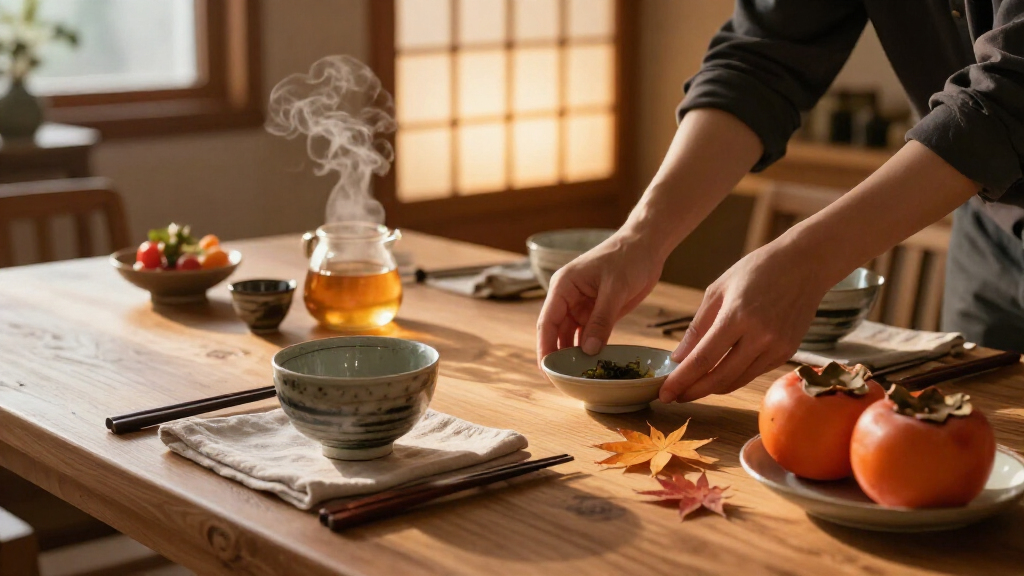
The first suggestion blends two ways of serving a meal. Each guest has an individual setting, while larger dishes remain in the middle for sharing. The report describes a traditional individual place setting arranged on an oshiki, a flat tray holding items such as a rice bowl, soup bowl and small plate. It calls the personal space meimei no ba. For Western hosts, the practical takeaway is to keep a place setting for each guest without giving up shared platters.
Livingetc’s second lesson is to choose some tableware for the person who uses it, rather than requiring every piece to match. The report says family members may have their own rice bowls and chopsticks, selected for their preferred size or feel. That approach can sit alongside a coordinated table: personal pieces need not mean that every plate or serving dish is different.
The third lesson treats a vessel as part of the meal’s presentation and experience. The report attributes the phrase “the vessel is the kimono of the food” to the legacy of Japanese potter Kitaōji Rosanjin, who opened a Tokyo restaurant in 1925 and made vessels for the food he served. It also recommends starting a collection of mame-zara, small plates about the size of a saucer, which can be used together or mixed.
Small Changes Shape the Autumn Table
The ideas offer hosts a way to make a table feel personal without replacing everything they own. A mix of individual settings and shared dishes can support both a considered place setting and the ease of passing food around. Choosing a bowl for its feel or a small plate for its role also gives everyday pieces a purpose beyond matching a set.
For seasonal hosting, the report’s main point is restraint. Rather than changing the whole room, readers can adjust a few plates, bowls or small accents to reflect autumn. Livingetc suggests warm clay and glazes in persimmon or rust, along with a modest detail such as a chrysanthemum-shaped chopstick rest. These are styling suggestions, not claims that a particular palette or item is required for Japanese table design.
Products Worth Considering

Bose TV Speaker (2nd Gen) Compact Soundbar

Dyson Cyclone V10 Origin Cordless Vacuum

Dyson Big Ball Multi Floor Canister Vacuum, Yellow
As an affiliate, we earn on qualifying purchases.
Four Habits Behind the Advice
The report was produced with Nakagawa, a craft maker and retailer founded in Nara in 1716, according to Livingetc. Its examples draw on Japanese dining customs and objects, then translate them into suggestions for a Western table. It does not claim that all Japanese households set tables in the same way.
Its fourth lesson is to change the plates, not the table. Livingetc describes Japanese homes as adapting vessels and a small seasonal arrangement, or shitsurai, as the year changes. For autumn, it recommends replacing summer glass or white porcelain with warmer-toned pieces and introducing one small seasonal object. The report also suggests setting out signs of the coming season slightly early, rather than waiting for the calendar to turn.
““The vessel is the kimono of the food.””
— Livingetc report
Advice, Not a Formal Study
The source is a design report, not a survey of Japanese households or a study comparing hosting styles. It does not quantify how widely the described habits are practiced, or whether they make guests feel more comfortable. Its recommendations are presented as inspiration that readers can adapt.
The supplied source material also does not give a publication date, identify a specific autumn season, or provide interviews from multiple households. The report names Nakagawa as a collaborator, but does not specify which recommendations came directly from the retailer or provide detailed sourcing for each custom. Readers should treat broad cultural descriptions as the article’s account, not as universal rules.
How Hosts Can Apply the Ideas
There is no announced follow-up event or scheduled next step. Readers can apply the report’s advice at their next meal by setting an individual place for each guest, putting shared dishes within reach, and choosing a few vessels that suit the food or the person using them. For an autumn table, Livingetc recommends a small seasonal adjustment, such as a warmer-toned bowl or one seasonal accent, rather than a complete redesign.
Any further developments would depend on new reporting from Livingetc or additional comments from Nakagawa. The present source offers practical design guidance, but does not set out a formal standard or forecast how the ideas will be adopted.
Key Questions
What are the four Japanese-inspired tablescaping lessons?
Livingetc recommends combining individual place settings with shared dishes, considering the person who uses each piece, treating the vessel as part of the food’s presentation, and changing a few plates or bowls with the season.
What does meimei no ba mean in the report?
Livingetc uses meimei no ba to describe each person’s own place at the table, arranged with an individual tray and dishes alongside food served for everyone to share.
What is mame-zara?
The report describes mame-zara as small plates about the size of a saucer. It suggests collecting them individually and using them either as a matching group or mixed together.
Does the report say every Japanese home sets the table this way?
No. The source gives design guidance drawn from Japanese dining customs and examples, but does not claim the practices are universal or quantify how common they are.
What autumn changes does Livingetc suggest?
It suggests swapping some summer vessels for warm clay or persimmon- and rust-colored pieces, then adding one small seasonal accent. The article presents these as options, not requirements.
Source: livingetc.com