
Editorial update log
November 20, 2026:
Deal update: RoundupForge price history now flags ASIN B09HFN8T64 on amazon.com as below its typical tracked range. RF labels the deal as all_time_low.
Exact pricing remains intentionally gated through the live Grimfaste price module in the article.
When choosing a home theater AV receiver, the key considerations are power, compatibility, and features that match your setup. The Denon AVR-S770H stands out as the best overall thanks to its balanced performance and future-proof 8K support. For those prioritizing sound quality, the Onkyo TX-RZ50 offers premium THX certification and robust channel options. Budget-conscious buyers should consider options like the Denon AVR-S570BT for solid basics at a lower price. Still, tradeoffs come with every choice, whether it’s fewer channels, less power, or simpler features. Keep reading to find the full breakdown of these top picks and what makes each one unique.

Get business pricing on your home office setup
- Business-only prices and quantity discounts
- Tax-exempt purchasing
- Multiple users, one account, clear invoices
Complete the kit


Key Takeaways
- Power output and channel count remain primary factors for room size and speaker complexity.
- 8K and HDMI 2.1 support are increasingly standard, future-proofing new setups.
- Built-in streaming and multi-room capabilities like HEOS or MusicCast add convenience but vary in quality.
- THX certification generally indicates higher sound quality and better calibration, but at a higher cost.
- User interface and ease of setup can significantly affect daily usability, especially for beginners.
| Onkyo TX-RZ50 9.2-Channel THX Certified AV Receiver |  | Best for High-Performance Enthusiasts | Channels: 9.2 | Power Output: 250 watts | HDMI Ports: 8 | VIEW LATEST PRICE | See Our Full Breakdown |
| Denon AVR-S770H 7.2 Channel 8K UHD Home Theater Receiver |  | Best Overall Balance of Features and Power | Channels: 7.2 | Power: 75W per channel | HDMI Ports: 8 | VIEW LATEST PRICE | See Our Full Breakdown |
| Denon AVR-X1700H 7.2 Channel AV Receiver – 80W/Channel, Built-in HEOS |  | Best Value for Connectivity | Power Output: 80 watts per channel | Channels: 7.2 | HDMI Inputs: 6 | VIEW LATEST PRICE | See Our Full Breakdown |
| Denon AVR-X1800H 7.2 Channel AV Stereo Receiver (80W x 7) | 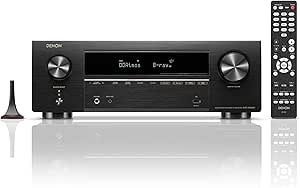 | Best Compact 7.2 Channel Option | Power: 80 watts | Channels: 7 | HDMI Inputs: 4 | VIEW LATEST PRICE | See Our Full Breakdown |
| Yamaha RX300A 5.2-Channel Home Theater AV Receiver |  | Best for Beginners and Small Rooms | Channels: 5.2 | Power: 70W | HDMI Inputs: 5 | VIEW LATEST PRICE | See Our Full Breakdown |
| Yamaha YHT-4970U 5.1-Channel Home Theater System |  | Best All-in-One Starter Kit | Channel Configuration: 5.1 | Video Support: 4K/120, 8K/60 | Audio Formats: Dolby Atmos, DTS Virtual:X | VIEW LATEST PRICE | See Our Full Breakdown |
| Denon AVR-S670H 5.2 Channel Home Theater Receiver |  | Best Value Receiver for Gamers | Channels: 5.2 | Power per Channel: 75 Watts | Video Resolution: 8K/60Hz, 4K/120Hz | VIEW LATEST PRICE | See Our Full Breakdown |
| Sony STRDH590 5.2 Channel Surround Sound Receiver |  | Best Budget Entry Point | Channel Configuration: 5.2 | Video Support: 4K HDR, HDCP 2.2 | HDMI Ports: 4 In / 1 Out | VIEW LATEST PRICE | See Our Full Breakdown |
| Onkyo TX-NR6100 7.2 Channel THX Certified AV Receiver |  | Best Performance for Mid-Sized Rooms | Channels: 7.2 | Power Output: 210 Watts per channel | Certification: THX Certified | VIEW LATEST PRICE | See Our Full Breakdown |
| Pyle 9.1 Channel AV Receiver with Bluetooth and 8K Support |  | Best for Maximum Channel Count on a Budget | Channels: 9.1 | Total Power: 600 Watts | Video Support: 8K/4K Pass-through | VIEW LATEST PRICE | See Our Full Breakdown |
| Donner MAMP8 5.2 Channel Surround Sound 4K HDR AV Receiver |  | Best for Compact Multi-Source Setup with 4K HDR Support | Channels: 5.2 | Power per channel: 75W RMS @ 4Ω | Supported video resolution: 4K HDR | VIEW LATEST PRICE | See Our Full Breakdown |
| Denon AVR-S570BT 5.2 Channel AV Receiver – 8K Ultra HD Audio & Video |  | Best for 8K Compatibility and Easy Setup | Channels: 5.2 | Power: 70W per channel | HDMI Inputs: 4 | VIEW LATEST PRICE | See Our Full Breakdown |
| home theater AV receiver | Channels | Connectivity |
|---|---|---|
| Onkyo TX-RZ50 9.2-Channel THX | 9.2 | — |
| Denon AVR-S770H 7.2 Channel 8K | 7.2 | Wi-Fi, Bluetooth, AirPlay 2, HEOS |
| Denon AVR-X1700H 7.2 Channel A | 7.2 | — |
| Denon AVR-X1800H 7.2 Channel A | 7 | — |
| Yamaha RX300A 5.2-Channel Home | 5.2 | — |
| Yamaha YHT-4970U 5.1-Channel H | — | HDMI eARC, Bluetooth |
| Denon AVR-S670H 5.2 Channel Ho | 5.2 | — |
| Sony STRDH590 5.2 Channel Surr | — | Bluetooth, HDMI |
| Onkyo TX-NR6100 7.2 Channel TH | 7.2 | — |
| Pyle 9.1 Channel AV Receiver w | 9.1 | HDMI, Optical, Coaxial, USB |
| Donner MAMP8 5.2 Channel Surro | 5.2 | Bluetooth 5.3, HDMI (2 in/1 out), USB, RCA, optical, coaxial, FM radio, Phono input |
| Denon AVR-S570BT 5.2 Channel A | 5.2 | Bluetooth, Wi-Fi |
More Details on Our Top Picks
Onkyo TX-RZ50 9.2-Channel THX Certified AV Receiver
This unit stands as the powerhouse choice for those demanding raw output and professional-grade calibration. With 250 watts per channel, it delivers significantly more headroom than the Denon AVR-S770H, making it ideal for large rooms or demanding speaker setups. The inclusion of DIRAC Live Room Correction is a major differentiator, offering superior acoustic treatment compared to standard auto-EQ systems found on budget models. However, this performance comes at the cost of physical footprint; at 36.1 pounds, it is massive and requires a sturdy rack. While the Onkyo TX-RZ50 excels in audio fidelity and video future-proofing with 8K support, its complex setup process may overwhelm beginners who just want plug-and-play simplicity. It is strictly for users who prioritize audio precision over ease of use.
Pros:- Massive 250-watt power output drives demanding speakers effortlessly
- DIRAC Live Room Correction offers superior audio calibration
- THX Certified ensures professional-grade audio and video standards
- Future-proof 8K HDMI support at 40 Gbps bandwidth
Cons:- Extremely heavy and bulky, requiring sturdy furniture
- Steep learning curve for initial setup and configuration
- Premium feature set may be excessive for casual streaming
Best for: Audiophiles with large rooms who want professional room correction and high power output.
Not ideal for: Casual viewers or renters who lack the space or interest in complex audio calibration.
- Channels:9.2
- Power Output:250 watts
- HDMI Ports:8
- Video Resolution:8K/4K at 40 Gbps
- Dimensions:15.68″D x 17.13″W x 7.94″H
- Weight:36.1 pounds
- Warranty:3 years
Our verdict“Choose this if you prioritize maximum power and professional-grade sound calibration over compact size.”
Denon AVR-S770H 7.2 Channel 8K UHD Home Theater Receiver
This model hits the sweet spot for most home theater enthusiasts, offering 8K UHD pass-through and comprehensive Dolby Atmos support without the overwhelming bulk of the Onkyo TX-RZ50. It provides 75 watts per channel, which is sufficient for medium-sized rooms and efficient speakers. Compared to the Denon AVR-X1800H, the S770H offers 8 HDMI ports versus 4, giving you more flexibility for connecting multiple consoles and streamers. The integration of HEOS multi-room audio allows for seamless streaming across the house, a feature often lacking in non-networked competitors. However, the complex initial setup can be a hurdle for novices. It is a well-rounded receiver that balances modern video standards with reliable audio performance, making it the most versatile option in this lineup.
Pros:- 8 HDMI inputs provide ample connectivity for multiple sources
- Supports 8K/60Hz and 4K/120Hz for next-gen gaming
- Built-in HEOS enables easy multi-room audio streaming
- Comprehensive support for Dolby Atmos and DTS:X
Cons:- 75 watts may struggle with low-efficiency speakers in large spaces
- Menu system and setup can be confusing for first-time users
- No significant power advantage over lower-tier 7.2 channel models
Best for: Gamers and movie buffs with medium-sized living rooms who need multiple HDMI inputs.
Not ideal for: Users with very large rooms who need more than 75 watts of power per channel.
- Channels:7.2
- Power:75W per channel
- HDMI Ports:8
- Video Formats:HDR10+, HLG, HDR, Dolby Vision, Dynamic HDR
- Audio Formats:Dolby TrueHD, Dolby Atmos, DTS:X, DTS Neural:X
- Connectivity:Wi-Fi, Bluetooth, AirPlay 2, HEOS
- Voice Control:Alexa, Siri, major home automation systems
Our verdict“The best all-around choice for users who need modern video specs and flexible connectivity.”
Denon AVR-X1700H 7.2 Channel AV Receiver – 80W/Channel, Built-in HEOS
This receiver offers a compelling middle ground, providing 80 watts per channel and 6 HDMI inputs, which is more than the newer Denon AVR-X1800H but less than the S770H. It supports 8K/60Hz pass-through and 4K/120Hz, ensuring compatibility with current gaming consoles. The built-in HEOS multi-room streaming is a standout feature, allowing users to sync audio with other Denon devices easily. While it lacks the higher power output of the Onkyo TX-RZ50, it is significantly more manageable in size and cost. The Virtual Height Effects help simulate Atmos sound even without overhead speakers. However, the lack of detailed software update information raises concerns about long-term feature parity. It is a solid choice for those who want Denon’s ecosystem without paying for the absolute latest hardware.
Pros:- 80 watts per channel offers slightly more power than entry-level 75W models
- 6 HDMI inputs provide good flexibility for most source setups
- Built-in HEOS allows for seamless multi-room audio integration
- Supports 8K/60Hz and 4K/120Hz video pass-through
Cons:- Older generation hardware may lack latest software features
- Only 1 HDMI output limits dual-screen setups
- Complex setup interface for beginners
Best for: Users who want HEOS multi-room audio and good connectivity without the highest price tag.
Not ideal for: Audiophiles seeking the absolute highest power output or latest calibration tools.
- Power Output:80 watts per channel
- Channels:7.2
- HDMI Inputs:6
- HDMI Output:1
- Supported Video:8K/60Hz, 4K/120Hz, Dolby Vision, HDR10+
- Voice Control:Alexa, Google Assistant, Siri
- Wireless:Wi-Fi, Bluetooth, AirPlay 2
Our verdict“A reliable mid-range option for users invested in the Denon HEOS ecosystem.”
Denon AVR-X1800H 7.2 Channel AV Stereo Receiver (80W x 7)
This model is designed for smaller spaces, offering 80 watts per channel in a more compact form factor than the S770H. It supports 8K/60Hz and 4K/120Hz pass-through, ensuring it remains relevant for future gaming and video content. The 4 HDMI inputs are its primary limitation compared to the S770H’s 8, requiring users to be selective with their sources or use an external switch. However, it retains the HEOS multi-room streaming capability and supports Dolby Atmos and DTS:X. Compared to the Yamaha RX300A, this Denon offers more channels (7.2 vs 5.2), providing a more immersive surround sound experience. It is an excellent choice for those who want Atmos capability in a smaller package but must accept the constraint of fewer HDMI ports.
Pros:- Compact design fits easily into smaller entertainment centers
- 80 watts per channel provides adequate power for small to medium rooms
- Supports 8K and 4K/120Hz for future-proof video compatibility
- Includes HEOS for wireless multi-room audio streaming
Cons:- Only 4 HDMI inputs restrict connectivity options
- Setup process remains complex for non-technical users
- Lacks advanced room correction tools found in premium models
Best for: Users with medium-sized rooms who want Atmos sound but have limited rack space.
Not ideal for: Gamers with multiple consoles who need more than 4 HDMI inputs.
- Power:80 watts
- Channels:7
- HDMI Inputs:4
- HDMI Version:8K/60Hz & 4K/120Hz pass-through
- Supported Formats:Dolby Vision, HDR10+, HLG, Dynamic HDR
- Wireless Technology:Bluetooth, Wi-Fi
- Streaming Services:Amazon Music, Spotify, TIDAL
Our verdict“Ideal for space-constrained setups that still require full 7.2 channel Atmos support.”
Yamaha RX300A 5.2-Channel Home Theater AV Receiver
This receiver is the most accessible entry point in the lineup, featuring Yamaha’s renowned room correction and an intuitive on-screen menu. With 5.2 channels, it supports Dolby Atmos and DTS Virtual:X, though it lacks the rear height channels of the Denon models. The 70 watts per channel output is sufficient for small apartments or bedrooms but may strain in larger spaces. Compared to the Denon AVR-X1800H, the RX300A is simpler to set up but offers fewer channels and lower power. The Bluetooth Multipoint feature allows easy switching between devices, a convenient touch for casual listeners. However, the 5 HDMI inputs are restrictive for users with many devices. It is best suited for those prioritizing ease of use and simplicity over channel count and power.
Pros:- Intuitive setup with automatic room correction and on-screen menu
- Bluetooth Multipoint allows seamless connection to multiple devices
- Supports Dolby Atmos and DTS Virtual:X for immersive sound
- Supports 4K120 and 8K60 video pass-through
Cons:- Limited to 5.2 channels, restricting full surround immersion
- Only 5 HDMI inputs may require external switching
- 70 watts is insufficient for large rooms or inefficient speakers
Best for: First-time buyers and those in small apartments who want simple setup and Atmos simulation.
Not ideal for: Enthusiasts who need more than 5 channels or high power for large rooms.
- Channels:5.2
- Power:70W
- HDMI Inputs:5
- HDMI Output:1
- Video Support:4K120/8K60, Dolby Vision, HDR10+
- Bluetooth:Multipoint
- Room Correction:Yes
Our verdict“The best choice for beginners who value simple setup and compact size over channel density.”
Yamaha YHT-4970U 5.1-Channel Home Theater System
This system is ideal for those who want a complete setup without mixing components. Unlike standalone receivers like the Denon AVR-S670H, this package includes speakers and a subwoofer, eliminating compatibility guesswork. It delivers Dolby Atmos and DTS Virtual:X for immersive audio, though it relies on virtualization rather than dedicated height channels. The automatic room correction simplifies calibration for non-audiophiles. However, the fixed 5.1 configuration limits future expansion compared to modular receivers. If you prefer upgrading individual speakers later, a separate receiver like the Sony STRDH590 offers more flexibility. This kit prioritizes convenience over component modularity.
Pros:- Includes a complete speaker set and subwoofer
- Automatic room correction optimizes sound placement
- Supports 4K/120 and 8K/60 video pass-through
- Multipoint Bluetooth for easy device switching
Cons:- Non-upgradable speaker components
- Heavy unit requires sturdy furniture
- Limited to 5.1 channel architecture
Best for: Beginners who want a plug-and-play home theater experience with included speakers.
Not ideal for: Enthusiasts who want to mix and match high-end speakers or upgrade components individually.
- Channel Configuration:5.1
- Video Support:4K/120, 8K/60
- Audio Formats:Dolby Atmos, DTS Virtual:X
- Connectivity:HDMI eARC, Bluetooth
- Weight:50.4 pounds
- Control Method:Remote Controller
Our verdict“Choose this if you value a cohesive, easy-to-set-up package over component customization.”
Denon AVR-S670H 5.2 Channel Home Theater Receiver
For gamers and streamers, this receiver balances advanced features with affordability. It supports VRR and ALLM, reducing lag and tearing for consoles, a feature set that outpaces older models like the Sony STRDH590. The HEOS integration allows for multi-room audio, a significant advantage over single-zone competitors. However, it is capped at 5.2 channels, meaning you cannot add rear height speakers for true Dolby Atmos. While the 8K/60Hz pass-through future-proofs video, the 75W per channel output is modest for large rooms. Compared to the Onkyo TX-NR6100, it lacks the power headroom for larger spaces but offers similar connectivity convenience.
Pros:- Dedicated gaming features (VRR, ALLM)
- 8K/60Hz and 4K/120Hz video support
- Built-in HEOS for multi-room streaming
- Alexa voice control compatibility
Cons:- Limited to 5.2 channels (no Atmos height channels)
- Modest 75W power output
- Interface can feel cluttered for novices
Best for: Gamers and streamers who need low-latency HDMI features and multi-room audio.
Not ideal for: Users with large living rooms who need more than 75 watts per channel.
- Channels:5.2
- Power per Channel:75 Watts
- Video Resolution:8K/60Hz, 4K/120Hz
- HDMI Ports:8 Inputs, 1 Output
- Gaming Features:VRR, ALLM
- Streaming:HEOS, Spotify, TIDAL
Our verdict“This is the smart choice for gamers who prioritize video features and streaming over raw audio power.”
Sony STRDH590 5.2 Channel Surround Sound Receiver
This receiver serves as a no-frills entry into home theater. It lacks the network streaming capabilities of the Denon AVR-S670H, relying instead on Bluetooth and HDMI. This simplicity reduces cost and complexity, appealing to users who just want to connect a TV and game console. The S-Force PRO virtual surround creates a wider soundstage from 5.2 channels, though it cannot match the discrete immersion of a 7.2 system like the Onkyo TX-NR6100. Its 4K HDR pass-through handles modern video signals well. However, the absence of Wi-Fi means no native app control or streaming services, requiring a separate media player for full smart features.
Pros:- Simple, straightforward setup process
- Supports 4K HDR and HDCP 2.2
- Compact footprint fits smaller entertainment centers
- Reliable Bluetooth connectivity
Cons:- No built-in Wi-Fi or streaming apps
- Virtual surround is less immersive than discrete channels
- Limited HDMI ports (4 in / 1 out)
Best for: Budget-conscious buyers who want basic 4K video support and simple Bluetooth audio.
Not ideal for: Streamers who want built-in apps like Spotify or Netflix without external devices.
- Channel Configuration:5.2
- Video Support:4K HDR, HDCP 2.2
- HDMI Ports:4 In / 1 Out
- Connectivity:Bluetooth, HDMI
- Dimensions:17″ W x 5.25″ H x 11.75″ D
- Weight:17.1 pounds
Our verdict“Pick this if you need a basic, reliable hub for video and Bluetooth without smart home features.”
Onkyo TX-NR6100 7.2 Channel THX Certified AV Receiver
The Onkyo TX-NR6100 stands out for its THX certification, guaranteeing a specific standard of audio fidelity. With 210 watts per channel, it drives speakers with authority that the Denon AVR-S670H cannot match. It supports 7.2 channels, allowing for a more discrete surround field than 5.1 or 5.2 setups. The HDMI 2.1 support handles 8K/60 and 4K/120, making it future-proof for high-end gaming rigs. However, its size is substantial, requiring more shelf space than the compact Sony STRDH590. While it offers Apple HomeKit and Google Assistant support, the setup complexity for 7.2 channels can be daunting for beginners compared to simpler kits.
Pros:- THX Certified for verified audio performance
- High power output (210W per channel)
- Full 7.2 channel support for discrete surround
- Comprehensive HDMI 2.1 gaming features
Cons:- Large physical footprint
- Setup and calibration can be complex
- Heavier than entry-level competitors
Best for: Audiophiles and gamers who want THX-certified sound and ample power for 7.2 layouts.
Not ideal for: Users with limited shelf space or those intimidated by complex speaker wiring.
- Channels:7.2
- Power Output:210 Watts per channel
- Certification:THX Certified
- Video Support:8K/60Hz, 4K/120Hz
- Smart Home:Apple HomeKit, Google Assistant
- Warranty:2 Years
Our verdict“This receiver is for those who want serious power and certification without stepping into ultra-premium pricing.”
Pyle 9.1 Channel AV Receiver with Bluetooth and 8K Support
This unit attempts to deliver 9.1 channel surround at an accessible price point, a configuration usually reserved for high-end gear like the Onkyo TX-RZ50. It supports 8K/4K video pass-through and includes auto-calibration, which is rare in this segment. The 600-watt total output sounds impressive on paper, though per-channel power is lower than premium rivals. Compared to the Denon AVR-S670H, it offers more channels but lacks refined software integration and trusted brand ecosystem support. The build quality and interface feel more utilitarian, and the lack of detailed warranty info raises concerns about long-term support. It is a high-risk, high-reward option for experimenters.
Pros:- Supports 9.1 channel architecture
- 8K/4K video pass-through capability
- Auto-calibration feature included
- High total wattage rating
Cons:- Unclear per-channel power distribution
- Limited brand ecosystem and support
- Basic build quality compared to Denon/Onkyo
Best for: DIY enthusiasts who want to experiment with 9.1 surround sound on a tight budget.
Not ideal for: Buyers who prioritize brand reliability, long-term software updates, or refined UI.
- Channels:9.1
- Total Power:600 Watts
- Video Support:8K/4K Pass-through
- Connectivity:HDMI, Optical, Coaxial, USB
- Calibration:Auto Calibration
- Control Type:Mechanical Knob, Push Button
Our verdict“Choose this only if you specifically need 9.1 channels and are willing to compromise on brand prestige.”
Donner MAMP8 5.2 Channel Surround Sound 4K HDR AV Receiver
The Donner MAMP8 stands out for its compact design while still supporting essential 4K HDR pass-through, making it a solid choice for users who want decent video quality without a bulky receiver. Compared with the Denon AVR-S570BT, it offers a broader array of input options, including RCA and FM radio, which benefits those seeking versatile media sources. However, it falls short on surround sound processing since Dolby and DTS decoding are absent, limiting its effectiveness in fully immersive atmos setups. Its 75W power per channel is sufficient for smaller rooms but may struggle to drive larger speakers at high volumes. This model is better suited to casual media enthusiasts or smaller home theaters that prioritize multiple input types in a compact footprint. It is less ideal for users wanting advanced surround sound decoding or more power for large spaces.
Pros:- Supports 4K HDR pass-through for high-quality video signals
- Multiple input options including Bluetooth, HDMI, USB, and FM radio
- Customizable EQ controls with automatic setting save
Cons:- Lacks Dolby and DTS decoding, limiting surround sound options
- Power output may be insufficient for large or demanding home theaters
Best for: Homeowners with limited space seeking straightforward, multi-source audio and video support.
Not ideal for: Aficionados aiming for full Dolby Atmos or DTS:X immersive experiences or larger room setups.
- Channels:5.2
- Power per channel:75W RMS @ 4Ω
- Supported video resolution:4K HDR
- Connectivity:Bluetooth 5.3, HDMI (2 in/1 out), USB, RCA, optical, coaxial, FM radio, Phono input
- Color:Black
- Warranty:1 Year
Our verdict“This receiver is best for users who want versatile inputs and 4K HDR support in a compact, easy-to-use package, but it’s less suited for immersive audio setups or large spaces.”
Denon AVR-S570BT 5.2 Channel AV Receiver – 8K Ultra HD Audio & Video
The Denon AVR-S570BT makes a compelling case for those wanting to future-proof their home theater with 8K HDMI support and latest HDR formats like Dolby Vision. It offers a slight edge over the Donner MAMP8 in video quality capabilities, especially for users with 8K TVs or gaming consoles. Its 70W per channel provides enough power for most medium-sized rooms, and its on-screen setup assistant simplifies installation for beginners or those less tech-savvy. However, with only four HDMI inputs, it may fall short for users with multiple devices, especially compared to models like the Onkyo TX-RZ50 with more ports. The focus on high-quality video and ease of use makes this a great all-around choice for enthusiasts who prioritize seamless setup and cutting-edge HDMI support, but it’s not ideal for those needing extensive HDMI ports or multi-room audio features.
Pros:- Supports 8K HDMI and latest HDR formats for enhanced video quality
- Built-in Bluetooth for wireless streaming from various services
- Easy on-screen setup assistant simplifies installation
Cons:- Limited to four HDMI inputs, which may be restrictive for complex setups
- No detailed info on multi-room or multi-zone audio capabilities
Best for: Home theater users with 8K TVs or gaming consoles who want a straightforward setup and reliable performance.
Not ideal for: Users with many connected devices requiring multiple HDMI ports or advanced multi-room audio features.
- Channels:5.2
- Power:70W per channel
- HDMI Inputs:4
- Supports:8K Ultra HD, HDR, Dolby Vision, HDR10+, VRR, QFT, eARC
- Connectivity:Bluetooth, Wi-Fi
- Control:App, Remote
Our verdict“This receiver is ideal for users seeking a future-ready, easy-to-install solution with high-quality video support, but it may fall short in device connectivity for larger setups.”

How We Picked
These home theater AV receivers were evaluated based on performance, build quality, feature set, and value. Priority was given to models that offer reliable audio and video processing, support for current standards like 8K HDMI, and expandability options such as multi-room audio. We also considered user interface design and setup ease, since complexity can deter less experienced users. The ranking reflects a balance between features and affordability, with an eye toward future-proofing as technology advances. Ultimately, the best picks deliver reliable performance for their price point and suit different user needs, from casual listeners to AV enthusiasts.| home theater AV receiver | Connectivity |
|---|---|
| Onkyo TX-RZ50 9.2-Channel THX | — |
| Denon AVR-S770H 7.2 Channel 8K | Wi-Fi, Bluetooth, AirPlay 2, HEOS |
| Denon AVR-X1700H 7.2 Channel A | — |
| Denon AVR-X1800H 7.2 Channel A | — |
| Yamaha RX300A 5.2-Channel Home | — |
| Yamaha YHT-4970U 5.1-Channel H | HDMI eARC, Bluetooth |
| Denon AVR-S670H 5.2 Channel Ho | — |
| Sony STRDH590 5.2 Channel Surr | Bluetooth, HDMI |
| Onkyo TX-NR6100 7.2 Channel TH | — |
| Pyle 9.1 Channel AV Receiver w | HDMI, Optical, Coaxial, USB |
| Donner MAMP8 5.2 Channel Surro | Bluetooth 5.3, HDMI (2 in/1 out), USB, RCA, optical, coaxial, FM radio, Phono input |
| Denon AVR-S570BT 5.2 Channel A | Bluetooth, Wi-Fi |
Factors to Consider When Choosing Home Theater AV Receivers
Choosing the right home theater AV receiver involves balancing several factors. Understanding what each feature offers and how it aligns with your setup can prevent costly mistakes. Consider power output to match your room size, and ensure compatibility with your existing speakers. Support for latest standards like HDMI 2.1 and 8K video ensures your system remains relevant. Additional features such as multi-room audio, app control, and streaming services enhance convenience but may add complexity. Recognizing your primary use—whether movies, gaming, or music—helps narrow down the best fit.Power and Channel Count
Power output and the number of channels determine how well an AV receiver can fill your space with sound. Larger rooms generally require more power and additional channels for surround sound formats like Dolby Atmos or DTS:X. However, more channels also mean higher costs and increased complexity. Selecting a receiver with slightly more power than you need provides room for future expansion or upgrades, and helps avoid distortion at higher volumes.
Video Compatibility and Future-Proofing
Support for HDMI 2.1, 8K resolution, and features like variable refresh rate (VRR) are becoming standard but still vary across models. Investing in a receiver with these features can extend the relevance of your setup, especially if you plan to upgrade your TV or gaming console soon. Consider also the number of HDMI inputs and outputs; more is better if you have multiple devices. Keep in mind that some older models may lack these future-ready features, limiting their longevity.
Ease of Use and Setup
A receiver’s interface and calibration options influence daily usability. Models with straightforward setup procedures and user-friendly apps reduce frustration and save time. Features like automatic room calibration with included microphones can optimize sound quality without manual tweaking. For less tech-savvy users, a simpler remote and clear on-screen menus are significant benefits. Overly complex systems, while rich in features, might require more learning curve and adjustments.
Streaming and Multi-Room Capabilities
Built-in streaming services and multi-room audio support are increasingly standard, but their quality and ease of use differ. Platforms like HEOS, MusicCast, or Chromecast offer flexible options for listening throughout your home. However, some implementations may have limited device compatibility or inconsistent interfaces. Consider whether these features are essential for your lifestyle and if they integrate seamlessly with your existing devices and apps.
Budget and Value
Price ranges vary widely, and higher cost often correlates with more features, better build quality, and enhanced audio processing. However, the most expensive model isn’t always necessary for every user. Focus on the core features you need, such as sufficient channels, HDMI support, and streaming. Sometimes, a mid-range receiver offers the best value—balancing performance and affordability—while premium models suit audiophiles or dedicated home theater enthusiasts.
Frequently Asked Questions
Do I need an 8K AV receiver if I don’t have an 8K TV?
While an 8K AV receiver isn’t essential if your current TV is 4K, choosing one with 8K support can provide a degree of future-proofing. It ensures compatibility with upcoming consoles, sources, and displays that will adopt higher resolutions. Additionally, many 8K receivers support HDMI 2.1, which offers features like higher refresh rates and lower latency beneficial for gaming and high-quality video. If your budget allows and you plan to upgrade soon, investing in an 8K-capable model makes sense to avoid needing an immediate replacement later.
Is THX certification worth paying extra for?
THX certification often indicates that the receiver has undergone rigorous testing for sound quality, calibration, and overall performance. It can be a good indicator of a reliable product, especially for audiophiles seeking precise sound reproduction. However, not all THX-certified models provide dramatically better audio than non-certified options, and the added cost may not always be justified for casual users. Consider whether the certification aligns with your priorities and if the extra features or build quality justify the premium.
Can I use a home theater AV receiver with my existing speakers?
Most AV receivers are compatible with standard speaker setups, but matching impedance and power handling is essential. Check your speakers’ specifications and ensure they are compatible with the receiver’s power output and channel configuration. Some receivers also support bi-amping or specific speaker calibration settings that enhance performance. If your speakers are older or non-standard, verify compatibility before purchasing to avoid potential damage or subpar sound quality.
How many HDMI inputs should I look for?
The number of HDMI inputs needed depends on your device setup. If you have multiple gaming consoles, Blu-ray players, and streaming devices, look for a receiver with at least 4-6 inputs to avoid constantly swapping cables. Also, consider the number of outputs, especially if you plan to connect multiple zones or separate screens. Future expansion is easier with additional inputs, so a slightly higher number can provide more flexibility without significantly increasing cost.
Is it necessary to get a receiver with multi-room audio support?
Multi-room audio support adds convenience if you want music playback in different areas of your home simultaneously. Features like HEOS, MusicCast, or Chromecast built-in enable you to stream content to multiple rooms with ease. However, if your primary focus is a dedicated home theater setup, this feature might be less critical. Consider your lifestyle and whether integrated multi-room streaming aligns with your entertainment habits to determine if it justifies additional investment.
Conclusion
For most users, the Denon AVR-S770H offers an excellent balance of features, power, and future-proofing, making it the best overall choice. Budget-conscious buyers will find the Denon AVR-S570BT provides solid value without sacrificing core functionality. Audiophiles or those seeking premium sound should consider the Onkyo TX-RZ50 for its THX certification and robust build. Beginners or casual viewers will benefit from models with straightforward setup, like the Yamaha RX300A. Ultimately, selecting the right receiver depends on your room size, device needs, and budget, but these picks cover the spectrum of typical home theater setups.