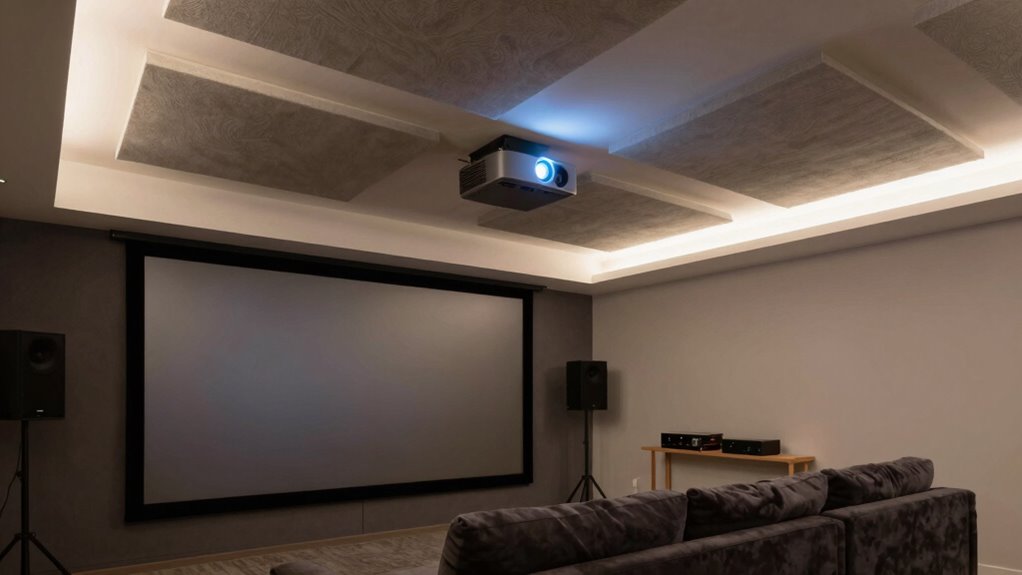

To design around projector noise, start by choosing quiet or low-noise models with built-in noise management features. Incorporate soundproofing materials like acoustic panels, dense drywall, or mass-loaded vinyl during initial construction. Position the projector away from shared walls and mount it securely with vibration dampers. Use sound-absorbing furnishings and manage room acoustics to contain sound. Planning these details early guarantees your space stays quiet — keep exploring to discover more effective strategies.

Get business pricing on your home office setup
- Business-only prices and quantity discounts
- Tax-exempt purchasing
- Multiple users, one account, clear invoices
Key Takeaways
- Incorporate soundproofing materials and acoustic treatments during initial room design to prevent noise issues.
- Select quiet or low-noise projectors with built-in noise management features from the start.
- Strategically position and mount projectors away from shared walls and vibration sources.
- Use sound-absorbing furnishings and room finishes to minimize sound reflection and echo.
- Plan room layout and construction with dedicated soundproof enclosures for projectors to contain noise.
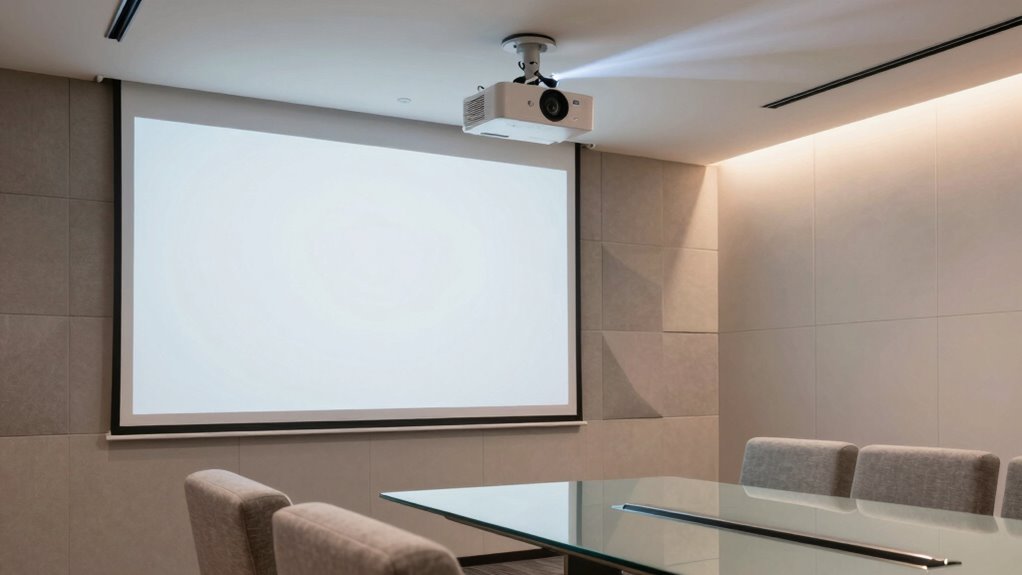
When designing spaces that incorporate projectors, addressing the noise they produce is essential for creating a comfortable environment. Projector noise can be disruptive, especially in settings where concentration or quiet is needed, such as conference rooms, home theaters, or classrooms. Instead of fighting this noise later, you should plan for it from the start by implementing soundproofing techniques that minimize the sound’s reach and impact. Properly managing room acoustics is key; it helps contain the noise and prevents it from bouncing around, which can make it seem louder and more distracting.
Begin by selecting projectors known for quieter operation. Look for models labeled as “quiet” or “low noise,” as these can significantly reduce the amount of sound that escapes during use. Once you’ve chosen the right projector, consider integrating soundproofing techniques into your room design. Installing acoustic panels or foam on walls helps absorb sound waves, preventing them from transmitting through walls or ceilings. Additionally, using thick, dense materials for walls, such as mass-loaded vinyl or specialized drywall, can further block noise from escaping into adjacent spaces.
Choose quiet projectors and add acoustic panels to reduce noise and improve room acoustics.
Room acoustics play a vital role in controlling projector noise. You want to design the space so that sound waves are contained and absorbed rather than reflected and amplified. Carpets, rugs, and fabric-covered furniture can help absorb sound within the room, reducing echo and making the environment quieter overall. If possible, build a dedicated projector enclosure or cabinet with soundproofing layers. This enclosure acts as a barrier, muffling the noise before it can travel outside the room. Incorporating soundproofing materials into your design enhances the overall effectiveness of these measures. Additionally, considering room size and layout during planning can further improve acoustic performance and noise containment.
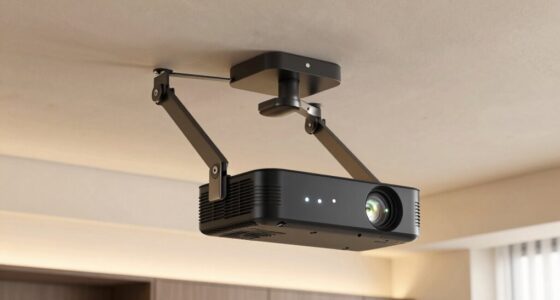
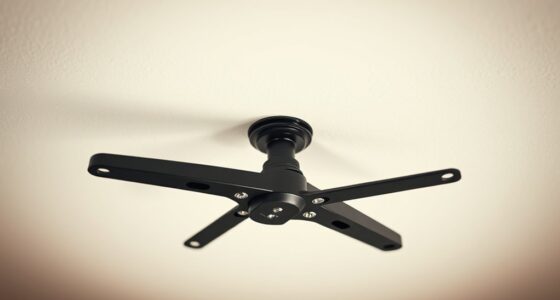
Furthermore, consider the placement of your projector. Position it away from shared walls or thin partitions, and ensure it’s mounted securely to minimize vibrations that can produce additional noise. Using rubber mounts or vibration dampers can prevent the projector from transmitting vibrations that contribute to noise pollution. If you’re designing a multipurpose space, add door seals and weatherstripping to prevent sound leakage through gaps, keeping the noise contained within the room. Understanding projector technology can also help you choose models with quieter operation and better noise management features. Moreover, integrating soundproofing techniques during the initial construction phase is often more effective and cost-efficient than retrofitting after installation.
Planning for soundproofing and room acoustics from the outset saves you time, money, and frustration later. It ensures the projector’s noise doesn’t become a distraction or annoyance, and it creates a more comfortable environment for everyone. By combining the right equipment choices with thoughtful design strategies, you’ll make the space more functional, quieter, and enjoyable to use.
quiet projector with noise reduction
As an affiliate, we earn on qualifying purchases.
As an affiliate, we earn on qualifying purchases.
Frequently Asked Questions
How Do Different Projector Models Vary in Noise Levels?
Different projector models vary considerably in noise levels, affecting your setup. Some projectors have quieter cooling fans, reducing the need for extensive soundproofing techniques. You can improve acoustics by incorporating acoustic treatment around your projector, like sound-absorbing panels, and choosing models with lower decibel ratings. Researching noise specifications before purchase helps you select a quieter model, minimizing disruptions and making your space more comfortable without extensive noise mitigation efforts later.
What Materials Best Absorb or Block Projector Noise?
You should consider using soundproof curtains and acoustic wall panels to absorb or block projector noise effectively. Soundproof curtains, made of dense materials, reduce noise transmission through windows and open spaces. Acoustic wall panels installed on walls absorb sound waves, minimizing echo and overall noise. Combining these materials creates a layered sound barrier, enhancing your space’s quietness and preventing projector noise from disrupting your environment.
Can Room Size Influence Noise Perception?
Yes, room size markedly influences how you perceive projector noise. A larger space allows sound to disperse, reducing perceived loudness, while smaller rooms can amplify noise. To optimize sound control, you can add soundproof curtains and acoustic panels, which help absorb and block noise. These materials work together to dampen projector sounds, making your room more comfortable and enjoyable without extensive structural modifications.
Are There Specific Architectural Features That Reduce Noise?
Yes, certain architectural features can reduce noise effectively. You should incorporate acoustic insulation within walls and ceilings to absorb sound, preventing it from spreading. Installing soundproof barriers, like heavy curtains or specialized panels, creates additional noise buffers. Strategic placement of these features around the projector and in the room’s perimeter helps minimize noise transmission, ensuring a quieter environment and better sound quality during presentations or screenings.
How Can I Predict Projector Noise Impact During Planning?
To predict projector noise impact during planning, you need to get ahead of the game. Consider the audio frequency of the projector’s noise and how it might resonate within your space. Use noise mitigation techniques like soundproofing or strategic placement to minimize disruption. Conduct sound tests early in the design process, and work closely with manufacturers to understand their equipment’s noise levels—this way, you won’t be caught off guard later.
As an affiliate, we earn on qualifying purchases.
Conclusion
By designing your space with projector noise in mind, you can create a more comfortable and enjoyable environment. Remember, studies show that noise levels above 55 decibels can markedly disrupt concentration and relaxation. So, integrating soundproofing, strategic placement, and acoustic treatments from the start can make a huge difference. Don’t wait until noise becomes a problem—plan ahead and keep your space peaceful, whether you’re working, watching, or entertaining.
acoustic panels for room soundproofing
As an affiliate, we earn on qualifying purchases.
As an affiliate, we earn on qualifying purchases.
vibration dampers for projectors
As an affiliate, we earn on qualifying purchases.
As an affiliate, we earn on qualifying purchases.
Fall Picks
fall essentials
As an affiliate, we earn on qualifying purchases.