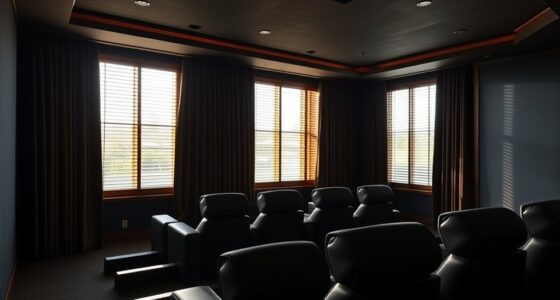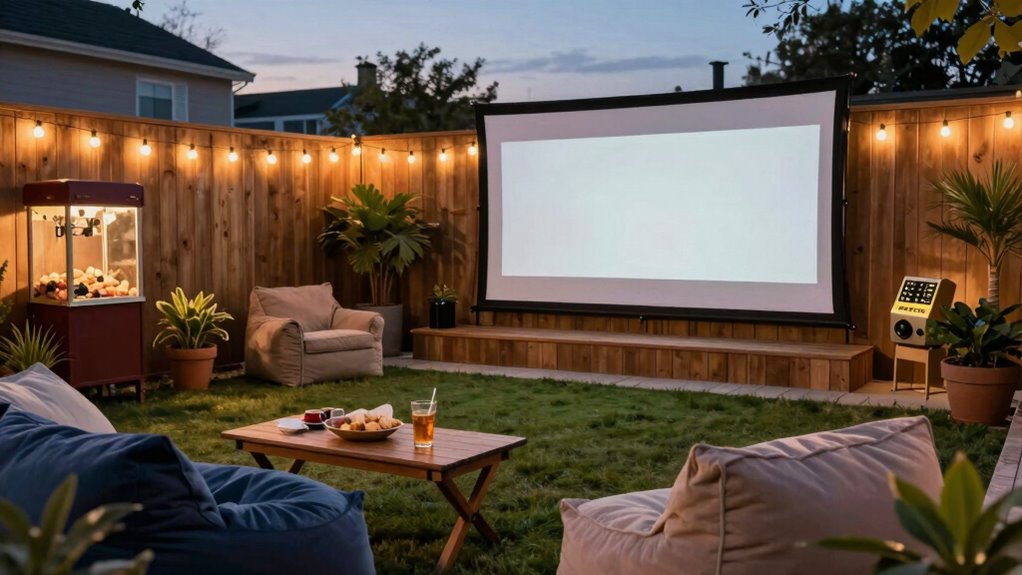
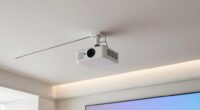
Before building a backyard theater, choose a site shielded by fences, trees, or shrubs to contain sound and minimize neighbor disturbance. Use soundproof barriers and dense landscaping for added sound absorption. Opt for outdoor speakers with directional features, and carefully position them toward your seating area. Regularly test and control sound levels with automation to keep noise in check. Focusing on both soundproofing and visual clarity will improve your experience; more tips follow if you keep exploring.

Get business pricing on your home office setup
- Business-only prices and quantity discounts
- Tax-exempt purchasing
- Multiple users, one account, clear invoices
Key Takeaways
- Choose a site with natural barriers like fences or trees to contain sound and minimize neighbor disturbance.
- Incorporate soundproof barriers and dense landscaping to reduce noise transmission.
- Use directional outdoor speakers focused on seating areas to prevent sound spill-over.
- Implement automated sound level controls and regular testing to maintain a peaceful environment.
- Prioritize proper setup for optimal soundproofing and image clarity under various lighting conditions.
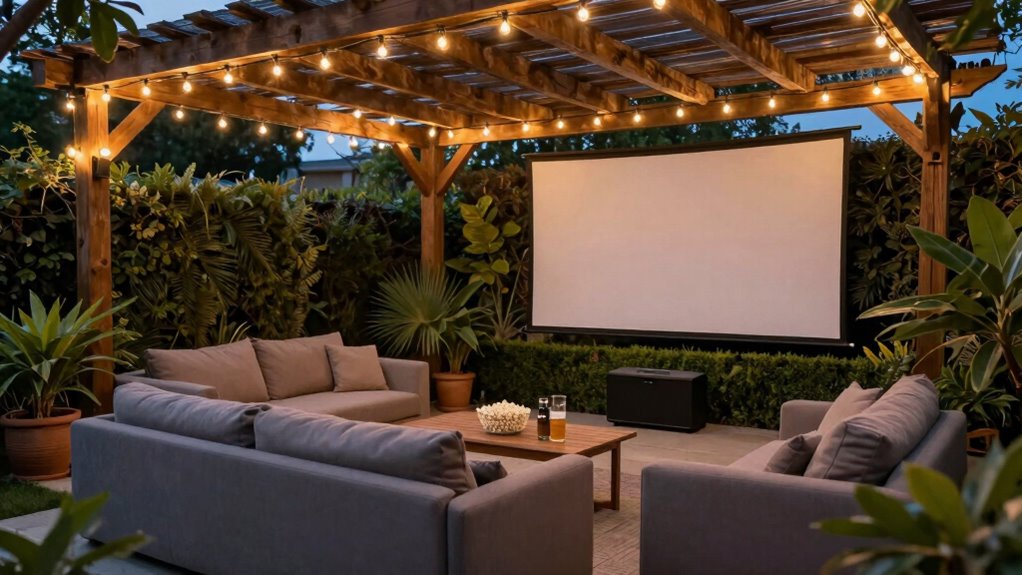
Transforming your backyard into a cozy theater space can be both fun and rewarding. But before you start setting up equipment and planning your movie nights, it’s essential to contemplate a few key factors that will make or break your outdoor experience. One of the most important aspects is soundproofing essentials. You want to keep the noise contained so it doesn’t disturb neighbors and to prevent outside sounds from disrupting your viewing. To achieve this, start by selecting a location that’s naturally shielded by fences, trees, or shrubs. You can also add soundproof barriers like outdoor acoustic panels or dense landscaping, which absorb sound waves and minimize noise transmission. Installing a solid sound barrier around your seating area helps contain the audio and keeps your backyard quiet for everyone. Additionally, choosing outdoor speakers with directional sound can focus audio toward your seating area, reducing spill-over and keeping sound confined within your space. When selecting equipment, consider models designed with soundproofing features to further enhance your outdoor experience. For added effectiveness, incorporating home automation devices can help control sound levels automatically during movie nights. Regularly testing the sound levels during setup can ensure that the audio remains within a comfortable range without disturbing your neighbors. Incorporating proper soundproofing techniques is crucial for maintaining a peaceful backyard theater environment. You can also explore contrast ratio considerations for clearer images, especially in varied lighting conditions.
Products Worth Considering

Sonos Era 100 SL Compact Microphone-Free Speaker, White

Philips Hue Festavia 130-Foot Indoor/Outdoor Smart String Lights, 500 Mini Color-Changing LEDs

Arlo Essential Outdoor Pan-Tilt-Zoom Security Camera, 2K, Wired, 2-Camera Pack
As an affiliate, we earn on qualifying purchases.
Frequently Asked Questions
How Much Does a Backyard Theater Typically Cost to Install?
A backyard theater typically costs around $3,000 to $10,000 to install, depending on your choices. You’ll need outdoor lighting to create the right ambiance and comfortable seating arrangements for your guests. Costs vary based on screen size, sound system, and materials used. Budgeting for these essentials guarantees a smooth setup, so plan ahead and consider your space to get the best value for your investment.
What Safety Considerations Are Important for Outdoor Theaters?
Think of your outdoor theater as a delicate dance, where safety takes the lead. You must prioritize fire safety by keeping flames and heat sources away from flammable materials, and guarantee your wiring is neat and up to code for electrical safety. Regularly check cords and outlets for damage, and install outdoor-rated equipment. By doing so, you create a safe space where your cinematic dreams unfold without a hitch or hazard.
Can I Use My Existing Outdoor Space, or Does It Need Modifications?
You can definitely use your existing outdoor space, but some modifications help. Focus on landscape integration by clearing clutter and creating flat, level ground for comfortable seating arrangements. Consider adding a designated viewing area and pathways for easy access. Enhancing the space with natural elements like plants or trees can improve ambiance, while minor adjustments guarantee your backyard theater feels seamless and inviting, making your outdoor movie nights more enjoyable.
What Are the Best Weatherproofing Options for Equipment?
To weatherproof your outdoor theater equipment, use waterproof covers for your projectors and screens to protect against rain and moisture. Opt for weather-resistant speakers designed to withstand outdoor conditions, ensuring clear sound despite changing weather. Elevate equipment off the ground to prevent water damage and consider additional shielding like awnings or canopies. These measures will keep your gear safe and functional, so you can enjoy movies rain or shine.
How Do I Ensure Good Sound Quality Outdoors?
To guarantee good sound quality outdoors, focus on strategic speaker placement—position speakers away from reflective surfaces and at ear level. Incorporate sound dampening materials like outdoor rugs or acoustic panels to minimize echo and noise interference. Avoid placing speakers behind objects or in enclosed spaces, which can muffle sound. Regularly test and adjust speaker angles to optimize clarity, creating an immersive experience for your outdoor movie nights.
Conclusion
Before you start building your backyard theater, remember that the old theory claiming larger screens always deliver better quality isn’t entirely true. In fact, choosing the right screen size for your space and viewing distance can make all the difference in your viewing experience. So, don’t just go bigger—go smarter. Investigate your space, test different setups, and you’ll create a cozy, enjoyable theater that truly fits your needs. Your perfect backyard movie night awaits!