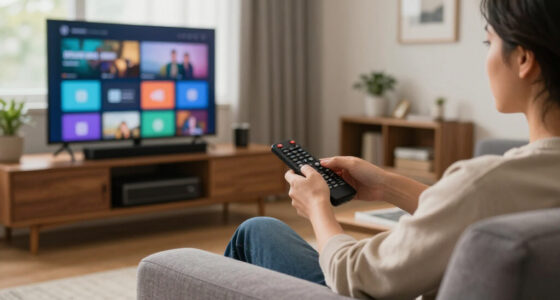

To decide between a 16:9 and a 2.35:1 screen, consider your viewing habits and content preferences. If you want versatility for everyday shows, sports, and streaming, 16:9 is a practical choice. But if you’re a film enthusiast seeking a more immersive, cinematic experience, 2.35:1 offers a widescreen feel that enhances visuals. Keep exploring to find out which option best fits your entertainment style and how each impacts your viewing experience.

Get business pricing on your home office setup
- Business-only prices and quantity discounts
- Tax-exempt purchasing
- Multiple users, one account, clear invoices
Key Takeaways
- Consider your primary content: versatile media favors 16:9, while cinematic experiences benefit from 2.35:1.
- Evaluate viewing environment: 16:9 works well for everyday TV, 2.35:1 enhances immersive movie watching.
- Think about compatibility: 16:9 adapts seamlessly across various media types without black bars or cropping.
- Prioritize visual impact: choose 2.35:1 for a panoramic, theater-like experience and maximum cinematic immersion.
- Assess flexibility needs: 16:9 offers easier switching between content formats, while 2.35:1 may require adjustments.
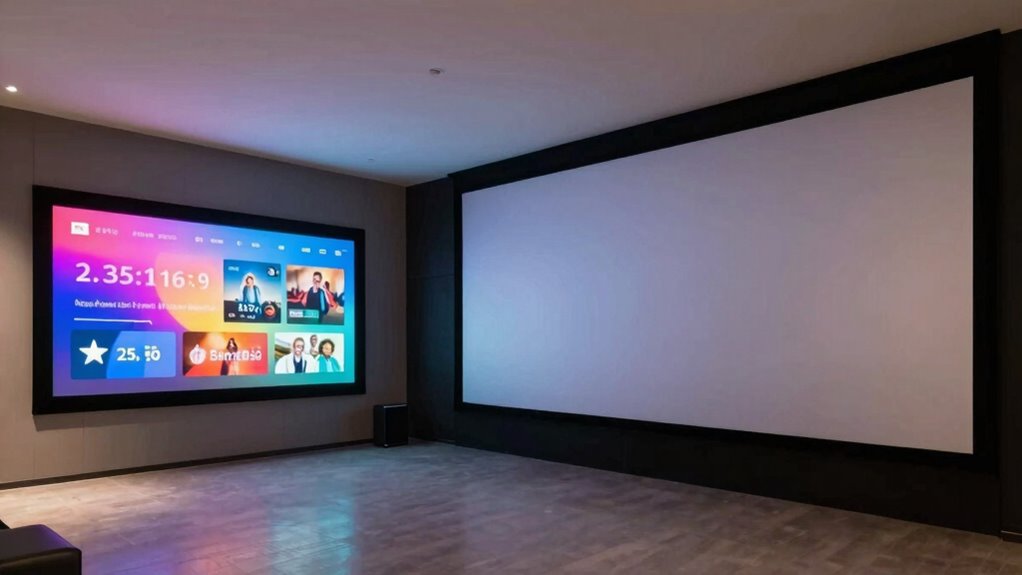
Are you unsure whether to choose a 16:9 or a 2.35:1 screen for your viewing needs? The decision often hinges on understanding how aspect ratio flexibility impacts your experience and what kind of viewer immersion each format offers. The 16:9 aspect ratio is standard for most TVs and streaming content, providing a balanced, familiar frame that works well for everyday viewing. It’s versatile, accommodating a wide range of content—from sports and news to TV shows—without black bars or cropping. Its aspect ratio flexibility makes it easier to switch between different types of media, enabling you to enjoy a variety of content without constantly adjusting your setup. Additionally, color accuracy plays a role in how vivid and true-to-life your images appear, which can be especially important for cinematic experiences.
The 16:9 aspect ratio is versatile, ideal for daily viewing across various content types without black bars or cropping.
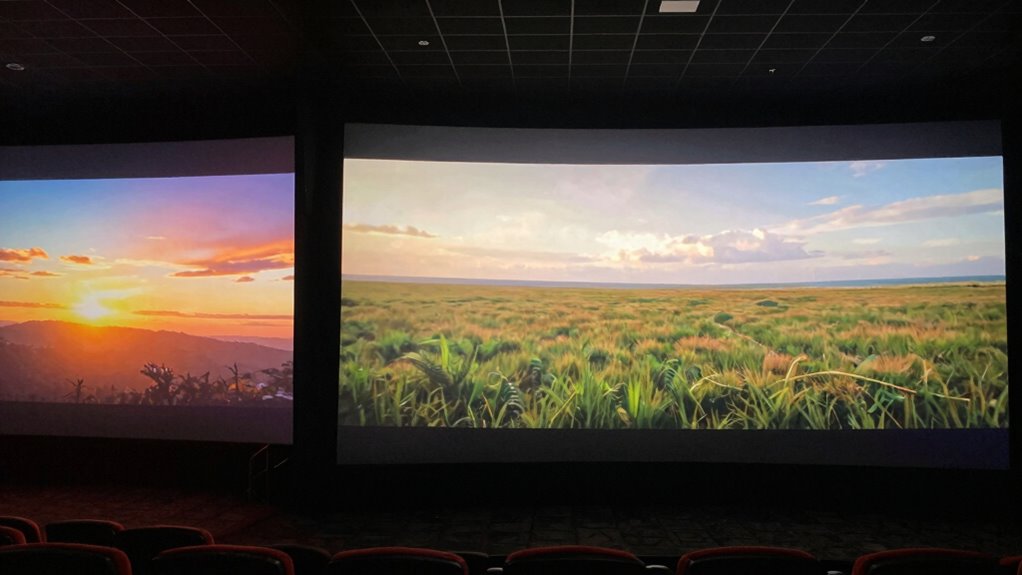
On the other hand, a 2.35:1 screen creates a more cinematic experience, closely mimicking the wide, panoramic feel of a movie theater. This aspect ratio is designed to maximize viewer immersion, pulling you into scenes with a sense of scale and depth that’s hard to match on standard screens. If you’re a film enthusiast or someone who values a more immersive, theater-like experience at home, a 2.35:1 screen can elevate your viewing. It emphasizes widescreen storytelling, making action sequences, landscapes, and visuals appear more expansive and engaging. However, this comes at the cost of aspect ratio flexibility; some content, especially standard broadcasts or older movies, might show black bars or require cropping, which can detract from the full-screen experience.
Your choice depends on what you prioritize most in your viewing habits. If you prefer a flexible setup that handles all types of content without fuss, a 16:9 screen is practical and straightforward. It adapts easily, ensuring you don’t miss out on anything or need to switch screens or settings. Conversely, if your primary goal is to enjoy movies with maximum immersion, and you’re willing to accept some limitations in content compatibility, a 2.35:1 screen offers a striking cinematic feel that can make you feel like you’re right in the middle of the action.
Ultimately, it comes down to your viewing preferences. If you value versatility and convenience, a 16:9 screen suits you best. But if you’re after a more dramatic, immersive experience that mimics the theater, then investing in a 2.35:1 screen might be the right move. Consider how much you watch different types of content, and what kind of visual impact you want to achieve, to make the best decision for your home entertainment setup.
As an affiliate, we earn on qualifying purchases.
Frequently Asked Questions
Which Screen Aspect Ratio Is Better for Gaming?
For gaming, a 16:9 screen usually offers better viewing comfort and a broader selection of games optimized for this aspect ratio. It also provides a good balance of screen size and immersion without overwhelming your space. The 2.35:1 ratio enhances cinematic experiences but might limit some game compatibility and reduce your overall viewing comfort during fast-paced action. Therefore, 16:9 is generally the better choice for gaming.
How Does Aspect Ratio Affect Image Quality?
Aspect ratio greatly influences your viewing experience, but it can also cause image distortion if mismatched with content. When the ratio isn’t right, you might see stretched or compressed images, reducing clarity. A proper aspect ratio maintains image quality, making scenes look natural and immersive. So, choosing the right ratio ensures you enjoy crisp, distortion-free visuals, heightening your overall viewing pleasure and preventing unnecessary distractions.
Can I Switch Between Ratios Easily?
Yes, you can switch between aspect ratios easily with aspect ratio customization features. Many modern TVs and projectors offer content adaptation flexibility, allowing you to change the display ratio quickly. This way, you can enjoy different formats without hassle, ensuring ideal viewing for movies, sports, or gaming. Just check your device’s settings or remote control options to adjust aspect ratios effortlessly, enhancing your overall viewing experience.
Are There Cost Differences Between the Two?
Yes, there are cost differences between 16:9 and 2.35:1 screens. Generally, 2.35:1 screens may cost more due to larger size and specialized screen material needed for wider aspect ratios. Installation complexity also varies; wider screens can be more challenging to install securely. You should consider your space and budget, as well as the screen material quality, to determine the most cost-effective option for your setup.
Which Aspect Ratio Is More Future-Proof?
Ironically, the classic 16:9 aspect ratio might be your best bet for the future, given its place in aspect ratio history. It’s versatile, fitting both cinematic presentation and everyday content. While 2.35:1 offers a dramatic, cinematic feel now, screens keep evolving. Embracing 16:9 guarantees you stay compatible with future formats, making it more future-proof for diverse viewing needs. Adaptability wins in the long run.
2.35:1 cinematic projector screen
As an affiliate, we earn on qualifying purchases.
As an affiliate, we earn on qualifying purchases.
Conclusion
Ultimately, choosing between 16:9 and 2.35:1 screens comes down to your viewing habits and space. Imagine settling into your favorite seat, the screen subtly aligning with your mood—whether it’s the vibrant, all-encompassing 16:9 or the cinematic sweep of 2.35:1. Sometimes, the perfect fit feels like it was meant to be, like finding that missing piece in a puzzle just as you’re about to give up. Trust your instincts, and your ideal screen will find you.
As an affiliate, we earn on qualifying purchases.
adjustable aspect ratio projector
As an affiliate, we earn on qualifying purchases.
As an affiliate, we earn on qualifying purchases.
Evergreen bestsellers Picks
bestsellers
As an affiliate, we earn on qualifying purchases.