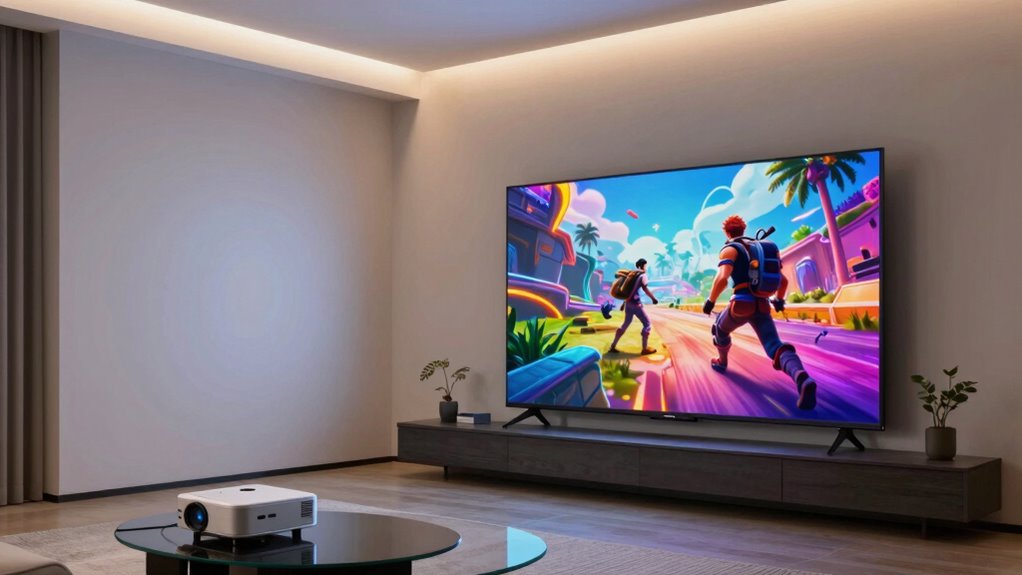

A TV might be better for gaming if you value sharp visuals, low input lag, and easy setup. With higher resolutions like 4K or 8K, TVs deliver crisp images while reducing pixelation. Gaming modes minimize lag for more responsive gameplay, and their convenience means less fuss with environment adjustments. They also perform well in well-lit rooms without the need for dark surroundings. If you want to learn more about when a TV outperforms a projector, keep exploring.

Get your home office setup delivered free — and shop member deals
- Fast, free delivery on millions of items
- Access to Prime Big Deal Days deals on October 6–7
- Prime Video, Amazon Music and more included
Key Takeaways
- When low input lag and quick response times are essential for competitive gaming.
- When a consistent, sharp image quality is needed regardless of ambient lighting conditions.
- When ease of setup and minimal environmental adjustments are preferred.
- When higher refresh rates and smoother motion handling improve gameplay experience.
- When reliable performance without color distortion or pixelation is a priority.
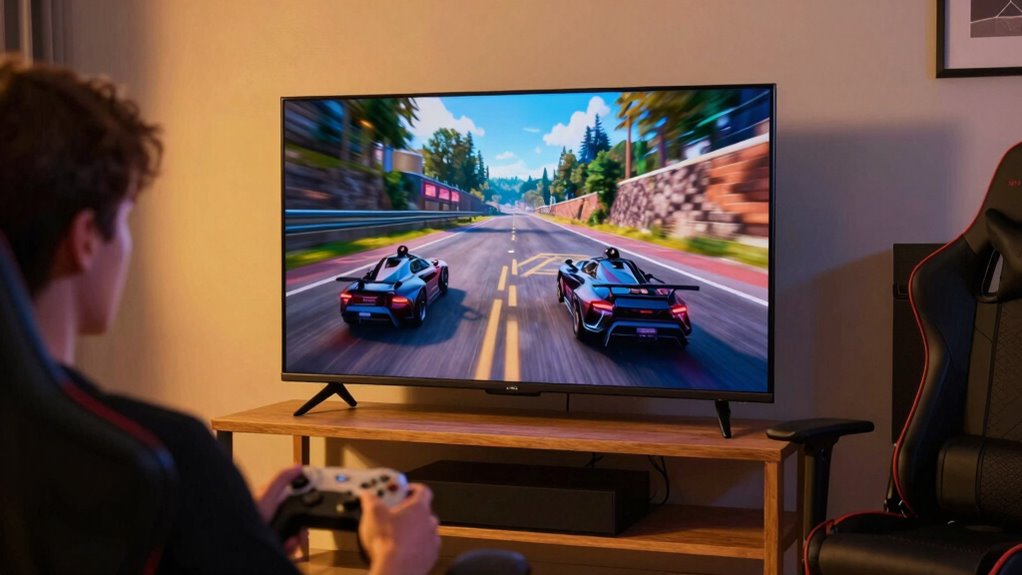
While projectors can offer an immersive gaming experience with their large screens, there are still many situations where a TV might be the better choice. One of the main advantages of a TV is its consistent screen resolution. Even budget models now provide sharp, clear images with high-definition (HD), 4K, or even 8K resolutions. This means you get crisp visuals without worrying about pixelation or blurriness, which can sometimes happen with projectors, especially in less-than-ideal lighting conditions or with lower-end models. A TV’s fixed resolution ensures you see every detail as intended, making your gaming experience more immersive and visually satisfying. Additionally, TVs generally have better color accuracy than projectors, ensuring vibrant visuals that enhance gameplay.
TVs offer consistent, sharp resolution for immersive gaming, unlike projectors that may pixelate in poor lighting.
Input lag is another critical factor where TVs often outperform projectors. Input lag refers to the delay between pressing a button and seeing the action on the screen. For fast-paced games like shooters or racing titles, even a slight delay can mean the difference between winning and losing. Modern gaming TVs are specifically designed to minimize input lag, often featuring gaming modes that reduce processing time. In contrast, many projectors, especially older or lower-end models, tend to have higher input lag due to their processing and scaling features. This delay can make gameplay feel less responsive and more frustrating, particularly in competitive scenarios.
Additionally, TVs typically have better refresh rates and motion handling than projectors, which further enhances gaming performance. Higher refresh rates mean smoother motion, reducing motion blur and making fast movements clearer. This is especially beneficial in fast-action games where clarity and responsiveness are essential. Many gaming TVs support 120Hz or higher refresh rates, ensuring you get fluid visuals without tearing or stuttering. Projectors, on the other hand, often struggle with maintaining high refresh rates, and their motion handling can sometimes produce ghosting or blurring, detracting from the gameplay experience.
Set-up and convenience also favor TVs. They are generally easier to install, require less space, and don’t need a dark room to look good. You can simply plug in, turn on, and start gaming. Projectors demand a controlled environment, a blank wall, and often complex adjustments for focus and keystone correction. Plus, the ambient light in your room can wash out the projected image, reducing clarity and contrast—something that’s less of an issue with a TV.
As an affiliate, we earn on qualifying purchases.
Frequently Asked Questions
How Does Input Lag Differ Between TVS and Projectors?
Input lag typically differs between TVs and projectors, with TVs generally offering lower lag due to faster processing. A TV’s display resolution and refresh rate contribute to smoother gameplay, reducing delay. Projectors often have higher input lag because of longer processing times, making them less ideal for fast-paced gaming. If low input lag is essential, a TV with a high refresh rate and good resolution usually provides a better gaming experience.
Are Projectors More Prone to Image Burn-In Than TVS?
Projectors are generally more prone to image burn-in than TVs, especially with static images or prolonged use. Their large screen size can intensify this issue, making burn-in more noticeable. While projectors offer portability and huge displays, you need to be mindful of static images that can cause burn-in over time. TVs, with their smaller screens and built-in protections, tend to resist burn-in better, making them a smarter choice for long gaming sessions.
What Is the Typical Lifespan of a TV Versus a Projector?
A TV usually lasts around 7-10 years, thanks to its durable screen resolution and LED or OLED technology. Projectors generally have a shorter lifespan of about 3,000-5,000 hours of use, depending on lamp quality and usage. If you prioritize portability and size, a projector can be more convenient, but you’ll need to replace lamps more often. TVs offer longer-term reliability and consistent image quality for gaming.
How Do Sound Quality Options Compare Between TVS and Projectors?
You’ll find that TVs generally offer better sound clarity because of enhanced speaker placement and built-in audio technology, delivering clearer dialogue and richer sound. Many TVs have dedicated speakers positioned for ideal sound distribution, whereas projectors often have limited audio options and rely on external speakers. If sound quality matters for your gaming experience, a TV’s integrated speakers can provide a more immersive and convenient setup without extra equipment.
Can Projectors Perform Well in Bright Room Conditions?
Projectors generally struggle in bright rooms because their screen size and image quality diminish with ambient light. You’ll notice less vibrant colors and washed-out images, making gaming less immersive. While portable, they require dark environments for the best experience. If you want a large screen in a bright room, a TV often outperforms a projector, offering better brightness, clarity, and consistent image quality regardless of lighting conditions.
gaming monitor with 120Hz refresh rate
As an affiliate, we earn on qualifying purchases.
As an affiliate, we earn on qualifying purchases.
Conclusion
While projectors offer a cinematic feel, a TV might still be your best bet for gaming, especially if you value quick response times and vibrant visuals. Did you know that modern TVs can have refresh rates of 120Hz or higher, reducing lag and motion blur? This means smoother gameplay and less frustration. So, if you’re chasing flawless performance, a TV could still be the smarter choice, even if a projector seems more immersive.
As an affiliate, we earn on qualifying purchases.
As an affiliate, we earn on qualifying purchases.
Halloween Picks
halloween
As an affiliate, we earn on qualifying purchases.