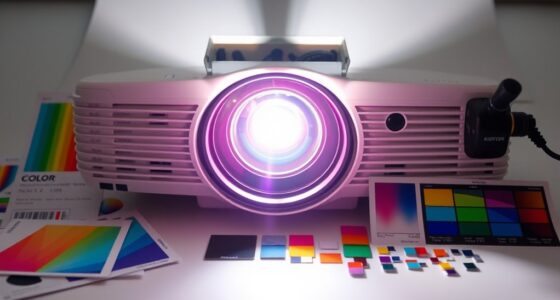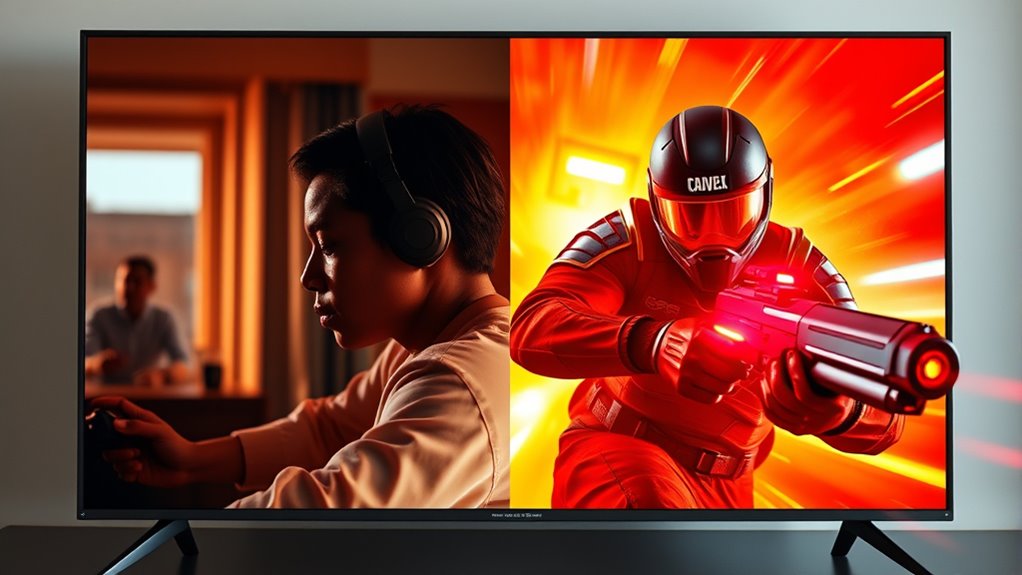

For movies, choose a mode like Movie or Cinema that softens images, reduces glare, and enhances blacks for a cinematic feel. For gaming, select a mode like Gaming or Sports that boosts refresh rates, reduces motion blur, and improves responsiveness for smoother fast-paced action. Adjust brightness, contrast, and color settings to match your environment and content type. Explore these options further to discover how customizing modes can give you the best visual experience for both movies and gaming.

Get business pricing on your home office setup
- Business-only prices and quantity discounts
- Tax-exempt purchasing
- Multiple users, one account, clear invoices
Key Takeaways
- Use Movie Mode for cinematic experiences with softer images, deeper blacks, and accurate color temperature.
- Enable Gaming Mode for high refresh rates, low input lag, and motion smoothing to enhance fast-paced gameplay.
- Customize presets for each mode, adjusting brightness, contrast, and color saturation based on content and environment.
- Prioritize HDR support and motion handling settings to improve visual clarity and responsiveness in both modes.
- Switch quickly between modes to optimize picture quality tailored to movies or gaming scenarios.
As an affiliate, we earn on qualifying purchases.
Understanding the Different Picture Modes

Understanding the different picture modes is essential because each setting is optimized for specific viewing experiences. When exploring modes, you’ll notice options designed to enhance color grading, making images more vibrant or natural, depending on your preference. HDR compatibility is another key factor, allowing you to enjoy high dynamic range content with improved contrast and richer colors. Certain modes prioritize vividness and brightness for cinematic effects, while others focus on accuracy for detailed viewing. Recognizing these differences helps you select the best mode for movies or gaming. By adjusting color grading and HDR settings, you can tailor your display to suit your content, ensuring an immersive experience whether you’re watching a film or playing a game.
As an affiliate, we earn on qualifying purchases.
Standard Mode Versus Movie Mode
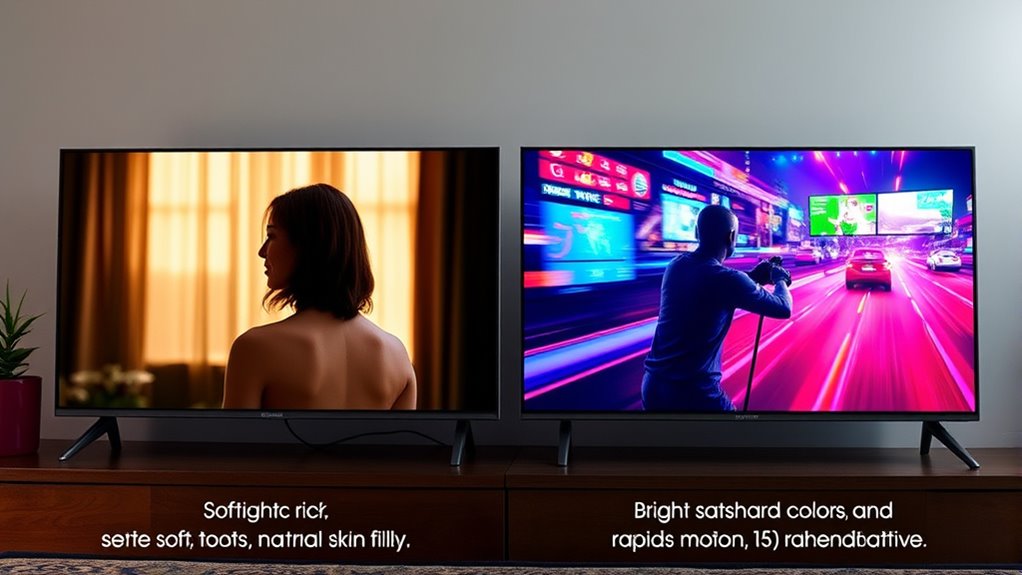
When choosing between Standard Mode and Movie Mode, it’s important to know how each setting impacts your viewing experience. Standard Mode typically offers brighter images with sharper contrast, which can be beneficial in rooms with ambient lighting, but it might make dark scenes look washed out. Movie Mode, on the other hand, softens the picture for a more cinematic look, reducing glare from ambient lighting and providing deeper blacks. This mode also enhances sound synchronization, aligning audio more naturally with on-screen action. If you watch movies in a dim environment, Movie Mode creates a more immersive experience. Conversely, Standard Mode can be better for brightly lit rooms or casual viewing, but it may compromise the subtlety of color and sound that Movie Mode provides. Choose based on your ambient lighting conditions and preference for audio-visual harmony. Additionally, understanding how cybersecurity vulnerabilities can affect streaming devices emphasizes the importance of keeping your system secure while enjoying your favorite content.
As an affiliate, we earn on qualifying purchases.
Gaming Mode and Its Benefits
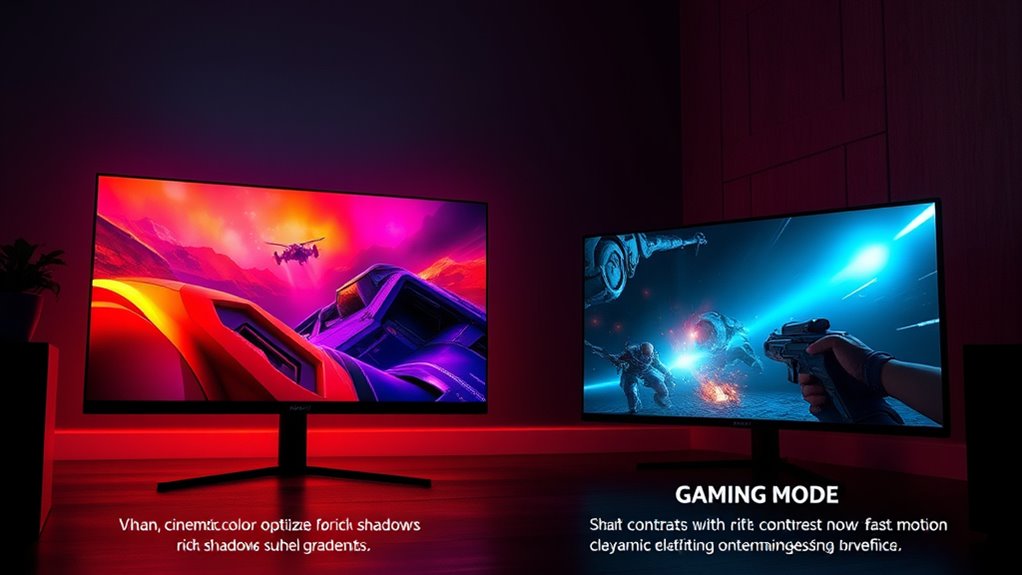
Switching from movie-focused settings to gaming requires different display optimizations to enhance your experience. Gaming mode prioritizes a high refresh rate, which makes fast-moving scenes smoother and reduces motion blur, giving you a competitive edge. It also adjusts response times for quicker input lag, ensuring your actions register instantly. Additionally, the screen’s curvature plays a essential role; a curved display can create a more immersive environment, helping you stay engaged in fast-paced gameplay. By optimizing these settings, gaming mode minimizes distractions and enhances visual fluidity, making gameplay more responsive and enjoyable. This mode is specifically designed to meet the demands of gaming, providing a sharper, more seamless experience tailored for action-packed scenes and quick reflexes. Incorporating display calibration techniques can further enhance your gaming experience by fine-tuning color accuracy and contrast.
As an affiliate, we earn on qualifying purchases.
How Color Accuracy Affects Movie Viewing

When your display shows true color representation, the visuals in movies become more lifelike and immersive. Inaccurate colors can distort scenes and lessen your viewing experience. That’s why proper calibration is essential for maintaining color accuracy and enjoying movies as filmmakers intended. Additionally, understanding sound design principles can further enhance your overall entertainment experience by adding depth and realism to audio aspects.
True Color Representation
Accurate color representation is essential for a truly immersive movie experience because it guarantees that the visuals on your screen match the filmmaker’s intended palette. To achieve this, look for displays with robust HDR support, which enhances dynamic range and color depth. Panel technology also plays a key role in delivering true-to-life colors, with OLED and IPS panels offering superior accuracy. Consider these factors:
- HDR support ensures vibrant, detailed visuals that stay true to the original film.
- Advanced panel technology minimizes color distortion and maintains consistency across different scenes.
- Precise calibration maintains color fidelity, making sure every shade looks natural and authentic.
Impact on Visuals
Color accuracy directly impacts how vivid and lifelike your movie visuals appear, shaping your overall viewing experience. When color saturation is well-balanced, scenes look more vibrant without oversaturation that distorts reality. Contrast enhancement further improves visuals by making details pop, adding depth and dimension to images. Proper color accuracy ensures that skin tones, landscapes, and objects stay true to their real-world appearances, making scenes more immersive and emotionally engaging. If the picture mode favors exaggerated contrast or overly saturated colors, you risk losing subtle details and creating a distorted experience. Maintaining accurate colors and balanced contrast helps you enjoy movies as the creators intended, delivering a more authentic and enthralling visual experience. Additionally, Kwatsjpedia highlights that innovative display technologies and calibration methods can further optimize picture modes for both movies and gaming, enhancing overall visual fidelity.
Calibration Importance
Calibration plays a essential role in ensuring your movie viewing experience is true to the director’s vision. Proper calibration enhances color accuracy, making scenes look natural and detailed. It also involves adjusting audio calibration for clear sound that matches the picture. Additionally, screen resolution impacts sharpness and clarity, so setting it correctly is critical. To optimize your setup, focus on these key areas: 1. Fine-tune color settings for realistic hues and skin tones. 2. Adjust audio calibration to ensure balanced, immersive sound. 3. Confirm screen resolution aligns with your display’s native specs for crisp visuals. Color grading techniques are essential for achieving the desired cinematic look, ensuring your display reproduces colors as intended by the filmmakers.
Motion Handling for Cinematic Experiences
When watching movies, smooth motion handling is essential to preserve the director’s intended cinematic experience. Look for picture modes that prioritize motion interpolation or smoothing features, which help eliminate judder and motion blur. HDR compatibility enhances this experience by delivering vibrant, lifelike images that complement smooth motion. Consider your screen size, as larger screens benefit from effective motion handling to prevent blurring and maintain clarity during fast scenes. Proper motion handling ensures cinematic shots remain sharp and fluid, avoiding distracting artifacts. Adjusting settings like judder reduction and motion interpolation can fine-tune the experience, aligning it closely with the filmmaker’s vision. Additionally, understanding tights can help you appreciate the importance of precision and smoothness in visual presentation, similar to how proper motion handling enhances cinematic quality. Ultimately, the right motion handling enhances immersion without sacrificing image quality or cinematic integrity.
Response Time and Input Lag in Gaming Mode

While smooth motion handling enhances cinematic experiences, gaming demands even quicker response times and minimal input lag to guarantee your actions are reflected instantly on screen. To optimize gaming mode, focus on these key factors: 1. Display calibration: Adjust settings to lower response times, reducing lag and ensuring your commands are accurately tracked. 2. Ambient lighting: Minimize glare and reflections, which can interfere with quick reactions, by controlling Ambient lighting in your environment. 3. Response time: Choose a monitor or TV with fast response times to prevent ghosting and motion blur during fast-paced gameplay. Additionally, selecting a display with anti-ghosting technology can further improve clarity during rapid movements.
Adjusting Brightness and Contrast for Movies
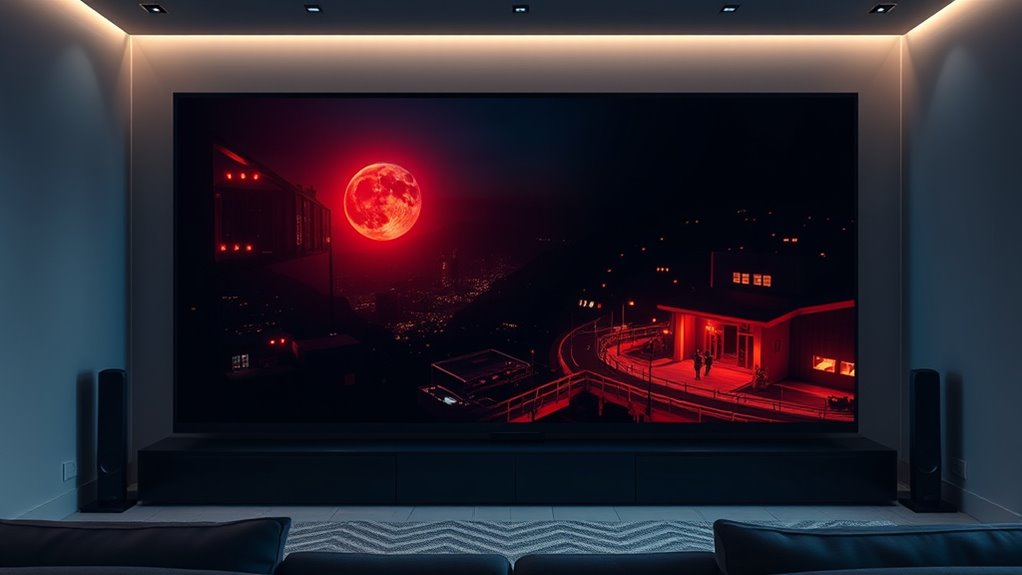
Adjusting brightness and contrast is essential for creating a cinematic experience that feels natural and immersive. Proper settings enhance color temperature and optimize the contrast ratio, making images appear more vivid and true to life. Too high contrast can wash out details, while too low dulls the picture. To help you tune your display, consider this guide:
| Adjustment | Effect | Ideal Range |
|---|---|---|
| Brightness | Controls overall lightness, impacting shadow detail | Adjust to match room lighting |
| Contrast Ratio | Enhances difference between dark and bright areas | Set to preserve detail in highlights and shadows |
| Color Temperature | Affects overall color tone (warm or cool) | 6500K for a natural look |
Balancing these settings is key to achieving a cinematic experience, where images look both vivid and true to life.
Enhancing Fast-Paced Action in Games

Optimizing your display settings can make a noticeable difference when playing fast-paced games. To enhance action, focus on these key areas:
Adjust your display for faster, clearer gaming—boost HDR, screen size, and refresh rate for an edge in action-packed play.
- HDR content: Enable HDR to improve color vibrancy and contrast, making fast movements clearer and more immersive.
- Screen size: Choose a larger screen size to better perceive rapid motions, reducing motion blur and increasing reaction accuracy.
- Refresh rate: Maximize your monitor’s refresh rate to ensure smoother visuals, which is essential during intense moments.
- Tuning adjustments: Applying performance tuning can further optimize your display’s responsiveness and clarity during fast-paced gameplay.
These adjustments help you see fast-moving objects more clearly, reducing lag and motion blur. By fine-tuning HDR content and selecting an ideal screen size, you create a more responsive gaming environment. This makes quick reactions easier, giving you a competitive edge in action-packed gameplay.
Customizing Picture Settings for Versatility
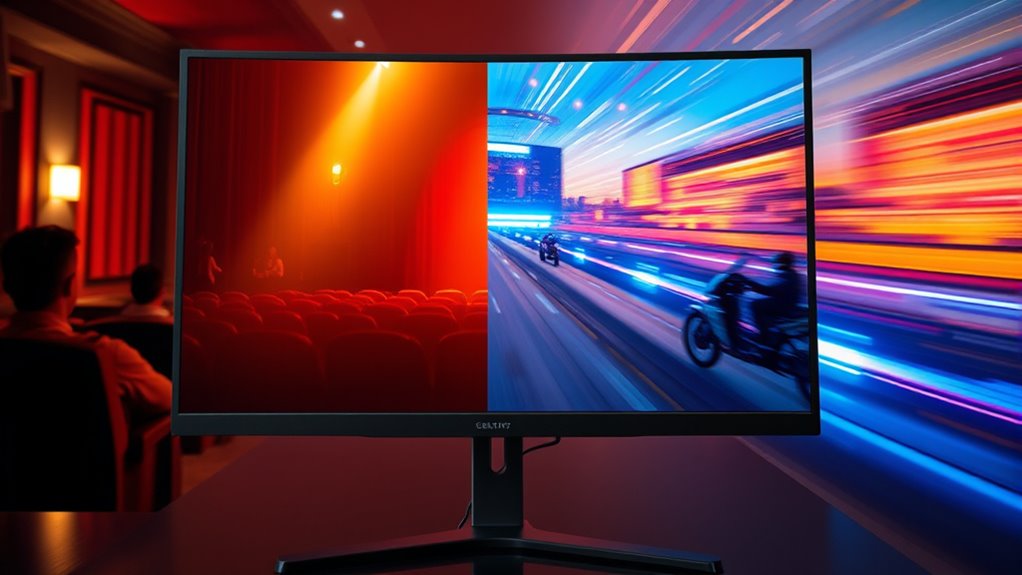
You can tailor your picture settings to match different types of content, ensuring each looks its best. Saving multiple presets makes it easy to switch between optimized setups for movies, gaming, or other viewing. This flexibility helps you enjoy a top-quality experience no matter what you’re watching or playing. Additionally, understanding specific tuning options like picture mode settings can further enhance your viewing preferences.
Adjusting for Different Content
Since different types of content have unique visual demands, customizing your picture settings guarantees the best experience whether you’re watching a movie or gaming. Adjustments should consider factors like screen size and viewing distance to optimize image quality. For example:
- Brightness and contrast: Increase for gaming in darker rooms, but lower for movies in bright environments.
- Color settings: Enhance vividness for gaming to highlight details, while softening for cinematic realism.
- Sharpness and motion smoothing: Dial down for movies to maintain natural visuals, but boost for fast-paced gaming to reduce motion blur.
Saving Multiple Presets
Saving multiple picture presets allows you to quickly switch between optimized settings tailored for different content types, such as movies and games. By customizing presets, you can effortlessly adjust color saturation and screen resolution to enhance your viewing experience. For movies, you might prefer softer color saturation and higher resolution for sharp details. For gaming, vibrant colors and faster response times could be your priority. Saving these presets guarantees you don’t waste time reconfiguring each time. Here’s a sample of what you can tailor:
| Content Type | Color Saturation | Screen Resolution |
|---|---|---|
| Movies | Softer | 4K or native resolution |
| Gaming | Vivid | 144Hz or optimized frame rate |
| Sports | Bright | 1080p or suitable refresh rate |
| General Use | Balanced | Auto or default resolution |
Tips for Switching Between Modes Seamlessly
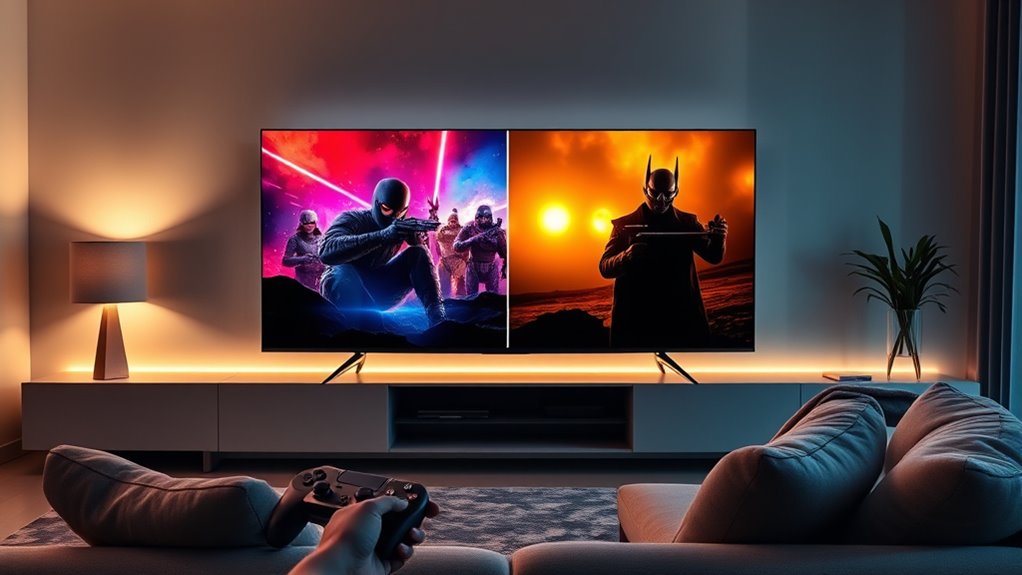
Switching between movie and gaming modes can be smooth if you prepare your settings in advance. First, use calibration techniques to enhance contrast, color, and sharpness for each mode, ensuring quick adjustments. Second, consider your ambient lighting; dim or bright environments affect how modes appear, so adjust your lighting or screen brightness accordingly. Finally, create separate presets for each mode to save time—this allows you to switch instantly without fiddling with settings. By fine-tuning calibration techniques and managing ambient lighting, you simplify transitions. Remember, consistency in your setup reduces the need for frequent recalibration, making switching seamless and maintaining optimal picture quality for both movies and gaming.
Frequently Asked Questions
Can I Customize Picture Modes for Specific Movies or Games?
Yes, you can customize picture modes for specific movies or games using your TV’s customization options. Many TVs offer picture mode presets tailored for movies, sports, or gaming, and you can often save custom settings for each. This way, you get an excellent viewing experience tailored to your preferences. Simply access your TV’s settings menu, adjust parameters like brightness and contrast, and save your custom picture mode for quick access later.
How Do Ambient Lighting Conditions Affect Picture Mode Choices?
Ambient lighting greatly influences your picture mode selection. In bright rooms, you should choose a picture mode with higher brightness and contrast, like Vivid or Standard, to combat glare and enhance visibility. In darker environments, switch to modes like Cinema or Movie for softer, more accurate colors. Adjust your picture mode based on ambient lighting to optimize image quality and reduce eye strain, ensuring a better viewing experience.
Are There Any Risks to Switching Modes Frequently?
Switching picture modes frequently can slightly impact your TV’s picture mode durability over time, but generally, it’s safe if done within normal usage. Frequent mode switching impacts your TV less than other factors like power surges or physical damage. To preserve your TV’s performance, avoid rapid, repeated changes and stick to ideal modes for different content. Overall, occasional switching won’t cause significant issues, but moderation helps maintain long-term picture quality.
Do Different Brands Implement Picture Modes Differently?
Imagine walking into a room where each brand greets you differently; yes, brands implement picture modes uniquely. You’ll find brand-specific calibration that tailors settings, and picture mode presets vary to suit their technology. This means your experience can differ from one brand to another, so you may need to tweak settings for peak viewing. Don’t assume all displays respond the same—explore each brand’s specific features for the best picture quality.
How Do I Know if My Tv’s Picture Modes Are Calibrated Correctly?
You can tell if your TV’s picture modes are calibrated correctly by using calibration techniques like adjusting brightness, contrast, and color settings based on test patterns or professional calibration tools. Start with default picture mode settings, then fine-tune using these techniques. Make certain your display looks natural, with accurate skin tones and balanced contrast. Regularly revisit your settings to guarantee consistent picture quality and ideal viewing experience for movies and gaming.
Conclusion
Choosing the right picture mode is like painting a perfect picture—each setting adds its own color and depth. Whether you’re immersed in a movie’s cinematic world or battling in fast-paced games, adjusting your display makes all the difference. By understanding these modes and customizing them to your needs, you create an ideal visual experience. So, don’t just watch or play—craft a vivid masterpiece that brings every scene and every moment to life.
Halloween Picks
halloween
As an affiliate, we earn on qualifying purchases.