
HDR, or High Dynamic Range, is a technology that boosts your projector’s contrast, brightness, and color accuracy. It makes images look more lifelike and immersive by deepening blacks, brightening highlights, and rendering broader colors. This results in sharper details and richer visuals, especially in scenes with high contrast. To get the most out of HDR, your projector needs to meet certain standards, and there’s more to discover about how it transforms your viewing experience as you continue.
Key Takeaways
- HDR (High Dynamic Range) enhances projector images by increasing contrast, brightness, and color accuracy for more lifelike visuals.
- It creates deeper blacks, brighter highlights, and a broader color palette, adding depth and realism to scenes.
- HDR improves the reproduction of subtle color gradations, making content appear more vibrant and true to the original.
- Projectors with HDR support deliver more detailed images, especially in high-contrast situations like bright skies or dark backgrounds.
- Overall, HDR offers a more immersive viewing experience by making images brighter, richer, and more true to life.
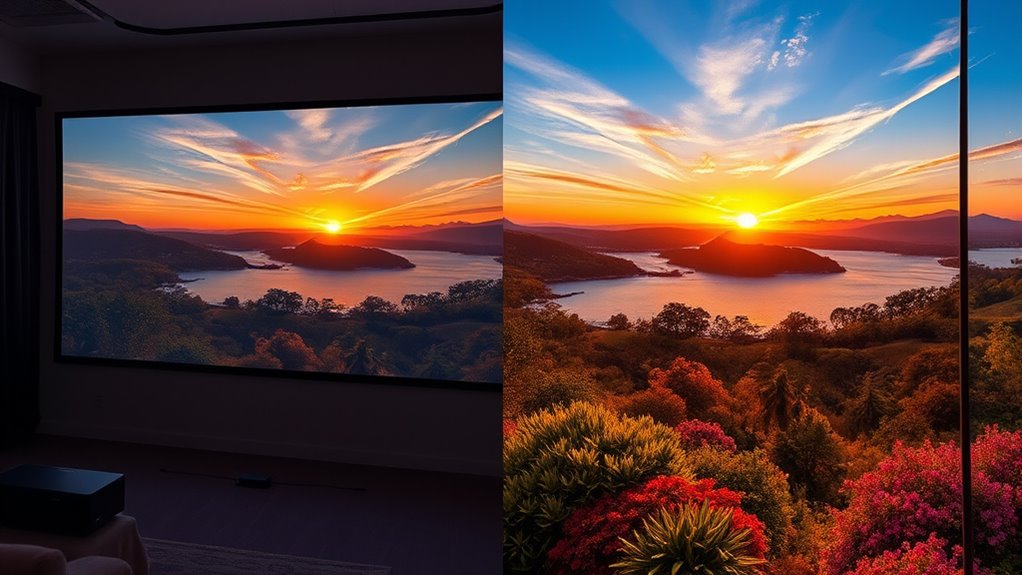
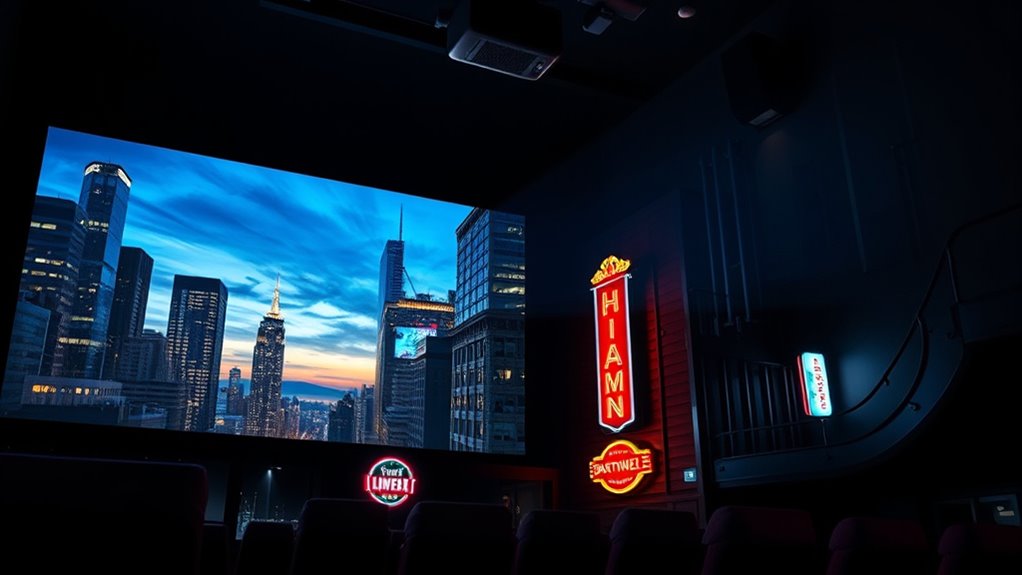
Are you curious about how HDR enhances your projector experience? High Dynamic Range, or HDR, is a technology designed to improve the way your projector displays images, making them more lifelike and immersive. Unlike standard images, which often struggle with limited contrast and color range, HDR allows your projector to deliver deeper blacks, brighter highlights, and a broader spectrum of colors. This results in visuals that are more detailed and vibrant, capturing the nuance and richness intended by filmmakers and content creators. When you watch HDR content, you’ll notice that scenes have more depth and realism, especially in high-contrast situations like a bright sky against dark mountains or a dimly lit room with bright highlights.
HDR enhances images with deeper blacks, brighter highlights, and more vibrant colors for a more lifelike projector experience.
One of the key benefits of HDR is its impact on color accuracy. With HDR, your projector can reproduce colors more precisely, closely matching the original intent of the content. This means skin tones look more natural, and the vividness of colors like reds, greens, and blues is enhanced without oversaturation. This color accuracy is vital if you want your viewing experience to mimic real life as closely as possible. It also guarantees that subtle color gradations, such as the gentle transition of a sunset or the detailed textures in a forest scene, are displayed without banding or distortion. As a result, your images become richer and more true to life, drawing you deeper into the story or scene.
Brightness standards are another essential aspect of HDR technology. Traditional projectors often struggle with achieving high brightness levels necessary for HDR content, particularly in well-lit rooms. HDR content demands higher brightness standards to fully realize its potential, especially when it comes to highlighting bright objects and scenes. Modern projectors designed with HDR support can reach these standards, ensuring that bright areas don’t appear washed out and that details in shadows aren’t lost. This balance between bright highlights and dark shadows creates a dynamic range that makes images more dramatic and visually impactful. When your projector meets these brightness standards, you’ll experience scenes with a greater sense of depth and realism, even in environments with ambient light.
In short, HDR transforms your projector experience by enhancing both color accuracy and brightness standards. It enables your content to look more true to life, with richer colors and more detailed contrast. Whether you’re watching movies, sports, or playing video games, HDR makes your viewing sessions more vibrant, immersive, and true to the creator’s vision. By understanding how HDR works and choosing a projector that supports high standards, you’ll reveal a new level of picture quality that elevates your entire entertainment setup. Additionally, selecting a projector with test standards ensures you get the best possible HDR performance.
As an affiliate, we earn on qualifying purchases.
Frequently Asked Questions
How Does HDR Affect Projector Lifespan?
HDR calibration can impact your projector’s durability, but it generally doesn’t shorten its lifespan if done correctly. When you optimize HDR settings, you reduce strain on the projector’s components, helping maintain its longevity. However, consistently displaying high-brightness HDR content at max settings may cause more wear over time. To protect your projector’s durability, regularly calibrate HDR properly and avoid unnecessary high-brightness modes.
Can HDR Be Used With All Types of Content?
Yes, HDR can enhance all kinds of content, from bright, vivid movies to detailed video games. You’ll want to make certain proper HDR calibration for your projector, as it optimizes contrast and color accuracy. While most modern content is HDR-compatible, some older videos or images may not fully benefit. By checking content compatibility, you can enjoy richer visuals, making every scene pop with lifelike brightness and depth.
What Are the Best Settings for HDR Projectors?
You should start with HDR calibration to optimize your projector’s settings, ensuring the best color accuracy. Adjust brightness, contrast, and gamma to enhance dynamic range without causing clipping or loss of detail. Use a test pattern or calibration disc if available. Fine-tuning these settings helps you achieve vivid, realistic images, so your HDR content looks its best, with accurate colors and deep contrast, delivering an immersive viewing experience.
Is HDR Compatible With 4K Projectors?
Yes, HDR compatibility works wonderfully with 4K projectors, delivering dazzling detail and dynamic contrast. When you choose a 4K projector with HDR capabilities, you’ll enjoy richer, more vibrant visuals that elevate your viewing experience. Keep in mind, not all 4K projectors support HDR, so check the specifications carefully. Pairing HDR with your 4K projector guarantees stunning, true-to-life images that captivate and immerse you.
How Does HDR Impact Power Consumption?
HDR can increase power consumption because it requires the projector to process and display more detailed, brighter images. This impacts energy efficiency, as the projector uses more power to achieve higher contrast and color accuracy. While the environmental impact might rise slightly due to increased energy use, choosing energy-efficient HDR-enabled projectors helps minimize this effect. Overall, HDR enhances picture quality but may lead to higher power demands.
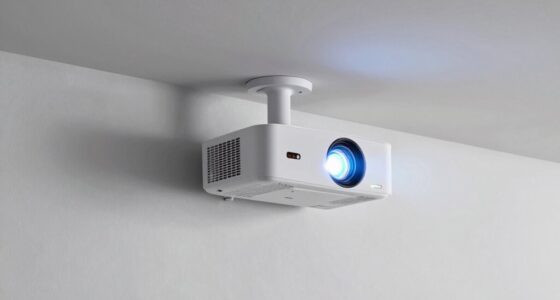
projector with high contrast and brightness
As an affiliate, we earn on qualifying purchases.
As an affiliate, we earn on qualifying purchases.
Conclusion
Understanding HDR can markedly enhance your viewing experience, making images brighter and more detailed. Did you know that HDR content can display over 1 billion colors, compared to just 16 million in standard displays? This incredible range creates lifelike visuals that truly pop. By choosing a projector with HDR support, you’re investing in stunning, immersive visuals that bring movies, games, and photos to life. Embrace HDR and enjoy a richer, more vibrant picture every time.
As an affiliate, we earn on qualifying purchases.
As an affiliate, we earn on qualifying purchases.