
For most home theater systems, I’d start with the SVS SB-1000 Pro: its sealed design and app-based controls make it the most flexible pick in this group. The Klipsch R-12SW is a strong alternative for buyers who want a larger, ported 12-inch design, while the Polk Audio Monitor XT12 offers another full-size option. The main tradeoffs are room-filling output versus compact placement, and simpler controls versus greater tuning flexibility. I compare all 15 models by their likely fit, features, and limitations, so read on for the full breakdown and help choosing the right subwoofer for your room.

Get business pricing on your home office setup
- Business-only prices and quantity discounts
- Tax-exempt purchasing
- Multiple users, one account, clear invoices
Complete the kit


Key Takeaways
- The SVS SB-1000 Pro stands out for adjustment flexibility: its sealed design and app controls give it an edge for buyers who need to tune bass around room and listening preferences.
- Several Klipsch 12-inch models serve different priorities: the R-12SW emphasizes a powered, ported format, while the Reference R-121SW and R-120SW suit shoppers comparing larger-driver Klipsch options.
- Compact models trade deep-room impact for placement freedom: the BESTISAN 6.5-inch and 8-inch options, Klipsch R-8SW, and Klipsch Sub-100 make more sense where cabinet size or space is the main constraint.
- Driver size alone does not decide the best fit: sealed versus ported construction, controls, and room layout can matter as much as moving from a 10-inch to a 12-inch model.
- The lineup ranges from entry-focused choices to advanced tuning: models such as the Yamaha NS-SW100BL and Polk PSW10 keep the decision approachable, while the SVS SB-1000 Pro offers more setup control.
| Yamaha NS-SW100BL 10-Inch 100W Powered Subwoofer – Black |  | Best for Balanced Home Theater and Music | Woofer diameter: 10 inches | Maximum output power: 100 watts | Technology: Advanced YST II; Twisted Flare Port | VIEW LATEST PRICE | See Our Full Breakdown |
| Klipsch Synergy Black Label SUB-120 12-Inch Front-Firing Subwoofer |  | Best for High-Impact Home Theater | Driver: 12-inch front-firing Cerametallic woofer | Continuous power: 200 watts | Dynamic power: 400 watts | VIEW LATEST PRICE | See Our Full Breakdown |
| SVS SB-1000 Pro Sealed Subwoofer, 12-Inch Driver, Black Ash |  | Best for Fine-Tuning a Compact Theater | Driver: 12-inch high-excursion | Amplifier power: 325 watts RMS; 820+ watts peak | Enclosure: Sealed, rigidly braced MDF | VIEW LATEST PRICE | See Our Full Breakdown |
| Klipsch Synergy Black Label Sub-100 10-Inch Front-Firing Subwoofer |  | Best Mid-Size Klipsch Pick | Woofer diameter: 10 inches | Driver: Front-firing spun copper Cerametallic | Power output: 150 watts continuous; 300 watts dynamic | VIEW LATEST PRICE | See Our Full Breakdown |
| Klipsch Reference R-8SW 8-Inch Subwoofer, 150-Watt Peak Power, Brushed Black Vinyl |  | Best Compact Pick | Woofer diameter: 8 inches | Maximum output power: 150 watts | Driver design: Down-firing | VIEW LATEST PRICE | See Our Full Breakdown |
| BESTISAN 8-Inch Powered Down-Firing Subwoofer |  | Best Compact Down-Firing Pick | Type: Powered subwoofer | Woofer diameter: 8 inches | Design: Down-firing | VIEW LATEST PRICE | See Our Full Breakdown |
| Dayton Audio Classic CS1200 12-Inch 200W Powered Subwoofer |  | Best Value for Balanced Theater Bass | Model: CS1200-Black | Woofer diameter: 12 inches | Amplifier: 200 watts, Class-D | VIEW LATEST PRICE | See Our Full Breakdown |
| Klipsch R-12SW 12-Inch 400W Powered Subwoofer |  | Best for High-Impact Movie Bass | Model: R-12SW | Woofer diameter: 12 inches | Woofer design: Copper-spun, front-firing | VIEW LATEST PRICE | See Our Full Breakdown |
| Polk Audio Monitor XT12 12-Inch Powered Subwoofer, Midnight Black |  | Best for Low-Frequency Extension | Model: Monitor XT12 (MXT12) | Woofer diameter: 12 inches | Amplifier: 100W peak, Class A/B | VIEW LATEST PRICE | See Our Full Breakdown |
| BESTISAN Basscore 80 Powered 8-Inch Subwoofer |  | Best Slim Profile for Smaller Rooms | Amplifier: Class-D | Power output: 100W RMS / 150W peak | Woofer size: 8 inches | VIEW LATEST PRICE | See Our Full Breakdown |
| BESTISAN Basscore 65 Compact Powered Subwoofer, 6.5-Inch Side-Firing Woofer |  | Best Compact Pick | Driver size: 6.5 inches | Maximum output power: 100 watts | Driver design: Side-firing | VIEW LATEST PRICE | See Our Full Breakdown |
| Klipsch R-120SW 12-Inch Powered Subwoofer, Black |  | Best for Big-Room Movie Bass | Woofer diameter: 12 inches | Frequency response: 29–120 Hz (±3 dB) | Amplifier power: 200 watts continuous / 400 watts peak | VIEW LATEST PRICE | See Our Full Breakdown |
| Klipsch R-100SW 10-Inch Powered Subwoofer |  | Best for Straightforward Receiver Pairing | Woofer diameter: 10 inches | Peak amplifier power: 300 watts | Continuous amplifier power: 150 watts | VIEW LATEST PRICE | See Our Full Breakdown |
| Polk Audio PSW10 10-Inch Powered Subwoofer | 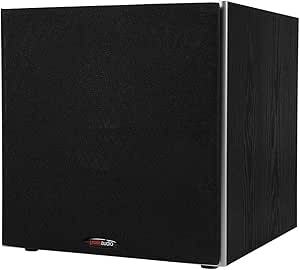 | Best for Smaller Rooms and Flexible Wiring | Woofer diameter: 10 inches | Amplifier power: 50 watts RMS / 100 watts dynamic | Frequency response: 40–160 Hz (-3 dB) | VIEW LATEST PRICE | See Our Full Breakdown |
| Klipsch Reference R-121SW 12-Inch Front-Firing Subwoofer |  | Best Front-Firing 12-Inch Pick | Woofer diameter: 12 inches | Maximum output power: 400 watts | Amplifier: All-digital | VIEW LATEST PRICE | See Our Full Breakdown |
| home theater subwoofer | Woofer diameter | Connectivity | Dimensions | Warranty |
|---|---|---|---|---|
| Yamaha NS-SW100BL 10-Inch 100W | 10 inches | Wired | 18.85 × 20 × 18.6 inches | 2 years |
| Klipsch Synergy Black Label SU | — | Wired | 23.7 × 17.7 × 21.3 inches (D × W × H) | 3 years parts and labor |
| SVS SB-1000 Pro Sealed Subwoof | — | Wired; Bluetooth also listed | — | Limited |
| Klipsch Synergy Black Label Su | 10 inches | Wired | 14 × 12.5 × 15.7 inches (H × W × D) | 5 years parts and labor |
| Klipsch Reference R-8SW 8-Inch | 8 inches | Wired RCA/LFE | 15.75 × 11.75 × 13.25 inches | 1 year |
| BESTISAN 8-Inch Powered Down-F | 8 inches | RCA, LFE, AUX, high-level speaker input and output | — | — |
| Dayton Audio Classic CS1200 12 | 12 inches | RCA, LFE, speaker wire | 18 x 15.5 x 16.37 inches (D x W x H) | 5-year manufacturer warranty |
| Klipsch R-12SW 12-Inch 400W Po | 12 inches | — | 20 × 20 × 17.75 inches | — |
| Polk Audio Monitor XT12 12-Inc | 12 inches | RCA line level, LFE, 5-way binding posts | — | — |
| BESTISAN Basscore 80 Powered 8 | — | LFE, RCA/AUX, high-level speaker input and output | 11.3 x 6.2 x 15.4 inches (H x W x D) | — |
| BESTISAN Basscore 65 Compact P | — | — | 11.3 × 6 × 15 inches (D × W × H) | 1 year |
| Klipsch R-120SW 12-Inch Powere | 12 inches | Wired RCA | — | 5 years on woofer; 2 years on amplifier |
| Klipsch R-100SW 10-Inch Powere | 10 inches | — | 14.5 × 12.5 × 16.4 inches | — |
| Polk Audio PSW10 10-Inch Power | 10 inches | — | 17 × 14.25 × 14.5 inches | — |
| Klipsch Reference R-121SW 12-I | 12 inches | Wired | — | 5-year manufacturer warranty |
More Details on Our Top Picks
Yamaha NS-SW100BL 10-Inch 100W Powered Subwoofer – Black
The Yamaha NS-SW100BL is a sensible fit for buyers who want one subwoofer for movie soundtracks and everyday music, rather than the higher-output emphasis of the Klipsch SUB-120. Its 10-inch driver and 100-watt output are a more modest pairing than that 12-inch Klipsch, while Yamaha’s Advanced YST II and Twisted Flare Port are designed to keep bass controlled and clear. That makes this a better match for moderate listening levels and systems where musical definition matters alongside impact. The tradeoff is limited headroom for large rooms or bass-heavy playback at high volume. Its wired, corded design also calls for a convenient outlet and receiver connection, and its listed dimensions make it less compact than the smaller Klipsch R-8SW.
Pros:- Advanced YST II and Twisted Flare Port are designed for clear, controlled bass.
- 10-inch driver offers a middle ground between compact 8-inch models and larger 12-inch subwoofers.
- Suitable for both home theater and music systems.
- Includes a two-year warranty.
Cons:- 100-watt maximum output offers less headroom than the Klipsch SUB-120.
- Wired, corded setup limits placement flexibility.
- Listed dimensions are substantial for a 10-inch subwoofer.
Best for: Home theater owners in small-to-medium rooms who also listen to music and prefer controlled bass over maximum output.
Not ideal for: Viewers with large rooms or a strong preference for very high-volume, deep-impact bass; the 100-watt output is less suited to that role than larger, higher-powered options.
- Woofer diameter:10 inches
- Maximum output power:100 watts
- Technology:Advanced YST II; Twisted Flare Port
- Audio channels:5.1
- Connectivity:Wired
- Dimensions:18.85 × 20 × 18.6 inches
- Weight:26.5 pounds
- Warranty:2 years
Our verdict“Choose the Yamaha for moderate-room movie and music systems where controlled bass matters more than maximum output.”
Klipsch Synergy Black Label SUB-120 12-Inch Front-Firing Subwoofer
For buyers who put soundtrack impact ahead of a small footprint, the Klipsch SUB-120 makes the strongest case among these picks. Its 12-inch front-firing Cerametallic woofer and 200 watts of continuous power give it a more substantial output profile than the 10-inch Yamaha NS-SW100BL or Klipsch Sub-100. The 400-watt dynamic rating adds headroom for changing movie scenes, though it is not a guarantee of room-filling performance in every space. The cost of that larger-driver approach is physical bulk: at 36.4 pounds, it is much harder to reposition than the 15-pound Klipsch R-8SW. It connects to most AV receivers, but the connection wires are not included, so buyers should account for the additional setup requirement.
Pros:- 12-inch front-firing driver is suited to adding substantial bass to movie soundtracks.
- 200 watts continuous and 400 watts dynamic power provide more headroom than the Yamaha NS-SW100BL.
- Designed to connect to nearly any AV receiver.
- Three-year parts-and-labor warranty.
Cons:- At 36.4 pounds, it is the heaviest option in this five-product group.
- Connection wires are not included.
- Large cabinet needs more placement space than the Klipsch R-8SW or Sub-100.
Best for: Home theater owners with a medium-to-large room, an AV receiver, and space for a full-size subwoofer focused on movie impact.
Not ideal for: Apartment dwellers or buyers who need a lightweight, easy-to-place unit; its size and weight are a poor fit for frequent moves or tight spaces.
- Driver:12-inch front-firing Cerametallic woofer
- Continuous power:200 watts
- Dynamic power:400 watts
- Maximum output power:420 watts
- Amplifier:Digital
- Connectivity:Wired
- Dimensions:23.7 × 17.7 × 21.3 inches (D × W × H)
- Weight:36.4 pounds
- Warranty:3 years parts and labor
Our verdict“Pick the SUB-120 if your room can accommodate its cabinet and you want more movie-bass headroom than the smaller models provide.”
SVS SB-1000 Pro Sealed Subwoofer, 12-Inch Driver, Black Ash
The SVS SB-1000 Pro stands apart from the ported, front-firing Klipsch SUB-120 by using a sealed cabinet and app-based controls. Its 12-inch high-excursion driver and 325-watt RMS amplifier offer a stronger feature set for buyers who want to tailor bass to their room, with app controls for volume, presets, and room tuning. The rigidly braced MDF enclosure is designed to limit cabinet resonance, while the sealed format may suit owners who value a compact, controlled setup over a larger cabinet aimed at maximum output. There are caveats: the supplied description contains conflicting PB-1000 Pro references, and Bluetooth is listed despite the wired subwoofer connections. I would verify connection and model details before buying; the Klipsch SUB-120 has clearer listed connection expectations.
Pros:- 325-watt RMS amplifier and 12-inch high-excursion driver provide substantial capability.
- App offers volume adjustment, custom presets, and room-tuning controls.
- Sealed, rigidly braced MDF cabinet is designed to reduce resonance.
- Compact sealed format offers a different placement profile from the larger Klipsch SUB-120.
Cons:- Product description includes conflicting details referring to the PB-1000 Pro.
- Bluetooth connectivity is listed, but the subwoofer connections are described as wired.
- The supplied specifications do not state cabinet dimensions or a specific warranty term.
Best for: Home theater owners who want app-based bass adjustments and room-tuning controls in a sealed subwoofer cabinet.
Not ideal for: Buyers who need unambiguous connectivity details or a straightforward plug-and-play choice; the listing has conflicting model and Bluetooth information.
- Driver:12-inch high-excursion
- Amplifier power:325 watts RMS; 820+ watts peak
- Enclosure:Sealed, rigidly braced MDF
- Finish:Black Ash
- Control method:Smartphone app
- Connectivity:Wired; Bluetooth also listed
- Audio output mode:Stereo, surround
- Warranty:Limited
Our verdict“Choose the SB-1000 Pro for app-based adjustment and sealed-cabinet design, but confirm the exact model and connection details first.”
Klipsch Synergy Black Label Sub-100 10-Inch Front-Firing Subwoofer
The Klipsch Sub-100 occupies the practical middle ground between the compact R-8SW and the larger SUB-120. Its 10-inch front-firing spun-copper Cerametallic driver and 150 watts of continuous power offer a step up from the Yamaha NS-SW100BL’s listed 100-watt maximum, while its 300-watt dynamic rating keeps it below the SUB-120’s larger-driver, higher-output profile. That makes it a reasonable fit for a home theater that needs more presence than an 8-inch unit but cannot spare as much space for a 12-inch cabinet. It requires an AV receiver, processor, or preamp, and the connection wires are not included. The wired-only setup also gives less placement freedom than a wireless-control arrangement.
Pros:- 10-inch front-firing driver suits a mid-size home theater setup.
- 150 watts continuous and 300 watts dynamic power exceed the Yamaha NS-SW100BL’s listed maximum output.
- Smaller and lighter than the Klipsch SUB-120.
- Five-year parts-and-labor warranty.
Cons:- Requires a separate AV receiver, processor, or preamp.
- Connection wires are not included.
- Wired-only connectivity limits placement flexibility.
Best for: Home theater owners with an AV receiver who want a 10-inch front-firing subwoofer without moving up to the larger SUB-120.
Not ideal for: Buyers without a receiver, processor, or preamp, or anyone seeking wireless connectivity or maximum output for a large room.
- Woofer diameter:10 inches
- Driver:Front-firing spun copper Cerametallic
- Power output:150 watts continuous; 300 watts dynamic
- Amplifier:All-digital
- Connectivity:Wired
- Dimensions:14 × 12.5 × 15.7 inches (H × W × D)
- Weight:25.5 pounds
- Warranty:5 years parts and labor
Our verdict“The Sub-100 is a good fit for receiver-based theaters that need a step up from an 8-inch subwoofer without the SUB-120’s bulk.”
Klipsch Reference R-8SW 8-Inch Subwoofer, 150-Watt Peak Power, Brushed Black Vinyl
The Klipsch R-8SW is the clear choice here when fitting the subwoofer into the room matters more than maximum bass output. Its 8-inch down-firing woofer, 15-pound weight, and compact listed dimensions make it easier to place than the 25.5-pound Klipsch Sub-100 or the much larger SUB-120. The all-digital amplifier is designed for efficient, accurate sound, and RCA/LFE connectivity suits a conventional receiver-based theater. The tradeoff is capacity: this model is aimed at smaller rooms, so it is less suited to filling a large space with forceful movie effects than the 10- and 12-inch alternatives. Its one-year warranty is also shorter than the coverage listed for the other Klipsch models here.
Pros:- Compact dimensions and 15-pound weight make placement easier than with the Klipsch Sub-100 or SUB-120.
- Down-firing 8-inch woofer is suited to smaller home theater rooms.
- All-digital amplifier is designed for efficient, accurate sound.
- Wired RCA/LFE connection fits conventional receiver-based setups.
Cons:- Less suited to large rooms and high-output movie playback than the 10- and 12-inch options.
- 150-watt maximum output is lower than the listed output of the larger Klipsch models.
- One-year warranty is shorter than the coverage listed for the Klipsch Sub-100 and SUB-120.
Best for: Apartment residents and small-room theater owners who need a lightweight subwoofer that is easier to fit beside existing equipment.
Not ideal for: Owners of large rooms or viewers who want strong, high-volume movie bass; its 8-inch driver is the smallest in this group.
- Woofer diameter:8 inches
- Maximum output power:150 watts
- Driver design:Down-firing
- Amplifier:All-digital
- Connectivity:Wired RCA/LFE
- Dimensions:15.75 × 11.75 × 13.25 inches
- Weight:15 pounds
- Warranty:1 year
Our verdict“Choose the R-8SW when a small footprint and easy placement matter more than the stronger output of a larger subwoofer.”
BESTISAN 8-Inch Powered Down-Firing Subwoofer
The BESTISAN’s compact 8-inch down-firing design suits a small theater setup where floor space matters more than room-shaking output. Its RCA, LFE, AUX, and speaker-level connections give it more ways to join a system than the Klipsch R-12SW, which is centered on line-level and LFE inputs. That flexibility can help with older or simpler equipment, though it does not make this a standalone speaker: it needs main speakers or a soundbar. At 60 watts maximum output, it is better viewed as bass support for a modest room than as a match for larger 12-inch models such as the Dayton Audio Classic CS1200. I would skip it for high-volume movie playback or any setup that sends amplified speaker output directly to a subwoofer input.
Pros:- Compact 8-inch cabinet is easier to place than the larger 12-inch options.
- Down-firing woofer suits a floor-standing home theater setup.
- RCA, LFE, AUX, and high-level connections offer broad wired compatibility.
- Includes a coaxial cable.
Cons:- 60 watts maximum output limits its suitability for large rooms and high playback levels.
- Requires separate main speakers or a soundbar.
- Not intended for direct connection to high-power amplifier outputs.
Best for: Apartment or bedroom theater owners pairing a compact subwoofer with a soundbar or modest main speakers.
Not ideal for: Buyers seeking forceful bass in a large room, or anyone whose system requires direct connection to a high-power amplifier.
- Type:Powered subwoofer
- Woofer diameter:8 inches
- Design:Down-firing
- Maximum output power:60 watts
- Connectivity:RCA, LFE, AUX, high-level speaker input and output
- Connection:Wired
- Power source:Corded electric
- Included accessory:Coaxial cable
Our verdict“Choose this BESTISAN for compact-room bass support and flexible wired connections, not for powerful output or a complete speaker system.”
Dayton Audio Classic CS1200 12-Inch 200W Powered Subwoofer
The Dayton Audio Classic CS1200 takes a middle path: its 12-inch woofer and 200-watt Class-D amplifier offer a more substantial theater foundation than the compact BESTISAN 8-inch models, without leaning on the Klipsch R-12SW’s higher stated dynamic power. A listed 26 Hz frequency response supports low-end effects, while the braced cabinet is intended to keep the enclosure from adding unwanted resonance. RCA, LFE, and speaker-level inputs make it adaptable to different systems, and auto-on plus simple tuning controls help keep setup straightforward. The tradeoff is its sizable footprint, and the CS1200 is wired rather than wireless. I would shortlist it for a dedicated living-room setup, but choose a smaller model when placement space is tight.
Pros:- 12-inch woofer and 200-watt Class-D amplifier suit fuller home theater playback.
- RCA, LFE, and speaker-level inputs support varied system connections.
- Auto-on and simple tuning controls make everyday operation easier.
- Includes a 5-year manufacturer warranty.
Cons:- Large cabinet may be difficult to place in a compact room.
- Wired connectivity only.
- A gray grille is sold separately.
Best for: Home theater owners who want a full-size 12-inch subwoofer, straightforward setup, and several wired connection options.
Not ideal for: Small-room buyers with limited floor space or anyone who needs wireless subwoofer connectivity.
- Model:CS1200-Black
- Woofer diameter:12 inches
- Amplifier:200 watts, Class-D
- Frequency response:26 Hz
- Connectivity:RCA, LFE, speaker wire
- Dimensions:18 x 15.5 x 16.37 inches (D x W x H)
- Input voltage:120 volts
- Warranty:5-year manufacturer warranty
Our verdict“Pick the CS1200 for substantial, easy-to-integrate wired bass in a room that can accommodate its cabinet.”
Klipsch R-12SW 12-Inch 400W Powered Subwoofer
The Klipsch R-12SW is the lineup’s high-output choice, pairing a 12-inch copper-spun woofer with an amplifier rated for 400 watts of dynamic power. Compared with the Dayton Audio Classic CS1200, it offers a higher stated power figure and adds crossover and phase controls, which give owners more ways to blend bass with their main speakers. Its 29–120 Hz response range and line-level/LFE inputs make it a straightforward match for many receiver-based theaters. The larger cabinet, at 20 × 20 × 17.75 inches, asks for more floor space than either BESTISAN 8-inch option, and its wired-only connection limits placement flexibility. This is a stronger fit for movie rooms where impact matters than for a compact setup that mainly needs discreet bass fill.
Pros:- 12-inch copper-spun woofer and 400-watt dynamic amplifier target impactful bass.
- Line-level and LFE inputs work with many home theater receivers.
- Adjustable crossover and phase controls support system matching.
- Front-firing design allows straightforward placement relative to the listening area.
Cons:- Large dimensions demand considerable floor space.
- Wired connectivity only.
- Two-year warranty is shorter than the Dayton CS1200’s stated five-year coverage.
Best for: Movie-focused theater owners with a receiver, room for a full-size cabinet, and a preference for adjustable bass integration.
Not ideal for: Small-room listeners seeking a compact subwoofer or buyers who need wireless placement options.
- Model:R-12SW
- Woofer diameter:12 inches
- Woofer design:Copper-spun, front-firing
- Amplifier power:400 watts dynamic power
- Frequency response:29–120 Hz
- Inputs:Line-level and LFE
- Controls:Low-pass crossover and phase
- Dimensions:20 × 20 × 17.75 inches
Our verdict“Choose the R-12SW when movie impact and integration controls matter more than a small footprint or wireless convenience.”
Polk Audio Monitor XT12 12-Inch Powered Subwoofer, Midnight Black
The Polk Monitor XT12 is a strong choice for buyers prioritizing deep bass extension: its listed response reaches down to 24 Hz, lower than the Dayton Audio Classic CS1200’s stated 26 Hz and the Klipsch R-12SW’s 29 Hz. That spec can matter for movie effects with very low-frequency content, though it does not by itself tell the whole story about output in a particular room. The Polk pairs that extension with crossover, volume, and phase controls, plus RCA, LFE, and 5-way binding-post connections. Its braced MDF cabinet is designed to limit resonance. The tradeoff is a 100W peak Class A/B amplifier, a more modest power rating than the Klipsch’s 400W dynamic figure, and no wireless connection. I’d favor Polk for low-end reach and tuning options, not for the biggest stated power reserve.
Pros:- Bass extension is listed down to 24 Hz.
- Adjustable crossover, volume, and phase help with room and speaker matching.
- RCA, LFE, and 5-way binding posts provide flexible wired connections.
- Braced MDF cabinet is designed to reduce resonance.
Cons:- 100W peak amplifier rating is lower than the Klipsch R-12SW’s stated dynamic power.
- No wireless connectivity.
- Not water resistant.
Best for: Home theater owners who value very low-frequency reach and want multiple controls to tune the subwoofer to their speakers.
Not ideal for: Buyers prioritizing high stated amplifier power, wireless placement, or a water-resistant cabinet.
- Model:Monitor XT12 (MXT12)
- Woofer diameter:12 inches
- Amplifier:100W peak, Class A/B
- Bass extension:Down to 24 Hz
- Crossover range:80–160 Hz
- Phase control:0°/180°
- Connectivity:RCA line level, LFE, 5-way binding posts
- Enclosure material:Engineered wood (MDF)
Our verdict“Choose the Polk Monitor XT12 for deep listed bass extension and useful tuning controls rather than the lineup’s highest power rating.”
BESTISAN Basscore 80 Powered 8-Inch Subwoofer
The BESTISAN Basscore 80 is the space-conscious alternative to the 12-inch Dayton Audio Classic CS1200 and Klipsch R-12SW. Its slim 8-inch format is easier to fit alongside furniture, while a 100W RMS Class-D amplifier gives it a clearly stated continuous-power figure. Bass extension is listed down to 35 Hz, so it is aimed at adding weight to movies and music rather than matching the deeper stated reach of the Polk Monitor XT12. LFE, RCA/AUX, and high-level connections widen its system compatibility, and automatic standby after 15 minutes reduces needless operation when no signal is present. The compromise is limited low-frequency reach versus the larger models, plus wired-only operation. I’d verify the cabinet dimensions before buying because the supplied information notes that measurements vary.
Pros:- Slim 8-inch format is easier to place than the larger 12-inch models.
- 100W RMS Class-D amplifier has a stated continuous-power rating.
- LFE, RCA/AUX, and high-level connections support varied systems.
- Automatic standby activates after 15 minutes without a signal.
Cons:- 35 Hz bass extension does not reach as low as the Polk Monitor XT12’s listed 24 Hz.
- Wired connectivity only.
- Listed dimensions vary between product information sources.
Best for: Small-room theater owners who need a slim wired subwoofer with several input options and automatic standby.
Not ideal for: Listeners seeking the deepest bass extension or high-impact output from a larger 12-inch subwoofer.
- Amplifier:Class-D
- Power output:100W RMS / 150W peak
- Woofer size:8 inches
- Bass extension:Down to 35 Hz
- Connectivity:LFE, RCA/AUX, high-level speaker input and output
- Standby:Automatically powers down after 15 minutes without a signal
- Dimensions:11.3 x 6.2 x 15.4 inches (H x W x D)
- Enclosure material:MDF
- Included accessories:1.5 m RCA cable, 24V/1.5A power adapter, quick start guide
Our verdict“Choose the Basscore 80 when a slim cabinet and flexible wired inputs matter more than the deeper reach of a full-size subwoofer.”
BESTISAN Basscore 65 Compact Powered Subwoofer, 6.5-Inch Side-Firing Woofer
The BESTISAN Basscore 65 suits a small theater setup where saving floor space matters more than room-filling impact. Its 6.5-inch side-firing driver and compact 6-inch width make it easier to fit beside furniture than the larger Klipsch R-120SW, while line/LFE and speaker-level inputs offer options for receivers and simpler systems alike. Adjustable volume and crossover controls help tailor the bass to smaller main speakers, rather than leaving the subwoofer to dominate them. The tradeoff is scale: this driver is a better match for modest rooms and restrained listening than for powerful movie effects or large seating areas. Auto-standby can also interrupt a quiet session if no signal reaches it for 15 minutes. I’d choose it for convenience and fit, not maximum low-end weight.
Pros:- Compact 6-inch width makes placement in tight spaces easier.
- Line/LFE and speaker-level inputs suit different system setups.
- Adjustable volume and low-pass crossover help match smaller speakers.
- Auto-standby reduces power use when no signal is present.
Cons:- The 6.5-inch driver is less suited to strong low-frequency output in a large room.
- Auto-standby activates after 15 minutes without a signal, which may interrupt quiet viewing.
Best for: Apartment dwellers or small-room theater owners who need a narrow subwoofer with flexible connections and basic integration controls.
Not ideal for: Owners of large rooms or viewers seeking forceful, room-filling movie bass; the 6.5-inch driver is smaller than the 10- and 12-inch alternatives here.
- Driver size:6.5 inches
- Maximum output power:100 watts
- Driver design:Side-firing
- Inputs:Line/LFE and speaker-level
- Controls:Volume and low-pass crossover
- Auto-standby:After 15 minutes without a signal
- Dimensions:11.3 × 6 × 15 inches (D × W × H)
- Warranty:1 year
Our verdict“Choose the Basscore 65 for a tight-space theater where compact size matters more than deep, high-output bass.”
Klipsch R-120SW 12-Inch Powered Subwoofer, Black
For a home theater where bass impact takes priority, the Klipsch R-120SW brings a 12-inch woofer, a rear-firing bass-reflex port and 400 watts peak power to the lineup. Its stated 29–120 Hz response reaches lower than the R-100SW’s 32 Hz lower limit, giving it a stronger spec-sheet case for deep effects. Compared with the compact BESTISAN Basscore 65, this Klipsch is built for a much larger scale of playback, but it also needs more room and sensible placement: the rear port can make proximity to a wall less convenient. It connects by wired RCA, with no wireless option listed, and its wood enclosure adds bulk. The five-year woofer warranty is a useful distinction from the R-100SW, though the R-121SW is another 12-inch alternative if a front-firing design better suits the room.
Pros:- 12-inch woofer and 29–120 Hz stated response target deep home theater bass.
- 400 watts peak and 200 watts continuous amplifier power.
- Rear-firing bass-reflex port supports a ported enclosure design.
- Five-year woofer and two-year amplifier warranties are specified.
Cons:- Rear-firing port can limit placement flexibility near walls.
- Wired RCA connectivity only; no wireless connection is listed.
- Larger 12-inch format is less suitable for tight spaces than the smaller options.
Best for: Home theater owners with a medium-to-large room who want a 12-inch subwoofer geared toward deep movie effects and have room for a rear-ported cabinet.
Not ideal for: Small-room listeners, buyers who need wireless connectivity, or anyone whose placement options put the rear port close to a wall.
- Woofer diameter:12 inches
- Frequency response:29–120 Hz (±3 dB)
- Amplifier power:200 watts continuous / 400 watts peak
- Maximum acoustic output:116 dB
- Port:Rear-firing bass-reflex
- Connectivity:Wired RCA
- Enclosure material:Wood
- Warranty:5 years on woofer; 2 years on amplifier
Our verdict“Pick the R-120SW for deep, high-output movie bass when your room can accommodate a sizable rear-ported subwoofer.”
Klipsch R-100SW 10-Inch Powered Subwoofer
The Klipsch R-100SW is a practical middle ground for a theater that needs more presence than a compact subwoofer can provide without moving up to a 12-inch cabinet. Its 10-inch front-firing woofer, RCA line-level and LFE inputs, and phase control make receiver integration straightforward; the phase adjustment can help align bass with the main speakers when placement creates a mismatch. Compared with the larger R-120SW, it gives up woofer area and peak power, but its 14.5 × 12.5 × 16.4-inch dimensions make it easier to accommodate. It also offers more integration controls than the listed Polk PSW10, including phase adjustment, while keeping the setup wired and conventional. The stated 32 Hz low end is respectable for this class, but buyers chasing the deepest, strongest effects should favor a 12-inch option.
Pros:- 10-inch front-firing woofer offers a useful step up from compact drivers.
- RCA line-level and LFE inputs support common receiver connections.
- Phase control helps integrate bass with the main speakers.
- Stated 32 Hz lower response limit suits many home theater effects.
Cons:- Wired-only connection, with no wireless capability listed.
- Less driver area and peak amplifier power than the R-120SW.
- No water resistance is specified.
Best for: Receiver-based theater owners who want a 10-inch subwoofer with LFE input and phase adjustment for tuning placement.
Not ideal for: Buyers seeking wireless setup or maximum deep-bass output for a large room; the R-120SW and R-121SW have larger 12-inch woofers.
- Woofer diameter:10 inches
- Peak amplifier power:300 watts
- Continuous amplifier power:150 watts
- Frequency response:32 Hz–120 Hz (±3 dB)
- Inputs:RCA line-level and LFE
- Controls:Volume, low-pass crossover, phase (0–180°)
- Dimensions:14.5 × 12.5 × 16.4 inches
- Weight:26 pounds
Our verdict“Choose the R-100SW for a conventional receiver setup that needs adjustable integration in a more manageable format than a 12-inch sub.”
Polk Audio PSW10 10-Inch Powered Subwoofer
The Polk Audio PSW10 is aimed at modest theater rooms where a 10-inch driver and flexible hookup options matter more than powerful low-frequency output. Its line- and speaker-level inputs, plus speaker-level outputs, can accommodate systems with different connection needs; that gives it a setup advantage over the RCA-only Klipsch R-100SW for some older or simpler configurations. The 80–160 Hz crossover range lets listeners adjust where the subwoofer hands off to the main speakers, though its stated 40 Hz lower response limit sits above the Klipsch models’ listed low ends. With 50 watts RMS and 100 watts dynamic power, it is better suited to adding weight and presence than to delivering forceful bass across a large theater. I’d favor it for compact rooms and flexible wiring, not demanding action-movie playback.
Pros:- Line-level and speaker-level inputs support varied system connections.
- Speaker-level outputs add flexibility for some setups.
- Adjustable crossover range of 80–160 Hz helps with speaker matching.
- 10-inch woofer adds bass presence in small-to-mid-size rooms.
Cons:- 50 watts RMS is modest for demanding home theater playback.
- Stated frequency response begins at 40 Hz, higher than the Klipsch R-100SW and R-120SW specifications.
- Designed for smaller spaces rather than large rooms.
Best for: Owners of small-to-mid-size theater rooms who need speaker-level as well as line-level connections and want adjustable crossover tuning.
Not ideal for: Large-room viewers or buyers seeking deep, high-impact movie bass; its 50-watt RMS rating and 40 Hz stated lower response limit are more modest than the Klipsch choices.
- Woofer diameter:10 inches
- Amplifier power:50 watts RMS / 100 watts dynamic
- Frequency response:40–160 Hz (-3 dB)
- Crossover range:80–160 Hz
- Inputs:Line-level and speaker-level
- Outputs:Speaker-level
- Dimensions:17 × 14.25 × 14.5 inches
- Weight:11.8 kg
Our verdict“Choose the PSW10 for a smaller theater that needs flexible wired connections and moderate bass rather than large-room impact.”
Klipsch Reference R-121SW 12-Inch Front-Firing Subwoofer
The Klipsch Reference R-121SW pairs a 12-inch front-firing woofer with an all-digital amplifier, making it a strong fit for theater owners who want a large driver without a rear-facing port to plan around. That front-firing layout can make placement less restrictive than the R-120SW, whose bass-reflex port faces backward. Both offer 12-inch drivers and 400 watts of listed peak or maximum output, so the R-121SW’s clearest distinction is its orientation and stated driver material, not a demonstrated output advantage. Line/LFE input, low-pass crossover and phase controls support system integration, while wired connectivity rules out a wireless setup. The supplied data gives a frequency response of “120 hertz” without a range, so it does not establish how low the sub reaches. I’d compare that incomplete specification carefully against the R-120SW’s stated 29–120 Hz range before choosing.
Pros:- 12-inch front-firing driver suits a larger theater setup.
- All-digital amplifier is built into the subwoofer.
- Low-pass crossover and phase controls help with system integration.
- Five-year manufacturer warranty is listed.
Cons:- Wired line/LFE connectivity only; no wireless connection is listed.
- The supplied frequency response value of 120 hertz does not specify a range or low-end limit.
- Larger floor-standing format may not suit compact rooms.
Best for: Home theater owners seeking a 12-inch, front-firing subwoofer with crossover and phase controls, especially when rear-port placement would be awkward.
Not ideal for: Buyers who need wireless connectivity or want a clearly stated low-frequency extension before choosing; the listed frequency response is only “120 hertz.”
- Woofer diameter:12 inches
- Maximum output power:400 watts
- Amplifier:All-digital
- Driver orientation:Front-firing
- Inputs:Line/LFE
- Connectivity:Wired
- Frequency response:120 hertz (range not specified)
- Warranty:5-year manufacturer warranty
Our verdict“Choose the R-121SW for a 12-inch front-firing design and flexible placement, but compare its incomplete response specification with the R-120SW before buying.”
How We Picked
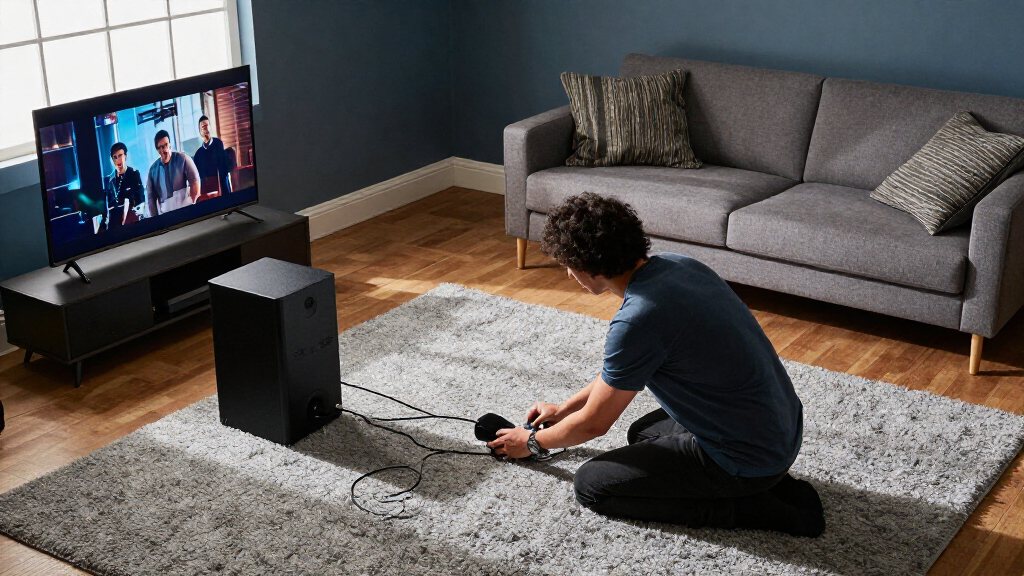
I ranked these home theater subwoofers by the factors that shape real system fit: driver and enclosure design, stated power and connection options, tuning controls, physical footprint, and how clearly each model suits a particular room or buyer. I also weighed versatility and setup demands; a compact subwoofer may be the better choice in a small room even when a larger cabinet could move more air.
The order reflects usefulness across common home theater needs, not a claim that every listener will prefer the same bass character. The SVS SB-1000 Pro leads for its control flexibility and broad placement potential. Larger Klipsch and Polk models follow for buyers prioritizing a conventional full-size powered subwoofer, while smaller and simpler designs rank lower because their likely output or tuning options are more limited. Since the supplied product details do not establish direct listening-test results, I base comparisons on design and listed features rather than claiming measured performance.
Factors to Consider When Choosing Home Theater Subwoofers
Choosing a home theater subwoofer is less about picking the biggest driver and more about matching bass output, enclosure design, controls, and placement to the room. I’d work through these factors before settling on a model, especially if the subwoofer will share space with furniture or sit near a neighbor-sensitive wall.
Match the Subwoofer to the Room, Not Just the System
A subwoofer that feels substantial in a small den may sound restrained in a large open-plan room. Room volume, openings to other spaces, seating distance, and listening level all affect how much bass reaches the seats. A 12-inch model is a reasonable starting point for many home theater setups, but it is not a guarantee of stronger or better bass than every 10-inch option. Avoid buying by driver diameter alone; amplifier design, enclosure, and placement also shape the result. If your room opens into a kitchen or hallway, treat that connected area as part of the listening space. When in doubt, prioritize a return policy or a way to audition the subwoofer at home.
Understand Sealed and Ported Bass
Sealed enclosures often appeal to buyers seeking a compact cabinet and controlled sound, while ported designs can be built to deliver stronger output around their tuning range. These are design tendencies, not promises that one format will sound better in every room. Movie effects with deep bass can expose the limits of a small enclosure, while music listeners may care more about integration and how the bass blends with the main speakers. Check the manufacturer’s stated frequency range and operating guidance rather than assuming a ported model reaches lower. Also consider the practical footprint: port location and cabinet clearance can restrict where a unit can sit. Choose the enclosure style that best matches your room and listening habits, not a blanket rule about bass quality.
Plan for Placement and Neighbor-Friendly Listening
Subwoofer placement can change bass levels and smoothness more than many buyers expect. A corner can boost perceived output, but it may also make certain notes sound uneven; placing a unit beside a sofa can create a different balance at the seats. Compact down-firing or side-firing models may fit where a front-firing cabinet cannot, yet their orientation still needs suitable clearance. For apartments or shared walls, a smaller subwoofer and moderate playback may be more practical than chasing maximum output. Use your receiver’s room calibration as a starting point, then listen from each main seat and adjust placement if bass is lumpy. Do not assume that turning the subwoofer down will fix every room-mode problem.
Check Controls and System Compatibility
Before buying, confirm how the subwoofer connects to your receiver and whether it has the controls your setup needs. A home theater receiver’s subwoofer output is the usual connection, but older systems may require a different input arrangement. Phase, crossover, and level adjustments help blend the sub with speakers; app-based control can make those changes easier from the listening position. A subwoofer with fewer controls may still work well when the receiver handles bass management, but it leaves less room for manual correction. Set the crossover in the receiver based on your main speakers rather than treating the subwoofer’s dial as the only control. Keep cables, power access, and ventilation in mind when choosing a location.
Decide When Paying for More Makes Sense
Spending more is most useful when it buys a capability you will actually use, such as more flexible tuning, stronger output for a larger room, or a cabinet suited to demanding playback. A compact budget model can be a sensible first subwoofer in a small room, but it may not satisfy a listener who expects powerful movie impact across several seats. Conversely, a larger model can be an awkward purchase if it overwhelms the room or has no convenient placement spot. Compare adjustment options and enclosure design alongside the amplifier and driver details. If your speakers are small, a well-integrated subwoofer can matter more than simply upgrading to a larger main speaker. Choose for your room and listening level rather than buying headroom you cannot use.
Think Beyond One Listening Seat
A single subwoofer can sound very different at the center seat and the seats beside it because rooms create peaks and dips in bass response. If a household watches movies across a couch or multiple rows, prioritize placement flexibility and receiver calibration features over a small advantage in listed power. A second subwoofer may improve consistency across seats, but it also requires space, matching connections, and time spent setting levels and timing. Buyers focused on one primary seat can make a simpler setup work well with careful placement. Before purchasing, decide whether the goal is maximum impact in one spot or more even bass across the room. That choice can change which subwoofer features matter most.
Frequently Asked Questions
Is the SVS SB-1000 Pro a better choice than a 12-inch Klipsch for a typical living room?
It depends on what you need from the subwoofer and how the room is arranged. The SB-1000 Pro’s sealed design and app controls favor buyers who want more adjustment options and a compact setup. A 12-inch Klipsch may suit listeners who prefer a larger, ported-style home theater option, but size by itself does not prove it will perform better in your room. Compare cabinet dimensions, connection needs, and placement options before choosing. If you expect to tune bass carefully, the SVS feature set is a clear distinction; if you want a straightforward larger-format model, compare the Klipsch models on their listed specifications.
Will an 8-inch or 6.5-inch subwoofer provide enough bass for movies?
Smaller subwoofers can add weight to dialogue, music, and moderate movie effects, particularly in compact rooms or nearfield setups. Their smaller cabinets are easier to place, but they are generally a less suitable bet for very high playback levels or bass that must fill a large open room. In this lineup, the BESTISAN compact models and Klipsch R-8SW are most compelling when space is the main constraint. Check the manufacturer’s frequency and output specifications, and keep expectations aligned with the room. If dramatic low-frequency effects are a priority, compare a larger model before deciding.
Should I buy a 10-inch or 12-inch subwoofer for my receiver-based home theater?
Start with room size, listening distance, and desired playback level rather than selecting by diameter alone. A 10-inch model can be a sensible match for a modest room or a system with limited placement space, while a 12-inch option may offer a better fit for listeners seeking more headroom. The receiver’s bass-management features and the subwoofer’s enclosure design also affect the result. Check that the subwoofer has a compatible input and that its dimensions fit the planned location. If the room is large or opens into other spaces, lean toward comparing the larger models, but do not assume the biggest driver automatically gives the smoothest bass.
Can I use a home theater subwoofer in an apartment without disturbing neighbors?
You can use one, but low-frequency sound travels through floors and walls more readily than many other sounds. A compact subwoofer can make it easier to keep playback levels moderate, though no model can prevent bass from reaching adjacent rooms. Place it away from shared walls where practical, use your receiver’s night or dynamic-range setting if available, and reduce the subwoofer level for late listening. A rug or isolation feet may reduce some vibration through the floor, but they will not block airborne bass. If quiet listening is the norm, favor controllable output over maximum size.
Do I need app controls or can my receiver handle subwoofer setup?
Many receivers can set crossover, level, and distance, which is enough for a straightforward installation. App controls add convenience when you want to adjust settings from your seat or make finer changes without reaching the back panel. They are useful, not mandatory, and they do not replace good placement or receiver calibration. Buyers who prefer simple setup can choose a model with the basic controls their receiver supports. If you expect to make frequent adjustments or want more control over the subwoofer itself, the SVS SB-1000 Pro’s app-based options distinguish it from simpler picks in this roundup.
Conclusion
For the broadest mix of flexibility and home theater fit, I recommend the SVS SB-1000 Pro as best overall, especially for buyers who want control over setup. The Dayton Audio Classic CS1200 is a value-minded 12-inch option to compare if you want a straightforward powered subwoofer, while the Klipsch R-12SW is a strong choice for buyers drawn to a larger powered Klipsch format. Beginners who want a familiar, uncomplicated starting point can look at the Yamaha NS-SW100BL or Polk Audio PSW10. For a small room or tight placement, consider the BESTISAN Basscore 65 or Klipsch R-8SW; for more tuning flexibility, choose SVS. Match the final pick to room size, placement, and listening level rather than buying by driver size alone.
Evergreen bestsellers Picks

LG 85-Inch QNED73B Mini LED 4K Smart TV (2026)

Apple AirPods Pro 3 Wireless Earbuds with Active Noise Cancellation

KitchenAid 5.5-Qt Bowl-Lift Stand Mixer, Porcelain White (KSM55SXXX)
As an affiliate, we earn on qualifying purchases.