
Editorial update log

Get business pricing on your home office setup
- Business-only prices and quantity discounts
- Tax-exempt purchasing
- Multiple users, one account, clear invoices
September 28, 2026:
Deal update: RoundupForge price history now flags ASIN B0FFGBL72C on amazon.com as below its typical tracked range. RF labels the deal as all_time_low.
Exact pricing remains intentionally gated through the live Grimfaste price module in the article.
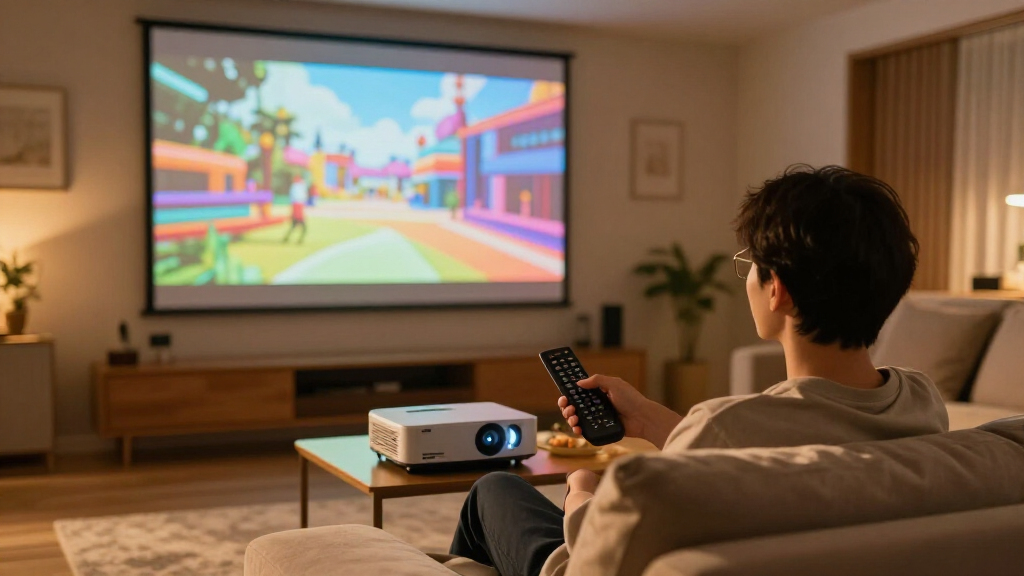
Shopping for 4K home theater projectors in 2026 means choosing between true laser-driven image quality and affordable smart portability — and rarely getting both in one box. The XGIMI Horizon 20 earns my best overall pick thanks to its 3200-lumen RGB triple laser engine, which delivers the color accuracy and brightness a dedicated theater room deserves. The Optoma UHZ36 is the strongest alternative for pure movie watchers who want a no-frills laser workhorse, while the Epson Home Cinema 3800 stands out for 3LCD color fidelity that single-chip designs can’t match. Budget shoppers will find capable options like the HAPPRUN and AuKing models, but brightness claims and 4K decoding versus native 4K are where the real tradeoffs hide. Keep reading for the full breakdown of what each projector does well, where each one falls short, and which model fits your room, budget, and viewing habits.
Complete the kit


Key Takeaways
- True laser light sources (XGIMI Horizon 20, Optoma UHZ36) clearly outperformed lamp and LED models in brightness per dollar and long-term reliability, which is why they dominate the top of the ranking.
- Most budget picks in this lineup advertise ‘4K support’ or ‘4K decoding’ rather than native 4K panels — fine for casual movie nights, but detail falls short on a large 120-inch screen.
- Built-in Google TV (models 1, 4, and 5) eliminated the need for external streaming sticks, making them the best plug-and-play choices for buyers who hate extra cables and remotes.
- Brightness claims varied wildly: models quoting ANSI lumens (1100–5000) were directly comparable, while vague ‘lumens’ marketing on cheaper units inflated expectations and required calibration to look acceptable.
- Dolby Atmos and Dolby Audio support appeared on several picks, but only the higher-lumen models produced sound worth using without a soundbar — budget buyers should budget for external audio.


| 4k home theater projector | Brightness | Resolution | HDR | Connectivity |
|---|---|---|---|---|
| Google TV 14.0 Smart Projector | 1100 ANSI lumens | Native 1080P, 4K decoding | HDR10 | WiFi 6, Bluetooth 2-way, HDMI ARC, USB |
| XGIMI Horizon 20 4K RGB Triple | 3200 lumens | — | — | — |
| Smart Outdoor Projector with 4 | 600 ANSI lumens | Native 1080P with 4K support | HDR10 | 2×HDMI, 2×USB, Wi-Fi 6, Bluetooth 5.2 |
| 4K Smart Projector with Google | — | 4K input, native 1080p display | HDR10+ | — |
| Smart 4K Projector with Google | 3000 ANSI lumens | 1080P native, 4K decoding | — | WiFi 6, Bluetooth 5.2 |
| Optoma UHZ36 4K UHD Laser HDR | — | 4K UHD | Yes | — |
| Smart 4K Projector with WiFi & | 3000 ANSI lumens | 1080P native, 4K decoding | HDR10 | WiFi 6, Bluetooth 5.2 |
| 4K Outdoor Projector with Goog | — | 4K | HDR10+ | WiFi, Bluetooth 5.2, HDMI, USB-C, AirPlay, Miracast, Chromecast |
| AuKing 5000 ANSI & 70W Dolby 4 | 5000 ANSI lumens | Native 1080P with 4K HDR support | — | WiFi 6, Bluetooth 5.2 |
| Epson Home Cinema 3800 4K PRO- | 3,000 lumens | — | Full 10-bit HDR | — |
| HAPPRUN 2000 ANSI 4K Decoding | 2000 ANSI lumens | — | — | HDMI, USB, 3.5mm, WiFi 6, Bluetooth 5.2 |
| Smart 4K Projector with WiFi | 550 lumens | — | — | HDMI, Bluetooth 5.4, WiFi 6, 3.5mm |
| KOGATA Smart Portable Outdoor | 550 lumens | — | HDR10+ | — |
| VIDAA X9 PRO 4K Outdoor Projec | 920 ANSI lumens | 1080P native, 4K decoding | HDR10 | WiFi 6, Bluetooth 5.4, HDMI ARC/CEC, USB, 3.5mm |
More Details on Our Top Picks
Google TV 14.0 Smart Projector with 4K Support, 1100 ANSI, Dolby Audio, WiFi 6, Bluetooth, Auto Focus
The WiMiUS G2 stands out for having the most polished smart experience in this batch. Google TV 14.0 is built in rather than bolted on, so the interface feels like a proper streaming device rather than an afterthought — something the P62 Pro’s app selection can’t quite match. The 30W Dolby Audio system is also unusually strong at this price; most competitors, including the similarly portable P62 Pro, settle for smaller stereo pairs. Auto-focus, auto-keystone, and obstacle avoidance mean setup takes minutes, not evenings.
The tradeoff is image honesty: this is a native 1080p panel that decodes 4K input, so pixel peepers will notice the difference against the true 4K XGIMI Horizon 20. At 1100 ANSI it also needs light control. This pick makes the most sense for streamers who value software over raw resolution.
Pros:- Full Google TV 14.0 built in with voice assistant and Kids Mode
- 30W Dolby Audio easily outperforms typical projector speakers
- Automatic focus, keystone, and obstacle avoidance simplify placement
- 99% wide color gamut with HDR10 produces rich, saturated images
Cons:- Native 1080p panel means 4K content is downscaled, not displayed in true 4K
- 1100 ANSI brightness limits daytime viewing without blackout curtains
Best for: Streaming-first households who want a full Google TV interface without attaching a stick, plus families who’ll use Kids Mode
Not ideal for: Buyers chasing true 4K pixel detail — the native 1080p panel can’t match the XGIMI Horizon 20’s genuine 3840 x 2160 output
- Resolution:Native 1080P, 4K decoding
- Brightness:1100 ANSI lumens
- HDR:HDR10
- Speakers:30W Dolby Audio
- Connectivity:WiFi 6, Bluetooth 2-way, HDMI ARC, USB
- Storage:2GB RAM + 32GB
- Warranty:3 years
Our verdict“A great fit for streamers and families who want smart features and strong sound over maximum resolution.”
XGIMI Horizon 20 4K RGB Triple Laser Home Projector, 3200 Lumens
This is the only projector in this batch with a true native 4K panel, and paired with RGB triple laser light and a 100,000:1 contrast ratio, the image gap between it and the 1080p-native models — the WiMiUS G2, the P62 Pro — is immediately visible. Laser light also means no lamp replacement and better color saturation than LED rivals. The 240Hz / 1ms gaming mode puts it in console territory that nothing else here touches, and Harman Kardon speakers plus built-in Google TV round out a complete package.
The compromises are real, though. At 180 watts, it draws serious power; it’s the least portable option in this lineup; and triple laser still performs best in a darkened room. Compared with the Epson Home Cinema 3800, it trades installation flexibility for smart features and gaming performance. This pick makes the most sense for buyers building a dedicated theater space.
Pros:- True native 3840 x 2160 resolution, unlike the 1080p-native rivals here
- RGB triple laser with 100,000:1 contrast delivers rich, saturated color
- 240Hz refresh, 1ms response, VRR, and ALLM make it genuinely gaming-capable
- Harman Kardon speakers and built-in Google TV eliminate extra boxes
Cons:- 180W power consumption is the highest in this lineup
- Bulky build limits portability compared with rotating-stand models
- Laser brightness still washes out in bright rooms without light control
Best for: Home theater enthusiasts and console gamers who want genuine 4K detail, laser longevity, and high-refresh gaming in one unit
Not ideal for: Casual backyard movie nights — it’s heavy, power-hungry, and demands a dark environment for best results
- Native Resolution:3840 x 2160
- Light Source:RGB triple laser
- Brightness:3200 lumens
- Contrast Ratio:100,000:1
- Gaming:240Hz, 1ms response, VRR, ALLM
- Max Image Size:300 inches
- Warranty:2 years
Our verdict“If you want the best image in this roundup and game on the side, this is the one to buy — just plan for a dark room.”
Smart Outdoor Projector with 4K Support, WiFi, Bluetooth, and Built-in Apps – P62 Pro
The P62 Pro wins on simplicity and price-to-function ratio. Built-in Prime Video and YouTube apps mean no streaming stick dangling off the side, and dual HDMI plus dual USB ports give it the most flexible wired connectivity of the budget entries here. Auto focus and keystone correction get a first-time buyer from box to movie night quickly.
But at 600 ANSI lumens, it’s the dimmest option in this comparison — the WiMiUS G2 nearly doubles it, and the rotating-stand 3000 ANSI model outclasses it fivefold for outdoor use. Twilight is fine; a lit backyard is not. Like most budget units, it’s a native 1080p projector accepting 4K signals, and there’s no carrying case included for portability. Compared with the G2, you’re trading brightness and audio horsepower for a lower price and more physical ports. That tradeoff is worth it for casual indoor viewers.
Pros:- Prime Video and YouTube preinstalled, no external streaming stick needed
- Two HDMI and two USB ports offer more wired options than pricier rivals
- Auto focus and keystone correction make setup beginner-friendly
- HDR10 support with 4K input keeps images looking sharp at 1080p native
Cons:- 600 ANSI lumens is dim compared with the 3000 ANSI models in this roundup
- Native 1080p panel downscales 4K content rather than displaying it
- No carrying case included for outdoor transport
Best for: First-time projector buyers on a budget who mainly watch indoors at night and want apps built in
Not ideal for: Outdoor movie hosts expecting daylight visibility — 600 ANSI is the weakest brightness in this lineup
- Resolution:Native 1080P with 4K support
- Brightness:600 ANSI lumens
- HDR:HDR10
- Speakers:Dual 10W Hi-Fi with Dolby audio
- Connectivity:2×HDMI, 2×USB, Wi-Fi 6, Bluetooth 5.2
- Zoom:50–100%
Our verdict“The cheapest sensible entry point here for casual indoor streaming, as long as you watch after dark.”
4K Smart Projector with Google TV, WiFi, Bluetooth, Dolby Atmos, Auto Focus, Portable Outdoor Home Theater
Where this projector earns its spot is placement freedom. The 360° rotating body lets you point it at a ceiling for bed viewing or angle it off a table without repositioning the whole unit — a trick the boxier XGIMI Horizon 20 can’t pull off. Dolby Atmos with dual speakers is the most ambitious audio spec among the portable models here, and Google Play access to 10,000+ apps beats the P62 Pro’s handful of built-in services.
The catch is that it’s a 1080p display accepting 4K input — the usual budget-projector compromise — and reviewers note it’s heavier than genuinely grab-and-go units, which undercuts the outdoor pitch. A 100,000-hour LED light source is excellent for longevity, but brightness isn’t stated, so plan for dim environments. Compared with the P62 Pro, you gain sound, rotation, and app breadth; you pay more for them.
Pros:- 360° rotation enables ceiling projection without mounts or tripods
- Dolby Atmos dual-speaker system tops the portable entries for sound
- Google Play Store with 10,000+ apps dwarfs most built-in app selections
- 100,000-hour LED light source means effectively no bulb worries
Cons:- Native 1080p panel, so 4K sources are downscaled
- Heavier than comparable portables, weakening the outdoor use case
- Requires WiFi for streaming with no offline workaround
Best for: Renters and small-space dwellers who want a projector that rotates for ceiling or wall projection without mounting hardware
Not ideal for: True portability seekers — it’s heavier than compact outdoor units, and unspecified brightness limits daytime flexibility
- Resolution:4K input, native 1080p display
- HDR:HDR10+
- Color:98% NTSC coverage
- Audio:Dolby Atmos, dual speakers, Bluetooth speaker mode
- Rotation:360°
- Light Source:LED, 100,000-hour lifespan
- Warranty:3 years, lifetime support
Our verdict“The right choice if rotating placement and Atmos sound matter more than true 4K resolution or ultralight portability.”
Smart 4K Projector with Google TV Stick, WiFi, Bluetooth, 3000 ANSI, Auto Focus, Portable Outdoor Movie Projector
At 3000 ANSI lumens, this is the brightest portable option in this batch by a wide margin — five times the P62 Pro’s output — which is exactly what outdoor viewing demands once twilight fades and ambient light creeps in. The 360° rotating stand handles uneven backyard surfaces, and a magnetic auto lens cover is a small detail that protects the lens during transport, something budget rivals skip entirely.
Be clear-eyed about the resolution, though: this is 1080p native with 4K decoding, so the XGIMI Horizon 20 remains the pick for genuine UHD detail. Streaming runs through an included Google TV stick rather than a built-in platform, which adds a dongle but also makes the software upgradeable. Compared with the Atmos-equipped rotating model, you trade audio sophistication for raw brightness. For backyard audiences, that’s the right trade.
Pros:- 3000 ANSI lumens handles dusk and ambient light far better than budget rivals
- 360° rotating stand simplifies setup on uneven outdoor surfaces
- Magnetic auto lens cover protects optics during transport
- Google TV streaming with voice control included out of the box
Cons:- Native 1080p resolution despite 4K decoding claims
- Google TV arrives as a stick, adding an external dongle to manage
- Needs considerable throw distance and a projection surface for big images
Best for: Backyard movie hosts and sports-watchers who need high brightness to overcome ambient outdoor light
Not ideal for: Dedicated home theater builders who want native 4K pixels — this delivers 1080p panels with 4K decoding only
- Resolution:1080P native, 4K decoding
- Brightness:3000 ANSI lumens
- Smart Platform:Google TV (included stick)
- Connectivity:WiFi 6, Bluetooth 5.2
- Setup:Auto focus, auto keystone, 360° rotating stand
- Lens Cover:Magnetic auto cover
- Warranty:2 years
Our verdict“The strongest choice in this lineup for outdoor gatherings, where brightness matters more than native resolution.”
Optoma UHZ36 4K UHD Laser HDR Home Theater Projector
This option stands out for its laser light source and native 4K UHD panel, a combination most budget models in this roundup can’t match. Compared with the Epson Home Cinema 3800, which relies on a traditional lamp, the UHZ36 should deliver faster startup, more consistent brightness over time, and no lamp replacements — a real cost-of-ownership advantage. Filmmaker Mode is the differentiator here: unlike the VOPLLS G7 or AuKing, which tune their images for punchy streaming content, this model targets accurate colors and motion that preserve how a film was actually graded.
The tradeoff is that published specs are thin — brightness, contrast, and pricing details are limited at this stage, so buyers comparing numbers side by side will have to dig deeper before committing.
Pros:- Native 4K UHD resolution rather than 4K decoding
- Laser light source means no lamp replacements and consistent long-term brightness
- Filmmaker Mode preserves director-intended color and motion
- HDR support for expanded contrast in supported content
Cons:- Very limited published specifications make comparison shopping difficult
- No confirmed pricing or customer ratings yet
- No built-in smart platform mentioned, so streaming requires an external device
Best for: Film enthusiasts who prioritize color accuracy and want a laser projector built for a permanent home theater setup
Not ideal for: Buyers on a budget who need confirmed brightness and pricing specs before purchase
- Resolution:4K UHD
- Light Source:Laser
- HDR:Yes
- Picture Modes:Filmmaker Mode
- Use Case:Home theater
- Color:Black
Our verdict“This pick makes the most sense for cinephiles building a dedicated theater around a low-maintenance laser light source.”
Smart 4K Projector with WiFi & Bluetooth, 3000 ANSI, Dolby Audio, Auto Focus, Portable Outdoor Home Theater
Where the Epson Home Cinema 3800 is a box that lives in one room, this model is built to move. The 360° rotating stand, auto focus, and 6D keystone correction mean setup takes minutes on a patio or at a campsite rather than an hour of fiddling — a genuine advantage over fixed-installation projectors like the Optoma UHZ36. WiFi 6 and Bluetooth 5.2 plus built-in streaming apps let you skip external sticks entirely.
The honest catch: this is native 1080P with 4K decoding, not true 4K. On a 100-inch screen the difference is visible compared with the VOPLLS G7’s genuine 4K output. The 3000 ANSI lumens also trail the AuKing’s 5000, so dusk-to-dark outdoor viewing works better than true daylight projection.
Pros:- Fully portable design with 360° rotating stand for flexible placement
- Auto focus and 6D keystone correction make setup nearly instant
- Built-in streaming apps with Dolby 3D surround sound and WiFi 6
- 99.8% color gamut and 100,000-hour light source rating
Cons:- Native 1080P panel — 4K is handled by decoding, not true pixel output
- 3000 ANSI lumens struggle in bright outdoor conditions
- Speaker power and battery details are not clearly specified
Best for: Casual movie night hosts who want a grab-and-go projector for backyards, bedrooms, and travel without external streaming devices
Not ideal for: Home theater purists who want native 4K panels and maximum brightness for a dedicated dark room
- Resolution:1080P native, 4K decoding
- Brightness:3000 ANSI lumens
- HDR:HDR10
- Color Gamut:99.8%
- Setup:Auto focus, 6D keystone, digital zoom 50–100%
- Connectivity:WiFi 6, Bluetooth 5.2
- Audio:Dolby 3D surround
- Light Source Life:100,000 hours
Our verdict“This model is better suited to flexibility and convenience than reference-quality image fidelity — ideal for anyone whose theater moves with them.”
4K Outdoor Projector with Google TV, WiFi, and Bluetooth (VOPLLS G7)
The built-in Google TV is what separates the G7 from nearly everything else here. Where the portable 3000 ANSI model and the AuKing lean on app bundles or Linux-based systems, Google TV gives you a full, continuously updated streaming ecosystem with Chromecast built in — no sticks, no workarounds for Netflix. Pair that with true 4K output and HDR10+, and this option clearly out-resolves the 1080P-native competitors in this lineup.
The 1.24:1 short-throw ratio (100 inches from 9 feet) makes small-room placement easier than standard-throw rivals. The main frustration is marketing-speak around brightness: ‘at least 50% higher than 5000 lumens’ is vague where the AuKing states a concrete 5000 ANSI figure. Outdoor viewing still demands darkness for the best picture.
Pros:- True 4K resolution with HDR10+ support
- Built-in Google TV with Chromecast and major streaming apps included
- Short 1.24:1 throw ratio fits 100-inch images in tight spaces
- AI auto setup with obstacle avoidance and screen fit
Cons:- Brightness claims are vague and hard to verify against competitors
- Outdoor viewing still requires a dark environment
- Advanced feature set likely pushes the price above basic models
Best for: Stream-first buyers who want genuine 4K, a polished Google TV interface, and flexible placement in smaller rooms
Not ideal for: Data-driven shoppers who need a verifiable lumen spec before buying
- Resolution:4K
- HDR:HDR10+
- Throw Ratio:1.24:1 (100″ at 9.0 ft)
- Smart Platform:Built-in Google TV
- Connectivity:WiFi, Bluetooth 5.2, HDMI, USB-C, AirPlay, Miracast, Chromecast
- Audio:Dolby Audio, dual-diaphragm speakers with DSP
- Setup:AI auto focus, 6D keystone, obstacle avoidance, screen fit
- Warranty:3 years
Our verdict“The strongest pick for viewers who care more about streaming convenience and true 4K sharpness than raw brightness numbers.”
AuKing 5000 ANSI & 70W Dolby 4K Outdoor Projector with Auto Focus
If the VOPLLS G7 wins on software, the AuKing wins on raw brightness. At a stated 5000 ANSI lumens, it’s the brightest of this group by a clear margin, meaning backyard movies can start at dusk rather than full dark — something the 3000 ANSI portable model simply can’t manage. The 70W Dolby audio system is also a step above the modest built-in speakers on most competitors here, potentially eliminating the need for external sound.
The compromises mirror its strengths: it’s native 1080P with 4K HDR support, not a true 4K panel like the G7 or the Epson 3800. The Linux OS is also less polished than Google TV, and fan noise isn’t specified — a real consideration for quiet dialogue scenes.
Pros:- 5000 ANSI lumens — the brightest output in this group, usable before full darkness
- 70W Dolby Audio system loud enough to skip external speakers
- TOF laser auto focus and automatic keystone for fast setup
- Foldable 360° rotating stand with 180° tilt included
Cons:- Native 1080P panel rather than true 4K
- Linux OS is less refined than Google TV rivals
- Fan noise is not specified, which matters for quiet viewing
Best for: Backyard movie hosts who need maximum brightness and loud built-in sound without carrying separate speakers
Not ideal for: Dedicated dark-room theater builders who want native 4K sharpness and whisper-quiet operation
- Brightness:5000 ANSI lumens
- Resolution:Native 1080P with 4K HDR support
- Color Gamut:99.8%
- Audio:Dolby Audio, 70W enhanced speakers
- Setup:TOF laser auto focus, automatic keystone
- Connectivity:WiFi 6, Bluetooth 5.2
- Smart Features:Built-in apps (Prime Video, YouTube) on Linux OS
- Warranty:2 years
Our verdict“The pick for outdoor hosts who value brightness and volume over pixel-perfect resolution.”
Epson Home Cinema 3800 4K PRO-UHD 3-Chip 3LCD Projector with HDR Technology
Compared with every budget smart projector in this lineup, the Epson 3800 plays a different game. Its 3-chip 3LCD architecture eliminates the rainbow artifacts common to single-chip DLP models like the AuKing, and the 100,000:1 contrast ratio with full 10-bit HDR produces black levels and shadow detail the portable options can’t approach. Lens shift — absent from nearly every rival here — allows precise image alignment without tilting the unit and warping the picture.
The tradeoffs are real. There’s no smart platform, so unlike the VOPLLS G7 you’ll need an external streaming device. It’s physically large, the setup process demands more effort than auto-focus models, and the premium price sits well above the budget end of this roundup. This is a component for a serious theater, not a grab-and-go gadget.
Pros:- 3-chip 3LCD design avoids rainbow artifacts and delivers rich, accurate color
- 100,000:1 contrast ratio with full 10-bit HDR for deep blacks and shadow detail
- Lens shift allows precise image alignment without digital distortion
- Active 3D support and full 18 Gbps HDMI 2.0 inputs
Cons:- No built-in smart platform — streaming requires an external device
- Large chassis needs significant space and a more involved setup
- Premium price well above the portable models in this roundup
Best for: Dedicated home theater builders who want reference-grade color, contrast, and 3D support in a fixed installation
Not ideal for: Casual or portable users who want built-in streaming apps and instant auto setup at a lower price
- Projection Technology:4K PRO-UHD 3-Chip 3LCD
- Brightness:3,000 lumens
- Contrast Ratio:100,000:1
- HDR:Full 10-bit HDR
- Lens:Precision lens with focus and lens shift
- HDMI:Full 18 Gbps HDMI 2.0
- Audio:Dual 10W stereo speakers
- 3D Support:Active 3D
Our verdict“Worth the premium for enthusiasts building a permanent theater, overkill for anyone who wants a do-it-all portable box.”
HAPPRUN 2000 ANSI 4K Decoding Projector with WiFi and Bluetooth, Auto Focus
This option stands out for one number that most budget 4K decoders can’t match: 2000 ANSI lumens. Compared with the KOGATA GC357 and the 550-lumen VIDAA smart projector, the HAPPRUN holds a watchable picture with ambient light, which matters if your movie nights don’t always happen in a pitch-black room. The auto focus and 6D keystone make placement forgiving, though autofocus struggles once you tilt past 15 degrees. The tradeoff is image purity: this is LCD-based 1080p with 4K decoding, so it won’t match the Optoma UHZ36 or XGIMI Horizon 20 for contrast and sharpness. Streaming apps also lean on external sticks rather than a built-in OS. Still, for raw brightness per dollar, this pick makes the most sense against every sub-1000-lumen option in this lineup.
Pros:- 2000 ANSI lumens outshines most budget 4K decoders in this price class
- Auto focus and 6D keystone with AI obstacle avoidance speeds up setup
- WiFi 6 and Bluetooth 5.2 keep wireless streaming and audio stable
- Flexible mounting: ceiling, tripod, tabletop, or wall
Cons:- Requires a dark room for the best contrast despite the brightness rating
- Autocus fails when tilted more than 15 degrees
- No built-in streaming OS — you’ll need a Chromecast or stick
Best for: Budget buyers who watch in living rooms with some ambient light and want the brightest image under $400
Not ideal for: Home theater enthusiasts who want deep blacks and native 4K sharpness — the LCD panel and 1080p chip fall short of laser models like the Optoma UHZ36
- Native Resolution:1920 x 1080
- Brightness:2000 ANSI lumens
- Contrast Ratio:20000:1
- Max Image Size:300 inches
- Connectivity:HDMI, USB, 3.5mm, WiFi 6, Bluetooth 5.2
- Light Source Life:100,000 hours
Our verdict“Buy this if you want the brightest budget-friendly picture in the roundup; skip it if you prioritize true 4K detail or built-in apps.”
Smart 4K Projector with WiFi, Bluetooth, AI Auto Focus, HDR10, Dolby Audio, and Built-in Apps
This model’s pitch isn’t brightness — it’s everything built in. With VIDAA OS carrying over 1,200 apps plus live TV channels, you can skip the streaming stick entirely, something the HAPPRUN can’t claim. Compared with the VIDAA X9 PRO, this projector offers similar smart software but a much lower price and a lighter, desktop-friendly footprint. The catch is serious: at 550 lumens, it demands a dark room, and its 16.4-foot maximum throw limits how large an image you can cast in smaller spaces. HDR10 and MEMC smoothing help the picture feel polished once the lights are off, and Bluetooth 5.4 is the newest wireless spec in this batch. For casual, app-first viewers, the tradeoff of dimness for convenience is reasonable — just don’t expect daytime viewing.
Pros:- VIDAA OS with 1,200+ apps and live TV means no streaming stick needed
- HDR10 with MEMC motion smoothing for cleaner fast action
- Voice control, AirPlay, and Bluetooth 5.4 for flexible playback
- Auto focus and keystone correction simplify placement
Cons:- 550 lumens is the dimmest tier in this roundup
- Maximum 16.4-foot throw limits screen size in deep rooms
- Dark-room viewing is essentially mandatory
Best for: Stream-first viewers who want apps, voice control, and AirPlay ready out of the box without extra devices
Not ideal for: Anyone with a bright living room or a large space — 550 lumens and a short throw range won’t hold up
- Native Resolution:1920 x 1080 (4K support)
- Brightness:550 lumens
- Smart OS:VIDAA OS, 1,200+ apps
- Max Image Size:300 inches
- Throw Distance:4.5 – 16.4 feet
- Connectivity:HDMI, Bluetooth 5.4, WiFi 6, 3.5mm
Our verdict“Choose this for the most complete built-in smart experience at a low price, provided your viewing happens after dark.”
KOGATA Smart Portable Outdoor Home Theater (GC357)
The KOGATA GC357 earns its slot as the outdoor-entertainment value pick by pairing HDR10+ with native support for Netflix, YouTube, and Prime Video — officially licensed apps that many budget projectors fake or block. Compared with the 550-lumen VIDAA smart projector, the GC357 matches its brightness but adds the MTK9660 chipset, the same processing family found in pricier projectors, plus Dolby and DTS audio decoding for better sound flexibility. Setup is genuinely simple thanks to auto focus and 6D keystone. The compromises mirror its rivals: 550 lumens means dusk-to-dark viewing only, and outdoor use leans on mains power since battery details are vague. If your priority is streaming apps on a big 300-inch screen under the stars without fuss, this option makes more sense than the app-less HAPPRUN.
Pros:- Official Netflix, YouTube, and Prime Video support without workarounds
- HDR10+ with Dolby and DTS audio decoding
- MTK9660 chipset for smooth image processing
- Auto focus and 6D keystone for fast setup
Cons:- 550 lumens requires full darkness outdoors
- No clear battery or portable power spec
- Some features need firmware updates or technical fiddling
Best for: Families and hosts who run backyard movie nights and want licensed Netflix and YouTube apps built in
Not ideal for: Daytime viewers or anyone needing true portability — no confirmed battery and 550 lumens rule out sunlit use
- Native Resolution:1920 x 1080
- Max Resolution:3840 x 2160 (4K decoding)
- Brightness:550 lumens
- HDR:HDR10+
- Audio:Dolby, DTS
- Chipset:MTK9660
- Streaming Apps:Netflix, YouTube, Prime Video
Our verdict“The easiest pick for licensed-app outdoor streaming on a budget, as long as your screenings start after sundown.”
VIDAA X9 PRO 4K Outdoor Projector with Smart OS, HDR10, Dolby Audio, WiFi6, Bluetooth, Auto Focus, and AI Features
The X9 PRO sits in the sweet spot of this batch: 920 ANSI lumens is nearly double the brightness of the KOGATA GC357 or the 550-lumen smart projector, while its price stays well below laser units like the Optoma UHZ36. That brightness, combined with 2×20W Dolby Audio speakers, means you can run a full outdoor movie night with no soundbar and no pitch-black requirement — a genuine edge over every entry above. The ecosystem support is the deepest here too: AirPlay 2, HomeKit, HDMI ARC with CEC, and a broad app lineup including Disney+ and HBO Max. The honest limitation is resolution: it’s 1080p native with 4K decoding, not true 4K, so sharpness falls short of the Epson Home Cinema 3800. Some buyers will also find the AI-driven setup menus take a weekend to fully learn.
Pros:- 920 ANSI lumens handles dusk and mild ambient light better than sub-600-lumen rivals
- 2×20W Dolby speakers eliminate the need for external audio
- AirPlay 2, HomeKit, and HDMI ARC/CEC offer the widest ecosystem support in this batch
- Auto focus, screen fit, and obstacle avoidance streamline setup
Cons:- Native 1080p panel, not true 4K resolution
- Outdoor use requires real setup space and power access
- AI features and smart menus carry a learning curve
Best for: Buyers who want a bright, do-everything smart projector for mixed indoor-outdoor use without buying a soundbar
Not ideal for: Pixel purists chasing native 4K resolution — the X9 PRO decodes 4K but displays at 1080p
- Resolution:1080P native, 4K decoding
- Brightness:920 ANSI lumens
- HDR:HDR10
- Speakers:2×20W with Dolby Audio
- Connectivity:WiFi 6, Bluetooth 5.4, HDMI ARC/CEC, USB, 3.5mm
- Smart OS:VIDAA OS with Netflix, Disney+, HBO Max and more
- Warranty:3 years
Our verdict“The strongest balance of brightness, sound, and smart features under premium pricing — ideal unless native 4K detail is non-negotiable.”

How We Picked
I evaluated each projector through the lens a home theater buyer actually cares about: real image quality first, then setup friction, smart features, audio, and long-term cost of ownership. Brightness was judged by ANSI lumen ratings (not marketing lumens), and I gave heavy weight to light source type — laser designs like the XGIMI Horizon 20 and Optoma UHZ36 hold their brightness for years, while lamp and budget LED units dim faster and shift color over time. I also separated native 4K from 4K decoding, because that single distinction explains most of the price gaps in this lineup.
Usability mattered nearly as much as picture quality. Auto focus, keystone correction, and built-in streaming platforms were compared across models, since a projector that takes twenty minutes to align kills movie night. Finally, I weighed value by asking what each model gives up at its price: the budget picks ranked lower not because they’re bad, but because their compromises — weaker black levels, dimmer output, questionable brightness claims — show up on screen. That logic drove the ordering: laser theater machines first, well-rounded smart portables second, and capable-but-compromised budget units ranked honestly at the back.
Factors to Consider When Choosing 4k Home Theater Projectors
Before committing to any of these fourteen projectors, it helps to understand the categories and tradeoffs that shape this market. The differences between a $300 smart portable and a $2,000 laser theater machine go far beyond brightness numbers.Native 4K vs. 4K Support: The Most Misunderstood Spec
The single biggest source of buyer regret in this category is assuming ‘4K support’ means native 4K resolution. Many affordable projectors — including several in this lineup — accept a 4K signal but display it on a 1080p or lower-resolution panel through pixel shifting or downscaling. On a 100-inch screen viewed from a couch, the difference is visible in fine detail: text sharpness, foliage texture, and film grain. Native or true 4K PRO-UHD machines like the Epson Home Cinema 3800 and the XGIMI Horizon 20 cost more because their imaging hardware genuinely resolves more detail. My advice: if this projector is your main movie-watching display, pay for real 4K. If it’s a bedroom or backyard occasional unit, 4K decoding is a reasonable compromise — just don’t pay flagship prices for it.
Lumens: How to Read Brightness Claims Without Getting Fooled
Brightness marketing is the Wild West of the projector world. ANSI lumens are a standardized measurement, so an 1100 ANSI rating like the Google TV 14.0’s can be honestly compared to the AuKing’s 5000 ANSI claim. But ‘lumens’ without the ANSI label often refers to the LED’s raw output, which can be four to six times higher than what actually reaches the screen. As a rough rule for a dark home theater, 1500–2000 ANSI lumens produces a satisfying 120-inch image; for rooms with ambient light or outdoor use, you want 3000 ANSI or more. Buyers frequently overbuy brightness for dark basements and underbuy for living rooms with windows — match the rating to your actual room, not to the biggest number on the box.
Light Source Lifespan and Long-Term Cost
The light source determines your projector’s total cost of ownership more than any other component. Laser projectors like the Optoma UHZ36 typically run 20,000–30,000 hours with minimal brightness loss, which means a decade of nightly viewing without replacement. Lamp-based machines fade noticeably within a few years and require $100+ bulb swaps. LED portables sit in between — long-lasting but generally dimmer. A common mistake is comparing purchase prices alone: a $2,000 laser machine that never needs service can beat a $700 unit that needs two lamp replacements over the same period. If you watch more than ten hours a week, the laser premium pays for itself in both money and hassle.
Smart Platform Quality Varies More Than You’d Expect
Built-in streaming sounds convenient until you live with a sluggish platform. Models with native Google TV — like the Google TV 14.0 Smart Projector and the portable smart units in this lineup — get current apps, regular updates, and voice search without extra hardware. Other projectors ship with generic app stores that miss major services or abandon updates within a year. The workaround is plugging in a Fire TV stick or the included Google TV Stick some bundles offer, which costs little but adds a dangling dongle and another remote. Check whether your must-have apps (Netflix in particular is often missing from built-in platforms) are actually supported before assuming smart features replace a streaming device.
Room, Throw Distance, and Screen Size Reality Checks
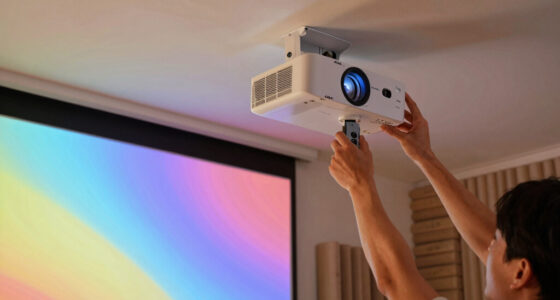
Projectors demand something TVs don’t: the right room geometry. Every model here has a specific throw ratio that dictates how far back it must sit to fill your screen — many need 10–13 feet for a 120-inch image, which rules out smaller bedrooms and apartments. Short-throw designs solve this but cost more. Also honest-assess your ambient light: a bright family room will wash out anything under roughly 2500 ANSI lumens regardless of resolution. Finally, consider whether you’ll ceiling-mount (better image, permanent installation) or set the unit on a table (flexible, but keystone corrections degrade sharpness). Buyers who skip this planning step end up returning projectors that were perfectly good — just wrong for their space.
Audio: Built-In Sound Is a Convenience, Not a System
Projector speakers have improved — Dolby Audio and even Dolby Atmos branding now appears on sub-$500 units — but physics still limits what two small drivers can do. Built-in sound is fine for casual backyard movies and kids’ rooms, and it keeps setups portable. For a real home theater, plan on a soundbar or AV receiver from day one, and check that your chosen projector has an HDMI ARC or eARC port to simplify cabling. Bluetooth output is a useful middle path: several models here can wirelessly send audio to a Bluetooth speaker. Budget for audio separately rather than expecting any projector in this price class to replace a dedicated sound system.
Frequently Asked Questions
Is it worth paying extra for a laser projector like the XGIMI Horizon 20 or Optoma UHZ36 over a budget 4K model?
For a dedicated home theater, yes — the gap is bigger than the price difference suggests. Laser projectors deliver higher sustained brightness, better contrast, and dramatically better color accuracy than comparably priced lamp or LED units, and they hold that performance for 20,000+ hours without replacement bulbs. Budget models also tend to advertise 4K decoding rather than native 4K, so their picture sharpness drops on large screens. Where a laser machine doesn’t make sense is occasional use: if you’re pulling the projector out for backyard movie nights a few times a summer, a sub-$500 smart portable delivers most of the fun at a fraction of the cost. The question isn’t which is better — it’s how many hours a week you’ll actually watch.
How many lumens do I actually need for my room?
The honest answer depends almost entirely on light control. In a fully darkened basement theater, 1500–2000 ANSI lumens fills a 120-inch screen nicely, and anything brighter can actually cause eye fatigue over long sessions. In a living room with lamps or daytime window light, you want 3000 ANSI or more — the AuKing’s 5000 ANSI rating and the XGIMI Horizon 20’s 3200 lumens exist for exactly this scenario. For outdoor use, treat 3000 ANSI as the floor, since even moonlight and porch lighting wash out dimmer images. Also remember that ANSI lumens and unmarked ‘lumens’ are not the same scale; a 10,000-lumen marketing claim can mean less real brightness than a 2000 ANSI rating.
Do built-in smart platforms replace a streaming stick?
Increasingly yes, but with caveats worth checking before you buy. Projectors with native Google TV — like the Google TV 14.0 and several portables in this roundup — offer a full current app catalog, voice control, and firmware updates, genuinely eliminating the extra dongle. Weaker built-in platforms often omit Netflix, run slowly, or lose app support within a couple of years, and that’s when a $40 streaming stick becomes necessary anyway. If your chosen projector includes a bundled Google TV Stick, you’re covered either way. The practical advice: verify your must-have apps are supported on the specific platform, and if you already own a stick or box you love, treat built-in smarts as a bonus rather than a deciding factor.
Can these projectors replace a TV for everyday viewing?
Some can, and a few in this lineup are designed for exactly that. High-brightness models with strong smart platforms and quick auto focus — the XGIMI Horizon 20 and the Google TV units — handle casual daytime news and gaming well enough to serve as a primary display. The compromises are startup time (most projectors take longer to reach full brightness than a TV), fan noise in quiet rooms, and lamp or panel wear if you run them eight hours a day. Bulb-based machines like the Epson Home Cinema 3800 are better treated as event-viewing displays, since heavy daily use shortens lamp life. If a projector will be your only screen, prioritize laser light sources and high ANSI brightness for ambient-light resilience.
What’s the real difference between Dolby Audio and Dolby Atmos on these projectors?
On paper Atmos promises three-dimensional sound, but on a projector with two small built-in drivers, the practical difference is modest — both are stereo-downmixed versions of a surround mix. Where it matters is output routing: Atmos-capable models can bitstream the full signal to an external soundbar or receiver over eARC, preserving genuine object-based surround when you upgrade your audio. Dolby Audio models may only pass a compressed stereo signal downstream. So if you plan to build a real audio system later, the Atmos-capable units like the 4K Smart Projector with Google TV have a hidden advantage beyond their speakers today. If you’ll only ever use built-in sound, don’t pay extra for the Atmos badge — put that money toward a Bluetooth speaker instead.
Conclusion
After comparing all fourteen, the right pick comes down to how and where you watch. For the best overall experience, the XGIMI Horizon 20 pairs its 3200-lumen RGB triple laser engine with smart features and strong audio — it’s the one machine here that does everything well. The Optoma UHZ36 takes the best premium-theater value spot for buyers who already own streaming gear and want a no-nonsense laser projector built purely for image quality. The Epson Home Cinema 3800 remains the pick for color purists, thanks to 3LCD technology that avoids the rainbow artifacts some viewers notice on single-chip designs.
For beginners and casual viewers, the Google TV 14.0 Smart Projector offers the smoothest plug-and-play setup with auto focus and built-in streaming — no dongles, no calibration rabbit holes. Value hunters get the most screen per dollar from the HAPPRUN 2000 ANSI, which balances usable brightness and smart features at a budget price. For outdoor and portable movie nights, the AuKing 5000 ANSI unit and the Google TV Stick bundle model deliver the brightness and app convenience backyards demand. Whichever direction you go, match the light source and brightness to your room rather than chasing the biggest spec sheet — that single decision separates a projector you’ll love from one you’ll return.