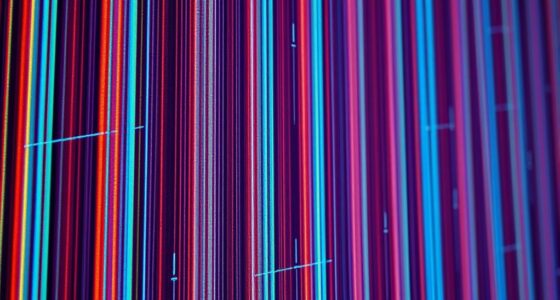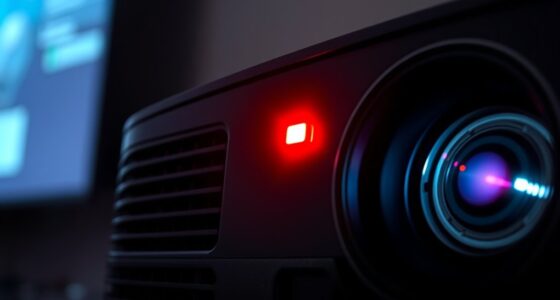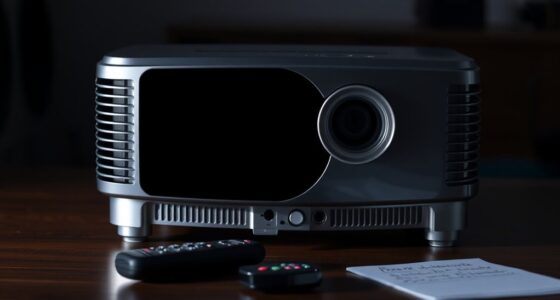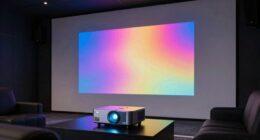

If rainbow artifacts are driving you crazy, start by calibrating your projector regularly to guarantee proper alignment and smooth light passage. Adjust the ambient lighting in your room—dimming or reducing outside light can make rainbows less noticeable. Experiment with your projector settings, like increasing the color wheel speed or changing filters, to cut down on color separation. Proper maintenance and environment tweaks make a big difference. Keep exploring to discover more tips that can help you enjoy a clearer, rainbow-free view.
Key Takeaways
- Regularly calibrate your projector to ensure proper alignment and reduce rainbow artifacts caused by misaligned internal components.
- Dim or control ambient lighting to decrease external light interference that amplifies rainbow visibility.
- Increase the color wheel speed or switch color wheel modes to shorten the duration of each color and minimize rainbow effects.
- Perform routine maintenance and adjust projector settings like color balance for optimal image quality and fewer artifacts.
- Choose viewing environments and angles that minimize eye sensitivity and external influences, enhancing overall image clarity.
Have you ever wondered how rainbows can inspire hope and creativity? When you’re watching a DLP projector, those colorful artifacts—often called rainbows—can be distracting or even maddening. They appear as fleeting flashes of color, especially during high-contrast scenes, and can make it difficult to enjoy movies or presentations. Luckily, there are practical steps to reduce or even eliminate these rainbow artifacts. One effective approach involves focusing on lens calibration. Over time, the projector’s internal components can drift out of alignment, leading to inconsistent light paths that make rainbows more noticeable. Regularly calibrating your lens guarantees that the light passes through the prism or color wheel smoothly, minimizing color separation issues. Proper lens calibration helps maintain the projector’s essential performance, which directly reduces the likelihood of rainbow artifacts disrupting your viewing experience.
Another key factor is ambient lighting. Bright or fluctuating room lighting can amplify the visibility of rainbows because the contrast between the projected image and surrounding environment becomes less distinct. By adjusting your ambient lighting, such as dimming the room lights or using blackout curtains, you create a controlled environment that keeps the projector’s output crisp and reduces eye strain. When ambient lighting is well-managed, you’re less likely to notice the fleeting color flashes, and your focus remains on the image rather than the artifacts. It’s important to note that the perception of rainbows can also depend on your eye sensitivity and viewing angles. For some, even minimal ambient light increases rainbow visibility, so refining your environment is vital.
In addition to calibration and lighting adjustments, consider the settings on your projector. Many models have settings that can help lessen rainbow effects, such as color wheel speed or color filter options. Increasing the color wheel speed reduces the time each color is displayed, making rainbow artifacts less noticeable. If your projector allows, switching to a different color wheel mode or adjusting the color balance can also help. It’s worth experimenting with these options to find the combination that minimizes rainbow visibility without compromising image quality.
Furthermore, staying informed about your projector’s performance maintenance can help in proactively addressing issues that contribute to rainbow artifacts. Ultimately, reducing DLP rainbows is about fine-tuning your setup. Regular lens calibration ensures the internal optics function correctly, while controlling ambient lighting minimizes external factors that make rainbows more apparent. Combining these technical adjustments with suitable projector settings provides a more seamless viewing experience. While rainbows can be captivating in nature, they shouldn’t interfere with your enjoyment of movies or presentations. With a little effort, you can greatly cut down on these artifacts and focus on the vibrant, colorful images that your projector was designed to deliver.
DLP projector rainbow reduction
As an affiliate, we earn on qualifying purchases.
As an affiliate, we earn on qualifying purchases.
Frequently Asked Questions
Can DLP Rainbows Damage My Eyes?
DLP rainbows don’t directly damage your eyes, but they can cause eye strain and visual discomfort if you stare at them for long periods. To protect your eyes, take regular breaks, adjust your screen settings, and guarantee proper lighting. While these artifacts aren’t harmful, they can lead to fatigue or headaches if you experience persistent visual discomfort. Being mindful of your viewing habits helps keep your eyes comfortable and healthy.
Do All Projectors Produce DLP Rainbows?
Not all projectors produce DLP rainbows. DLP projectors use a spinning color wheel to create colors, which can cause rainbow artifacts during image processing. If your projector has a single-chip DLP system, you’re more likely to see rainbows, while three-chip DLP projectors minimize this issue. Keep in mind, the design of the color wheel and how the image is processed play key roles in whether you experience these colorful artifacts.
Are There Specific Settings to Reduce Rainbows?
You can often soften the rainbow effect by tweaking your projector’s settings. Start with color wheel adjustments to find a smoother shift, reducing the rapid color changes that cause rainbows. Additionally, lowering your brightness settings can help lessen the eye-catching artifacts. These simple steps make a noticeable difference, allowing you to enjoy your viewing experience without the distraction of rainbow artifacts.
How Long Do DLP Rainbows Typically Last?
DLP rainbows usually last just a few seconds or less, depending on your eye sensitivity and the level of color separation. If you’re highly sensitive, you might notice them longer, but most people see them briefly during scene changes or bright flashes. To minimize this, you can adjust projector settings or use filters. Being aware of your eye sensitivity helps you understand how long these artifacts might affect your viewing.
Are DLP Rainbows Harmful to Children?
DLP rainbows aren’t harmful to children, but safety concerns can arise from their visual impact. These artifacts are temporary and don’t cause physical harm, but they might cause discomfort or distraction for sensitive viewers. To guarantee safety, keep an eye on your child’s reaction, and consider adjusting projector settings or viewing distance. While harmless, minimizing rainbow effects enhances comfort and reduces unnecessary visual strain for everyone.
projector lens calibration tools
As an affiliate, we earn on qualifying purchases.
As an affiliate, we earn on qualifying purchases.
Conclusion
Dealing with DLP rainbows can be frustrating, but with these tips, you can minimize their impact and enjoy clearer visuals. Did you know that studies show over 70% of users experience rainbow artifacts at some point? By adjusting your projector’s settings or switching to a different technology, you can markedly reduce these distractions. Don’t let rainbows ruin your viewing experience—take action today and enjoy seamless, vibrant images every time.
ambient lighting for projector room
As an affiliate, we earn on qualifying purchases.
As an affiliate, we earn on qualifying purchases.
projector color wheel speed adjustment
As an affiliate, we earn on qualifying purchases.
As an affiliate, we earn on qualifying purchases.