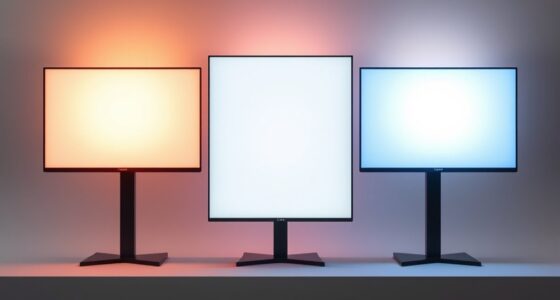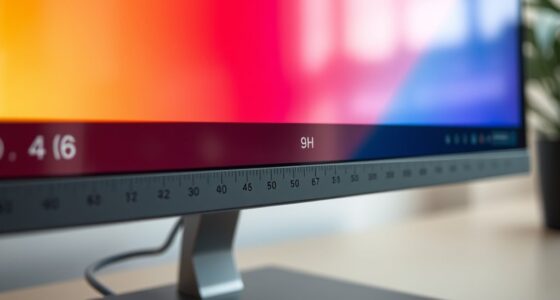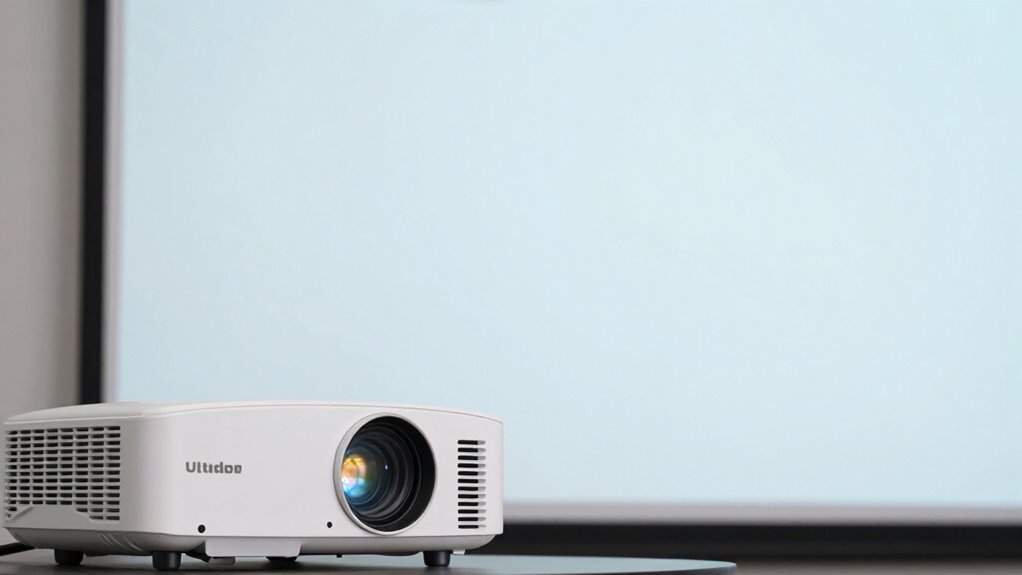
If your screen isn’t perfectly flat, your ultra short throw projector’s image can become distorted, blurry, or uneven in color. Even minor surface irregularities can cause shadows, focus issues, and color shifts, ruining your viewing experience. Flatness guarantees your projector’s reflected light remains consistent, providing sharp, vibrant images. Maintaining a perfectly flat screen is essential for quality, and knowing how to achieve this will help you get the best possible projection setup. Keep going to discover more tips.

Get business pricing on your home office setup
- Business-only prices and quantity discounts
- Tax-exempt purchasing
- Multiple users, one account, clear invoices
Key Takeaways
- Flat screens prevent distortions, ensuring sharp, clear images in ultra short throw projection setups.
- Even surfaces maintain accurate light reflection, preserving color fidelity and visual quality.
- Proper flatness reduces shadows, blurring, and focus issues caused by surface irregularities.
- Achieving and maintaining flatness enhances long-term image consistency and prevents future distortions.
- Flat screens simplify installation and optimize overall projection performance for immersive viewing.
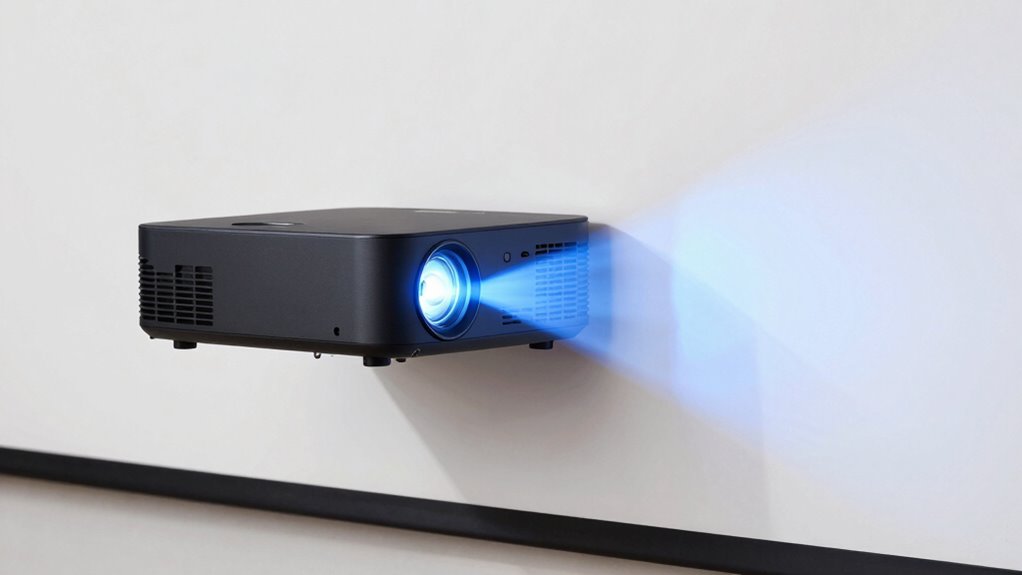
When it comes to achieving a seamless, high-quality projection experience, screen flatness plays a vital role, especially with ultra short throw (UST) projectors. Unlike traditional projectors, UST models sit just inches from the screen, which makes any curvature or unevenness more noticeable. When your screen isn’t perfectly flat, you risk distortions that can compromise the clarity and overall quality of your image. Flat screens ensure that the projected light reflects uniformly, maintaining sharpness and consistency across the entire display. Without proper flatness, you might notice blurring, shadows, or uneven focus, all of which diminish the viewing experience.
Color accuracy is another critical aspect affected by screen flatness. When a screen is warped or bent, the angles at which light reflects can shift, causing colors to appear off or washed out in certain areas. For ultra short throw projection, where the image is so close to the screen, even minor imperfections can drastically impact color fidelity. Maintaining a flat surface helps ensure that colors remain true to the source, providing rich, vibrant images that look natural and consistent from every viewing angle. This is especially important if you use your setup for professional presentations, home theaters, or gaming, where color accuracy can make or break the experience.
However, achieving perfect flatness isn’t always straightforward. Installation challenges often come into play, especially if the screen material is flexible or if the mounting surface isn’t perfectly even. You might find it tricky to keep the screen perfectly flat over time, as environmental factors like humidity or temperature changes can cause warping or sagging. Additionally, some installation setups require specialized hardware or framing to keep the screen taut and flat. If you neglect these challenges, you risk creating a surface that’s uneven, which, as mentioned earlier, can severely impact image quality and color accuracy. Proper planning, choosing the right mounting system, and ensuring a stable, level surface can help you avoid these pitfalls. Investing in high-quality, screen mounting hardware can also significantly improve long-term flatness and stability. Moreover, understanding the importance of screen flatness can help guide your setup process to prevent future issues. Ensuring that your environment maintains consistent conditions can also help preserve the flatness over time, preventing warping caused by external factors.
Maintaining a flat screen also contributes to consistent image quality, as uneven surfaces can cause variations in brightness and sharpness across the display. In the end, flatness isn’t just about aesthetics; it’s a fundamental factor that directly influences the quality of your ultra short throw projection. When you prioritize a perfectly flat screen, you enhance color accuracy, reduce installation challenges, and ensure a crisp, immersive viewing experience. Taking the time to address installation issues and select the right materials pays off by delivering consistent, stunning images every time.
ultra short throw projector screen flatness
As an affiliate, we earn on qualifying purchases.
As an affiliate, we earn on qualifying purchases.
Frequently Asked Questions
How Does Screen Flatness Affect Image Brightness?
If your screen isn’t flat, you’ll notice dimmer images because uneven surfaces scatter light, reducing overall brightness. This unevenness also affects image contrast, making dark scenes less distinct. Poor screen flatness can compromise screen durability over time, causing warping or damage that further diminishes brightness. To maintain a vibrant, sharp picture, make sure your screen stays perfectly flat, supporting consistent brightness, better contrast, and longer-lasting durability.
Can Curved Screens Improve Projection Quality?
Ever wonder if curved screens improve projection quality? They can, especially by enhancing curved screen aesthetics and viewer ergonomic comfort. The gentle curve minimizes distortion and glare, delivering a more immersive experience. Plus, the design naturally guides your eyes, reducing fatigue during long viewing sessions. By aligning with your viewing angle, curved screens boost image clarity and overall enjoyment, making your ultra short throw projection sharper and more engaging.
What Materials Best Ensure Flatness in Projection Screens?
To guarantee flatness in projection screens, you should choose materials like high-quality fiberglass or specialized matte fabrics, which offer excellent material durability and stability. These materials resist warping and deformation over time. Additionally, focus on installation precision by securing the screen tightly and evenly, preventing any sagging or unevenness. Properly selected materials combined with meticulous installation guarantee a perfectly flat surface, enhancing ultra short throw projection quality.
How Do Environmental Factors Impact Screen Flatness?
Environmental factors substantially impact your screen’s flatness through environmental stability. Fluctuations in temperature, humidity, or air pressure can cause surface deformation, leading to warping or ripples. To maintain ideal flatness, you should control room conditions, avoiding sudden changes. Proper environmental stability minimizes surface deformation, ensuring your projection surface remains flat and provides clear, distortion-free images essential for high-quality ultra short throw projection.
Is Regular Maintenance Necessary for Flat Screens?
Regular maintenance is vital for keeping your flat screen aligned and guaranteeing ideal image quality. Imagine a school replacing a projector bulb, only to realize the screen’s slight warping caused misalignment. Following proper maintenance routines, like cleaning and inspecting the screen, helps prevent issues. Regular upkeep ensures your screen stays flat, providing sharp, clear images, and extends its lifespan, making your ultra short throw projection experience consistently impressive.
projection screen mounting hardware
As an affiliate, we earn on qualifying purchases.
As an affiliate, we earn on qualifying purchases.
Conclusion
So, now that you know why screen flatness is essential for ultra short throw projection, aren’t you excited to choose a screen that delivers crisp, distortion-free images? When your screen is perfectly flat, you’ll enjoy a seamless viewing experience without distractions or image warping. After all, isn’t the goal to make your home theater feel just like a real cinema? Invest in flatness, and elevate your movie nights to the next level!
adjustable projector screen frame
As an affiliate, we earn on qualifying purchases.
As an affiliate, we earn on qualifying purchases.
high-quality projector screen tensioning kit
As an affiliate, we earn on qualifying purchases.
As an affiliate, we earn on qualifying purchases.
Fall Picks
fall essentials
As an affiliate, we earn on qualifying purchases.