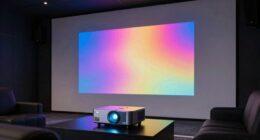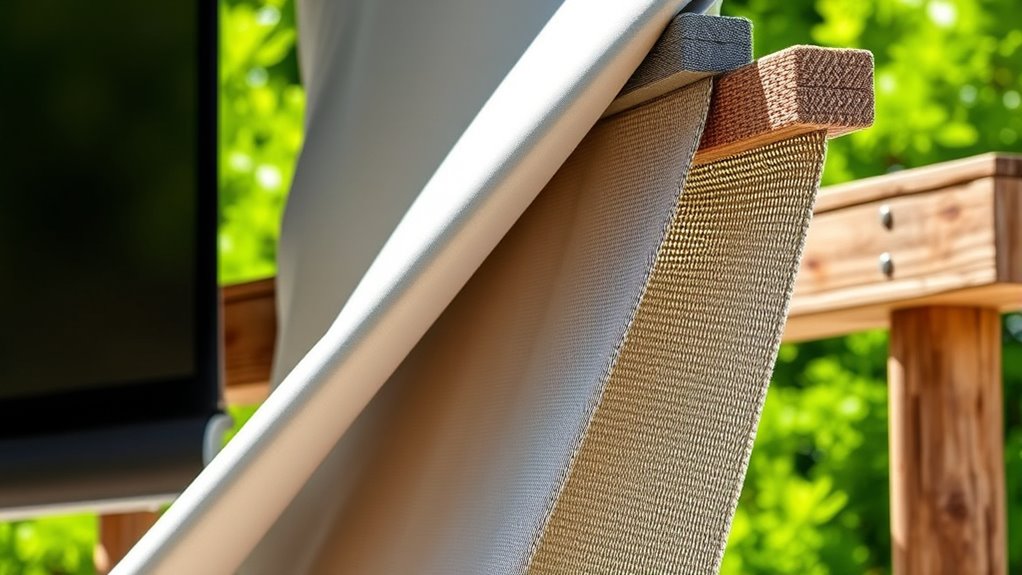
When choosing materials for outdoor projection screens, prioritize waterproof fabrics like PVC, polyester, or specialized outdoor textiles that resist rain, UV rays, and mold. Look for reinforced seams and tight weaving to prevent sagging and tearing from wind or impact. Durable, fade-resistant fabrics improve image clarity and longevity. Proper maintenance, such as gentle cleaning, can extend your screen’s life. Want to discover which materials best suit your outdoor setup? Keep exploring for expert tips.
Key Takeaways
- Select waterproof fabrics like PVC or outdoor-grade polyester for durability against rain and humidity.
- Ensure the material has UV-resistant coatings to prevent sun damage and fading over time.
- Choose fabrics with reinforced seams and tight weaving to resist tearing, sagging, and warping.
- Opt for surfaces that are easy to clean and maintain, helping preserve image quality in outdoor conditions.
- Prioritize opaque, high-contrast materials to enhance image clarity and visibility in various weather environments.
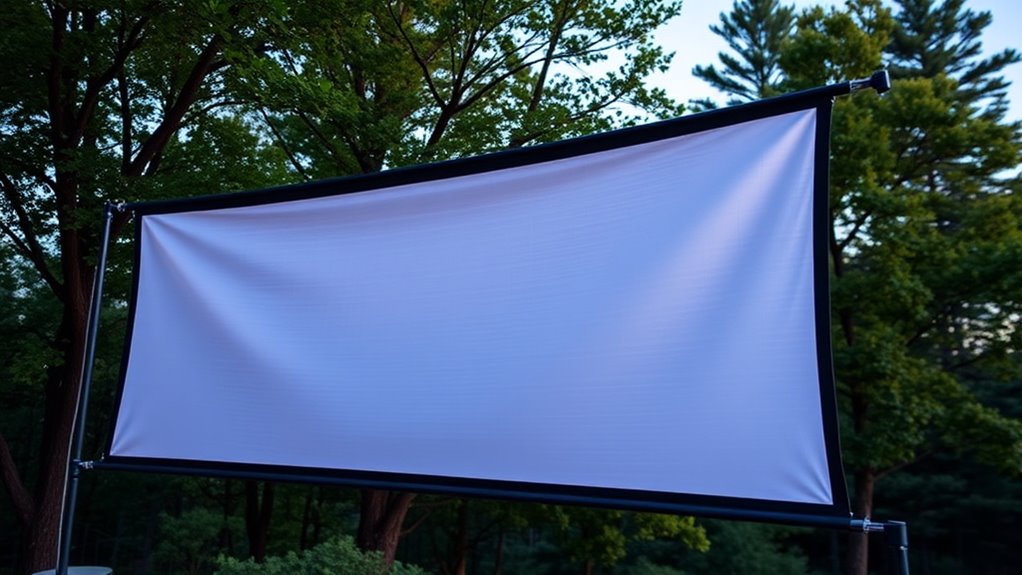
Outdoor projection screens transform your backyard into a home theater or entertainment space, allowing you to enjoy movies, sports, or presentations under the open sky. When selecting a screen, one of the most critical factors to contemplate is how well it withstands the elements. Weather resistance is essential because your screen will be exposed to rain, humidity, sunlight, and wind. You want a material that can handle these conditions without deteriorating or losing its image quality. Look for screens made from high-quality, waterproof fabrics that resist mold, mildew, and UV damage. These materials often feature a protective coating that prevents water from seeping in and damaging the fabric, ensuring your screen remains functional and vibrant for years. Regular maintenance, such as cleaning and inspecting the fabric, can further extend the lifespan of your outdoor projection screen. Material durability plays a significant role in how long your outdoor projection screen will last. The materials used should be sturdy enough to endure physical stress, such as wind or accidental impact, without tearing or fraying. Heavy-duty fabrics like PVC, polyester, or specialized outdoor screen fabrics are designed specifically for outdoor use. These materials are not only resistant to tearing but also maintain their shape and surface integrity over time. When choosing a screen, consider how it’s constructed—seams should be reinforced, and the fabric should be tightly woven to prevent sagging or warping. Durability also includes resistance to fading, which is vital for outdoor screens constantly exposed to sunlight. In addition to weather resistance and material durability, think about how easy it is to maintain the material. You’ll want a fabric that can be cleaned easily with a damp cloth or gentle soap, without risking damage. Some screens come with coatings that make cleaning simpler and help preserve the surface’s reflective qualities. The overall quality of the material impacts not just longevity but also the viewing experience—darker, more opaque fabrics will create better contrast and color accuracy, even if the weather isn’t ideal. Investing in a weather-resistant material and durable construction ensures your outdoor entertainment setup remains pristine and ready for use whenever you want. Ultimately, investing in a screen with high weather resistance and durable material construction means you won’t have to worry about daily exposure to the elements or accidental damage. It guarantees that your entertainment setup remains pristine and ready for use whenever you want. The right outdoor projection screen can stand up to the unpredictable outdoor environment, providing you with a reliable, high-quality viewing experience year-round. Your choice of material will determine how well your screen performs over time, making durability and weather resistance the top priorities in your selection process.
outdoor waterproof projection screen
As an affiliate, we earn on qualifying purchases.
As an affiliate, we earn on qualifying purchases.
Frequently Asked Questions
How Do Weather Conditions Affect Outdoor Projection Screen Durability?
Weather conditions directly impact your outdoor projection screen’s durability. Rain, sun, and wind can cause material degradation over time, especially if the screen lacks weatherproof coatings. These coatings protect against moisture and UV rays, extending your screen’s lifespan. Without them, your screen may fade, warp, or develop mold. To keep it in top shape, choose materials with effective weatherproof coatings and regularly inspect for any signs of damage caused by the elements.
What Maintenance Is Required for Outdoor Projection Screens Year-Round?
Did you know that proper maintenance extends your outdoor projection screen’s lifespan by up to 50%? You should perform regular cleaning routines using gentle cleaners and water, avoiding harsh chemicals. Applying protective coatings annually helps shield the material from weather damage. Make certain you remove debris after storms and store the screen properly during harsh weather. These steps keep your screen in top condition and ensure clear, vibrant images for years to come.
Are There Eco-Friendly Materials Suitable for Outdoor Projection Screens?
Yes, you can choose eco-friendly materials for outdoor projection screens. Recycled fabrics are a great option because they reduce waste and are durable enough for outdoor use. Biodegradable plastics offer an environmentally friendly alternative to traditional plastics, breaking down naturally over time. By selecting these materials, you help protect the environment while enjoying high-quality outdoor screenings. Just make certain the materials are weather-resistant to withstand outdoor conditions.
How Do Different Mounting Options Impact Screen Performance?
Did you know that proper mounting options can boost your outdoor screen’s lifespan by up to 30%? Your choice impacts performance markedly—poor mounting stability causes sagging, while effective vibration control minimizes image distortion. Secure mounts ensure your screen stays taut and steady despite wind or movement. Opt for sturdy brackets or tension systems to enhance stability and vibration control, giving you a clearer, sharper image in all weather conditions.
What Are the Best Storage Practices During Off-Season?
During the off-season, you should practice seasonal storage by thoroughly cleaning your outdoor projection screen and removing any debris. Use protective covers to shield it from dust, moisture, and pests. Store the screen in a cool, dry place away from direct sunlight to prevent material degradation. Properly folded or rolled, your screen stays in good condition, ensuring peak performance when you’re ready to use it again.
UV resistant outdoor projection fabric
As an affiliate, we earn on qualifying purchases.
As an affiliate, we earn on qualifying purchases.
Conclusion
Imagine yourself under a starlit sky, the gentle glow of your outdoor screen illuminating friends and family. Choosing the right material transforms your backyard into a magical cinema escape, where every movie feels immersive and special. With the perfect screen in place, you’ll create unforgettable memories, feeling the cool night air and hearing laughter echo into the night. Your outdoor space becomes more than just a yard—it becomes a timeless place of connection and wonder.
outdoor projector screen with reinforced seams
As an affiliate, we earn on qualifying purchases.
As an affiliate, we earn on qualifying purchases.
weatherproof outdoor projection screen material
As an affiliate, we earn on qualifying purchases.
As an affiliate, we earn on qualifying purchases.