When choosing a DIY projector screen, your options include paint, fabric, or manufactured screens, each with unique benefits. Paint is budget-friendly and easy to apply but may offer less uniformity. Fabric offers portability and customization, with the right tension ensuring a good image. Manufactured screens provide professional quality and consistent results but come at a higher price. To find out which best suits your space and needs, explore the details below.
Key Takeaways
- Paint screens are budget-friendly, easy to customize, and require surface preparation for even projection; ideal for limited budgets.
- Fabric screens offer portability, customizable textures, and better light diffusion control, enhancing image quality with proper tensioning.
- Manufactured screens provide consistent quality, minimal setup, and optimal surface properties but are more expensive upfront.
- Surface preparation and correct installation are crucial regardless of material to ensure a flat, wrinkle-free viewing surface.
- Choice depends on budget, space, and desired image quality; DIY paint is economical, fabric offers flexibility, and manufactured screens deliver professional results.
Creating your own projector screen is a cost-effective way to enhance your home theater experience. When selecting your material choices, you’ll want to consider the different options available—paint, fabric, or manufactured screens—and how each impacts picture quality and ease of installation. Your choice depends on your budget, space, and desired image quality, but understanding the pros and cons of each can help you decide the best route.
Creating a home theater screen with paint, fabric, or manufactured options depends on your budget and space.
If you opt for paint, you’ll find it to be the most budget-friendly and flexible option. Special projector screen paints are designed to reflect light evenly, producing a bright, clear image. When choosing materials for this method, focus on high-quality, matte paints formulated specifically for projection. These paints come in a variety of shades, but generally, a neutral gray or white provides the best contrast and brightness. Installation tips for painting include preparing a smooth, clean wall surface—patching holes and sanding rough areas—and applying multiple thin coats, allowing each to dry thoroughly. Using painter’s tape to mask off the surrounding area ensures clean edges and a professional look. Keep the room dark during projection to maximize the image, and consider mounting a frame or border around the painted surface to prevent accidental smudges. Additionally, choosing a high-quality projection surface can significantly improve image clarity and color accuracy.
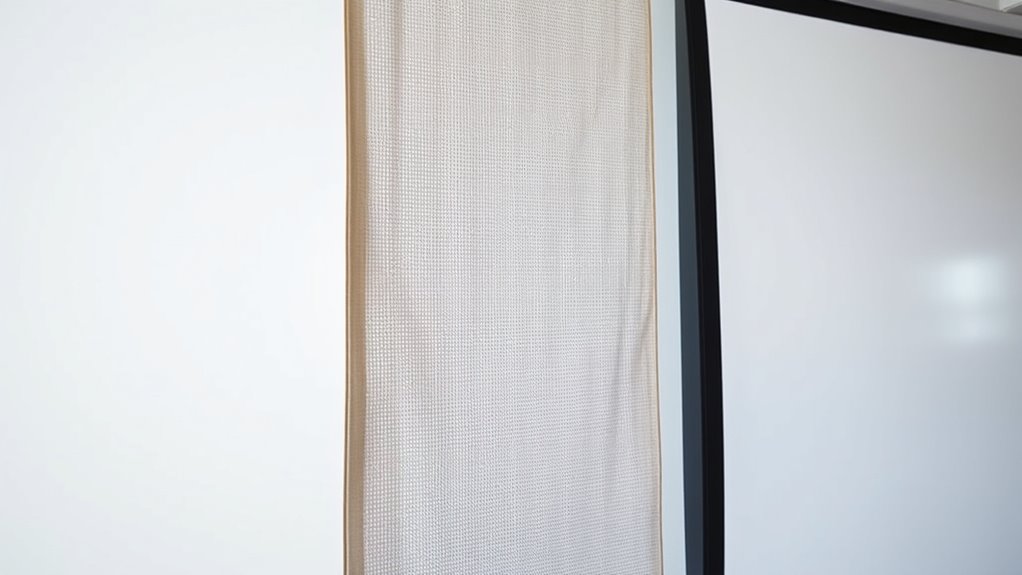
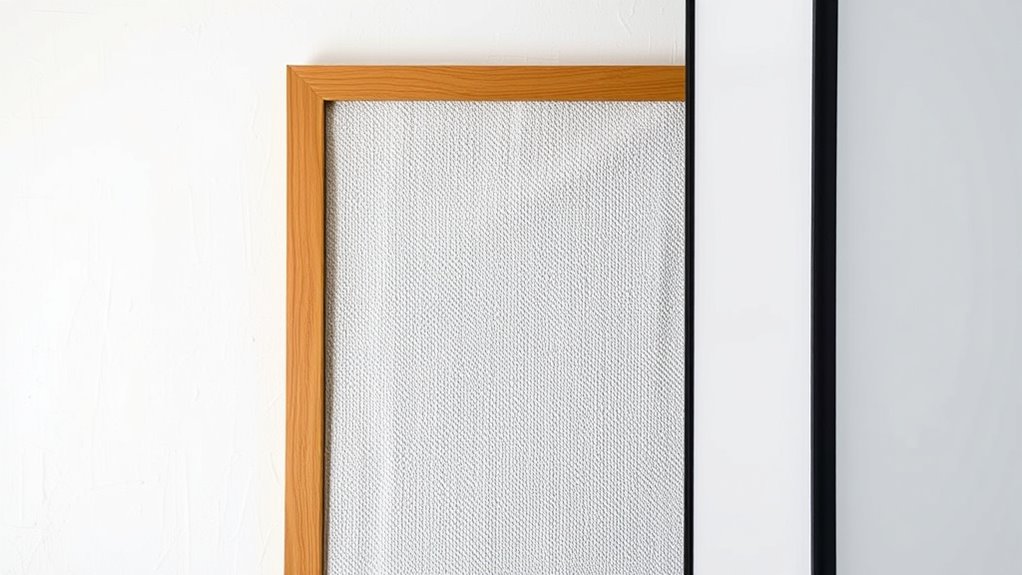
Fabric screens are another popular choice, offering portability and a range of textures that can enhance image quality when chosen carefully. When selecting fabric, look for materials labeled as projector screen fabric or those with a matte finish, such as blackout cloth or specialized screen mesh. These fabrics help prevent light diffusion and maintain color accuracy. To install fabric, stretch it tightly over a frame made of wood or metal, avoiding wrinkles and sagging. Secure the fabric with staples or clips, and ensure the surface remains flat. Tension is key—loose fabric can distort the image, so make sure it’s taut. Fabric screens are easy to set up and take down, making them ideal if you want flexibility or a temporary solution.
Manufactured screens are commercially available and often come with a ready-made frame and a specialized surface designed for optimal projection. They are typically more expensive but provide consistent quality and minimal setup effort. When installing a manufactured screen, follow the manufacturer’s instructions carefully—mount it securely on a wall or stand, ensuring it’s level and centered. Proper installation tips include keeping the screen at eye level for the best viewing angle and making sure the surface is free of dust and fingerprints for the clearest image.
Ultimately, your material choices and installation tips will shape your home theater’s picture quality and usability. Whether you go with paint, fabric, or a manufactured screen, taking the time to prepare your surface and mount it correctly will ensure a satisfying viewing experience. Understanding the best projection surfaces can help you achieve a brighter, sharper image with vivid colors and better contrast.
As an affiliate, we earn on qualifying purchases.
Frequently Asked Questions
Which Material Offers the Best Color Accuracy?
You’ll find that a high-quality manufactured screen generally offers the best color accuracy because it’s designed for ideal material reflectivity. This specialized reflectivity ensures colors appear vivid and true to life. DIY options like paint or fabric can work well, but they often lack the precise reflectivity and uniformity needed for accurate color reproduction. For the best results in color accuracy, choose a professionally manufactured screen designed specifically for projectors.
How Durable Are Painted Projector Screens Over Time?
Painted projector screens can be quite durable if you choose the right type of paint, considering film thickness and surface texture. Over time, they may develop cracks or peel if the surface isn’t properly prepared or if the paint isn’t applied evenly. Regular cleaning and minimal exposure to moisture help maintain their integrity. To guarantee longevity, opt for high-quality, flexible paint and a smooth surface texture during application.
Can DIY Screens Be Used Outdoors?
Yes, you can use DIY screens outdoors, but weather resistance is key. Choose materials like weatherproof fabric or paint designed for outdoor use to withstand rain and sun. Keep your screen portable by using lightweight frames or stands, making it easy to set up and pack away. Proper sealing and selecting weather-resistant materials guarantee your DIY projector screen stays durable and functional in outdoor conditions.
What Is the Ideal Screen Size for Small Rooms?
Think of your small room as a cozy nest where bigger isn’t always better. For the best viewing experience, aim for a screen size around 100 to 120 inches diagonally. Measure your space carefully—usually, a width of 80-100 inches fits comfortably without crowding. Keep in mind, the ideal screen dimensions should complement your space measurement, providing a cinematic feel without overwhelming your intimate environment.
Are Manufactured Screens More Cost-Effective Long-Term?
Manufactured screens can be more cost-effective long-term if you have budget constraints and value ease of installation. They typically last longer, resist wear and tear, and often come with warranties, reducing replacement costs. Plus, they’re easy to set up, saving you time and effort. While initial costs may be higher, their durability and convenience make them a smart investment for ongoing use, especially if you want a reliable, hassle-free viewing experience.

Projector Screen DIY Elastic Polyester Material 59×105 inch for Max 130 inch 16:9 Projection Screen Economical Black Backing 4K Ultra HD Front Projection Textile Fabric
- Size and Compatibility: Fits up to 130-inch DIY screens
- Material: Elastic polyester textile for easy setup
- Color and Contrast: Light silver gray for enhanced contrast
As an affiliate, we earn on qualifying purchases.
As an affiliate, we earn on qualifying purchases.
Conclusion
So, which DIY projector screen option suits your space and style best? Whether you choose paint, fabric, or a manufactured screen, each offers unique benefits. Think about your budget, setup, and desired image quality—what matters most to you? Remember, creating your perfect home theater can be fun and rewarding. Why not try one of these solutions and turn your room into a cinematic escape? Your perfect movie night is just a project away!

Mdbebbron 120 inch Projector Screen 16:9 Foldable Anti-Crease Portable Projector Movies Screens for Home Theater Outdoor Indoor Support Double Sided Projection
- Portable and Foldable Design: Lightweight, compact, easy to carry and store
- Versatile Usage: Suitable for home, office, outdoor, and events
- Anti-Crease and High-Quality Material: Made of durable polyester for clear, bright projection
As an affiliate, we earn on qualifying purchases.
As an affiliate, we earn on qualifying purchases.

WALI Universal Projector Screen Ceiling Mount, Wall Hanging Mount L-Brackets, 6 inch Adjustable Extension with Hook Kit, Projector Screen Placement Hold up to 66 lbs (PSM001-W), White
- Compatibility: Fits most manual and spectrum projector screens
- Load Capacity: Supports up to 66 lbs (30 kg)
- Material: Made of high-quality steel
As an affiliate, we earn on qualifying purchases.
As an affiliate, we earn on qualifying purchases.