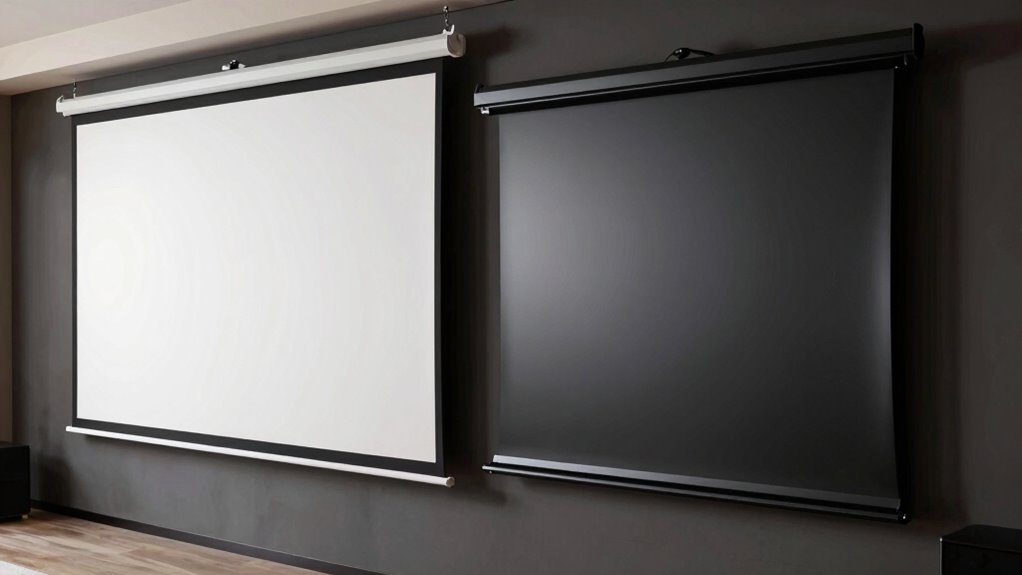
To compare fixed frame and motorized screens for long-term use, consider projection quality, installation effort, and maintenance needs. Fixed frame screens offer superior image clarity and durability, ideal for dedicated spaces, but require precise setup. Motorized screens are flexible and space-saving but may need more upkeep due to moving parts. Think about your room, usage frequency, and aesthetic preferences. Continuing further can help you understand which option fits your long-term projection needs best.
Key Takeaways
- Assess projection quality needs; fixed frames typically offer superior image clarity and stability for long-term use.
- Consider installation complexity; fixed frames require precise setup, while motorized screens are easier to install but involve maintenance.
- Evaluate durability and maintenance; fixed frames are low-maintenance and more durable over time compared to motorized options.
- Analyze space and aesthetic integration; motorized screens save space and conceal when not in use, enhancing room aesthetics.
- Review technological features; AI-powered or surface technology can influence long-term performance and user experience for both types.
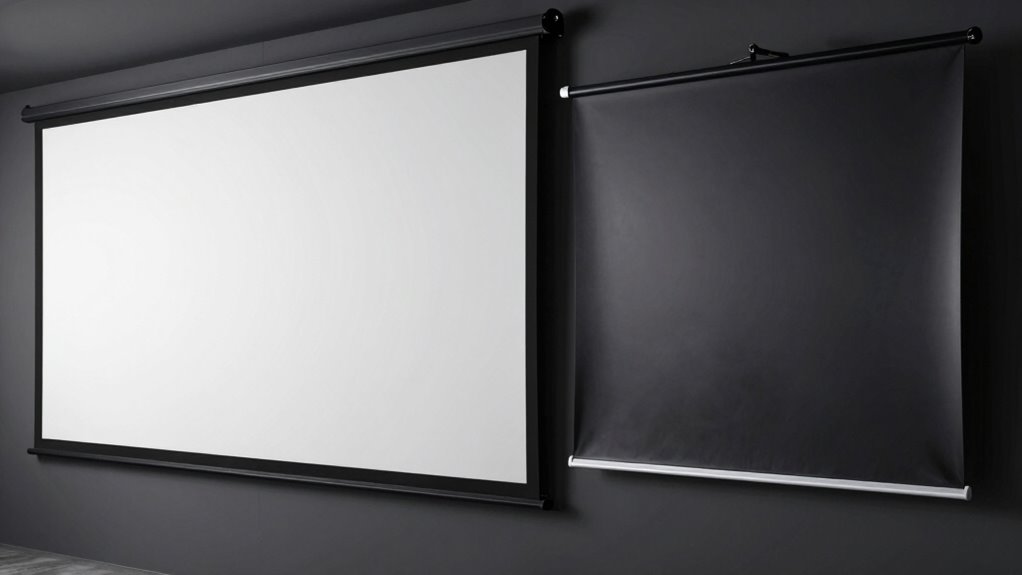
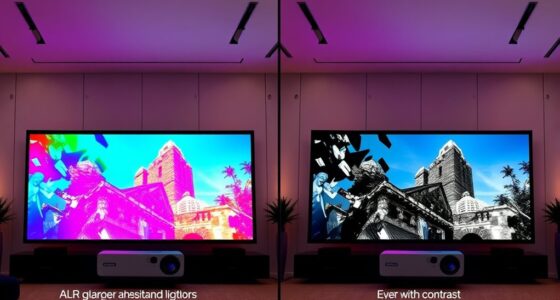
When choosing a projection screen for your home theater or conference room, understanding the differences between fixed frame and motorized screens is crucial. Your decision impacts not just the initial setup but also the long-term use, especially when it comes to projection quality and installation complexity. Fixed frame screens are known for their superior projection quality because they offer a taut, flat surface that minimizes distortions and enhances image clarity. If you prioritize sharp visuals with vibrant colors and high contrast, fixed frames tend to deliver better overall image quality. They’re designed to stay in a fixed position, which means the surface remains perfectly tensioned, reducing wrinkles or warps that could compromise picture sharpness.
However, when it comes to installation complexity, fixed frame screens usually require more effort upfront. They need to be securely mounted to a wall or ceiling, and the process can involve precise measurements and sometimes carpentry skills to guarantee an even, stable setup. Once installed, they stay in place, making them less flexible but more durable over time. On the other hand, motorized screens offer convenience and versatility, especially if space or aesthetics matter. They can be lowered or raised with the push of a button, allowing you to hide the screen when it’s not in use, which can be a significant advantage in multi-purpose rooms. The installation process for motorized screens tends to be simpler because they often come with mounting brackets and electrical components that are straightforward to connect. Nonetheless, you’ll need to take into account the power source and wiring to ensure smooth operation.
In terms of long-term use, think about how often you’ll need to deploy or conceal the screen. Fixed frames are ideal if you want a dedicated, always-ready setup where the focus is on superior projection quality. They require minimal ongoing maintenance but lack the flexibility of changing positions or hiding the screen. Motorized screens excel in environments where space efficiency, aesthetics, or occasional use is a priority. They may involve more maintenance due to moving parts and electrical components, but their ability to blend into the room’s design can make them worth the investment. Additionally, considering projection surface technology can help you choose a screen that maintains image quality over time. When selecting a screen, it’s also beneficial to evaluate the durability of materials, especially for long-term installations, to ensure your investment remains protected. Proper installation techniques and understanding your specific needs can significantly influence the longevity and performance of your projection system. Being aware of AI-powered features in some screens can further enhance your viewing experience and ease of use. Ultimately, your choice depends on balancing projection quality needs with installation effort and how you plan to use the screen over time.

Silver Ticket Products STR Series 6 Piece White 1.1 Gain 120" Diagonal 16:9 Format Projection Screen, Aluminum Frame, Wall Mounted, 109.25×63.625 inches STR-169120
- Product Type: Wall-mounted fixed frame projection screen
- Size: 120-inch diagonal, 63.625" x 109.25"
- Viewing Area: 58.875" x 104.5" with 120" diagonal
As an affiliate, we earn on qualifying purchases.
As an affiliate, we earn on qualifying purchases.
Frequently Asked Questions
Which Screen Type Offers Better Durability Over Time?
You’ll find fixed frame screens typically offer better durability over time because of their sturdy frame and high-quality materials. They maintain visual clarity longer, especially with premium fabrics that resist warping or sagging. Motorized screens, while convenient, can wear out faster due to moving parts and less robust materials. For long-term use, a fixed frame screen with superior material quality guarantees consistent performance and clearer visuals over the years.
Are Motorized Screens More Energy-Efficient Than Fixed Frames?
Motorized screens generally aren’t more energy-efficient than fixed frames because they rely on electricity to operate, leading to higher energy consumption. While they offer convenience, you should consider power efficiency if you plan to use them frequently. Fixed frame screens, being static, consume no additional power once installed, making them more energy-efficient in the long run. If energy savings are your priority, a fixed frame might be the better choice.
Can Fixed Frame Screens Be Easily Repaired if Damaged?
Yes, fixed frame screens can be easily repaired if damaged. You’ll want to assess the screen material first; some materials, like vinyl or fabric, are simple to patch or replace. The repair process usually involves removing the damaged section, sewing or gluing a patch, and re-stretching the material onto the frame. With basic tools and patience, you can often fix minor tears yourself, saving time and money.
Do Motorized Screens Require Regular Maintenance?
Yes, motorized screens do require regular maintenance to keep them functioning smoothly. You should regularly perform screen cleaning to prevent dust buildup, which can affect image quality. Additionally, occasional remote troubleshooting helps address any issues with the motor or remote control. Proper upkeep guarantees your motorized screen operates reliably over time, providing a seamless viewing experience without unexpected hiccups.
How Do Installation Costs Compare Between the Two Types?
Coincidentally, installation costs for fixed frame screens are often lower because they involve straightforward setup, while motorized screens typically require more complex installation due to wiring and motor integration. You’ll find that installation complexity and cost variability are higher with motorized options, often leading to increased initial expenses. If you’re comfortable with extra effort and budget, motorized screens offer convenience, but fixed frames are generally more budget-friendly upfront.

DINAH 120 Inch Electric Projector Screen with Remote
- Large 120-Inch Screen: Immersive viewing experience for all
- Remote Control Operation: Easily lower or retract with remote
- 4K 3D HD Compatibility: Sharp, vivid image quality
As an affiliate, we earn on qualifying purchases.
As an affiliate, we earn on qualifying purchases.
Conclusion
In the end, choosing between fixed frame and motorized screens is like selecting the right tool for a job—you’ll want the one that best fits your needs and space. Fixed frames offer stability and a sleek look, perfect for dedicated home theaters. Motorized screens add convenience and versatility, ideal for multi-purpose rooms. Think of it as the difference between a dependable steady hand and a smart, automated assistant—both have their place, but your choice depends on what matters most to you.
Silver Ticket Products STR Series 6 Piece White 1.1 Gain 120" Diagonal 16:9 Format Projection Screen, Aluminum Frame, Wall Mounted, 109.25×63.625 inches STR-169120
- Product Type: Wall-mounted fixed frame projection screen
- Size: 120-inch diagonal, 63.625" x 109.25"
- Viewing Area: 58.875" x 104.5" with 120" diagonal
As an affiliate, we earn on qualifying purchases.
As an affiliate, we earn on qualifying purchases.
DINAH 120 Inch Electric Projector Screen with Remote
- Large 120-Inch Screen: Immersive viewing experience for all
- Remote Control Operation: Easily lower or retract with remote
- 4K 3D HD Compatibility: Sharp, vivid image quality
As an affiliate, we earn on qualifying purchases.
As an affiliate, we earn on qualifying purchases.