Curved projector screens aren’t just a gimmick—they can truly transform your viewing experience. By wrapping visuals around you, they create immersive scenes that flat screens can’t match, enhancing depth, contrast, and realism. Proper design and setup are key to avoiding distortion and getting the most out of your investment. If you want to discover how these screens can elevate your entertainment setup, there’s more to explore.
Key Takeaways
- Curved screens create immersive, lifelike visuals by wrapping images around the viewer’s peripheral vision.
- Proper design and calibration minimize distortion, ensuring a high-quality viewing experience.
- They enhance contrast and perceived brightness, making images more vivid and realistic.
- Higher costs and installation complexity are considerations, but the immersive benefits can justify the investment.
- When well-implemented, curved projector screens are more than a gimmick, offering a significant upgrade in visual engagement.
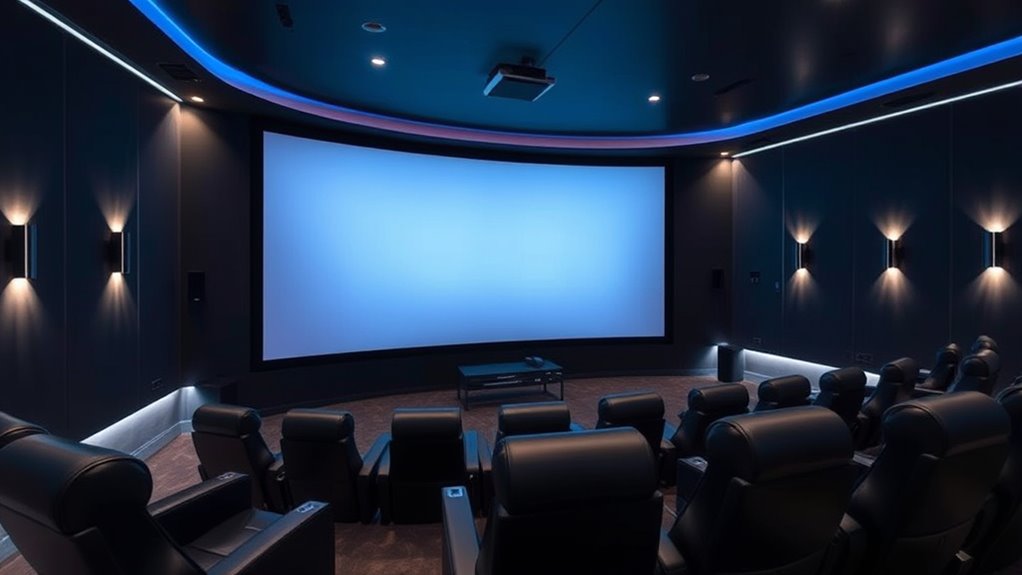
Have you ever wondered why curved projector screens are gaining popularity? The answer lies in their ability to create an immersive experience that traditional flat screens simply can’t match. When you sit in front of a curved screen, the shape naturally directs your focus across the entire image, making you feel more engaged in the content. This design mimics the way your eyes perceive the world, wrapping the visuals around you to draw you into the scene. But along with this immersive quality comes the risk of visual distortion if the screen isn’t properly designed or positioned. You might notice that images look stretched or warped at certain angles, which can detract from the viewing experience. That’s why understanding the balance between the benefits and potential drawbacks of curved screens is essential.
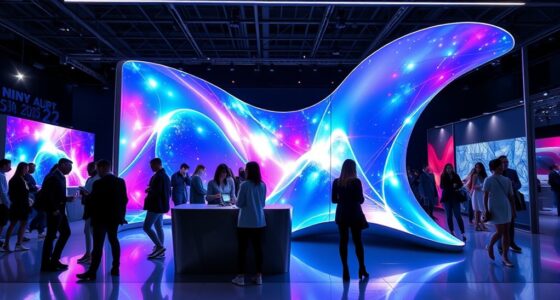
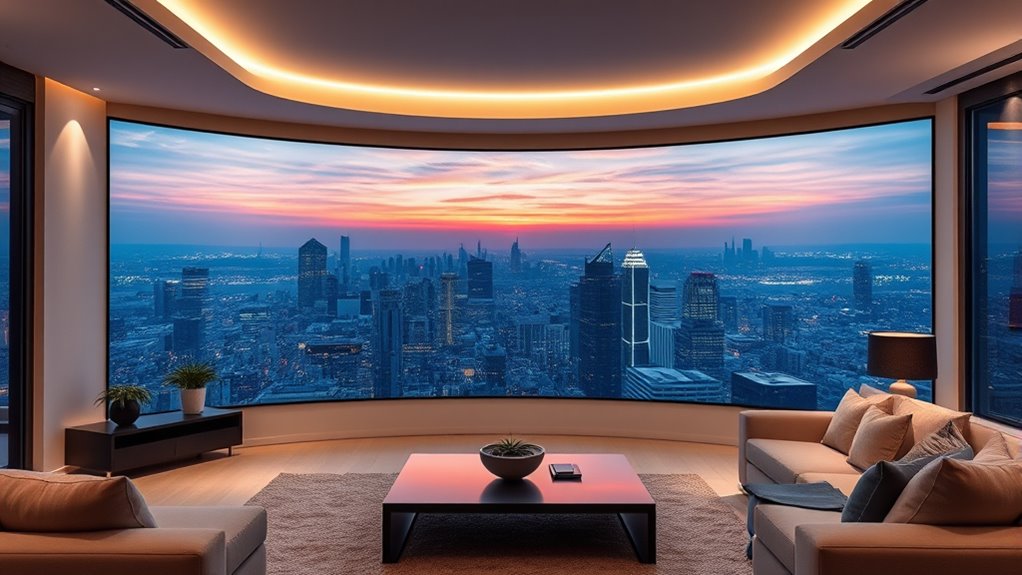
The immersive experience offered by curved projector screens is primarily due to their geometry. Unlike flat screens, which can create a somewhat detached viewing environment, curved screens envelop your peripheral vision, making you feel like you’re part of the action. This is especially noticeable in large home theaters or commercial cinemas, where the curvature ensures that your entire field of view is filled with the image. As a result, the sense of depth and realism increases. Additionally, the contrast ratio of curved screens can be enhanced because of their shape, making images appear more vivid and lifelike. However, this effect depends heavily on the screen’s radius and your seating position. If you sit too far off-center or at an awkward angle, the image can become distorted—sometimes appearing stretched or compressed. This visual distortion isn’t always noticeable on well-designed curved screens, but it can be problematic if the curvature isn’t tailored to the room or if the projector isn’t correctly aligned.
Another factor to consider is that the curved shape enhances perceived brightness and contrast, making images pop with more vividness. This can elevate your viewing experience, especially during high-definition movies or gaming. However, the potential for visual distortion means you need to be mindful of the screen’s specifications and your viewing setup. Proper calibration and choosing a screen with an appropriate radius for your space can minimize these issues. It’s also worth noting that curved screens tend to be more expensive and require more precise installation, which might not be practical for every setup. Still, if you’re after a truly immersive environment and are willing to invest in proper calibration, a curved projector screen can markedly enhance your entertainment experience—just be prepared to adjust your seating and settings to avoid any unwanted visual distortions.
curved projector screen 120 inch
As an affiliate, we earn on qualifying purchases.
As an affiliate, we earn on qualifying purchases.
Frequently Asked Questions
Do Curved Screens Improve Viewing Angles for Large Groups?
Yes, curved screens improve viewing angles for large groups by creating a more immersive experience. They help minimize visual distortion at the edges, ensuring everyone gets a clearer, more consistent picture. With a curved setup, people seated at different angles still enjoy a nearly uniform image, enhancing group viewing. This design reduces dead zones and offers a more engaging, cohesive visual experience for everyone involved.
Are Curved Screens Suitable for Outdoor Projection?
Are curved screens suitable for outdoor projection? Not often. You’ll face significant installation challenges and potential edge distortion due to uneven surfaces and environmental factors. Outdoor conditions can cause the curvature to misalign or distort the image, reducing clarity. If you want a reliable outdoor setup, flat screens are generally better, offering easier installation and fewer issues with distortion or weather-related damage.
How Do Curved Screens Affect Color Accuracy?
You’ll notice that curved screens can impact color accuracy by causing color distortion, especially at the edges where the curve is most pronounced. This shape can also affect brightness uniformity, making some areas appear brighter or darker than others. To minimize these issues, choose high-quality screens designed for curved displays, and calibrate your projector properly. This way, you’ll enjoy vibrant, consistent colors with minimal distortion across the entire screen.
Are Curved Projector Screens More Expensive Than Flat Ones?
You’ll find that curved projector screens are generally more expensive than flat ones, with costs sometimes 20-30% higher. The cost comparison reflects not just the price but also increased installation complexity, since curved screens require precise mounting and calibration. This means you’ll need to budget more for both the screen and professional setup, making them a pricier choice but potentially offering a more immersive viewing experience.
Can Curved Screens Be Used With All Types of Projectors?
You can use curved screens with most projectors, but watch out for projection distortion, especially if your projector isn’t designed for curved surfaces. Installation challenges may arise, requiring precise setup to guarantee ideal image quality. Make sure your projector’s throw ratio and lens capabilities match the curve to avoid issues. With proper alignment, curved screens can enhance immersion without sacrificing clarity or adding unnecessary complications.
high contrast curved projector screen
As an affiliate, we earn on qualifying purchases.
As an affiliate, we earn on qualifying purchases.
Conclusion
So, next time you step into your home theater, imagine the gentle curve wrapping around you like a warm embrace, pulling the picture closer and making every scene feel alive. Curved projector screens aren’t just a gimmick—they’re an invitation to dive deeper into your favorite movies and games. As the light dances across the smooth arc, you’ll find yourself immersed, forgetting the world outside. It’s not just a screen; it’s your portal to a more vivid, mesmerizing experience.
professional projector screen calibration tools
As an affiliate, we earn on qualifying purchases.
As an affiliate, we earn on qualifying purchases.
large immersive home theater screen
As an affiliate, we earn on qualifying purchases.
As an affiliate, we earn on qualifying purchases.