An acoustically transparent screen is designed to let sound pass through without sacrificing picture quality, making it perfect for hidden speakers behind the screen. They come in various materials like perforated fabric or woven textures that balance sound and visuals. Choosing the right one depends on factors like sound clarity, image sharpness, and room space. If you’re curious about how these screens work and how to get the best setup, there’s plenty more to explore.

Get business pricing on your home office setup
- Business-only prices and quantity discounts
- Tax-exempt purchasing
- Multiple users, one account, clear invoices
Key Takeaways
- Acoustically transparent screens allow sound to pass through, enabling placement of speakers behind the screen for clearer audio.
- They are made from perforated or woven materials that balance sound transmission with high-quality visuals.
- Material choice influences sound quality, durability, and visual aesthetics, making selection important for optimal performance.
- Proper installation, including speaker placement and mounting height, enhances sound clarity and viewing experience.
- Regular cleaning and careful handling extend the lifespan of acoustically transparent screens while maintaining performance.
acoustically transparent projection screen
As an affiliate, we earn on qualifying purchases.
As an affiliate, we earn on qualifying purchases.
What Are Acoustically Transparent Screens and How Do They Work?

Have you ever wondered how you can enjoy a clear picture on your screen without blocking sound from your speakers? Acoustically transparent screens are specially designed to do just that. They allow you to place speakers directly behind the screen, optimizing speaker placement for better sound quality. These screens are made from materials that promote sound absorption, so your audio remains clear and undistorted, even when speakers are hidden behind them. The fabric or perforated material used in these screens lets sound pass through without muffling it, providing an immersive experience. This clever design ensures that your visuals stay crisp, and your sound stays natural and vibrant, all while maintaining a sleek, unobstructed look for your home theater or presentation setup. Additionally, understanding the different types of acoustically transparent screens can help you choose the best option for your specific needs.
perforated fabric home theater screen
As an affiliate, we earn on qualifying purchases.
As an affiliate, we earn on qualifying purchases.
Key Features to Consider When Choosing an Acoustically Transparent Screen

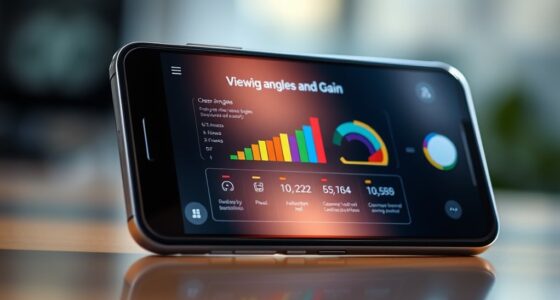
When selecting an acoustically transparent screen, it’s vital to take into account several key features that impact both sound quality and image clarity. First, consider speaker placement; the screen should allow speakers to be positioned behind it without muffling sound or blocking visuals. This requires a screen material that’s specifically designed to be acoustically transparent, so sound passes through clearly while maintaining image quality. Look for high-quality, perforated or woven screen materials that minimize sound distortion and ensure even image projection. Additionally, assess the screen’s gain and viewing angle to guarantee maximum brightness and clarity from different positions in your room. Choosing the right combination of screen material and thoughtful speaker placement will deliver a seamless audio-visual experience. Furthermore, understanding acoustically transparent material properties can help you select the best screen to improve both sound transmission and visual performance.
woven acoustically transparent screen
As an affiliate, we earn on qualifying purchases.
As an affiliate, we earn on qualifying purchases.
Benefits of Using Acoustically Transparent Screens in Your Home Theater

Using an acoustically transparent screen offers you clearer sound quality without visual compromise. It also gives you more flexibility in choosing screen styles and room decor. Plus, it can enhance your room’s acoustics, creating a more immersive home theater experience. Additionally, selecting a high-quality air purifier technology can help improve overall indoor air quality, ensuring a healthier environment during extended viewing sessions.
Enhanced Sound Transparency
Ever wondered how to enjoy immersive sound without sacrificing your home theater’s visual appeal? Acoustic transparent screens enhance sound transparency, allowing speakers behind the screen to deliver clear audio without visual interference. Proper acoustic panel placement complements this setup, reducing sound reflections and improving overall clarity. Using effective soundproofing techniques further isolates your theater, minimizing external noise and preventing sound leakage. This combination guarantees you experience rich, immersive audio while maintaining a sleek look. Incorporating space optimization strategies can further enhance your home theater environment for a more enjoyable experience.
Aesthetic Flexibility Options
Acoustically transparent screens offer remarkable aesthetic flexibility, allowing you to design a sleek, seamless home theater that complements your decor. With a variety of color options, you can choose screens that blend in or stand out, matching your wall color or acting as a visual feature. Mounting styles also vary, giving you the ability to install screens flush against the wall, recessed, or with custom frames for a tailored look. This flexibility means you don’t have to compromise style for function. Whether you prefer a minimalist vibe or a more decorative setup, acoustically transparent screens adapt to your aesthetic preferences. Their versatility ensures your home theater remains visually appealing while delivering excellent sound performance.
Improved Room Acoustics
Because acoustically transparent screens allow sound to pass through with minimal distortion, they considerably enhance your room’s overall acoustics. You’ll notice improved sound absorption and reduced unwanted room reflections, creating a clearer, more natural audio experience. This setup minimizes echo and enhances dialogue clarity, making your home theater more immersive. By allowing speakers to be positioned directly behind the screen, sound travels freely without interference. This optimizes speaker placement and reduces sound loss. Additionally, understanding home security systems can help you protect your home theater equipment from theft or damage.
speaker behind screen home theater
As an affiliate, we earn on qualifying purchases.
As an affiliate, we earn on qualifying purchases.
Different Types of Acoustically Transparent Materials
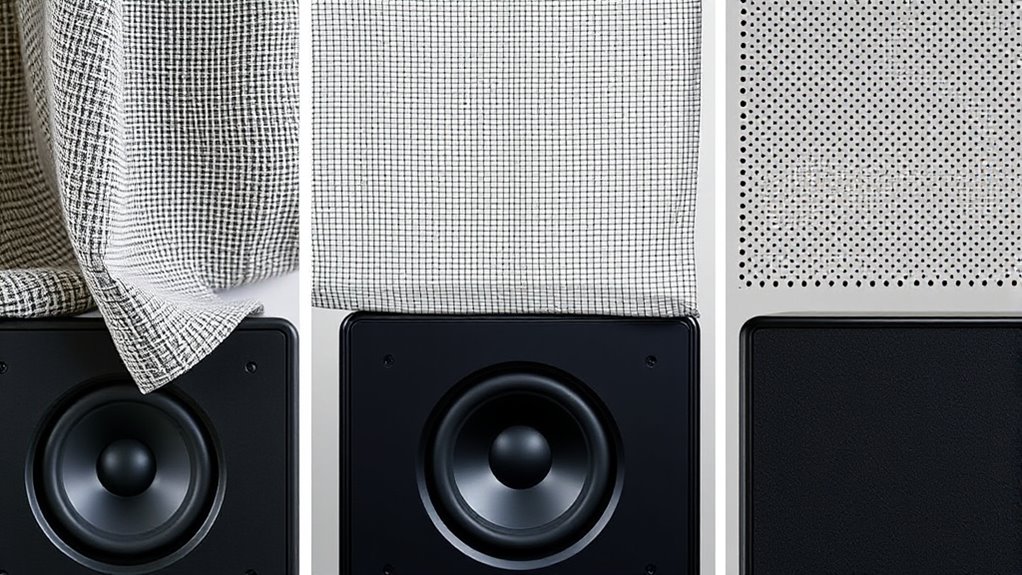
You’ll find a variety of acoustically transparent materials to choose from, each with unique fabrics and textures. Perforated screens and films offer different levels of sound permeability and visual appeal. Understanding these options helps you select the best material for your home theater setup. Additionally, selecting materials with appropriate acoustic properties ensures optimal sound quality and minimal visual distraction.
Fabric Varieties and Textures
When selecting fabric varieties and textures for acoustically transparent screens, understanding the different materials available is essential. Fabric textures vary widely, from smooth and tightly woven to more open and textured options. These textures influence both sound transparency and aesthetic appeal. Material options include polyester, linen, cotton, and specialized acoustical fabrics designed for sound permeability. Polyester is durable and affordable, making it a popular choice. Linen and cotton offer natural looks but may vary in durability. Acoustic-specific fabrics often feature open weaves that allow sound to pass through with minimal distortion. Your choice depends on your desired appearance and acoustic performance. Additionally, understanding sound transparency helps in selecting fabrics that optimize both acoustic and visual qualities. By exploring these fabric textures and material options, you ensure your screen meets both visual and sound transmission needs effectively.
Perforated and Perforated Films
Perforated and perforated film materials are popular choices for acoustically transparent screens due to their ability to balance sound transmission with visual concealment. These sound permeable materials feature small holes or patterns that let sound pass through while maintaining a clear view. Perforated films are lightweight, flexible, and easy to install, making them ideal for various settings. They come in different hole sizes, patterns, and materials, allowing you to customize both aesthetics and acoustic performance. Their perforations reduce sound reflection and help maintain sound clarity in a space. Whether you choose metal, vinyl, or other options, perforated films provide an effective solution for hiding speakers or equipment without sacrificing sound quality. This makes them a versatile choice for many acoustic environments. Additionally, factors affecting sound quality such as hole size and pattern play a crucial role in optimizing acoustic performance.
Installation Tips for Optimal Sound and Image Quality

Are you aiming to get the best sound and image quality from your acoustically transparent screen? Proper installation is key. Start with speaker placement; position your speakers directly behind the screen to maintain clarity and minimize sound distortion. Keep a consistent distance between speakers and the screen to ensure balanced audio. When choosing screen material, verify it’s compatible with your projector and supports your desired image quality. Mount the screen at the correct height, ideally eye level when seated, to optimize viewing angles. Use a level to ensure it’s perfectly straight, and secure all mounting points firmly. Avoid placing objects or furniture in front of the screen that could block sound or light, and always follow manufacturer instructions for installation. Additionally, understanding acoustic transparency can help you select the right screen for optimal sound performance.
Comparing Acoustically Transparent Screens to Traditional Screens

Acoustically transparent screens offer distinct advantages over conventional fixed or non-perforated projection surfaces, especially when integrating sound and image quality. They allow sound to pass through, eliminating the need for separate speakers and enhancing clarity. In terms of screen material durability, these screens tend to be resilient, but some may be more prone to tears or wear over time compared to traditional surfaces. When considering cost comparison, acoustically transparent screens typically cost more initially, but they can save money by reducing equipment needs and improving setup flexibility. Selecting the appropriate projection surface depends on your specific needs and budget constraints.
Common Myths and Misconceptions About Acoustically Transparent Screens

Many people believe that acoustically transparent screens always compromise sound quality or image clarity, but this isn’t true. This myth debunking helps you understand that modern materials and designs ensure high-quality audio and visuals. A common misconception is that these screens reduce sound fidelity considerably; however, advancements have minimized such effects, providing clear sound transmission. Clarifying these misconceptions, you’ll see that acoustically transparent screens are engineered to maintain ideal image sharpness while allowing speakers behind them to deliver clean audio. Don’t fall for the false idea that choosing an acoustically transparent screen means sacrificing performance. Instead, you benefit from a solution that combines excellent visual quality with effective sound transmission, making your home theater experience more immersive without compromises.
Tips for Maintaining and Caring for Your Acoustically Transparent Screen

To keep your acoustically transparent screen in top condition, regular cleaning and careful handling are essential. Start with gentle screen cleaning using a soft, dry cloth to remove dust and dirt. Avoid harsh chemicals or abrasive materials that can damage the fabric. For fabric maintenance, check for spots or stains and clean them promptly with a damp cloth or an appropriate fabric cleaner, following manufacturer instructions. Handle the screen carefully during cleaning and installation to prevent tears or deformation. Keep the screen away from direct sunlight and excessive moisture to preserve its material. Regularly inspecting the fabric ensures you catch any issues early. Proper care extends the lifespan of your screen, maintaining both its acoustic transparency and visual quality.
Frequently Asked Questions
Can Acoustically Transparent Screens Improve Sound Quality in Large Rooms?
Yes, acoustically transparent screens can improve sound quality in large rooms by enhancing sound absorption without sacrificing visual clarity. You’ll notice better clarity because these screens allow sound to pass through while reducing echoes and background noise. This makes conversations clearer and audio more accurate. By choosing the right screen, you create a more balanced acoustic environment, improving overall sound quality while maintaining a clean, professional look in your space.
Are There Budget-Friendly Options for Acoustically Transparent Screens?
Did you know that some acoustically transparent screens cost less than $200? Yes, there are affordable options that fit your budget considerations. You can find budget-friendly acoustically transparent screens made from quality materials, perfect for improving sound clarity without breaking the bank. These options guarantee you get good sound performance while staying within your financial limits, making your home or theater setup both effective and affordable.
How Do Acoustically Transparent Screens Affect Projector Brightness?
Acoustically transparent screens can slightly reduce projector brightness because of their screen gain and light diffusion properties. The screen gain determines how much light is reflected, while light diffusion spreads light evenly. If your screen has a lower gain, expect a small decrease in brightness. However, good quality acoustically transparent screens balance light diffusion and gain, ensuring you still get a clear, bright image without sacrificing sound transparency.
Do Acoustically Transparent Screens Come in Different Sizes and Aspect Ratios?
Yes, acoustically transparent screens come in various sizes and aspect ratios. You can choose from different material options like woven or perforated fabrics to suit your needs. Frame designs also vary, including fixed, motorized, or portable options, making it easy to find a setup that fits your space. This flexibility guarantees you get the perfect size and aspect ratio for ideal viewing and sound quality.
Can I Use an Acoustically Transparent Screen Outdoors?
Think of your acoustically transparent screen as a sturdy sail catching the wind. While it’s designed for indoor use, some models offer outdoor durability and weather resistance. If you want to use one outside, look for screens specifically built for weather resistance, with materials that withstand rain, sun, and wind. Otherwise, your screen may falter under outdoor elements, losing clarity and sound transparency over time.
Conclusion
Now that you’ve uncovered the ins and outs of acoustically transparent screens, you’re ready to make an informed choice. Think of these screens as the silent heroes of your home theater—allowing sound to flow seamlessly while delivering stunning visuals. With the right knowledge, you can guarantee your setup is perfectly tuned, turning your space into a symphony of sight and sound. Embrace the magic, and let your home theater shine like a beacon in the night.
Fall Picks
fall essentials
As an affiliate, we earn on qualifying purchases.