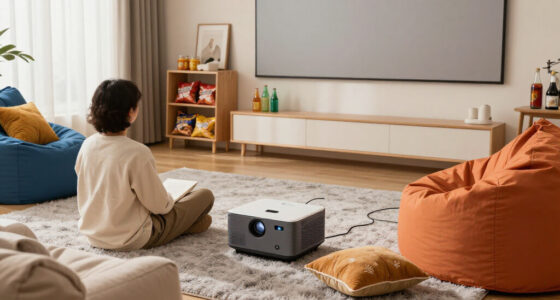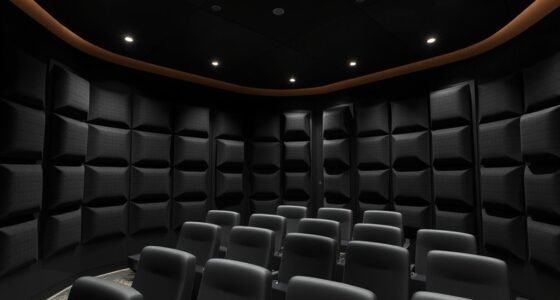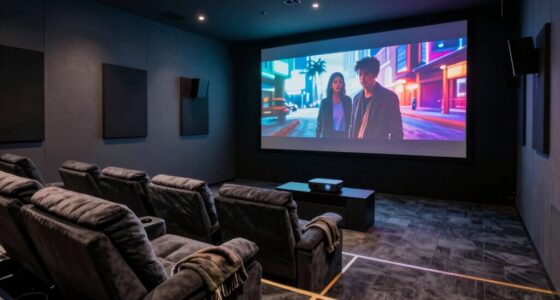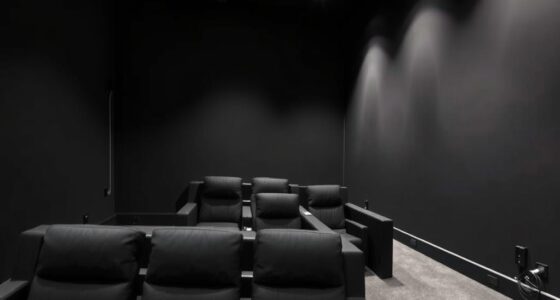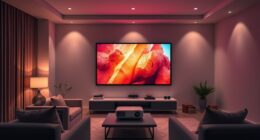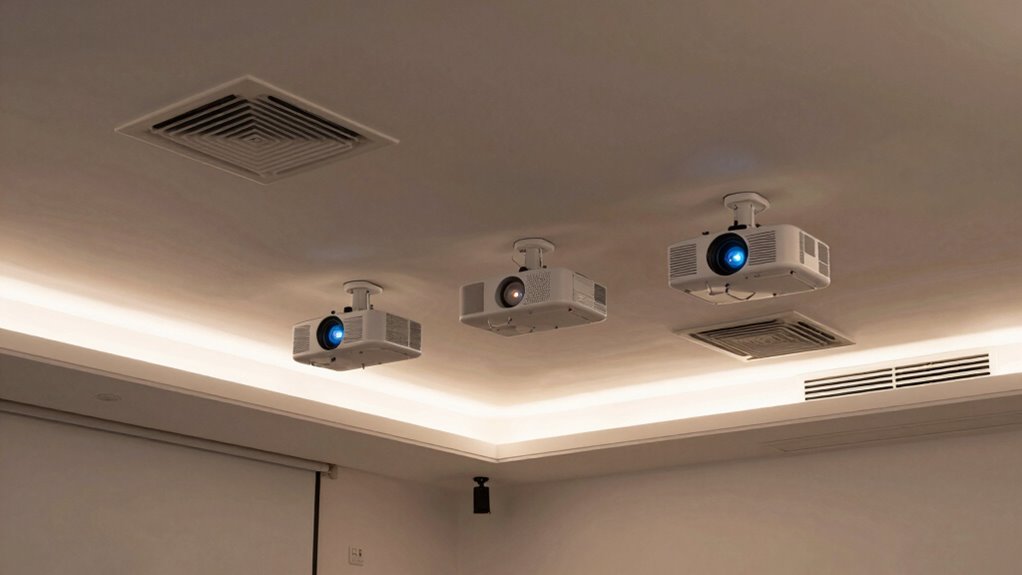
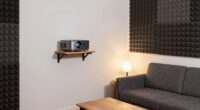
Proper ventilation planning in enclosed projector rooms is essential to prevent overheating, which can damage equipment and reduce image quality. Good airflow maintains safe temperatures, guarantees peak projector performance, and extends the lifespan of electronic components. It also helps avoid hot spots and discomfort. Without effective ventilation, you risk costly repairs and compromised viewing. Keep in mind, focusing on airflow and room layout now can make a significant difference—there’s more to learn about optimizing your setup.

Get your home office setup delivered free — and shop member deals
- Fast, free delivery on millions of items
- Access to Prime Big Deal Days deals on October 6–7
- Prime Video, Amazon Music and more included
Key Takeaways
- Proper ventilation prevents heat buildup, protecting equipment and ensuring optimal projector performance.
- Effective airflow management reduces hot spots and maintains consistent operating temperatures.
- Good ventilation extends projector lifespan by preventing overheating-related damage.
- Adequate planning avoids image quality issues like flickering and color distortions caused by heat stress.
- Considering room layout and airflow improves overall viewing comfort and reduces maintenance costs.
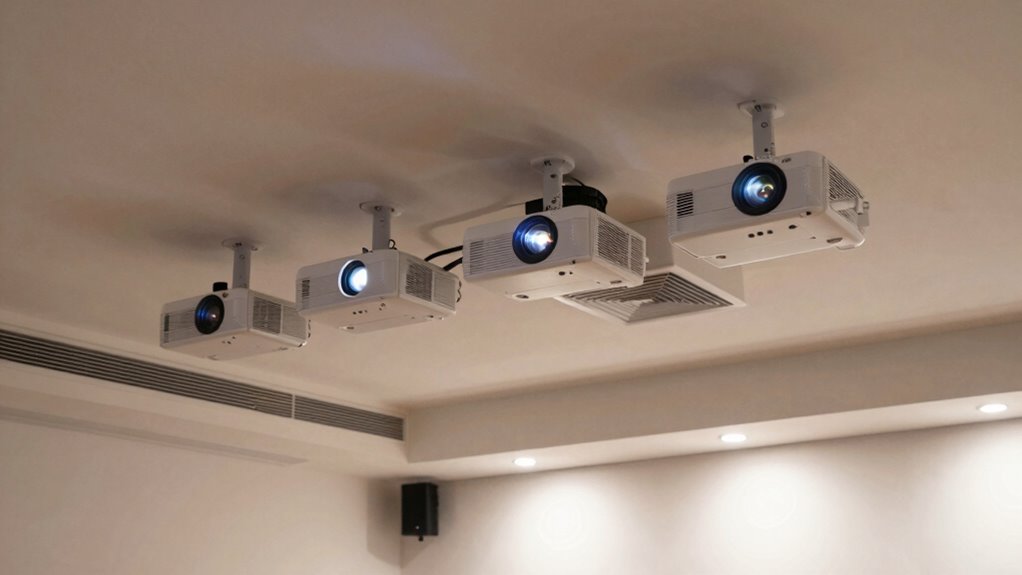
Have you ever considered how vital proper ventilation is for projector rooms? It’s more than just keeping the space comfortable; it’s about safeguarding your equipment and guaranteeing peak performance. When ventilation isn’t properly planned, heat buildup can become a serious issue, leading to overheating and potential damage to the projector. This is where airflow optimization plays a key role. By designing a system that promotes consistent and unobstructed airflow, you can prevent hot spots and make sure that heat dissipates efficiently. Good airflow means cooler operating temperatures, which directly supports the longevity of your projector and other electronic components.
Temperature control is at the heart of effective ventilation planning. Projectors generate significant heat during operation, and without a well-thought-out ventilation system, this heat can quickly accumulate. Elevated temperatures not only cause discomfort but can also trigger automatic shutdowns or reduce the lifespan of your equipment. Proper ventilation helps maintain a stable environment where temperature levels stay within safe ranges. This involves carefully choosing the right placement for vents and exhaust fans, as well as considering the room’s size and layout. When these elements are aligned, the room’s temperature remains consistent, and your projector can work at peak performance without the risk of overheating.
Neglecting ventilation planning can lead to more than just equipment issues; it can compromise the overall viewing experience. Overheated projectors might produce poor image quality, color distortions, or flickering. These problems can be avoided with proactive airflow management and temperature regulation. Additionally, a well-ventilated room contributes to a healthier environment by reducing humidity and preventing mold growth, which could otherwise damage equipment and degrade air quality. You also avoid the inconvenience and costs associated with frequent repairs or replacements caused by heat-related failures. Incorporating indoor air quality considerations such as humidity control can further enhance the environment and protect your equipment. Proper ventilation systems are essential in creating a safe environment that ensures both equipment longevity and user comfort. Furthermore, understanding the importance of ventilation systems can guide you in selecting the most effective solutions for your space.
A thorough understanding of heat dissipation techniques can greatly improve your room’s ventilation effectiveness and help maintain optimal operating conditions. In essence, thoughtful ventilation planning isn’t an afterthought; it’s a fundamental part of creating a reliable projector setup. It’s about more than just installing a fan; it’s about designing a system that actively manages airflow and temperature control to keep your equipment running smoothly. When you prioritize these elements, you guarantee that your projector performs at its best, delivering sharp images and vibrant colors without interruption. Proper ventilation extends the life of your projector and enhances the overall experience, making it a vital aspect of any enclosed projector room.
As an affiliate, we earn on qualifying purchases.
Frequently Asked Questions
How Often Should Ventilation Systems Be Inspected in Projector Rooms?
You should inspect your ventilation systems at least once every six months. Regular airflow testing helps guarantee proper circulation and identifies any blockages or inefficiencies early. Consistent ventilation maintenance keeps the system functioning at its best, preventing overheating and potential equipment damage. Neglecting these inspections can lead to poor air quality and increased fire risk, so stay proactive with routine checks to maintain a safe, well-ventilated projector room environment.
What Are the Signs of Poor Ventilation in Projector Rooms?
You’ll notice signs of poor ventilation in your projector room when air quality feels stuffy, or you experience lingering odors and increased dust. Humidity levels may fluctuate, causing discomfort or fogged lenses. You might also see condensation or mold growth. These issues indicate inadequate airflow, which hampers humidity control and air quality. Addressing these signs promptly by improving ventilation helps maintain a safe, comfortable environment for equipment and users.
Can Portable Fans Adequately Improve Airflow in Enclosed Projector Spaces?
Portable fans can help improve airflow in enclosed projector spaces, but they might not be enough alone. They provide some airflow enhancement, reducing heat buildup and stale air. However, for ideal ventilation, you should consider integrating these fans with a well-designed ventilation system. This combination ensures consistent air exchange, prevents overheating, and maintains a comfortable environment, especially during long presentations or high-intensity use.
Are Specific Air Filtration Systems Necessary for Projector Room Ventilation?
A stitch in time saves nine—so yes, specific air filtration systems are necessary for projector room ventilation. You need to prioritize air filter maintenance and consider ventilation system upgrades to effectively remove fumes and dust. Proper filtration keeps air clean, protecting equipment and your health. Regularly checking filters and upgrading systems as needed guarantees maximum airflow, making your projector room safer and more efficient.
How Does Ventilation Impact Projector Equipment Lifespan?
Ventilation directly impacts your projector equipment’s lifespan by maintaining ideal air quality and temperature regulation. Proper airflow prevents dust buildup and overheating, which can damage internal components. When ventilation is effective, it reduces the risk of overheating, extends the life of bulbs and electronics, and guarantees consistent performance. Neglecting ventilation can cause premature failures, costly repairs, and reduced projector efficiency, so prioritize good airflow to protect your investment.
As an affiliate, we earn on qualifying purchases.
Conclusion
Proper ventilation in enclosed projector rooms isn’t just a detail—it’s the backbone of a safe, efficient space. Think of it as the heartbeat that keeps everything running smoothly; without it, heat and fumes can build up like a brewing storm. By planning your ventilation carefully, you’re not just preventing damage—you’re ensuring your equipment and everyone inside stay cool, safe, and ready to perform. Remember, good airflow is the secret ingredient to a thriving projector room.
airflow management for electronic equipment
As an affiliate, we earn on qualifying purchases.
As an affiliate, we earn on qualifying purchases.
room ventilation system for projectors
As an affiliate, we earn on qualifying purchases.
As an affiliate, we earn on qualifying purchases.
Fall Picks
fall essentials
As an affiliate, we earn on qualifying purchases.