
Using a dedicated circuit for your home theater guarantees a stable, interference-free power supply that protects your equipment from noise, surges, and voltage fluctuations. It provides a consistent ground connection, making troubleshooting easier and reducing the risk of damage. Shared circuits can lead to interruptions, humming sounds, or potential damage from power issues. To get the most out of your setup and keep everything running smoothly, you should explore how a dedicated circuit can benefit you in more detail.
Key Takeaways
- A dedicated circuit provides a stable, interference-free power supply, reducing hums and noise in home theater systems.
- Shared circuits increase the risk of voltage fluctuations and grounding issues that can damage sensitive equipment.
- Using a dedicated circuit simplifies troubleshooting and ensures consistent ground connection for optimal performance.
- Dedicated circuits facilitate the installation of high-quality surge protectors, safeguarding devices from power surges and lightning strikes.
- Overall, a dedicated circuit enhances equipment safety, longevity, and provides a more reliable, high-quality home theater experience.
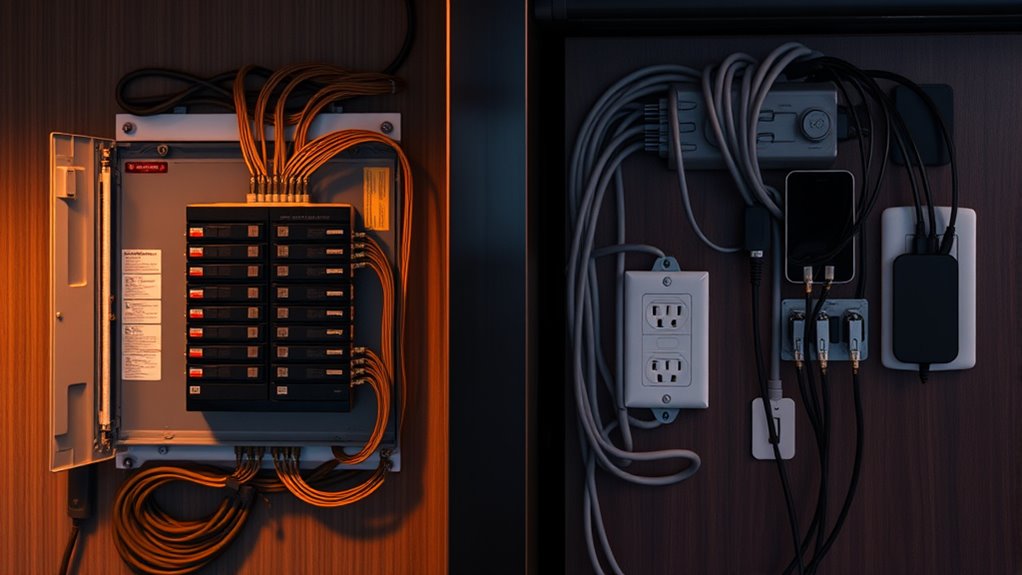
When setting up your home theater, choosing the right power supply is essential for peak performance. The way you power your equipment can considerably impact both the quality of your viewing experience and the longevity of your devices. One of the most critical decisions is whether to use a dedicated circuit or rely on shared power sources. Opting for a dedicated circuit guarantees that your home theater has a clean, stable supply of electricity, minimizing the risk of grounding issues that can cause noise or equipment malfunction. Grounding issues can introduce hums, buzzes, or even damage to sensitive components, so a dedicated circuit helps keep these problems at bay by providing a consistent ground connection and reducing interference from other household devices.
Surge protection plays an essential role regardless of your choice. When you have a dedicated circuit, it’s easier to incorporate high-quality surge protectors that shield your gear from voltage spikes caused by power surges or lightning strikes. These surges can fry delicate electronic components, leading to costly repairs or replacements. A dedicated circuit offers a cleaner and more reliable power flow, making surge protection devices more effective because they aren’t dealing with fluctuating loads from other appliances. This setup also simplifies troubleshooting since any power-related issues are more straightforward to diagnose without multiple devices sharing the same circuit. Additionally, a dedicated circuit reduces the likelihood of voltage fluctuations, which can negatively impact device performance and lifespan.
home theater dedicated circuit breaker
As an affiliate, we earn on qualifying purchases.
As an affiliate, we earn on qualifying purchases.
Frequently Asked Questions
How Do I Know if My Home Theater Needs a Dedicated Circuit?
You should consider a dedicated circuit for your home theater if you notice frequent power surges or your circuit breaker trips often when using your equipment. A dedicated circuit helps prevent overloads and guarantees stable power. If your equipment demands high power or you experience flickering lights, it’s a clear sign you need a dedicated circuit to safeguard your gear and avoid disruptions.
Can I Upgrade From Shared to Dedicated Circuits Easily?
Sure, upgrading from shared to dedicated circuits is straightforward—if you don’t mind flipping the circuit breaker, turning off power, and possibly rewiring. You’ll need to evaluate your power load and make certain your panel can handle the new circuit. It’s like giving your home theater its own VIP lane, but expect some effort and maybe a professional’s help to ensure everything’s wired correctly and safely.
What Are the Costs Involved in Installing a Dedicated Circuit?
The cost comparison for installing a dedicated circuit varies, typically ranging from $150 to $500 depending on your home’s wiring and local labor rates. The installation process involves hiring a licensed electrician to add a new circuit breaker and run wiring to your home theater area. Expect to pay for parts and labor, but investing in a dedicated circuit can protect your equipment and guarantee peak performance.
How Does Circuit Capacity Affect Home Theater Performance?
They say “a chain is only as strong as its weakest link,” and your home theater’s circuit capacity is no different. If your circuit can’t accommodate your equipment’s power demands, you risk power fluctuations and overloads, which can cause performance issues or damage. A higher capacity circuit ensures smooth operation, prevents overloads, and delivers consistent power, so your movie nights stay immersive and trouble-free.
Are There Specific Safety Precautions for Dedicated Circuits?
You should always follow safety precautions for dedicated circuits by ensuring proper grounding techniques and selecting the right circuit breaker types. Use grounding techniques to prevent electrical shocks and wiring issues, and choose circuit breakers designed for your equipment’s load to protect against overloads. Regularly inspect your dedicated circuit, and consult a licensed electrician to verify that grounding and breaker settings are correctly installed, ensuring safe and reliable operation.
surge protector for home theater equipment
As an affiliate, we earn on qualifying purchases.
As an affiliate, we earn on qualifying purchases.
Conclusion
Think of your home theater as a delicate orchestra; a dedicated circuit acts as a conductor, ensuring each instrument plays in harmony without interference. Shared power is like a crowded street, where sudden stops or surges can disrupt the flow. By choosing a dedicated circuit, you safeguard your equipment, allowing your cinematic symphony to perform flawlessly. Don’t let power issues turn your theater into chaos—give it the steady rhythm it deserves.
high-quality power strip for home theater
As an affiliate, we earn on qualifying purchases.
As an affiliate, we earn on qualifying purchases.
home theater power surge protector
As an affiliate, we earn on qualifying purchases.
As an affiliate, we earn on qualifying purchases.