When mounting on drywall or concrete, it’s important to understand each surface’s strength and use the appropriate hardware. Drywall needs expansion anchors or molly bolts to support weight safely, while concrete requires masonry anchors like wedge or sleeve types. Always check the weight capacity and install hardware properly to avoid damage or failure. If you keep these tips in mind, you can guarantee a secure, safe setup; more details can help you master every step.
Key Takeaways
- Choose appropriate anchors: toggle or molly anchors for drywall; sleeve or wedge anchors for concrete.
- Verify the weight capacity of anchors to prevent overloading and ensure secure mounting.
- Pre-drill holes suitable for the material and anchor type for proper installation.
- Use heavier-duty anchors and fasteners for concrete surfaces to support larger or heavier items.
- Always follow manufacturer instructions and consider material strength to ensure safety and durability.
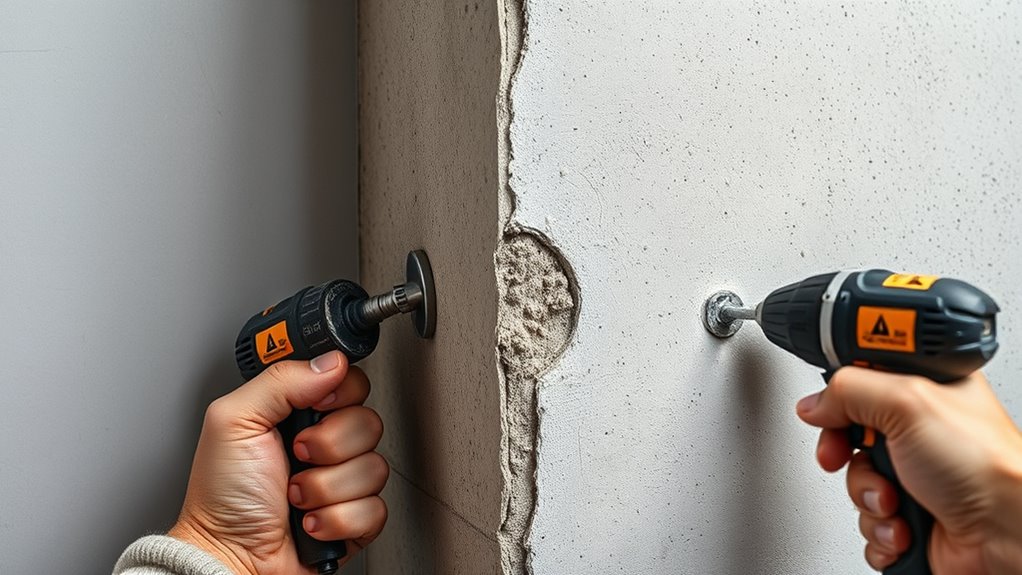
When it comes to mounting items, choosing the right surface is vital for safety and stability. The type of wall surface you’re working with directly influences the kind of anchor types you should select, as well as the overall weight capacity you can expect from your installation. Drywall and concrete are common surfaces, but they require different approaches to guarantee your items stay secure without risking damage or accidents. Understanding the strengths and limitations of each material helps you make informed decisions, whether you’re hanging a picture frame or installing a heavy shelf.
Drywall is lightweight and easy to work with, but it’s not designed to support heavy loads on its own. When mounting on drywall, you need to use appropriate anchors that distribute weight effectively and prevent the drywall from crumbling or pulling away. Toggle bolts, molly bolts, and plastic expansion anchors are popular choices because they expand behind the drywall, providing a solid grip. The key is to always check the anchor types for their specified weight capacity. If you’re hanging something lightweight, standard plastic anchors might suffice, but for heavier items, you’ll want anchors rated for higher weights. Exceeding the weight capacity can lead to the anchor pulling out or damaging the drywall, creating a safety hazard.
Concrete, on the other hand, offers a much more robust surface for mounting. It’s dense and can support considerably heavier loads without cracking or crumbling. When mounting on concrete, you’ll typically use masonry anchors, such as sleeve anchors or wedge anchors, which are designed specifically for this material. These anchors are inserted into pre-drilled holes and expand to grip the concrete tightly. Always check the anchor’s weight capacity to guarantee it can handle the item’s weight. Since concrete provides a stable base, you can generally hang heavier objects here, but it’s still vital to choose the correct anchor type for your specific needs. Using the wrong anchors or ignoring weight limits can result in anchors loosening or pulling out over time.
Additionally, the strength of the material plays a crucial role in determining how much weight it can safely support, emphasizing the importance of selecting the proper mounting hardware for each surface.
drywall toggle bolts for heavy pictures
As an affiliate, we earn on qualifying purchases.
As an affiliate, we earn on qualifying purchases.
Frequently Asked Questions
What Tools Are Essential for Mounting on Drywall Versus Concrete?
For mounting on drywall, you’ll need a drill with masonry bits, screwdrivers, and anchors suited for drywall, guaranteeing tool compatibility and easier installation. When working with concrete, use a hammer drill, heavy-duty masonry bits, and expansion anchors to handle the increased installation complexity. These tools help you secure items safely and efficiently, matching the material’s demands. Always choose tools appropriate for each surface to ensure a safe, sturdy mount.
How Do Weight Limits Differ Between Drywall and Concrete Mounting?
Your weight capacity varies considerably between drywall and concrete mounting. Drywall typically supports lighter loads, around 20-50 pounds, due to limited load distribution. In contrast, concrete can handle much heavier weights, often over 200 pounds or more, thanks to solid load distribution. Always check specific anchor and fastener ratings, and guarantee proper installation to prevent accidents or damage, especially when mounting heavy objects.
Can I Mount Heavy Objects on Drywall Without Additional Supports?
You shouldn’t attempt to hang heavy objects on drywall without extra supports; it’s like trying to hold a skyscraper with a toothpick. Drywall alone isn’t designed for substantial weight, so use anchors or reinforce the area. For drywall repairs or when working near concrete, guarantee proper installation and concrete sealing. This way, your artwork or shelves stay secure, and your walls remain intact, avoiding costly mishaps.
What Safety Precautions Should I Take When Drilling Into Concrete?
When drilling into concrete, prioritize safety by wearing personal protective equipment like safety goggles, gloves, and a dust mask. Always check for hidden wires or pipes before drilling to prevent accidents. Use proper drilling safety techniques, such as securing the drill and applying steady pressure. Keep your work area clear of debris and make certain good ventilation. These precautions help protect you from sparks, dust, and potential injuries during concrete drilling.
Are There Specific Anchors Recommended for Each Surface Type?
Yes, specific anchors are recommended for each surface type to guarantee safety and stability. For drywall, you should use plastic or toggle anchors that provide surface compatibility and strong holding power. For concrete, heavy-duty anchors like wedge or sleeve anchors are best suited. Always choose the right anchor type based on your surface, and follow manufacturer instructions to ensure proper installation and secure mounting.
masonry anchors for concrete walls
As an affiliate, we earn on qualifying purchases.
As an affiliate, we earn on qualifying purchases.
Conclusion
No matter if you’re mounting on drywall or concrete, safety should always come first. While drywall might seem easier, using proper anchors guarantees your items stay secure and prevent accidents. Don’t skip the precautions—taking the right steps protects your belongings and keeps your space safe. So, whether you choose drywall or concrete, invest in quality hardware and follow installation guidelines. It’s worth it for peace of mind and a job well done.
molly bolts for drywall mounting
As an affiliate, we earn on qualifying purchases.
As an affiliate, we earn on qualifying purchases.
concrete wall anchors for shelves
As an affiliate, we earn on qualifying purchases.
As an affiliate, we earn on qualifying purchases.