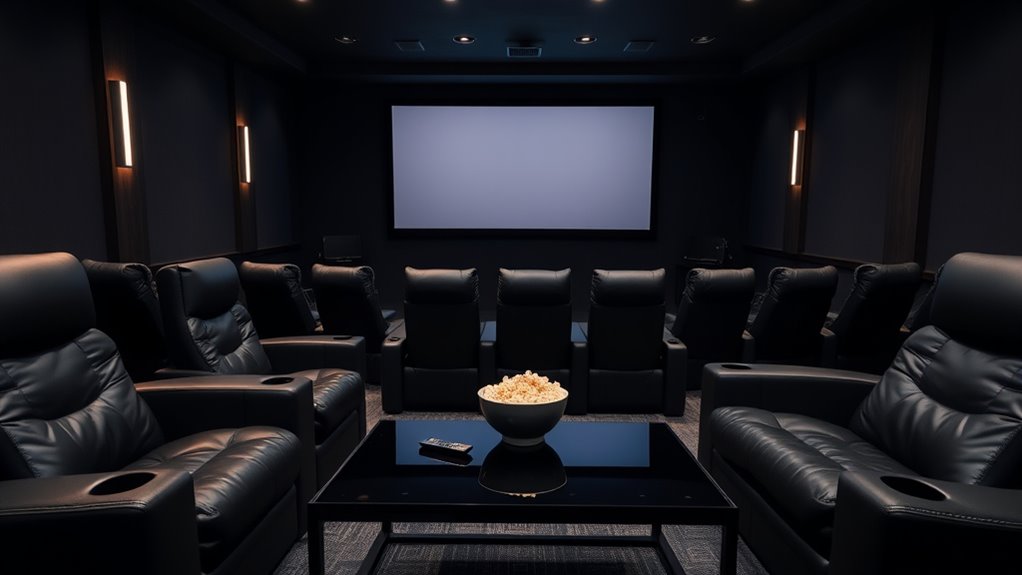

To optimize your home theater seating, start by positioning your seats about 1.5 to 2.5 times the screen width away from the projector for clear images and comfortable viewing. Arrange them to form an arc around the screen, ensuring they’re at ear level for better sound perception. Proper speaker placement and acoustic treatment enhance sound quality, while testing different distances helps find perfect balance. Keep exploring for more tips to create an immersive experience.
Key Takeaways
- Position seats at an optimal distance from the projector screen, typically 1.5 to 2.5 times the screen width for immersive viewing.
- Arrange seating to form an arc around the center of the room for balanced sound and clear sightlines.
- Maintain front speakers at ear level when seated and align them with the screen for optimal audio clarity.
- Space seats to allow acoustic treatments and speaker placement, reducing echoes and sound diffusion.
- Consider room size, shape, and acoustic treatments to create a comfortable, immersive environment with proper viewing angles and sound distribution.

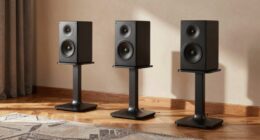
Creating the perfect home theater experience starts with selecting the right seating. Once you’ve chosen your seats, it’s essential to consider how your entire setup works together to produce optimal sound and picture quality. One of the key factors here is speaker placement. Properly positioned speakers ensure that sound travels evenly throughout the room, creating an immersive experience. You want your speakers to be at ear level when seated, with the front speakers aligned with your screen for clear dialogue and accurate sound effects. The placement of surround and rear speakers should be strategically around your seating area, ideally forming an arc that envelops you without causing sound imbalance or echoes. Keep in mind that the distance between your seats and speakers influences how well you perceive sound. Too close, and you might miss the full effect; too far, and sound may become diffused or delayed. It’s worth experimenting with speaker placement before finalizing your seating layout to ensure a balanced audio experience.
Additionally, considering room acoustics and how sound interacts with surfaces can significantly impact your listening quality. Acoustic treatment plays a vital role in enhancing your home theater’s sound quality. Acoustic panels, bass traps, and diffusers help absorb or scatter sound waves, reducing unwanted echoes and reverberations that can muddy audio clarity. By strategically placing acoustic treatment materials on walls, ceilings, and corners, you can greatly improve sound accuracy. This is especially important in projector rooms, where reflective surfaces can bounce sound around unpredictably. Proper acoustic treatment ensures that sound reaches your ears cleanly and evenly, regardless of where you’re seated. It also helps in controlling low-frequency sound waves that can otherwise cause boomy or muddled audio. When planning your room’s layout, consider the placement of acoustic treatments in relation to your speakers and seating positions. This integrated approach creates a balanced environment where sound is crisp, clear, and evenly distributed, allowing you to fully enjoy your movies and music.

Home Theater Seating Seats, Movie Theater Chairs Theater Recliner with 7 Colors Ambient Lighting, Lumbar Pillow, Touch Reading Lights, Tray Table, Power Recline, with Center Drop Down Console, Black
HOME THEATER SEATING: A long day finally comes home to you and you need a movie? Or a…
As an affiliate, we earn on qualifying purchases.
As an affiliate, we earn on qualifying purchases.
Frequently Asked Questions
How Do I Choose the Best Seat for Different Screen Sizes?
To pick the best seat for different screen sizes, consider the viewing distance that matches your screen’s dimensions, usually about 1.5 to 2.5 times the screen width. You should also think about soundproofing techniques to enhance audio clarity and make lighting adjustments to reduce glare. Test different spots, ensuring you get ideal picture quality and sound, and adjust your seating accordingly for a comfortable, immersive experience.
What’s the Ideal Number of Seats for a Small Home Theater?
For a small home theater, aim for 3 to 4 seats to keep the space cozy yet functional. Focus on acoustic treatments to improve sound quality and arrange lighting to minimize glare and shadows. This setup ensures everyone has a good view and sound experience. Keep the layout flexible so you can adjust seating and lighting as needed, creating an inviting environment for movie nights.
How Can I Optimize Seating for Multiple Viewing Angles?
Imagine sharing unforgettable movie nights with friends, feeling perfectly immersed from every angle. To optimize seating for multiple viewing angles, arrange seats in a gentle curve around your screen, ensuring everyone’s eyes are aligned. Use audio calibration to balance sound, and lighting control to reduce glare, creating a comfortable environment. This setup guarantees that each viewer experiences immersive visuals and crisp audio, making your home theater truly enthralling for all.
Are There Ergonomic Considerations for Extended Viewing Comfort?
To guarantee extended viewing comfort, focus on ergonomic posture and lumbar support. Choose seats with adjustable features that allow you to maintain a natural spine alignment, reducing fatigue. Use cushions or lumbar supports to improve posture during long sessions. Proper seat height and angle help prevent neck strain, while supportive padding keeps you comfortable. Prioritizing these ergonomic considerations makes your home theater experience more enjoyable and less tiring over time.
How Do I Prevent Sound Interference Between Seats?
You might worry about sound interference ruining your viewing experience, but soundproofing techniques and smart seat arrangement tips can help. Position seats with adequate space and stagger them to minimize sound overlap. Use acoustic panels or curtains to absorb noise, and consider placing sound-absorbing materials behind seats for added clarity. These approaches make certain each seat enjoys clear sound without interference, elevating your home theater experience to professional standards.

CANMOV Electric Power Recliner Chair with Adjustable Headrest,Breathable Faux Leather Home Theater Seating with Ambient Lighting,Cup Holders,Hidden Arm Storage,USB,Type-C Ports,Black
Home Theater Seating:This movie theater chairs supports a wide range of backrest adjustment from 105° to 150°. Whether…
As an affiliate, we earn on qualifying purchases.
As an affiliate, we earn on qualifying purchases.
Conclusion
Now, as you finalize your home theater layout, remember that the right seating distance isn’t just about ideal viewing—it’s about creating a space where every movie night feels like a personal cinema. Sometimes, the perfect seat finds you just when you least expect it, turning an ordinary room into an unforgettable experience. So trust your instincts, adjust your setup, and enjoy the magic of your custom theater—because the best seats are the ones you feel most at home in.

8 Pack Self-Adhesive Soundproof Wall Panels, 12 x 12 x 0.47 in Sound Proof Foam Panels for Walls, 1.2lb/ft³ High Density, Thicker 0.47in, Acoustic Panel, Peel and Stick Wall Panel Studio Black
【Excellent Quality】: This wall soundproofing foam board is made of high-quality 100% polyester, odorless and flame retardant. There…
As an affiliate, we earn on qualifying purchases.
As an affiliate, we earn on qualifying purchases.

ULTIMEA 7.1ch Soundbar with Wireless Subwoofer, Virtual Surround Sound System for TV, App Control, 410W Peak Power, Sound bar for TV, 4 Wired Surround Speakers, Home Theater Sound System Poseidon D70
7.1ch Virtual Surround Sound System: Upgraded from the 5.1ch Poseidon D50, the Poseidon D70 meets more needs with…
As an affiliate, we earn on qualifying purchases.
As an affiliate, we earn on qualifying purchases.