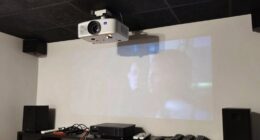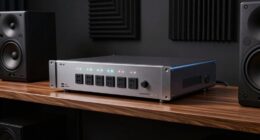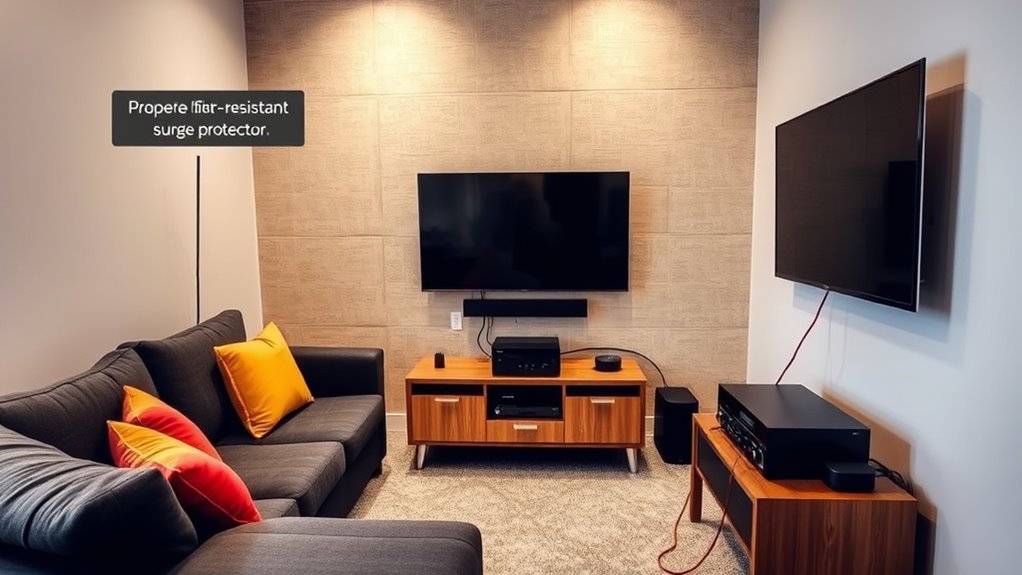

To guarantee fire safety in your home theater, organize cables using ties and sleeves to prevent overheating and tripping hazards. Keep fire extinguishers rated for electrical fires nearby and check them regularly. Avoid overloading outlets and use surge protectors that can handle your equipment’s demand. Maintain clear, unobstructed access and stay vigilant for signs of wear on cables and devices. Continuing with these safety tips helps create a safer entertainment space for everyone.
Key Takeaways
- Organize cables with ties or sleeves to prevent overheating and tripping hazards.
- Use surge protectors rated for high-demand electronics and avoid daisy-chaining.
- Keep fire extinguishers (Class C) accessible near the home theater setup.
- Regularly inspect and replace damaged cables or equipment to prevent electrical fires.
- Position heat-generating devices away from flammable materials and ensure proper ventilation.
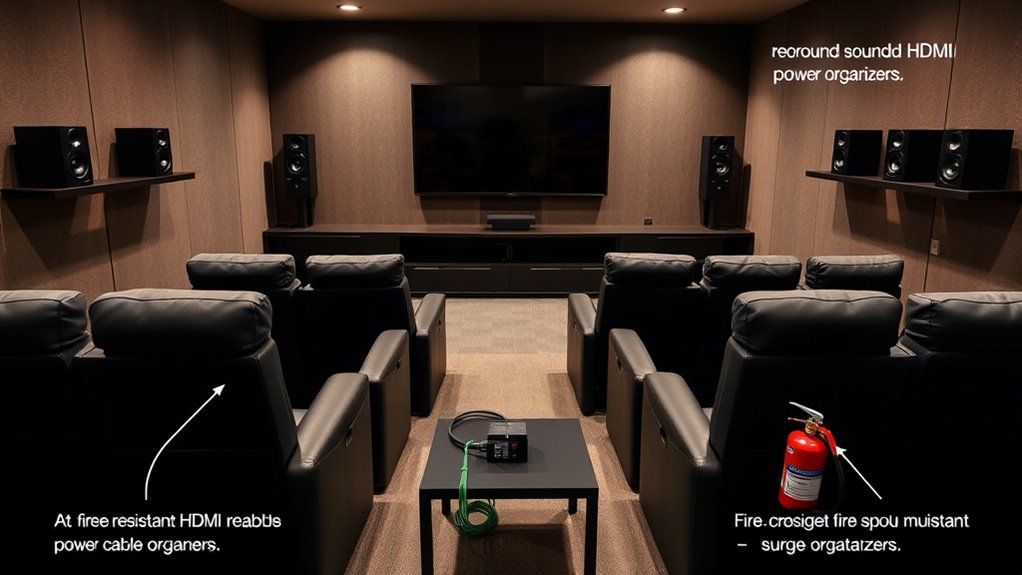
Creating a home theater can bring endless entertainment, but it also introduces potential fire hazards if safety precautions aren’t taken. One of the most important steps you can take is ensuring proper cable management. When cables are tangled, scattered, or left unorganized, they can overheat or get damaged, increasing the risk of electrical fires. Use cable ties, clips, or sleeves to keep cords neat and secure. Avoid running cables under rugs or furniture, where heat can build up and damage the insulation. Regularly inspect your cables for wear, fraying, or exposed wires, and replace any damaged ones immediately. Proper cable management not only reduces fire risks but also makes troubleshooting easier and prevents tripping hazards, keeping your setup safer overall.
Additionally, incorporating projector technology that emphasizes safety features can further protect your setup.
Another critical safety aspect is fire extinguisher placement. You should have at least one fire extinguisher rated for electrical fires (Class C) within easy reach of your home theater area. Place it near the entrance or in a location that’s accessible without obstruction. Don’t hide it behind furniture or in hard-to-reach spots, as quick access can make all the difference during an emergency. Keep the extinguisher’s pressure gauge in the green zone and check it regularly to ensure it’s fully charged. Familiarize yourself with how to operate it so you can act swiftly if needed. Remember, a fire extinguisher is a crucial safety tool, and having it close by ensures you’re prepared for any electrical sparks or small fires that could occur.
Beyond cable management and extinguisher placement, be mindful of your equipment’s placement overall. Avoid overloading electrical outlets or daisy-chaining power strips, as this can cause overheating and sparks. Use surge protectors designed for high-demand electronics, and ensure they have sufficient capacity for all your devices. Keep flammable materials away from heat sources, such as speakers, projectors, or lighting systems, which can generate heat during extended use. Regularly clean your equipment to prevent dust buildup, which can contribute to overheating or even short circuits.
Electrical fire rated fire extinguisher for home theater
As an affiliate, we earn on qualifying purchases.
As an affiliate, we earn on qualifying purchases.
Frequently Asked Questions
How Often Should I Check My Home Theater Wiring for Safety?
You should check your home theater wiring for safety at least once every six months. Regular cable maintenance and wiring inspections help prevent electrical hazards like short circuits or overheating. During inspections, look for frayed cables, loose connections, or signs of damage. Make certain all wiring is properly organized and away from heat sources. Staying proactive with these checks keeps your system safe and reduces the risk of fire or equipment failure.
What Are the Best Fire-Resistant Materials for Home Theater Furniture?
Think of your home theater furniture as a shield against fire hazards. For the best protection, choose fire-resistant upholstery and flame-retardant fabrics. These materials act like a fireproof suit, preventing flames from spreading quickly. Look for furniture that’s specifically treated or made with these materials, ensuring safety without sacrificing comfort. By selecting fire-resistant options, you create a safer environment where entertainment and peace of mind go hand in hand.
Can I Use Extension Cords Safely With Home Theater Equipment?
Yes, you can use extension cords safely with your home theater equipment if you follow proper extension cord safety practices. Always choose heavy-duty, appropriately rated extension cords and avoid daisy-chaining multiple cords. Use power strip usage that has surge protection and sufficient outlets to prevent overloads. Regularly inspect cords for damage, and never run cords under rugs or furniture. This guarantees your setup remains safe and reduces fire hazards.
What Are the Signs of Electrical Overload in My Home Theater?
You’ll notice circuit overloads when your circuit trips frequently or your breakers keep shutting off. Damaged wiring can cause flickering lights or a burning smell. If your home theater’s power strips feel warm or if outlets spark when you plug in devices, these are signs of electrical overload. To stay safe, avoid overloading circuits, check for damaged wiring regularly, and consider consulting an electrician if you notice any issues.
How Should I Plan an Emergency Evacuation in a Home Theater Setup?
You should plan an emergency evacuation by identifying clear escape routes from your home theater area and ensuring they’re unobstructed. Practice your escape plan regularly, so everyone knows how to exit quickly. Keep emergency supplies like a flashlight, first aid kit, and fire extinguisher nearby. Make sure all family members are familiar with the plan, and consider installing smoke detectors to alert you early in case of fire.
Cable management sleeves and ties for electronics
As an affiliate, we earn on qualifying purchases.
As an affiliate, we earn on qualifying purchases.
Conclusion
Remember, just like Icarus who soared too close to the sun, neglecting fire safety can lead to a fiery fall. By properly setting up your home theater and staying vigilant, you safeguard your sanctuary from disaster. Think of your equipment as a delicate flame—you control its power, not the other way around. Stay cautious, follow safety tips, and enjoy your cinematic experience without risking a tragic ending. Your home, like a fortress, is worth protecting.
Surge protector for high-demand home theater equipment
As an affiliate, we earn on qualifying purchases.
As an affiliate, we earn on qualifying purchases.
Home theater safety fire prevention kit
As an affiliate, we earn on qualifying purchases.
As an affiliate, we earn on qualifying purchases.