Laser projectors use solid-state light sources like laser diodes, which deliver brighter, more vivid images while consuming less energy than traditional lamps. They combine red, green, and blue lasers for vibrant color accuracy and employ advanced beam modulation techniques for sharp, smooth visuals. These projectors are more durable, energy-efficient, and capable of producing high-resolution images with minimal motion blur. Keep exploring to discover how these technologies create stunning visuals and improve overall performance.
Key Takeaways
- Laser projectors use solid-state light sources like lasers for brighter, more vivid images and longer lifespan.
- They combine red, green, and blue lasers to produce a broad, accurate color spectrum.
- Beam modulation controls laser intensity and position for sharper images and smoother motion.
- Advanced optics shape and direct laser beams to enhance image quality and resolution.
- Benefits include higher energy efficiency, better color fidelity, and improved durability over traditional lamp-based projectors.
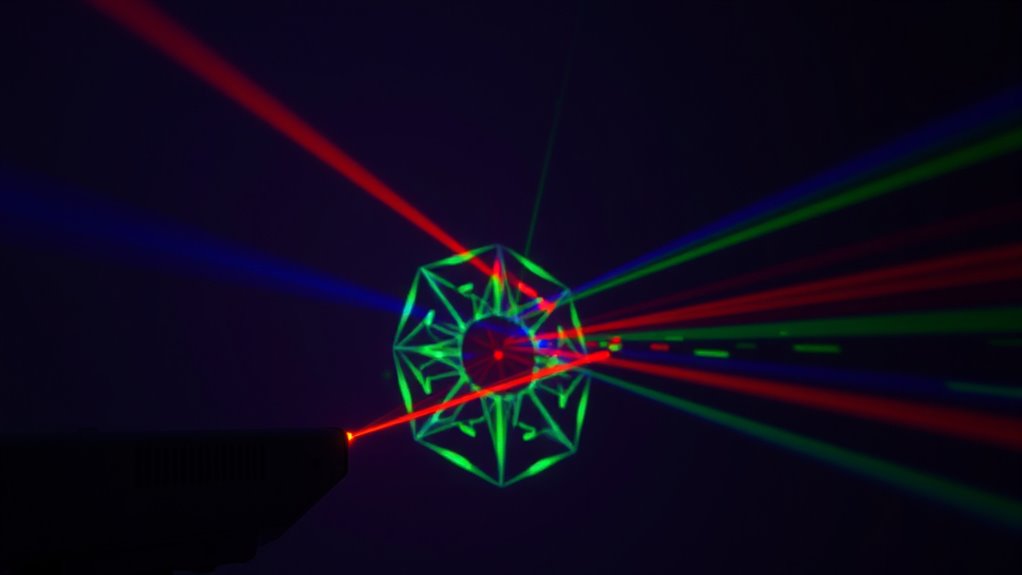
Have you ever wondered how modern projectors produce such bright, vivid images? The secret lies in the way laser projectors generate and control light. Unlike traditional lamp-based projectors, laser projectors use solid-state light sources, which are more efficient and capable of delivering stunning visuals. At the core of their brilliance is the process of color mixing, where different laser wavelengths—red, green, and blue—combine to produce a broad spectrum of colors. This precise color blending results in images that are not only bright but also rich and vibrant. The ability to accurately mix colors is essential for creating lifelike images, and laser projectors excel in this area thanks to their advanced beam modulation techniques.
Beam modulation is the method by which laser projectors control the intensity, position, and shape of the laser beams. Think of it as a way to finely tune the light to craft detailed images on a screen. Instead of relying on spinning color wheels or filters like traditional projectors, laser systems manipulate the laser beams directly, enabling faster and more precise control. This direct modulation allows for smoother color transitions and sharper image details, even at high resolutions. It also helps reduce motion blur, making laser projectors ideal for dynamic visuals, like sports or gaming.
When you look at a laser projector’s image, you’re fundamentally seeing the result of complex beam modulation and color mixing working together seamlessly. The laser sources emit narrow, intense beams that are then directed and shaped by sophisticated optics. These beams are rapidly turned on and off or adjusted in intensity to produce the precise shades and tones needed for the image. Because laser beams can be modulated at incredibly high speeds, the projector can render images with exceptional clarity and color accuracy. This combination of color mixing and beam modulation not only enhances picture quality but also improves energy efficiency and longevity, making laser projectors a more sustainable choice. Additionally, color fidelity is significantly improved in laser projectors compared to traditional systems, further elevating their image quality.
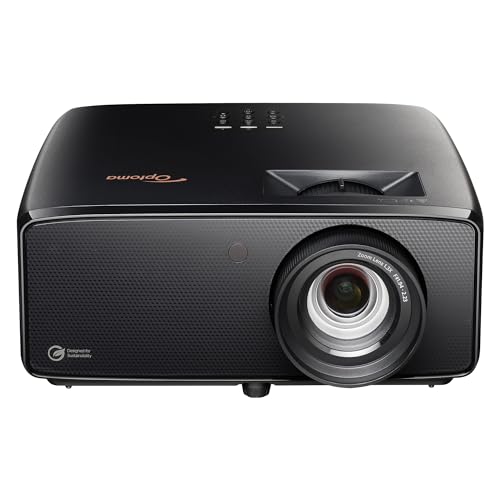
Optoma UHZ36 4K UHD Laser HDR Home Theater Projector – Black
- 4K UHD Resolution: See the difference in clarity
- HDR Support: Enjoy vibrant, detailed images
- Filmmaker Mode: Preserves original director's vision
As an affiliate, we earn on qualifying purchases.
As an affiliate, we earn on qualifying purchases.
Frequently Asked Questions
How Long Do Laser Projectors Typically Last?
Laser projectors typically last around 20,000 to 30,000 hours, depending on laser diode lifespan and usage. You can expect their performance to stay consistent with proper maintenance, which usually involves cleaning filters and checking connections regularly. By following recommended maintenance frequency, you’ll extend your projector’s life. Keep in mind that intense use or neglect can shorten lifespan, so regular upkeep guarantees the best performance over many years.
Are Laser Projectors Suitable for Outdoor Use?
Yes, laser projectors are suitable for outdoor use, but you need to take into account weather resistance and installation challenges. You’ll want models with weather-resistant features to withstand rain, wind, and dust. Proper installation is vital to guarantee stability and peak performance, especially in challenging outdoor conditions. By choosing a projector designed for outdoor environments and planning a secure setup, you can enjoy vibrant displays outside without worries.
What Safety Precautions Are Necessary With Laser Projectors?
You need to follow laser safety guidelines to prevent eye injury. Always wear appropriate eye protection when operating or near laser projectors, especially during setup or maintenance. Keep the laser beam directed away from people’s eyes and avoid looking directly into the laser source. Use proper signage and barriers to alert others about laser use. These precautions guarantee safe operation and protect everyone from potential hazards associated with laser projectors.
Can Laser Projectors Be Used in Small Rooms?
You can definitely use laser projectors in small rooms, but keep in mind that room size impacts projection quality. In tight spaces, the image might be less vibrant or clear if the projector isn’t properly adjusted. To get the best results, guarantee your projector is correctly calibrated for small rooms, and position it at the right distance. This way, you’ll enjoy sharp, vivid images without compromising safety or quality.
How Do Laser Projectors Compare in Cost to Traditional Projectors?
Laser projectors generally cost more upfront than traditional projectors, but their long-term affordability analysis shows savings on maintenance and bulb replacements. You’ll find that the cost comparison favors laser projectors over time, thanks to their durability and energy efficiency. While the initial investment is higher, you benefit from better image quality, less upkeep, and lower operating costs, making them a smart choice if you’re looking for a long-term solution.

Optoma GT2000HDR Ultra-Compact Short Throw Full HD Home Laser Projector
- Eco-Friendly Design: Environmentally conscious construction
- Bright 3500 Lumens: High brightness for clear images
- External Power Supply: Detachable power source
As an affiliate, we earn on qualifying purchases.
As an affiliate, we earn on qualifying purchases.
Conclusion
Now that you know the basics, you’ll appreciate how laser projectors use solid-state light for stunning visuals. Did you know that laser projectors can last up to 20,000 hours without significant brightness loss? That means fewer replacements and more consistent quality over time. As you explore this technology, you’ll find it offers brighter, sharper images with greater energy efficiency. Embrace the future of projection and enjoy breathtaking visuals that truly stand out.

ViewSonic LS740HD 1080P Laser Projector, 5500 Lumens, Full HD Home Theater
- Brightness: 5500 Lumens for Bright Images
- Resolution: Full HD 1080p Clarity
- Zoom: 1.3x Optical Zoom
As an affiliate, we earn on qualifying purchases.
As an affiliate, we earn on qualifying purchases.

Optoma HZ41 4600-Lumen Full HD Laser DLP Home Theater and Gaming Laser Projector – Black
- Brightness: 4600 ISO Lumens
- Throw Ratio: 1.48 to 1.62:1
- Refresh Rate: 120 Hz
As an affiliate, we earn on qualifying purchases.
As an affiliate, we earn on qualifying purchases.