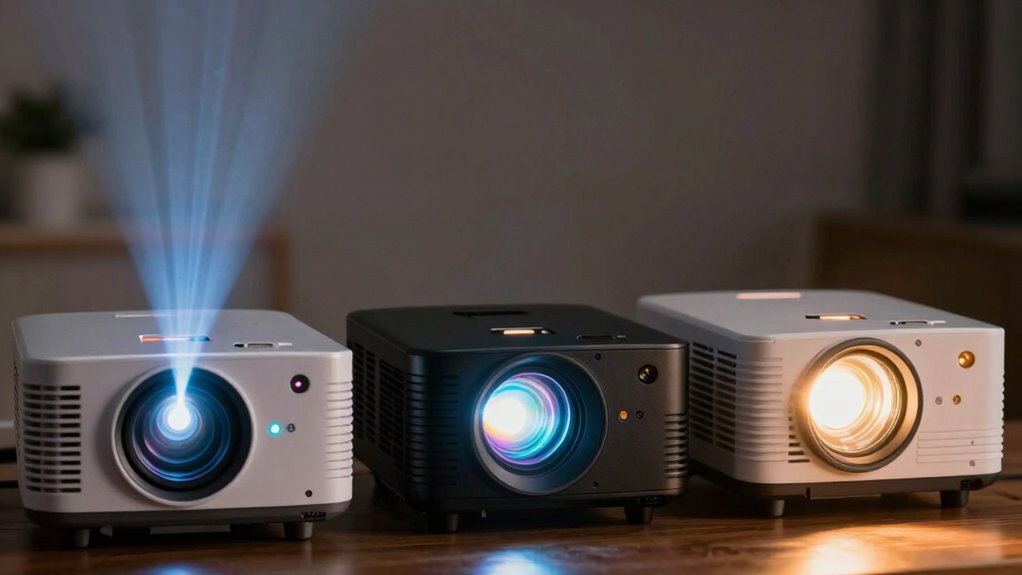
In daily use, you’ll notice laser projectors produce brighter, sharper images that stay vibrant longer and require less maintenance, though they come with a higher upfront cost. LED projectors are energy-efficient, inexpensive, and require minimal upkeep, making them great for casual use. Lamp projectors, on the other hand, can degrade over time with duller images and frequent lamp replacements, increasing ongoing expenses. To understand which option suits your needs best, keep exploring the details below.
Key Takeaways
- Laser projectors provide brighter, sharper images with consistent quality over time, ideal for well-lit environments.
- LED projectors are energy-efficient, produce decent image quality, and require minimal maintenance.
- Lamp projectors often need frequent lamp replacements, leading to higher ongoing maintenance and reduced image clarity.
- Laser and LED projectors consume less power, lowering operating costs compared to traditional lamp models.
- Cost considerations vary: laser projectors have higher upfront costs but better longevity; LED projectors are more budget-friendly.

When choosing a projector for daily use, understanding the differences between laser, LED, and lamp projectors can help you make an informed decision. One of the key aspects to consider is image quality. Laser projectors generally offer the best image quality, with brighter, sharper images that maintain clarity even in well-lit rooms. They produce a more consistent brightness and color accuracy over time, which means your images remain vibrant for longer periods without deterioration. LED projectors provide decent image quality, but they tend to have slightly lower brightness and color richness compared to laser models. Lamp projectors, while historically popular, often struggle with image consistency and color accuracy as the lamp ages, leading to duller images and reduced sharpness. If crisp, vivid visuals are a priority, laser projectors are typically the better choice.
Laser projectors offer the clearest, brightest images with long-lasting color accuracy for daily use.
Power consumption is another important factor that influences daily use. Laser projectors are generally more energy-efficient than traditional lamp models, consuming less power while delivering high brightness levels. This efficiency translates to lower electricity bills and less heat generated, which can extend the lifespan of the device. LED projectors also excel here, as they consume even less power than laser models. They are ideal for environments where energy savings matter, such as in offices or homes with frequent projector use. On the other hand, lamp projectors tend to draw more power, partly because they rely on high-wattage lamps that need frequent replacements. These lamps also generate more heat, requiring additional cooling and maintenance, which adds to the overall operating costs. Additionally, the technology used in projectors can significantly impact their performance and longevity. A better understanding of projection technologies can help you make a more informed choice based on your specific needs.
In daily use, you’ll find that laser projectors, though often more expensive upfront, pay off through superior image quality and lower power consumption over time. They also tend to have longer lifespans, reducing the need for frequent replacements. LED projectors are a more budget-friendly option that still offers good performance with the added benefit of lower energy use and less maintenance. Lamp projectors, while historically used in many settings, may become less practical long-term due to higher power demands, shorter lifespan, and the ongoing cost of replacing lamps.
Ultimately, your choice hinges on what matters most to you—whether it’s image quality, energy efficiency, or cost. If you want the clearest visuals with less ongoing expense, laser projectors are a solid investment. If you’re looking for a more affordable, energy-efficient option with decent quality, LED projectors can serve you well. And if budget constraints are tight or you already own a lamp projector, knowing its limitations can help you plan for upgrades in the future.
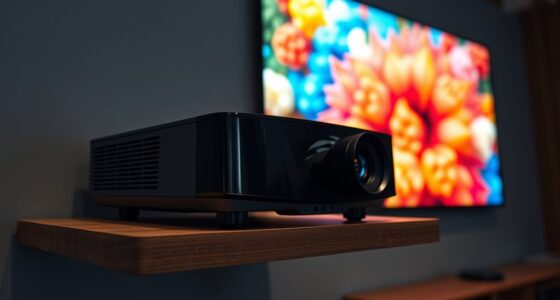
laser projector for home theater
As an affiliate, we earn on qualifying purchases.
As an affiliate, we earn on qualifying purchases.
Frequently Asked Questions
Which Projector Type Is Most Energy-Efficient for Daily Use?
Laser projectors are the most energy-efficient for daily use because they consume less power while providing bright, high-quality images. Their advanced light source technology guarantees better power efficiency and longer lifespan compared to LED and lamp projectors. If you want to reduce energy consumption and enjoy consistent performance, laser projectors are the best choice. They balance brightness and efficiency, making them ideal for frequent use without skyrocketing power costs.
How Do Maintenance Needs Differ Among Laser, LED, and Lamp Projectors?
You’ll find that maintenance needs vary among projector types. Lamp projectors require frequent bulb replacements and need cooling systems to prevent overheating. LED projectors have longer-lasting components, so they seldom need bulb changes, and their cooling requirements are minimal. Laser projectors demand less maintenance overall, with virtually no bulb replacements and efficient cooling systems. Your choice depends on balancing maintenance demands with performance and longevity.
Are Certain Projectors Better Suited for Outdoor Daily Use?
Think of choosing a projector like selecting a trusty outdoor companion. Laser projectors excel in outdoor durability and longer-lasting brightness, making them ideal for daily outdoor use. LED projectors are portable and energy-efficient, perfect for quick setups, while lamp projectors might struggle outdoors due to sensitivity to environmental factors. For consistent outdoor performance, laser projectors stand out, ensuring you get bright, reliable images no matter the weather.
How Does Color Accuracy Vary Between Projector Types Over Time?
You’ll notice color accuracy varies over time, especially with different projector types. Laser projectors generally maintain color quality longer due to minimal color degradation, but calibration challenges can arise after extended use. LED projectors tend to preserve color consistency better initially but may face gradual color shifts. Lamp projectors often experience more significant color degradation over time, requiring frequent recalibration to guarantee accurate colors in your daily viewing.
Which Projector Offers the Longest Lifespan for Regular Use?
You’ll find LED projectors offer the longest lifespan, averaging around 20,000 to 30,000 hours of use. In a lifespan comparison, laser projectors come next, with about 20,000 hours, while traditional lamp projectors typically last only 4,000 to 6,000 hours. This means LED technology is ideal if you want a low-maintenance, durable option for daily use, ensuring your projector stays bright longer.

YGSKK Mini Projector with Wifi and Bluetooth, Built-in Apps,Movie Projector
- Latest Wi-Fi 6 and Bluetooth 5.3: Faster, stable wireless connections
- Built-in Streaming Apps: Access Prime Video, YouTube, Hulu
- Native 1080P HD Resolution: Clear, sharp full HD images
As an affiliate, we earn on qualifying purchases.
As an affiliate, we earn on qualifying purchases.
Conclusion
Choosing between laser, LED, and lamp projectors depends on your daily needs, but don’t worry—each offers unique advantages. Laser projectors deliver bright, sharp images for frequent use, while LED models are energy-efficient and low maintenance, perfect for casual viewing. Lamp projectors may require more upkeep, but they often come at a lower initial cost. So, consider your environment and budget—any of these options can enhance your viewing experience if chosen wisely.
As an affiliate, we earn on qualifying purchases.