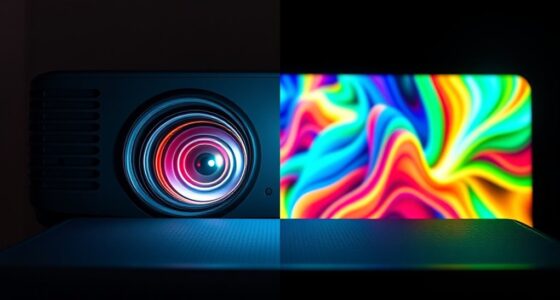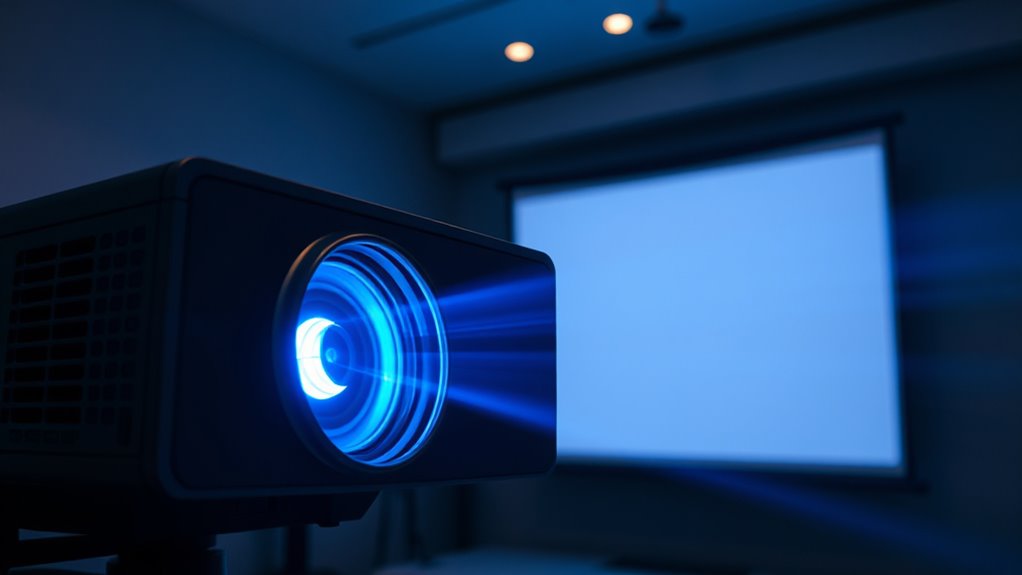

A projector works by using a light source—like LED, laser, or traditional lamps—to produce bright, vivid images. Inside, optical components such as lenses and mirrors focus and direct the light onto a surface. The image formation technology—like LCD, DLP, or LCoS—modulates the light to create sharp visuals, while color accuracy and resolution guarantee realistic, vibrant pictures. If you’re curious about how each part contributes to the final display, exploring further reveals the fascinating details.
Key Takeaways
- Projectors use a light source, such as LED, laser, or lamp, to illuminate image formation components.
- Inside, optical systems like lenses and mirrors focus and direct light to create a clear image.
- Image formation technologies (LCD, DLP, LCoS) modulate light to generate visuals on surfaces.
- Resolution determines detail clarity, with higher resolutions producing sharper, more realistic images.
- Color accuracy and brightness depend on the light source and optical components, affecting overall image quality.
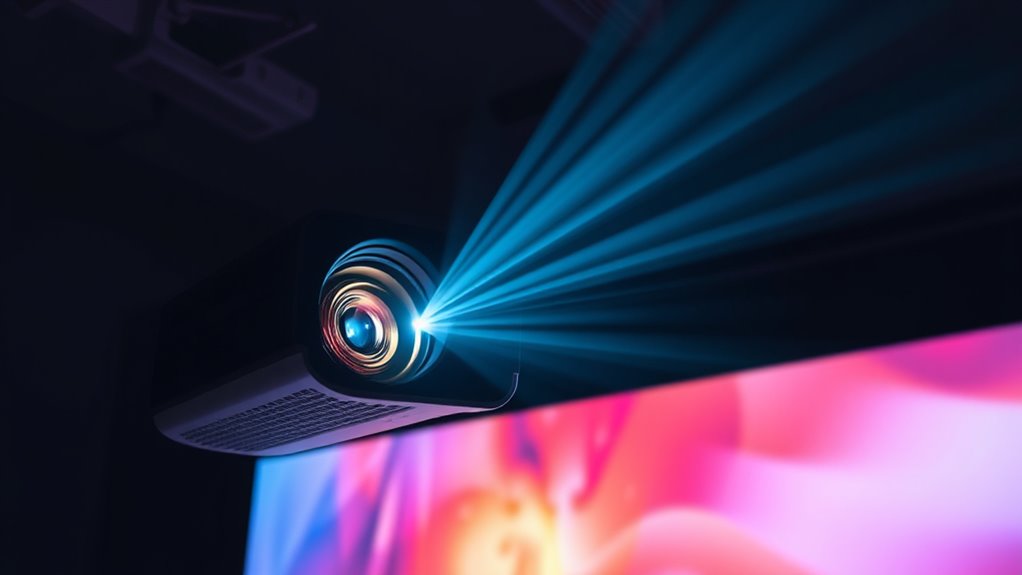
Have you ever wondered how modern projectors can produce stunning images on any surface? The secret lies in the intricate blend of technology that controls image resolution and the light source. When you turn on a projector, it takes digital signals—like a video file or presentation—and transforms them into a visual display that can be projected onto walls, screens, or even irregular surfaces. At the heart of this process is the image resolution, which determines how sharp, detailed, and clear your projected image will be. Higher resolutions, like 1080p or 4K, contain more pixels, ensuring that even intricate details are visible and the image looks crisp. Lower resolutions may save costs but tend to produce blurry or pixelated visuals, especially on larger surfaces.
The light source plays a vital role in how effectively a projector can display its images. Traditional projectors use lamps, but modern models employ LEDs, lasers, or hybrid sources. LEDs are energy-efficient and long-lasting, making them ideal for portable or home use. Laser-based projectors, on the other hand, offer brighter images and more vivid colors, even in well-lit rooms. The light source illuminates the image created inside the projector’s optical system and projects it outward onto a surface. The intensity and quality of this light directly influence the brightness and contrast of the final image, making it an essential component for achieving vivid visuals.
Inside the projector, the image is formed through a combination of optical elements, such as lenses and mirrors, which focus and direct the light. Depending on the technology used—like LCD, DLP, or LCoS—the image creation process varies slightly but ultimately results in the projected picture you see. For instance, LCD projectors use liquid crystal panels that modulate light to form images, while DLP projectors use tiny mirrors that tilt to direct light pixels. These systems rely heavily on the light source to produce a bright, clear image, especially when projecting onto larger surfaces or in environments with ambient light. Additionally, advancements in color accuracy technology ensure that the projected images have true-to-life hues and shades, enhancing overall visual fidelity.
Ultimately, the magic of a projector comes down to how well it balances image resolution with a powerful, consistent light source. When these elements work harmoniously, you get sharp, vibrant images that bring movies, presentations, or games to life. That’s how modern projection technology transforms digital data into stunning visuals, making your viewing experience both immersive and impressive.
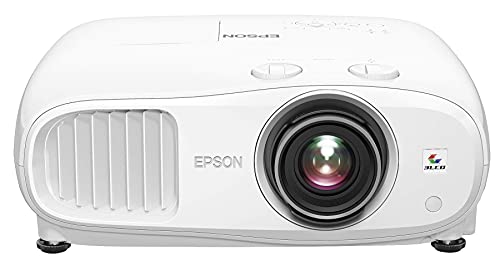
Epson Home Cinema 3800 4K PRO-UHD 3-Chip 3LCD Projector with HDR Technology
- Projection Technology: 4K PRO-UHD with advanced image processing
- Color Accuracy: True 3-chip 3LCD design for vibrant colors
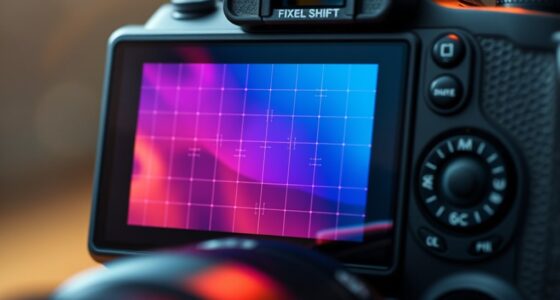
- Resolution Processing: 4K pixel-shifting for detailed images
As an affiliate, we earn on qualifying purchases.
As an affiliate, we earn on qualifying purchases.
Frequently Asked Questions
How Do Different Types of Projectors Compare in Image Quality?
You’ll notice that different projectors vary in image quality primarily due to color accuracy and resolution differences. For example, DLP projectors often deliver sharper images with better color fidelity, while LCD models excel in vibrant colors and smooth details. Higher resolution projectors, like 4K, offer crisper images, but they can be pricier. Consider your needs for color precision and clarity to choose the best type for your space.
What Maintenance Is Required for Long-Term Projector Use?
For long-term use, you need to regularly clean the lens to prevent dust buildup, which can affect image quality. Keep an eye on the bulb life and replace the bulb when it nears its end to avoid sudden failures. Also, check air filters and vents, ensuring they stay free of dust. Regular maintenance like this keeps your projector functioning smoothly and prolongs its lifespan.
Can Projectors Be Used Outdoors Effectively?
Yes, you can use projectors outdoors effectively, turning your backyard into a vivid outdoor display. Choose models with weather resistance and guarantee they’re protected from rain, wind, and dust. Set up in a shaded area to maximize brightness and clarity, and use a sturdy, elevated surface to prevent damage. With proper planning, your outdoor movie nights or presentations will be bright, sharp, and unforgettable, rain or shine.
How Energy-Efficient Are Modern Projection Systems?
Modern projection systems are quite energy-efficient, helping you save on power consumption. They typically have longer lamp lifespans, reducing the need for frequent replacements and conserving energy over time. By choosing projectors with LED or laser light sources, you benefit from lower power consumption and increased durability. This makes them ideal for continuous use, whether for outdoor or indoor settings, without substantially increasing your energy costs.
What Are the Common Troubleshooting Steps for Projection Issues?
Troubleshooting projection issues is like fixing a puzzle—you need to check each piece. First, guarantee proper projection calibration to align the image correctly. If the picture is dim or blurry, replace the lamp. Also, clean the lens and check connections. Restart your projector and update firmware if needed. These steps often resolve common problems and restore your projection quality quickly.

YGSKK Mini Projector with Wifi and Bluetooth, Built-in Apps,Movie Projector
- Latest Wi-Fi 6 and Bluetooth 5.3: Faster, stable wireless connections
- Built-in Streaming Apps: Access Prime Video, YouTube, Hulu
- Native 1080P HD Resolution: Clear, sharp full HD images
As an affiliate, we earn on qualifying purchases.
As an affiliate, we earn on qualifying purchases.
Conclusion
Now that you know how a projector works, you can see it’s like wielding a magic wand that transforms blank walls into vibrant screens. With tiny chips, powerful lenses, and light magic, it creates stunning visuals right before your eyes. Once you understand this technology, you’ll realize it’s the closest thing to summoning a movie theatre out of thin air. So next time you watch a film, remember—you’re witnessing a technological miracle in action!
![[Officially-Licensed App & Auto Focus]White Smart Mini Projector with WiFi and Bluetooth, XuanPad 4K Support Movie Projector, Portable Native 1080P Outdoor Projector with 360° Stand](https://m.media-amazon.com/images/I/51I8uy-U8bL._SL500_.jpg)
[Officially-Licensed App & Auto Focus]White Smart Mini Projector with WiFi and Bluetooth, XuanPad 4K Support Movie Projector, Portable Native 1080P Outdoor Projector with 360° Stand
- Compatibility with Streaming Apps: Supports Netflix, YouTube, Prime Video
- 4K and 1080P Resolution: Native 1080P with 4K support for sharp images
- High-Quality Image Technology: Nano-high-lens and color gamut reconstruction
As an affiliate, we earn on qualifying purchases.
As an affiliate, we earn on qualifying purchases.

APIO Resolution 1080p Auto Focus, 400 ANSI Lumen DLP Pro Pocket Projector with HDMI/Type C Supports, Built-in Rechargeable Battery and Speakers for Streaming Movies, Laptops, Phones, Home & Outdoor
- Complete 7-Piece Pack: Includes projector, cables, adapters, manual
- HD Resolution & Auto Features: 1280×720 HD, autofocus, keystone correction
- Built-in Speakers & Audio Support: Integrated sound, external audio compatible
As an affiliate, we earn on qualifying purchases.
As an affiliate, we earn on qualifying purchases.