
A dynamic iris in a projector automatically adjusts the aperture size based on scene brightness to enhance contrast. When the scene is bright, it narrows the aperture, reducing light and preventing glare. In darker scenes, it widens the aperture to let in more light, revealing details in shadows. This process creates a sharper, more vibrant picture with better contrast and depth. Understanding how it works can help you appreciate how your projector delivers cinema-quality images—if you keep exploring, you’ll discover even more.

Get business pricing on your home office setup
- Business-only prices and quantity discounts
- Tax-exempt purchasing
- Multiple users, one account, clear invoices
Key Takeaways
- The dynamic iris adjusts the projector’s aperture size in real-time based on scene luminance to optimize contrast.
- It narrows in bright scenes to prevent overexposure and widens in dark scenes to improve visibility.
- By controlling aperture size, it enhances contrast, making bright areas less glaring and preserving shadow details.
- This mechanism prevents flat or harsh images, delivering sharper, more vibrant visuals with balanced contrast.
- Overall, the dynamic iris enables projectors to adapt to changing lighting conditions for cinema-quality image quality.
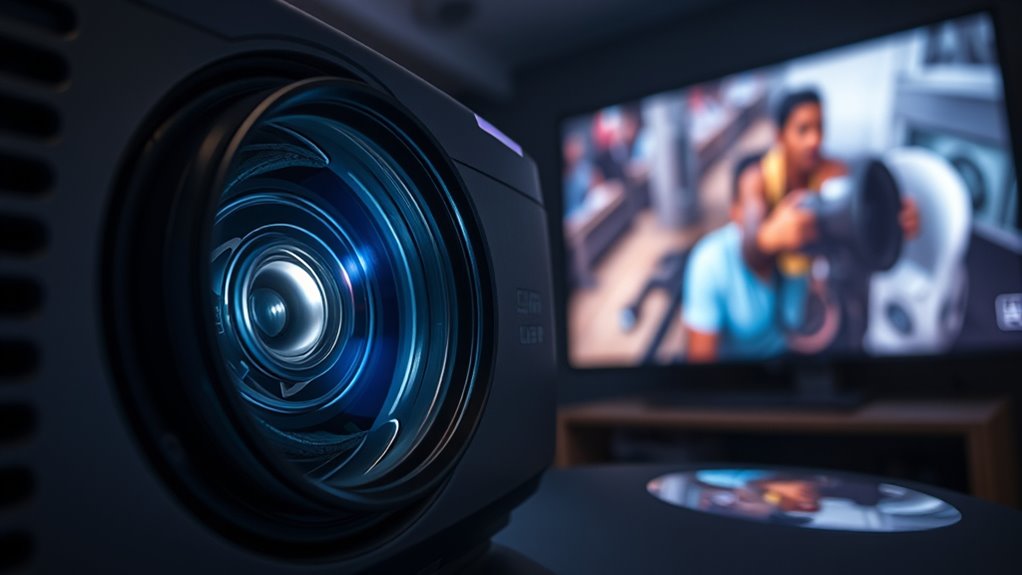
Have you ever wondered how your eyes adjust so quickly to changing light? It’s a fascinating process that involves your iris mechanism, which controls the size of your pupil. Just like your eyes adapt to different lighting conditions, projectors with a dynamic iris do the same to enhance image quality. The dynamic iris is a sophisticated component that automatically adjusts the aperture opening to optimize contrast and brightness, making sure you get the clearest picture possible regardless of the environment. This adjustment isn’t random; it’s a precise response to the varying luminance levels in the scene being projected. As the light in the scene gets brighter or darker, the iris mechanism responds by expanding or contracting, allowing more or less light through the lens. This process is critical for contrast enhancement because it prevents washed-out images in bright scenes and preserves detail in darker areas.
When a projector employs a dynamic iris, it constantly monitors the incoming image data and makes real-time adjustments. For instance, if a scene has intense highlights alongside deep shadows, the iris will narrow to prevent the bright parts from overwhelming the image. Meanwhile, it widens in darker scenes to boost visibility without sacrificing detail. This constant modulation enhances contrast, making images appear more vibrant and lifelike. It’s like the projector’s eye is intelligently “seeing” the scene, adjusting its aperture to produce the most balanced picture. You’ll notice this effect when watching movies or presentations—colors look more vivid, shadows retain detail, and bright areas aren’t glaring. This technological feature is especially valuable in environments where lighting conditions vary or aren’t perfectly controlled, such as in conference rooms or home theaters.
The iris mechanism’s ability to dynamically respond to the scene’s luminance levels is what sets high-quality projectors apart. Without it, images might appear flat or overly harsh, with poor contrast making it hard to distinguish details. By contrast, a projector with a well-implemented dynamic iris can deliver a stunning visual experience, even in challenging lighting situations. The contrast enhancement achieved by this feature ensures that every detail, from the darkest shadows to the brightest highlights, is preserved and visually appealing. This is why many premium projectors include a dynamic iris—it’s a smart, automatic way to improve picture quality without manual adjustments. Basically, your eyes and the projector’s iris mechanism work in tandem to deliver sharp, vibrant images that captivate your attention and elevate your viewing experience.
Furthermore, advancements in contrast ratio technology continue to improve how projectors handle challenging scenes, making dynamic iris features even more effective at delivering cinema-quality visuals.
As an affiliate, we earn on qualifying purchases.
Frequently Asked Questions
Does a Dynamic Iris Increase Projector Lamp Life?
A dynamic iris can extend your projector’s lamp longevity by adjusting the aperture based on the scene’s brightness, reducing unnecessary strain. This feature helps maintain ideal lamp performance, which in turn enhances projector durability. When you use a dynamic iris, you’ll likely see less frequent lamp replacements and better overall lifespan, making your projector more reliable and cost-effective over time.
Can I Manually Adjust the Dynamic Iris Settings?
Yes, you can manually adjust the dynamic iris settings on many projectors. This iris customization allows you to fine-tune the contrast and brightness levels to suit your viewing environment. By accessing the projector’s menu, you can typically find options for manual adjustment, giving you control over how the iris operates. Just follow the manufacturer’s instructions to make precise adjustments, ensuring excellent picture quality tailored to your preferences.
How Does Ambient Lighting Affect Dynamic Iris Performance?
Ambient light can profoundly impact your projector’s dynamic iris performance, affecting contrast enhancement. When there’s a lot of ambient lighting, the iris may struggle to darken scenes effectively, reducing contrast. You might notice images look washed out or less vibrant. To get the best results, reduce ambient light in your viewing environment, or use a projector with a more advanced dynamic iris that adapts better to lighting conditions, ensuring ideal contrast enhancement.
Is a Dynamic Iris Suitable for Gaming Projectors?
A dynamic iris can be suitable for gaming projectors if you prioritize picture clarity and contrast. It automatically adjusts to changing scenes, enhancing dark details and bright images, which improves your gaming performance. However, some models might introduce slight delays or flickering. If seamless visuals are essential for your gaming experience, make sure the projector’s dynamic iris is fast and well-implemented. Overall, it can boost contrast, making your gaming sessions more immersive.
What Maintenance Is Required for a Dynamic Iris System?
You should regularly perform iris calibration to guarantee ideal contrast performance and maintain your dynamic iris system. Follow a maintenance schedule that includes cleaning the iris mechanism and checking for dust or debris, which can affect its operation. It’s also wise to inspect the system periodically for any signs of wear or malfunction. Proper maintenance keeps your projector’s dynamic iris functioning smoothly, enhancing picture quality and extending its lifespan.
home theater projector contrast enhancement
As an affiliate, we earn on qualifying purchases.
As an affiliate, we earn on qualifying purchases.
Conclusion
Now that you understand how a dynamic iris works, it’s clear why it’s a game-changer for projectors. Think of it as your projector’s secret weapon, effortlessly adjusting to deliver sharper images and deeper contrast. Just as a skilled artist brings a canvas to life with careful strokes, the dynamic iris enhances every scene’s depth and clarity. Embrace this technology, and watch your viewing experience transform from ordinary to extraordinary—like opening a window to a more vivid world.
4K projector with automatic aperture
As an affiliate, we earn on qualifying purchases.
As an affiliate, we earn on qualifying purchases.
As an affiliate, we earn on qualifying purchases.
Fall Picks
fall essentials
As an affiliate, we earn on qualifying purchases.