
High Dynamic Range (HDR) for projectors boosts image brightness, contrast, and color accuracy, making scenes look more vivid and lifelike. It expands the luminance range, so whites are brighter and blacks are deeper, adding depth and realism. HDR also enhances contrast, emphasizing shadows and highlights for better detail. This means your movies, sports, and games will feel more immersive and vibrant. Keep exploring to discover how HDR can transform your viewing experience even further.

Get business pricing on your home office setup
- Business-only prices and quantity discounts
- Tax-exempt purchasing
- Multiple users, one account, clear invoices
Key Takeaways
- HDR enhances image quality by delivering brighter whites, deeper blacks, and more vibrant colors.
- It adjusts contrast ratios to create a more realistic and immersive viewing experience.
- HDR projectors support precise color reproduction, ensuring natural skin tones and true-to-life hues.
- It improves visual detail in both bright and dark scenes, making images more dynamic and engaging.
- Overall, HDR transforms projectors into immersive displays with richer contrast, color, and image depth.

High Dynamic Range (HDR) technology has revolutionized the way we experience images, and projectors are no exception. When you watch content with HDR, you’re stepping into a world where colors appear more vibrant, and details in both bright and dark scenes become clearer. This is especially noticeable with projectors that support HDR, as they can deliver images with improved color accuracy and contrast enhancement, making your viewing experience more immersive and true to life. HDR allows projectors to display a wider range of luminance levels, which means brighter whites and deeper blacks. As a result, you’ll see richer colors and more nuanced shading, giving depth to scenes that otherwise might look flat or washed out.
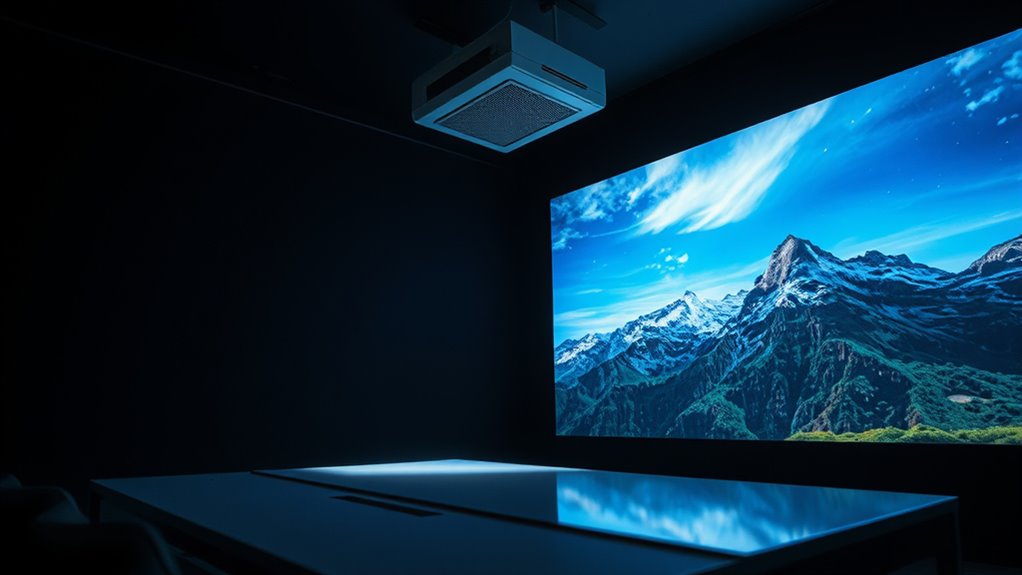
With HDR, contrast enhancement plays an essential role in creating this vivid picture. When your projector employs HDR, it intelligently adjusts the contrast ratio, emphasizing differences between light and dark areas. This means you won’t just see a brighter image; you’ll notice a more distinct separation between shadows and highlights. This contrast boost adds a three-dimensional quality to your viewing, making movies, sports, and games feel more realistic. As you watch, your eyes pick up on minute differences in brightness and color, making scenes pop with clarity and depth. The result is that every detail, from the faint textures in a shadowed corner to the glow of a sunset, becomes more lifelike.
HDR enhances contrast, creating vivid, lifelike images with distinct shadows and highlights for a more immersive viewing experience.
Achieving superior color accuracy is essential for HDR to truly shine. When your projector supports HDR, it can reproduce colors more precisely, aligning closely with the creator’s intent. This means skin tones look natural, skies are a true blue, and reds and greens are vibrant without oversaturation. Many HDR-capable projectors use advanced processing techniques to guarantee that the colors you see are accurate and consistent across different scenes. This fidelity enhances your overall viewing experience, especially when watching movies or visual content that relies heavily on color storytelling.
In essence, HDR transforms your projector from a basic display device into a window that offers a more detailed, colorful, and contrast-rich image. Whether you’re watching a blockbuster film, enjoying a sports game, or playing video games, HDR ensures that images are more dynamic and true-to-life. By improving color accuracy and contrast enhancement, HDR technology elevates your home theater setup, making every viewing session more engaging and visually stunning.
As an affiliate, we earn on qualifying purchases.
Frequently Asked Questions
Can Any Projector Support HDR Content?
Not all projectors support HDR content, so you need to check for HDR compatibility. Your projector’s brightness plays a role in displaying HDR effectively, as higher brightness enhances contrast and color. If your projector isn’t HDR-compatible, it won’t display HDR content properly, resulting in dull images. To enjoy vibrant visuals, look for a model with HDR support and sufficient brightness to showcase the full dynamic range accurately.
How Does HDR Impact Projector Lifespan?
HDR can impact your projector’s lifespan by increasing the demand on its light source and internal components, potentially reducing durability over time. You might notice that frequent HDR use accelerates wear, especially if your projector isn’t designed for high dynamic range content. To maximize lifespan effects, choose a projector with robust durability features and avoid prolonged HDR sessions. Proper maintenance and adjusting settings can also help preserve your projector’s longevity.
Are There Specific HDR Formats Compatible With Projectors?
Ever wondered which HDR formats work with projectors? You’ll find that HDR10 is widely compatible, supporting most modern projectors and adhering to industry standards. Some projectors also support Dolby Vision, but it’s less common. Always check your device’s specifications to guarantee compatibility, as different projectors may support varying HDR formats. Are you choosing a projector that meets your HDR needs? Knowing the right standards makes a big difference in image quality.
What Are the Cost Differences Between HDR and Non-Hdr Projectors?
You’ll find that HDR projectors tend to be more expensive than non-HDR models, mainly due to advanced technology and higher-quality components. The cost comparison varies based on factors like brightness, resolution, and brand reputation. Pricing factors include the projector’s HDR capability, lumens output, and image processing features. While HDR projectors offer richer visuals, expect to pay a premium, so consider your budget and viewing needs before choosing between HDR and non-HDR models.
How Do I Calibrate My Projector for Optimal HDR Performance?
Think of calibrating your projector like tuning a musical instrument for perfect harmony. Start by entering your calibration process, using a test pattern or calibration disc. Adjust brightness, contrast, and color settings to achieve the ideal settings for HDR content. Pay attention to shadow detail and highlights, ensuring neither are crushed or blown out. Fine-tune until images are vibrant, balanced, and true to life, delivering the best HDR experience.
As an affiliate, we earn on qualifying purchases.
Conclusion
Don’t let concerns about compatibility or cost hold you back. Embracing HDR for your projector can truly elevate your viewing experience with brighter images and richer colors. While it might seem like a luxury, the enhanced detail and realism are worth it, especially for movie nights or gaming. So, upgrade to HDR and enjoy stunning visuals that make every scene come alive—your eyes will thank you!
As an affiliate, we earn on qualifying purchases.
projector with high contrast and color accuracy
As an affiliate, we earn on qualifying purchases.
As an affiliate, we earn on qualifying purchases.
Halloween Picks
halloween
As an affiliate, we earn on qualifying purchases.