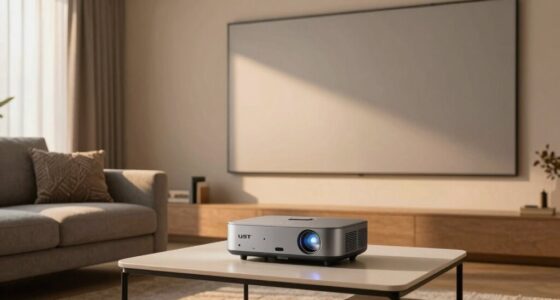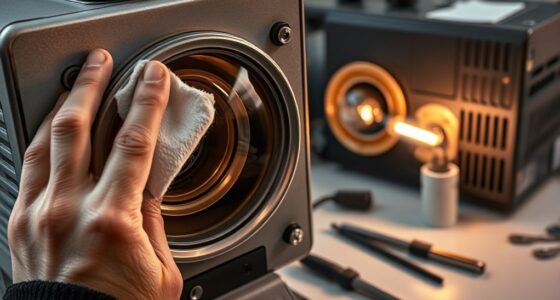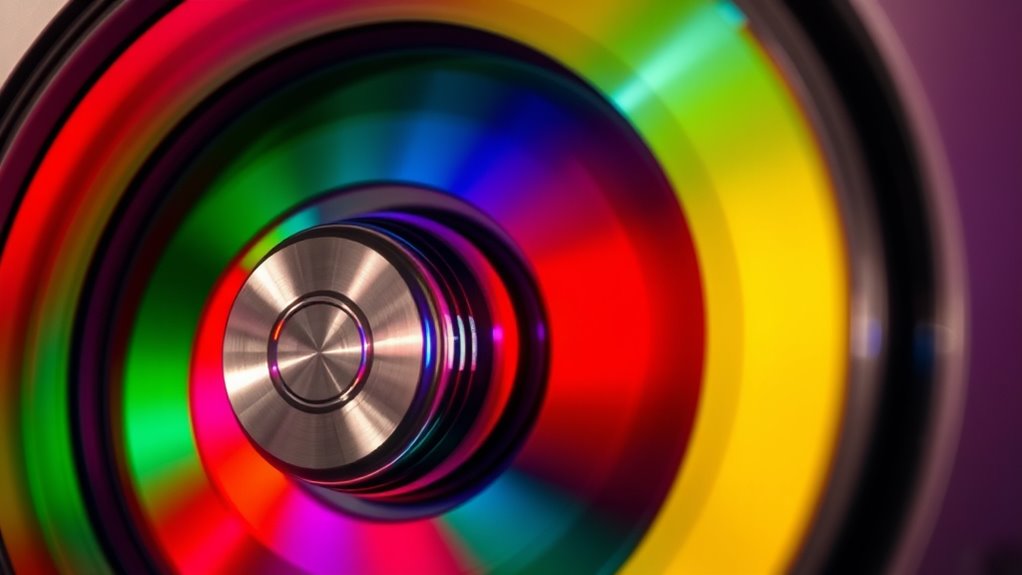

In DLP projectors, the color wheel plays a crucial role by filtering light into specific colors like red, green, and blue to produce vibrant images. As it spins rapidly, it blends these colors seamlessly, ensuring sharp, accurate visuals without ghosting or color bleeding. The wheel’s speed and design directly impact picture quality and flicker-free performance. If you want to understand how these components work together to improve your viewing experience, keep exploring the details behind color wheel technology.
Key Takeaways
- Color wheels filter specific colors, enabling DLP projectors to produce full-color images through rapid segmentation.
- They influence color accuracy, vibrancy, and overall image quality by controlling light filtering and color blending.
- Rotation speed and synchronization are crucial for preventing artifacts like flickering, ghosting, or color bleeding.
- Different types of color wheels, including multi-segment ones, expand color gamuts for richer visuals.
- Proper maintenance of the color wheel ensures consistent performance, sharp images, and prevents visual defects.

Original DLP Projector Color Wheel For Acer H5360 P7305w X1261 H5360BD P1273 P5270 H5380BD S1283HNE P1283 Projectors
Original Quality Projector Color Wheel
As an affiliate, we earn on qualifying purchases.
As an affiliate, we earn on qualifying purchases.
Understanding the Basics of DLP Technology
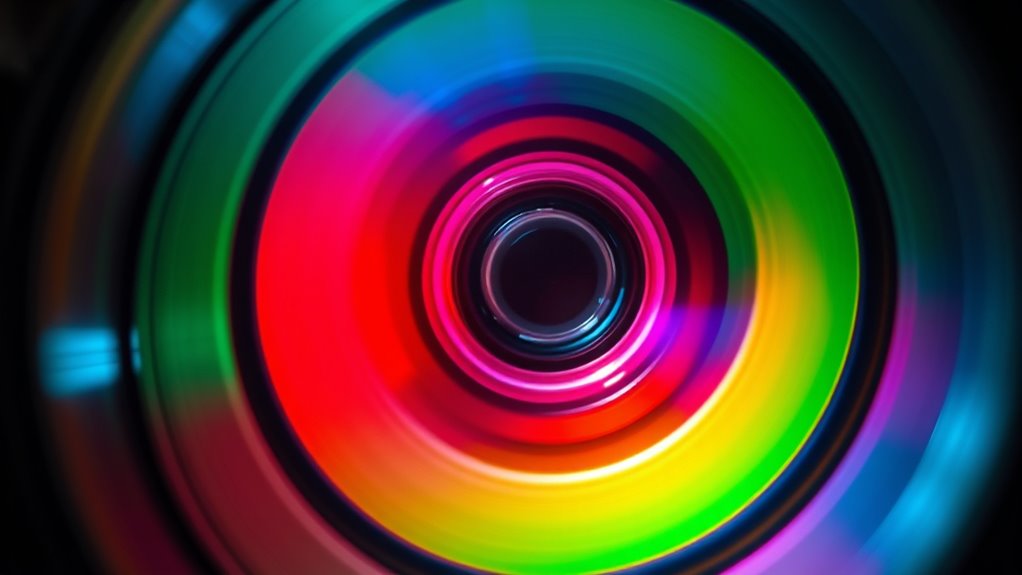
Digital Light Processing (DLP) technology uses tiny mirrors to project images onto a screen. A key component in this process is the color wheel, which relies heavily on specific color wheel materials chosen during manufacturing. These materials need to be durable, optically clear, and capable of withstanding continuous rotation at high speeds. During color wheel manufacturing, manufacturers select substrates like glass or plastic with precise properties to ensure consistent color blending and minimal heat buildup. The quality of these materials directly impacts color accuracy and image quality. Understanding the basics of DLP involves recognizing how these carefully manufactured color wheels rapidly spin, filtering light into primary colors that combine into vibrant images. This process is fundamental to the high-quality visuals DLP projectors deliver. Material selection plays a crucial role in maintaining the longevity and performance of the color wheel.

Color Wheel for Optoma Projectors HD141X, HD142X, GT1080, HD25E, HD26, HD180 etc
6 segments, 40mm diameter as listing picture
As an affiliate, we earn on qualifying purchases.
As an affiliate, we earn on qualifying purchases.
Components and Structure of Color Wheels

You’ll want to understand how the color segmentation mechanism works to see how colors are produced. The filter rotation dynamics determine how quickly and smoothly the colors change during projection. By examining these components, you can better appreciate how precise and efficient color display is achieved in DLP projectors. Additionally, the Gold IRA Rollovers process involves specific procedures to ensure proper fund transfer and compliance with tax regulations.
Color Segmentation Mechanism
The color segmentation mechanism in DLP projectors relies on a precisely engineered color wheel that divides light into specific color segments. As light passes through, the wheel’s segments perform color filtering, ensuring each portion only transmits its designated color. This process allows for accurate color segmentation, which is essential for vibrant and true-to-life images. The wheel’s structure typically includes multiple colored sections—red, green, blue, and sometimes secondary colors—arranged in a specific sequence. When the wheel spins rapidly, each segment sequentially filters the light, creating a rapid cycle of color images that our eyes perceive as a full-color display. This integral mechanism forms the foundation for achieving dynamic, high-quality color reproduction in DLP projectors. Additionally, the color wheel synchronization with the projector’s imaging system is critical for maintaining seamless color transitions and minimizing visual artifacts.
Filter Rotation Dynamics
At the heart of the color segmentation mechanism lies the rotation dynamics of the color wheel, which directly influence the quality and timing of color display. The rotation speed control guarantees the wheel spins smoothly and at precise rates, maintaining accurate color sequence. Proper color wheel synchronization synchronizes the wheel’s rotation with the projector’s light modulation, preventing color artifacts. You’ll find components like:
- Segmented filters for red, green, and blue
- A central hub for smooth rotation
- Bearings minimizing friction
- Motor systems controlling rotation speed
- Sensors for real-time synchronization feedback
These elements work together to keep the color wheel spinning steadily, delivering seamless color transitions and sharp images. The rotation dynamics are crucial for consistent performance, balancing speed control with synchronization accuracy. Understanding rotation control is essential to optimize projector performance and prevent image distortion.
Original DLP Projector Color Wheel For Acer H5360 P7305w X1261 H5360BD P1273 P5270 H5380BD S1283HNE P1283 Projectors
Original Quality Projector Color Wheel
As an affiliate, we earn on qualifying purchases.
As an affiliate, we earn on qualifying purchases.
How Color Wheels Influence Image Quality

Color wheels play a crucial role in determining the overall image quality of DLP projectors by controlling how colors are produced and displayed. The design and quality of the wheel directly impact color accuracy, ensuring that hues appear vibrant and true to life. A well-engineered color wheel helps prevent color bleeding and ghosting, maintaining sharp, crisp images. Additionally, it influences light uniformity across the projected image, avoiding uneven brightness that can distract viewers. If the wheel spins smoothly and precisely, it contributes to consistent color blending and brightness levels. Overall, the color wheel’s performance is essential for delivering clear, accurate, and evenly lit visuals, making your viewing experience more immersive and enjoyable.
Color Wheel for Optoma Projectors HD141X, HD142X, GT1080, HD25E, HD26, HD180 etc
6 segments, 40mm diameter as listing picture
As an affiliate, we earn on qualifying purchases.
As an affiliate, we earn on qualifying purchases.
The Impact of Color Wheel Speed and Rotation

Since the speed and rotation of the color wheel directly influence how colors are rendered, maintaining peak performance is essential for image quality. Variations in rotation speed can cause color flickering or artifacts, impacting your viewing experience. Proper color wheel synchronization ensures that the colors align perfectly with the projected image, avoiding color distortions. Rotation speed variability might lead to inconsistent color blending, reducing image clarity. You’ll notice that:
Maintaining synchronized color wheel rotation ensures sharp, accurate, and flicker-free projected images.
- Precise synchronization minimizes flicker
- Consistent rotation speeds improve color accuracy
- Higher rotation speeds often reduce visible color separation
- Variability can cause color shift or ghosting
- Smooth, stable rotation enhances overall image sharpness
Understanding these factors helps you appreciate the importance of controlled wheel rotation, which directly affects the quality and stability of your projected images. Forsale 100
Types of Color Wheels Used in DLP Projectors

Different types of color wheels are designed to maximize the performance of DLP projectors by balancing color accuracy, brightness, and smoothness. The most common are the spinning color wheels with segments of red, green, and blue filters, which work with traditional lamp sources. When using LED light sources, specialized color wheels with spectral filtering are often employed to enhance color purity and efficiency. These wheels may feature dichroic filters or multi-segment designs that improve spectral separation, resulting in richer colors and better contrast. Some projectors use six-segment wheels for expanded color gamuts. The choice depends on the light source and desired image quality, making the selection of the right color wheel vital for achieving peak performance in your DLP projector. Understanding color wheel technology is essential for optimizing your projector’s visual output.
Common Issues and Troubleshooting Color Wheel Problems

When your projector shows signs like a stuck or frozen color wheel, unusual color artifacts, or strange noises, it could be a sign of underlying issues. These problems often disrupt image quality or cause noise and vibration, making troubleshooting essential. Identifying and addressing these symptoms early can help keep your projector running smoothly. Additionally, filter maintenance plays a crucial role in preventing dust buildup that can affect color wheel performance and overall image quality.
Color Wheel Stuck or Frozen
A stuck or frozen color wheel is a common issue that can cause your DLP projector to display distorted or no images at all. This problem often results from a color wheel malfunction, leading to a frozen color wheel that doesn’t spin properly. You might notice static colors, flickering, or complete image loss. To troubleshoot:
- Check for dust or debris on the color wheel or inside the projector.
- Ensure the cooling fan is functioning to prevent overheating.
- Inspect for loose or damaged wiring connections.
- Reset the projector to clear temporary glitches.
- Consider replacing the color wheel if it remains stuck after troubleshooting.
A frozen color wheel disrupts the color cycle, affecting image quality. Addressing these issues promptly can restore proper function and improve your viewing experience. Regular maintenance and keeping the projector’s internal components clean can also help prevent recurring problems with the color wheel.
Unusual Color Artifacts
Have you noticed unusual color artifacts like streaks, color blotches, or flickering during your projector’s display? These issues often indicate color wheel malfunctions that disrupt the smooth color shift. Unusual color artifacts can be caused by dirt or dust on the color wheel, a misaligned wheel, or a failing motor. When the color wheel isn’t spinning correctly, it leads to inconsistent color filtering, resulting in visual glitches. You might also see color streaks or blotches that seem out of place. Troubleshooting involves checking for dust buildup, ensuring the wheel spins freely, and inspecting for physical damage. If the problem persists, the color wheel may need replacement. Addressing these issues promptly can restore accurate color rendering and prevent further damage to your projector’s internal components. Additionally, issues with the color wheel can sometimes be linked to the overall health of the projector’s internal components, similar to how ECU tuning can optimize engine performance in Honda vehicles.
Noise or Vibration Issues
Unusual noise or vibrations from your projector often point to issues with the color wheel’s operation. These problems can cause noise interference and vibration resonance, affecting picture quality and device longevity. You might notice:
- Rattling sounds during operation
- Excessive vibration felt on the projector body
- Whining or high-pitched noise from the color wheel
- Fluctuations in image stability
- Increased fan noise as the projector compensates
These symptoms typically indicate a misalignment, bearing wear, or debris affecting the color wheel’s smooth rotation. Ignoring these issues can worsen vibration resonance and noise interference, potentially damaging internal components. Regular maintenance or replacing the color wheel usually resolves these problems, restoring quiet, stable operation. Proper color wheel maintenance and timely troubleshooting can extend the lifespan of your projector.
Advances in Color Wheel Design and Technology

Recent innovations in color wheel design and technology have greatly enhanced the performance of DLP projectors. Advances in spectral filtering allow for more precise separation of colors, resulting in richer image quality and better color accuracy. Newer color wheels incorporate multi-segmented designs to optimize spectral filtering, reducing color bleed and improving contrast. Additionally, improved rotational synchronization ensures that the color segments align perfectly with the projector’s light source, minimizing artifacts like color breakup. These technological improvements also enable faster rotation speeds, which enhance brightness and reduce image flicker. As a result, you experience sharper, more vibrant images with less noise and distortion. Overall, these developments in color wheel design substantially elevate the visual performance of DLP projectors, offering a more immersive viewing experience.
Comparing Color Wheels to Other Color Processing Methods

How do color wheels compare to other color processing methods in digital projectors? Color wheels excel in simplicity and cost-effectiveness, offering high color wheel efficiency for fast, vibrant images. However, alternative color processing methods, like RGB laser or LED systems, provide smoother color blending and eliminate the spinning components.
Imagine:
- Rapid color changes without flicker
- Consistent color saturation
- Fewer mechanical parts for durability
- Reduced noise during operation
- Better energy efficiency in some models
While color wheels are reliable and widely used, alternative methods can deliver more seamless color reproduction. Your choice depends on balancing cost, performance, and maintenance needs, with each approach having distinct advantages in the domain of digital projection.
Tips for Maintaining Optimal Color Wheel Performance

Keeping your color wheel in top shape guarantees vibrant, flicker-free images. Regular color wheel maintenance is essential for guaranteeing excellent performance. First, keep the projector’s interior clean by gently removing dust and debris with compressed air, preventing overheating and mechanical issues. Avoid touching the color wheel directly to prevent smudges or scratches. Check for signs of wear, such as uneven rotation or noise, which could indicate the need for professional servicing. Ensure the cooling system functions properly to maintain consistent temperatures, reducing the risk of damage. Using the projector in a dust-free environment also prolongs the lifespan of the color wheel. Consistent maintenance not only preserves image quality but also extends the overall lifespan of your projector’s components.
Frequently Asked Questions
How Does the Color Wheel Affect Projector Lifespan?
The color wheel influences your projector’s lifespan by affecting its durability. A high-quality color wheel with better durability guarantees less wear and tear, which helps optimize the projector’s lifespan. Regular maintenance and choosing models with resilient color wheels can prevent premature failure. By prioritizing durability, you can extend your projector’s longevity and enjoy consistent, vibrant images over time.
Can Color Wheel Design Impact Energy Efficiency?
Yes, the color wheel design can impact energy efficiency. Using high-quality color wheel materials reduces light absorption, making your projector more efficient. Advanced light dispersion techniques ensure more precise color separation, minimizing light loss and saving energy. A well-designed color wheel with optimized materials and dispersion methods can substantially lower power consumption, helping you save on energy costs and extend your projector’s lifespan.
Are There Environmental Factors Influencing Color Wheel Performance?
You might not realize it, but environmental factors can considerably influence your projector’s color wheel performance. Bright ambient light can cause your colors to appear washed out, while temperature fluctuations can lead to overheating or sluggish operation. Proper temperature regulation ensures the color wheel spins smoothly and maintains accurate colors. Stay aware of your surroundings to keep your projector performing at its best, delivering vibrant visuals every time you watch.
How Do Different Brands Vary in Color Wheel Technology?
You’ll notice that different brands vary in color wheel technology, mainly due to brand compatibility and manufacturing quality. Some brands prioritize advanced materials for smoother operation and better color accuracy, while others focus on cost-effective manufacturing, which might affect durability. You should consider these factors to choose a projector that offers reliable performance and consistent color quality, ensuring your viewing experience remains vibrant and true to life.
What Future Innovations Are Expected in Color Wheel Development?
You can expect exciting advancements in color wheel development, as manufacturers explore innovative color mixing techniques and new materials. Future designs may feature faster spinning, quieter operation, and enhanced color accuracy, all while using more eco-friendly, durable materials. These innovations aim to deliver richer, more vibrant images, making your viewing experience more immersive. As technology progresses, your projector’s color wheel will become smarter, more efficient, and better suited to meet your evolving entertainment needs.
Conclusion
By understanding how color wheels work in DLP projectors, you can appreciate their vital role in delivering vibrant images. For example, imagine upgrading your projector and noticing sharper, more accurate colors—it’s likely due to improved color wheel technology. Regular maintenance and choosing the right type can keep your projector running smoothly. So, stay informed and care for your projector’s color wheel, ensuring stunning visuals for years to come.