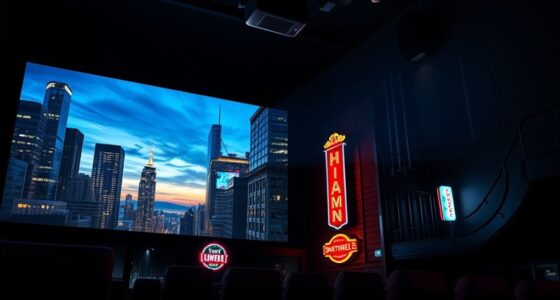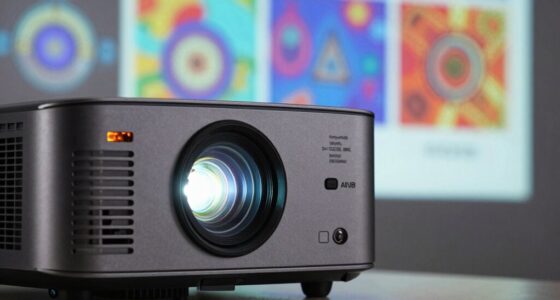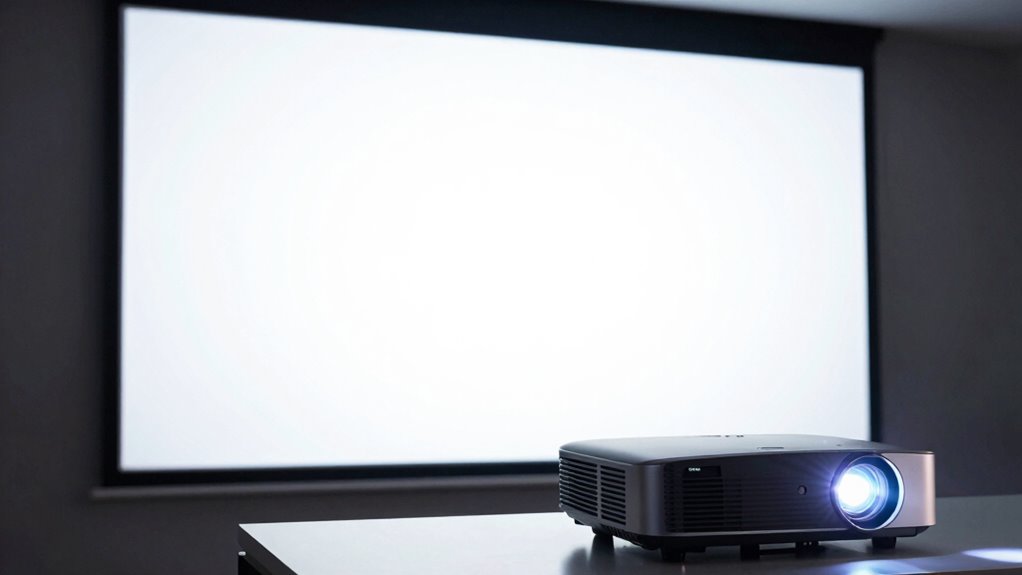

ANSI lumens tell you how bright a projector can get, helping you see how well it performs in different lighting conditions. It measures the projector’s ability to produce visible images but doesn’t tell you about color quality or contrast. A higher lumen count means brighter images, but you still need to take into account contrast and color accuracy for the best picture. To understand how these factors work together, keep exploring what influences overall image quality.

Get business pricing on your home office setup
- Business-only prices and quantity discounts
- Tax-exempt purchasing
- Multiple users, one account, clear invoices
Key Takeaways
- ANSI lumens measure the brightness a projector can produce in a standardized way.
- They do not reflect color quality, contrast, or image sharpness.
- Higher lumens are ideal for bright environments but don’t guarantee vivid images.
- Brightness should be balanced with contrast and color accuracy for optimal image quality.
- Relying solely on lumens can be misleading; consider other factors for a better viewing experience.
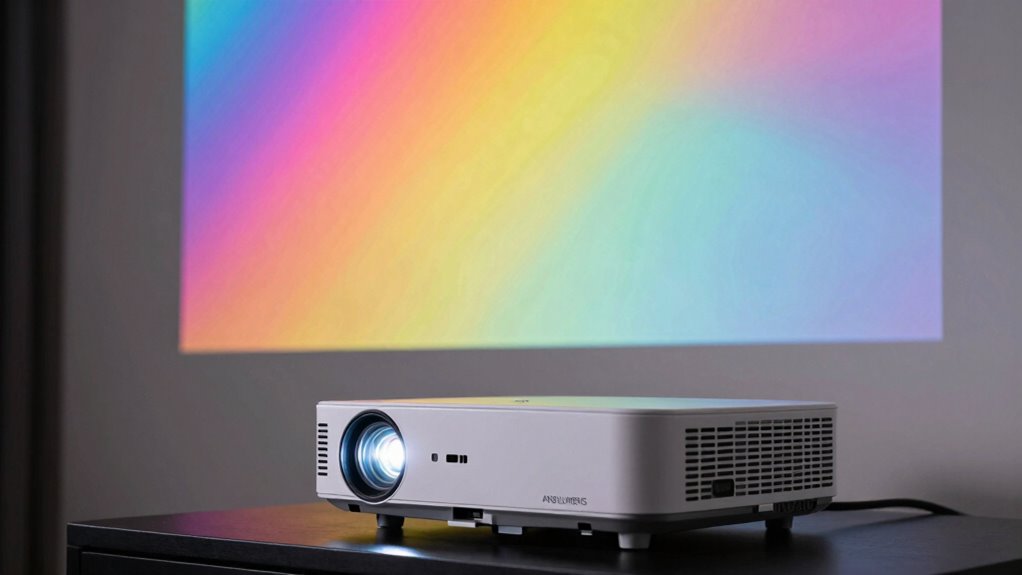
Understanding what ANSI lumens mean is essential when choosing a projector, especially if you want a bright, clear image in various lighting conditions. ANSI lumens measure the brightness a projector can produce, giving you a straightforward way to compare models. However, brightness alone doesn’t tell the whole story. You also need to consider how well the projector displays colors and how it handles contrast. These factors influence how vivid and sharp your images will appear, making your viewing experience more immersive.
Color accuracy is a critical aspect that ANSI lumens don’t quantify directly. Even if a projector boasts high lumens, it won’t necessarily deliver true-to-life colors. A projector with good color accuracy reproduces hues faithfully, which is especially important if you’re watching movies, viewing photos, or giving presentations where color detail matters. Look for projectors that specify support for color-enhancing technologies or have a high color gamut, meaning they can display a broader range of colors. A bright projector with poor color accuracy can produce washed-out images, diminishing your viewing experience, no matter how high the lumens are.
Contrast ratio is another key element that works hand-in-hand with brightness to determine image quality. It describes the difference between the darkest blacks and the brightest whites a projector can produce. A high contrast ratio results in more detailed, vibrant images, especially in darker scenes. Without sufficient contrast, even a projector with high lumens can produce images that seem flat or washed out, particularly in a dimly lit room. When evaluating projectors, don’t just focus on ANSI lumens; consider the contrast ratio to ensure your images will be crisp and dynamic. A balanced combination of high brightness, excellent contrast, and accurate color reproduction will give you the best visual results.
In essence, while ANSI lumens provide a valuable initial measure of brightness, understanding the interplay between brightness, color accuracy, and contrast ratio is vital. You want a projector that can cut through ambient light without sacrificing color fidelity or image depth. By paying attention to these factors, you’ll choose a device that not only shines brightly but also delivers vibrant, detailed images that truly captivate your audience or enhance your viewing experience.
As an affiliate, we earn on qualifying purchases.
Frequently Asked Questions
How Does Room Size Affect Perceived Projector Brightness?
In a larger room, your projector’s brightness might seem lower because the light disperses over a bigger area, impacting perceived brightness and color accuracy. You’ll notice images appear dimmer, and fan noise may increase as the projector works harder to maintain clarity. To improve viewing, consider a projector with higher ANSI lumens, ensuring vibrant colors and minimal fan noise, even in spacious environments.
Can High ANSI Lumens Compensate for Ambient Light?
Yes, high ANSI lumens can offset ambient light, making your projection clearer and brighter. However, keep in mind that increasing brightness often impacts color accuracy and boosts energy consumption. If you want vibrant, true-to-life images in well-lit rooms, opt for a projector with high ANSI lumens, but balance it with energy efficiency and color performance to get the best viewing experience without unnecessary power use.
What Is the Ideal Lumen Range for Home Theater Projectors?
You’ll want a home theater projector with 1,500 to 2,500 lumens for vivid images, even if your room isn’t perfectly dark. Don’t settle for lower brightness that dims your viewing experience or overcompensate with excessive lumens that wash out colors. A good lumen range, combined with high contrast ratio and excellent color accuracy, guarantees your movies look rich, vibrant, and true to life, regardless of ambient light.
Do ANSI Lumens Stay Consistent Over a Projector’s Lifespan?
Yes, ANSI lumens can decline over a projector’s lifespan due to brightness degradation. As the projector ages, its lumen output may decrease, but regular lumen calibration can help maintain consistent brightness levels. You should expect some reduction in brightness over time, but proper calibration and maintenance can extend the projector’s peak performance. Keep an eye on lumen levels, especially if you’re relying on the projector for critical presentations or home theater setups.
How Do Different Projection Surfaces Impact Brightness Visibility?
Did you know that a smooth, white surface can boost brightness perception by up to 50%? Different projection surfaces considerably impact visibility; textured or colored surfaces can reduce brightness and distort color accuracy. You’ll notice that matte white screens provide ideal brightness and color fidelity, while textured or colored surfaces can cause shadows or color shifts, making details harder to see. Choosing the right surface guarantees your projected image remains vibrant and clear.
As an affiliate, we earn on qualifying purchases.
Conclusion
Think of ANSI lumens like the brightness of a campfire—you can see it clearly from afar, but the warmth it provides depends on how close you are. Just like a fire’s glow, higher lumens mean a brighter picture, but it’s not the whole story. When choosing a projector, remember that the right brightness depends on your space and needs. Don’t be dazzled by numbers alone—consider your environment for the perfect projection experience.
projector with high contrast ratio
As an affiliate, we earn on qualifying purchases.
As an affiliate, we earn on qualifying purchases.
projector with accurate color reproduction
As an affiliate, we earn on qualifying purchases.
As an affiliate, we earn on qualifying purchases.
Fall Picks
fall essentials
As an affiliate, we earn on qualifying purchases.