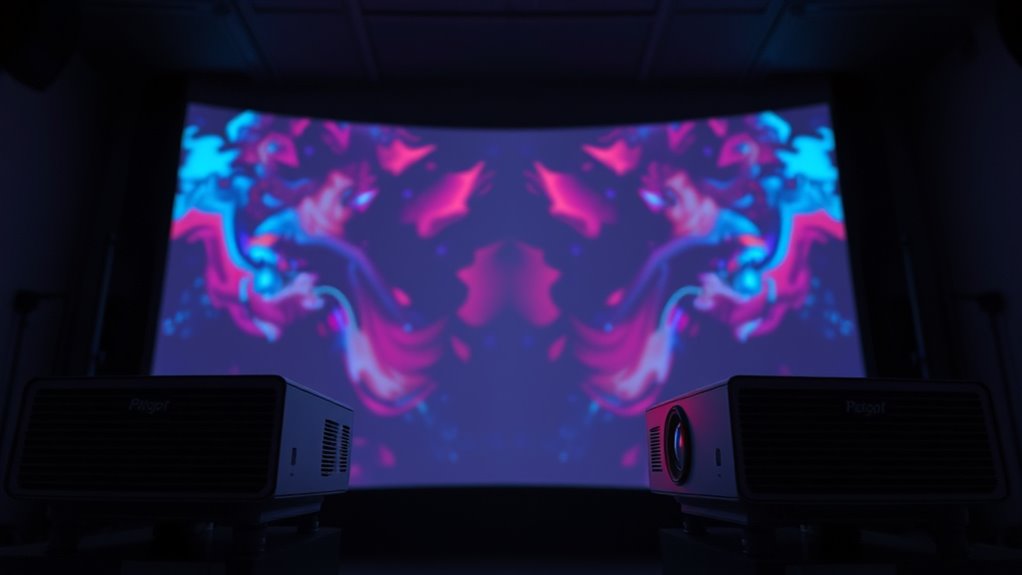
3D projectors create depth by using stereoscopic projection techniques that send different images to each eye. They typically use polarization filters or active shutter glasses to deliver separate images, making your brain perceive a three-dimensional scene. Polarization uses light filters, while active shutter glasses synchronize with the projector to rapidly switch images. Both methods enhance the viewing experience, and exploring these differences can help you better understand how immersive 3D visuals work.
Key Takeaways
- 3D projectors create depth by delivering two slightly different images to each eye, enhancing stereoscopic perception.
- Polarization and active shutter are the main methods used to separate images for each eye in 3D projection.
- Polarization projects polarized images, and viewers wear polarized glasses to see the 3D effect.
- Active shutter uses synchronized liquid crystal glasses that alternately block each eye in sync with the projected images.
- Proper synchronization and setup are essential for effective 3D projection, affecting image quality and viewer comfort.
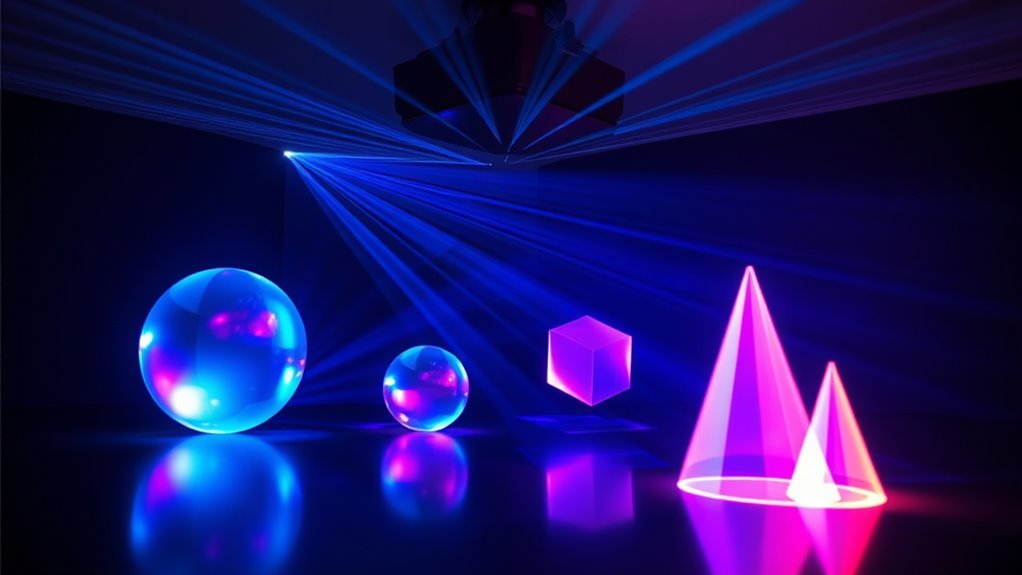
Have you ever wondered how 3D projectors bring movies and presentations to life? The magic behind this immersive experience lies in specialized projection techniques that create the illusion of depth. Two main methods make this possible: polarization techniques and active shutter technology. Both approaches work by delivering slightly different images to each eye, which your brain then combines to perceive three dimensions.
3D projectors use polarization and active shutter tech to create immersive, three-dimensional images.
Polarization techniques are among the most common and rely on polarized light. When the projector casts images, it uses filters to polarize the light differently for each eye. For instance, one eye might receive a vertically polarized image, while the other gets a horizontally polarized one. When you wear polarized glasses, each lens only allows the corresponding polarization to pass through, ensuring each eye sees only its designated image. This method is effective, relatively simple, and often used in cinemas because it doesn’t require batteries or electronics in the glasses. However, polarization can sometimes be affected by head tilts or misalignment, which might reduce the 3D effect. Additionally, the polarization method is less effective when viewing off-axis, limiting viewer movement in some cases.
On the other hand, active shutter technology takes a different approach. It involves electronically synchronized glasses that alternately block each eye in rapid succession. The projector displays alternating images—one for the left eye and one for the right—at a high refresh rate. The active shutter glasses then use liquid crystal shutters that open and close in sync with the projector’s timing, blocking each eye at the appropriate moment. This rapid switching creates a seamless 3D experience because each eye only sees the image intended for it. Active shutter systems generally produce sharper, more vibrant images compared to polarization, and they’re less affected by head tilts.
Both techniques require precise synchronization between the projector and glasses, but they serve different preferences and setup conditions. Polarization methods tend to be more comfortable for extended viewing and are simpler to implement, making them popular in commercial cinemas. Active shutter systems, while often more expensive, provide a higher quality 3D experience with better image clarity and less crosstalk between images.
Ultimately, the choice between polarization techniques and active shutter technology depends on your specific needs, budget, and environment. But whether through polarized filters or electronically synchronized shutters, these advancements are what make 3D projectors so effective at transforming flat images into enthralling, three-dimensional worlds. Understanding projection techniques is key to appreciating how immersive 3D visualizations are made possible.
Frequently Asked Questions
Can 3D Projectors Be Used Outdoors Effectively?
Yes, you can use 3D projectors outdoors effectively, but focus on models with strong outdoor visibility. Look for projectors with high brightness levels to guarantee clear images even in daylight, and choose weather-durable units to withstand elements like rain or wind. Proper placement and protective enclosures also help maximize outdoor visibility and weather durability, making your 3D projection experience enjoyable regardless of the environment.
What Are the Power Consumption Differences Between 3D and Regular Projectors?
You’ll find that 3D projectors tend to use slightly more power than regular ones, mainly due to their advanced features and additional components. While their energy efficiency has improved, a quick power comparison shows they consume a bit extra, but not enough to cause major concerns. If you’re mindful of energy use, choosing models with better efficiency ratings can help balance the immersive experience with responsible power consumption.
How Long Do 3D Glasses Typically Last Before Needing Replacement?
You can expect 3D glasses to last about 50 to 100 uses before needing replacement. Durability concerns, like lens longevity and frame wear, can affect their lifespan. If you handle them carefully and store them properly, they might last longer. However, frequent use, cleaning, and exposure to sunlight can shorten their lifespan. Keep an eye on lens clarity and frame condition to determine when it’s time for a new pair.
Are There Compatibility Issues With Existing Home Theater Systems?
You might face compatibility challenges with existing home theater systems when upgrading to 3D projectors. Some systems may need calibration adjustments to work seamlessly, especially regarding input sources and display settings. confirm your current equipment supports 3D formats and check for any firmware updates. By addressing these calibration requirements beforehand, you can prevent issues and enjoy a smooth, immersive 3D viewing experience without costly upgrades.
What Maintenance Is Required to Keep 3D Projectors Functioning Properly?
Did you know that regular maintenance can extend your 3D projector’s lifespan by up to 30%? To keep it running smoothly, you should perform routine cleaning routines, like dusting vents and lenses, and follow calibration procedures to guarantee ideal image quality. Check the filters regularly and replace them if needed. Staying on top of maintenance keeps your projector functioning properly and delivers the best 3D experience.
Conclusion
Now that you understand how stereoscopic projection works, you’re better equipped to choose and enjoy 3D projectors. Remember, knowledge is power, and the more you learn, the more immersive your viewing experience becomes. Whether for movies, gaming, or presentations, 3D projectors can truly elevate your entertainment. Keep exploring new tech—after all, the sky’s the limit when you know how it all works. Stay curious, and enjoy the journey into 3D worlds!